6,5 h
copenhagen
Tour Privado de Dia Completo a Malmö com Almoço Sueco Incluído
✓ Cancelamento grátis Para crianças
4.8(140 avaliações)
A partir de €385/ pessoa
Reservar Agora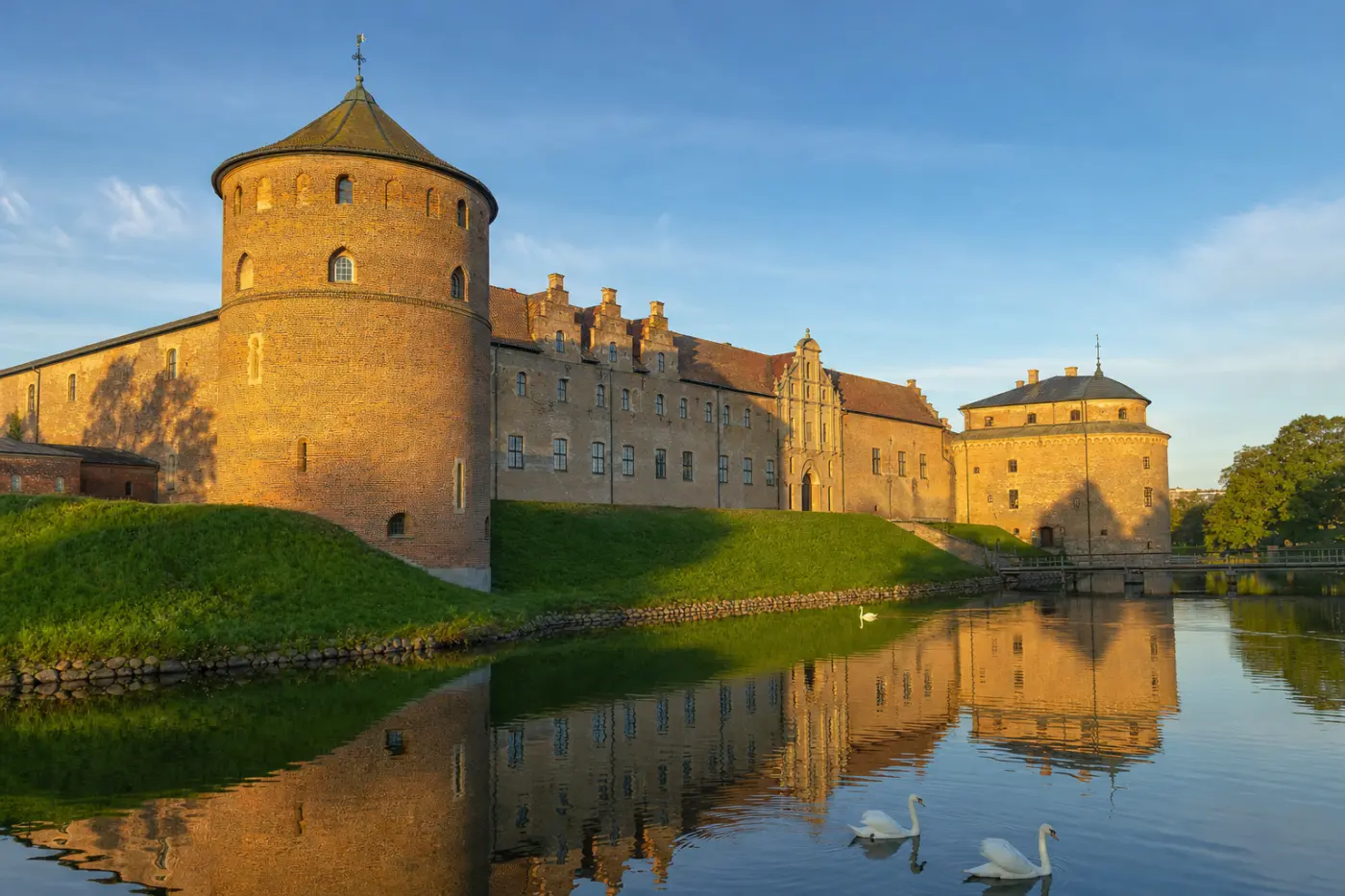
Atração turística
Malmöhus — Malmö Castle — stands as the oldest preserved Renaissance castle in all of Scandinavia, its low-slung yellow-brick towers rising above a wide moat on the western edge of Malmö's city center. The site's history begins in 1434, when King Eric of Pomerania raised the first fortification here to enforce the Sound Toll, the lucrative tax levied on all ships passing through the Øresund strait. That original structure was razed in the civil wars of the early 16th century, and in the 1530s King Christian III of Denmark commissioned an entirely new complex: a modern artillery fortress fused with a stately Renaissance residence and the official seat of the county governor, all integrated onto a single site. Danish coins were minted within its walls throughout the Middle Ages, making it a financial as well as a military nerve center for the Danish Crown's control of the strategically vital Scania region.
The castle's most dramatic episode unfolded between 1568 and 1573, when James Hepburn, 4th Earl of Bothwell — third husband of Mary, Queen of Scots — was imprisoned within its walls. Hepburn had been the chief suspect in the murder of Mary's previous husband, Henry Stuart, Lord Darnley, and had fled Scotland after political collapse. His ship ran aground near Bergen, Norway during a storm, and Protestant Danish King Frederick II, who may also have harbored hopes of extracting a ransom from Scotland, had him transferred to Malmöhus. Hepburn had previously been released from the Tower of London for lack of evidence; he would never again know freedom, dying in 1578 at Dragsholm Castle in Zealand after a decade of Danish captivity. After Sweden regained Scania from Denmark in 1658, the castle became a Swedish defensive outpost, then transitioned into a full prison by the mid-19th century, with executions carried out in the courtyard. The prison closed in 1909, the building briefly served as a homeless shelter, and in the years just before World War II it reopened as a public museum.
Today Malmöhus forms the heart of Malmö Museums, the largest museum complex in southern Sweden, and its interiors have been meticulously restored to reflect the aesthetic of the 16th century. Visitors move through reconstructed Renaissance chambers, the grim surviving prison cells with photographs of their former occupants, and an armory with period weaponry. The Malmö Art Museum occupies one wing, holding one of Sweden's largest collections of Nordic and European art from the Renaissance to contemporary works. The Natural History Museum fills another. Among the most affecting exhibits is a white WWII-era bus displayed near the entrance — one of the "White Buses" used by the Swedish Red Cross in secret negotiations with Heinrich Himmler in 1945 to extract Scandinavian and Jewish prisoners from Nazi concentration camps. After dark, a projected light show on the castle's upper windows recreates the shadow theater of Crown Prince Frederick's notorious 16th-century parties.
The castle is a 20-minute walk southwest from Malmö Central Station, accessible via a footpath that crosses a moat bridge where enormous resident swans patrol the water year-round — the territorial male is known to challenge his own reflection in a nearby mirror. Admission to the full Malmö Museums complex is included in one entry fee. The castle is managed by the Swedish National Property Board and is listed as part of Sweden's protected cultural heritage. Plan at minimum two hours to do justice to the history, art, and natural history wings.
Tours privados com guia local, ao seu ritmo.
copenhagen

copenhagen

copenhagen
copenhagen
copenhagen
Usamos um único cookie, para recordar esta escolha. Não usamos cookies de análise nem de publicidade. Ler a política de cookies.