2 hrs
Milan
Milan Must-Sees: 2-Hour Private Tour for Newcomers
✓ Free cancellation Kids friendly
5.0(20 reviews)
From €158/ person
Book Now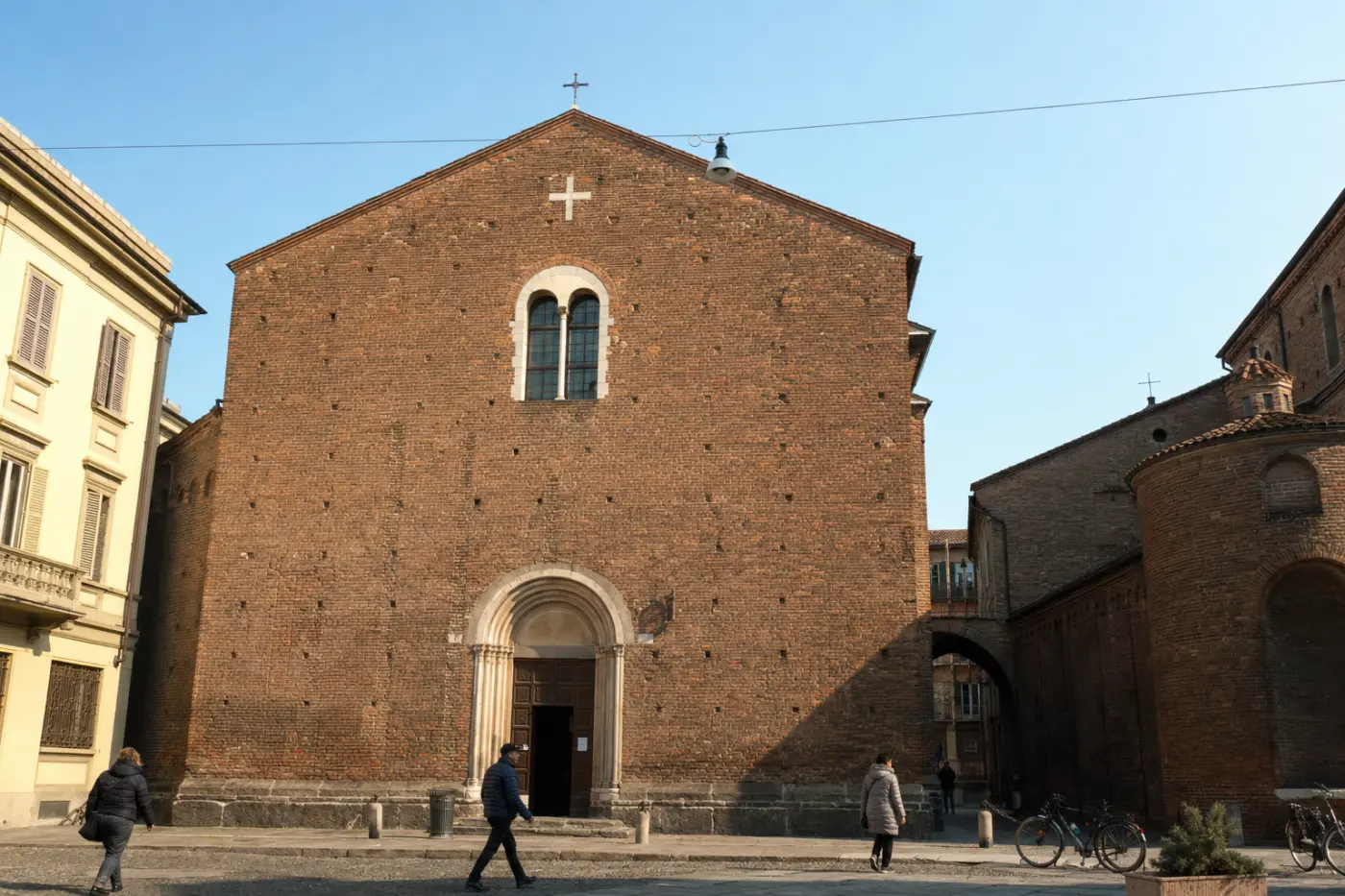
Tourist attraction
The Basilica di San Simpliciano is one of the oldest Christian buildings in Milan, founded in the late 4th century by Bishop Ambrose of Milan — the same theologian and statesman who baptized St. Augustine in 387 AD. It was the last of four basilicas Ambrose strategically positioned along the main roads entering the city, each built over existing Roman cemeteries just outside the ancient Mediolanum walls. This particular site stood along the road to Como, and the basilica was originally called the Basilica Virginum, as Ambrose intended it as a resting place for consecrated virgins. It was renamed after his successor, Bishop Simplicianus (397–400 AD), who completed the construction and was himself buried here.
The church's exterior preserves much of its early Christian identity: the brick façade is largely Romanesque in character, reflecting an 11th–12th century restructuring that respected the original late-antique layout. The interior follows a classic three-nave basilical plan, and its most celebrated feature is the magnificent Renaissance fresco of the Coronation of the Virgin (c. 1515) covering the apse, attributed to Ambrogio da Fossano, known as Bergognone, and completed by his workshop. The apse's golden luminosity stands in striking contrast to the austere brick nave. The basilica also preserves the relics of the Three Martyrs of Anaunia — Sisinnius, Martyrius, and Alexander — Cappadocian missionaries sent by Ambrose who were killed in the Val di Non in 397 AD. According to Milanese tradition, their miraculous intervention at the Battle of Legnano in 1176 helped the Lombard League defeat Emperor Frederick Barbarossa, an event celebrated annually on May 29 with a procession still held today.
Visitors entering from the quiet, cobbled Piazza San Simpliciano — tucked just off the busy Corso Garibaldi in the Brera district — are immediately struck by the transition from the city's noise to the basilica's cool, dim interior. The side chapels hold a series of notable paintings from the 15th to 17th centuries, including works in the Ambrosian school tradition. The adjacent cloister, accessible from inside the complex, is a rare and peaceful survival of the Benedictine monastery that grew around the original church, with a Lombard portico that dates to the late medieval period. The monastery became Benedictine by the 8th century and remained a monastic center for over a thousand years.
Admission is free, and the basilica is open daily, though hours vary; it is best visited on weekday mornings when it is least crowded. The piazza itself is worth lingering in — the Benedictine complex still occupies much of the surrounding block, and the adjacent Piazza Paolo VI to the right of the façade offers a quiet spot to sit outdoors. The church is a 10-minute walk from the Cairoli or Lanza metro stations (M1/M2). There are no guided tours on-site, but the sacristy staff is often willing to provide context about the relics and frescoes on request.
Private tours with a local guide, at your own pace.
Milan
Milan
Milan
Milan

Milan

Milan
We use a single cookie, to remember this choice. We do not use analytics or advertising cookies. Read our cookie policy.