4 hrs
Valencia
Highlights & Secrets of Valencia Half-Day Private Tour with Local Tasting
✓ Free cancellation Kids friendly
4.8(55 reviews)
From €163/ person
Book Now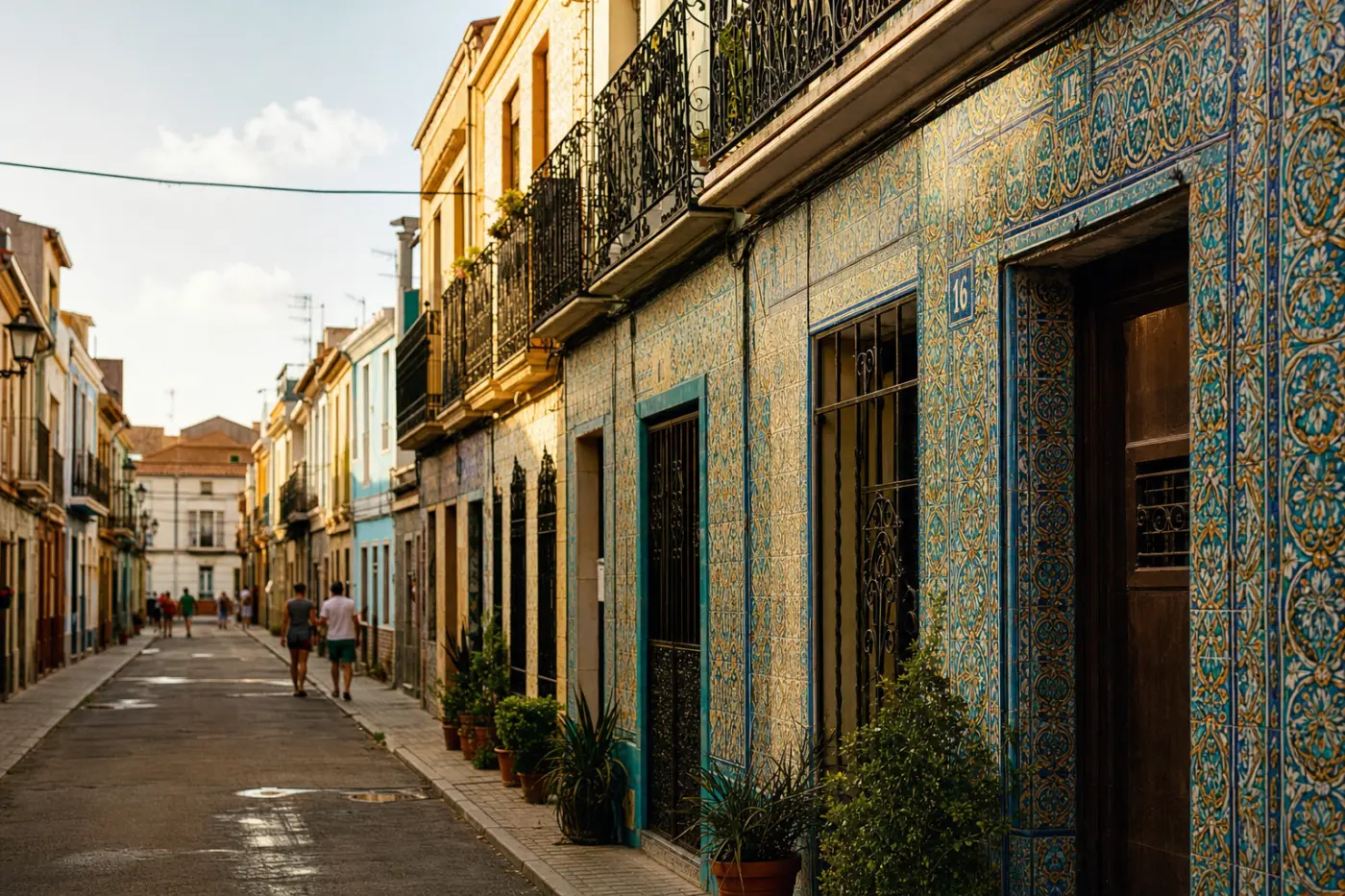
Tourist attraction
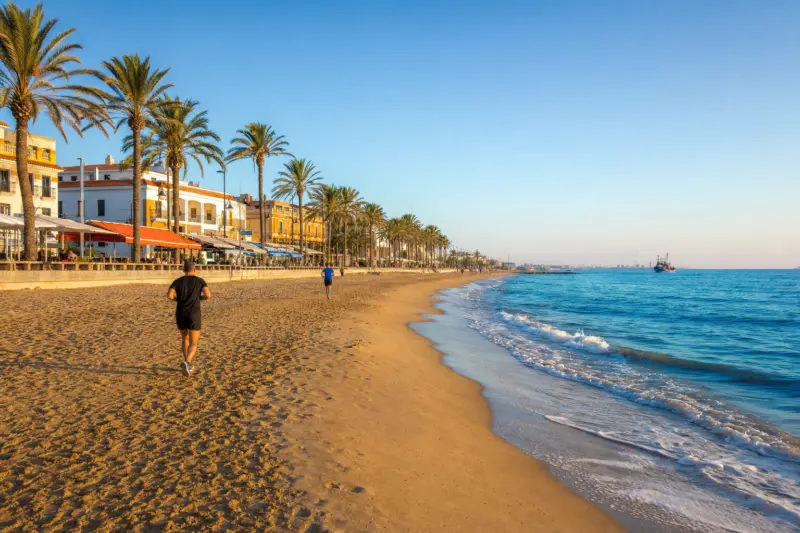
El Cabanyal is a historic seaside barrio on Valencia's eastern edge, stretching between the port and the Mediterranean shore. Its origins trace to the 13th century, when fishermen first erected wooden shacks — cabanes — on the beach after the Christian reconquest of Valencia in 1238. By the 19th century these impermanent shelters had evolved into a dense, permanent neighbourhood of low terraced houses, laid out in a distinctive grid of long, narrow streets running parallel to the sea. The quarter was formally incorporated into the city of Valencia in 1897, and in the decades that followed its residents — still largely fishing families and dockworkers — built or refaced their homes in the exuberant Valencian Modernista style then sweeping the city. The result is an extraordinary concentration of façades clad in ceramic azulejo tiles, with sinuous floral motifs, polychrome geometric patterns, and ironwork balconies that rival anything in the Eixample of Barcelona.
For much of the late 20th century El Cabanyal lived under an existential threat. A 1998 urban plan championed by the PP-led Valencia city government proposed extending the Avenida de Blasco Ibáñez — a wide boulevard from the city centre — straight through the heart of the neighbourhood, which would have demolished an estimated 1,651 homes and bisected the barrio irreparably. Residents, architects, and international heritage bodies mounted a fierce two-decade campaign of resistance, and in 2010 the Spanish Ministry of Culture placed the neighbourhood under special protection, temporarily halting demolitions. The threat was definitively lifted after the 2015 regional elections brought a new city government, which formally cancelled the road extension plan. The neighbourhood was declared a Site of Local Relevance (Bien de Relevancia Local) under Valencian heritage law, and restoration funding has since been channelled into the most deteriorated streets. That history of struggle is woven into El Cabanyal's identity: murals, plaques, and the occasional gap-toothed plot where a house was already torn down before the campaign succeeded are visible reminders of what was nearly lost.
Walking through El Cabanyal today means moving through a neighbourhood in active, uneven reinvention. The streets around Calle de la Reina, Calle del Progrés, and Calle dels Pescadors display some of the finest intact Modernista domestic architecture in Spain — two-storey houses whose tiled façades function almost as public art. The 19th-century market, the Mercat del Cabanyal, remains a working neighbourhood market where the morning catch from the adjacent Grau port still arrives. The Church of the Virgen del Carmen and the older Ermita dels Àngels anchor the barrio's religious life, while a growing constellation of independent bars, ceramic studios, and local restaurants has arrived alongside longer-term residents without yet erasing the neighbourhood's working-class maritime character.
El Cabanyal rewards slow exploration on foot; the entire grid is walkable in an afternoon, though the density of decorated façades makes lingering almost unavoidable. The neighbourhood sits about 4 km east of Valencia's city centre, reachable on tram lines 4 and 6 from the Pont de Fusta stop, with the Cabanyal tram stop dropping visitors directly into the main street. Late morning is the best time to visit the Mercat, while the seafront promenade — just two blocks east — offers the classic view back toward the barrio's roofline at sunset. The annual Setmana del Cabanyal festival in autumn opens private courtyards and hosts installations inside the neighbourhood's most architecturally significant homes.
Private tours with a local guide, at your own pace.
Valencia
Valencia
Valencia
Valencia
Valencia
Valencia
Valencia
Valencia
We use a single cookie, to remember this choice. We do not use analytics or advertising cookies. Read our cookie policy.