3 hrs
Milan
Milan Private Family Tour: Castle, Gelato & Dinosaurss
✓ Free cancellation Kids friendly
4.5(23 reviews)
From €247/ person
Book Now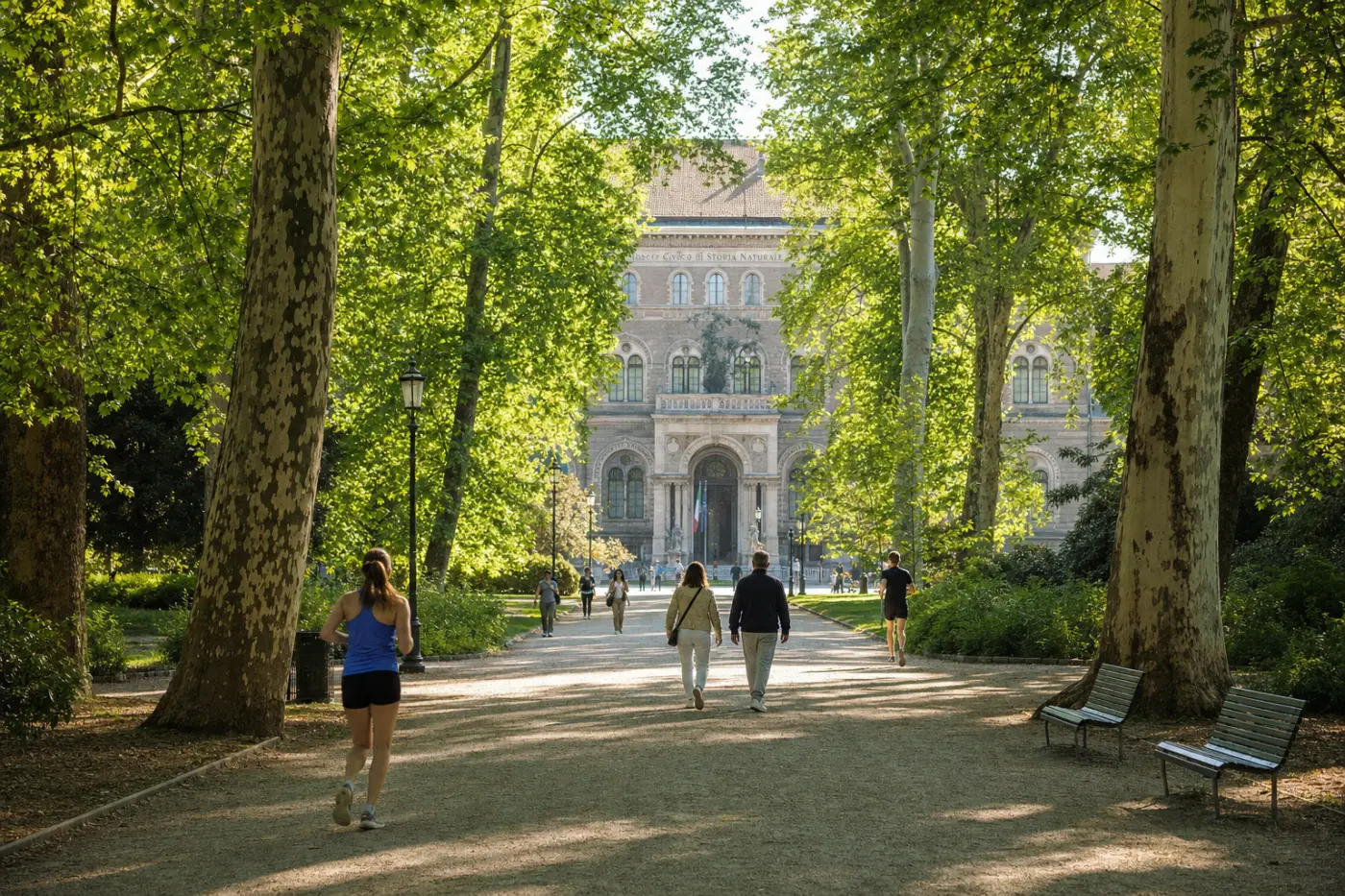
Tourist attraction
The Giardini Pubblici Indro Montanelli are Milan's oldest public gardens, stretching across approximately 17 hectares between the Porta Venezia and Palestrina neighbourhoods. They were designed in 1784 by Giuseppe Piermarini — the same neoclassical architect responsible for Teatro alla Scala — in the English landscape style then fashionable across aristocratic Europe. Piermarini's layout favoured naturalistic curves, irregular tree groupings, and a small ornamental lake over the rigid geometry of formal Italian gardens. Though conceived in the late 18th century, the gardens were not opened to the general public until 1888, having previously served a more restricted audience. In 2002, the city of Milan renamed them in honour of Indro Montanelli (1909–2001), the influential Italian journalist and historian who had famously spent his mornings writing on a bench inside the park and whose bronze statue — a target of red paint by political protesters over the years — still sits within the grounds.
Beyond the lawns and centuries-old trees, the gardens contain two significant cultural institutions. The Museo Civico di Storia Naturale, housed in a Romanesque-revival building inaugurated in 1888, holds one of Italy's most important natural history collections, including an acclaimed collection of minerals and a reconstructed dinosaur skeleton. Adjacent to it stands the Planetario di Milano, built in 1930 and donated to the city by the publisher Ulrico Hoepli — at the time of its inauguration it was the largest planetarium in Italy and remains a functioning public observatory. Together, these two venues give the park an intellectual weight unusual for a city green space.
Visitors today move between shaded allées of mature plane and horse chestnut trees, past a carousel that has operated in the gardens for generations, and along the edges of the small lake where ducks and coots are permanent residents. Children gravitate toward the pony rides and the well-equipped play areas, while joggers and dog walkers use the wide central paths from the park's opening at 6:30am. The Porta Venezia entrance, framed by neoclassical gate piers, is the most photographed access point and deposits visitors directly onto the main tree-lined axis leading toward the museum complex.
Entry to the gardens is free and they are open every day, closing at 9pm in winter and 11:30pm in summer. The nearest Metro stop is Porta Venezia on Line 1 (red line), making the gardens an easy addition to any itinerary that includes the nearby Corso Buenos Aires or the Liberty-style architecture of the Porta Venezia district itself. Weekday mornings are the quietest time to visit; weekends draw local families in considerable numbers. The Museo Civico di Storia Naturale charges a small admission fee and keeps separate opening hours, so checking its schedule before visiting is advisable.
Private tours with a local guide, at your own pace.
Milan

Milan
Milan

Milan
Milan
Milan