6 hrs
Valencia
Private Valencia Full-Day Tour - Highlights, Museums & Paella
✓ Free cancellation Kids friendly
5.0(16 reviews)
From €334/ person
Book Now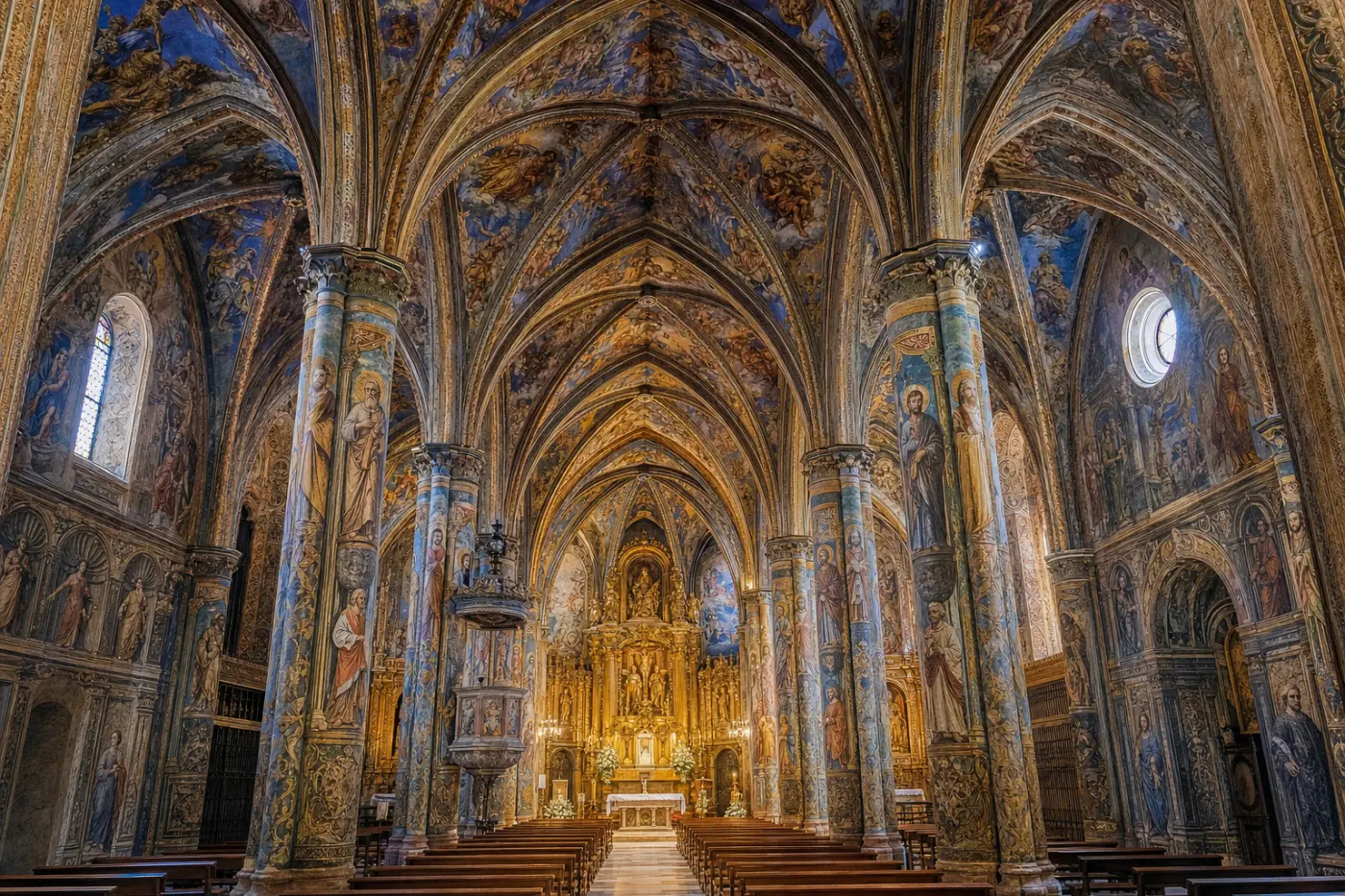
Tourist attraction
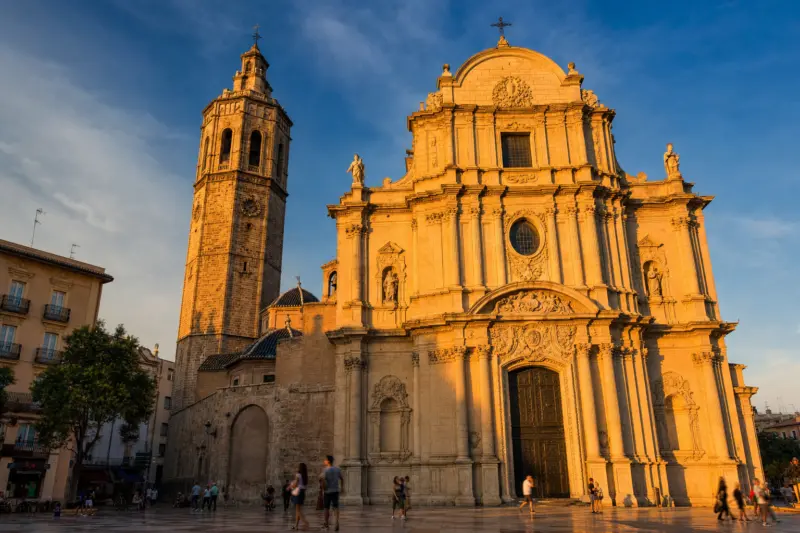
The Church of San Nicolás de Bari and San Pedro Mártir stands on Carrer dels Cavallers in Valencia's El Carmen neighbourhood, occupying a site with an almost unbroken religious history stretching back to 1239, when King James I of Aragon reconquered Valencia from the Moors and immediately consecrated the city's first Christian parishes. San Nicolás was one of just twelve original parishes established that year, making it the oldest continuously functioning parish church in Valencia. Its dedication is split between Saint Nicholas of Bari — the 4th-century bishop of Myra whose legend gave rise to the figure of Santa Claus — and Saint Peter Martyr, a 13th-century Dominican inquisitor canonised in 1253, just fourteen months after his assassination, the fastest canonisation in Church history at that time.
The structure visible today is predominantly late Gothic, rebuilt between 1419 and 1455 on the footprint of an earlier Romanesque chapel. Its single broad nave, pointed arches, and slender clustered columns are characteristic of Valencian Gothic, a style that favoured spatial austerity and verticality. The church's transformation into what journalists and art historians have called the "Sistine Chapel of Valencia" came between 1690 and 1700, when the artist Juan Viñes — working under the direction of the Valencian Baroque painter Antonio Palomino — covered every square metre of the Gothic vaulting with an extraordinary cycle of frescoes. Palomino, later famous for his treatise El Museo Pictórico y Escala Óptica (1715–1724), orchestrated a programme depicting scenes from the lives of the two patron saints alongside a cascade of angels, trompe-l'œil architectural elements, and allegorical figures that dissolve the stone ceiling into an illusion of open sky. After centuries of grime, dampness, and neglect, a meticulous six-year restoration project was completed in 2016, stripping back layers of deterioration to reveal colours — cobalt blues, warm ochres, and deep carmines — of startling intensity.
Visitors entering through the 15th-century Gothic portal are immediately confronted by the contrast between the sober stone piers below and the explosion of colour overhead. The nave measures roughly 30 metres in length, and tipping your head back to study the frescoed vaults is an almost vertiginous experience. Among the most admired panels is the depiction of San Pedro Mártir's martyrdom, in which Palomino's figures achieve a Baroque theatricality fully equal to anything in Madrid or Rome. The lateral chapels retain carved altarpieces and polychrome sculpture from the 16th and 17th centuries, including a notable alabaster relief of the Pietà. The church also preserves a magnificent 15th-century Gothic stone pulpit, one of the finest surviving examples in the Valencian Community.
The church is located a short walk from the Torres de Serranos and sits in the middle of El Carmen, Valencia's most atmospheric medieval quarter. It opens for both worship and tourism, with dedicated visiting hours (typically Tuesday–Saturday 10:30–19:30, Sunday 10:30–14:00; confirm times before visiting as they change seasonally). An audio guide is available and strongly recommended — it directs your eye to specific fresco panels and explains the iconographic programme that links the two saints across the vaulted ceiling. Arrive early on weekday mornings to avoid queues, and bring binoculars if you want to study the detail of the upper frescoes closely.
Private tours with a local guide, at your own pace.
Valencia
Valencia
Valencia

Valencia
Valencia
Valencia
Valencia
Valencia
We use a single cookie, to remember this choice. We do not use analytics or advertising cookies. Read our cookie policy.