7 hrs
Paris
Paris Private Full Day Tour: Montmartre, Sights & Eiffel Tower
✓ Free cancellation Kids friendly
4.6(109 reviews)
From €353/ person
Book NowTourist attraction
Rising from the middle of the Seine, the Île de la Cité is the literal and historical origin point of Paris. Around the 3rd century BCE, the Celtic Parisii tribe settled on this teardrop-shaped island, exploiting its natural defenses and its position as a crossing point on the river. The Romans absorbed the settlement into their empire after 52 BCE, renaming it Lutetia and building a forum, baths, and an amphitheater — the remnants of which still survive beneath the Latin Quarter on the opposite bank. By the early medieval period, the island had become the administrative and religious capital of the Frankish kingdom, and it has remained the ceremonial core of France ever since. All road distances in France are still measured from Point Zéro, a brass octagonal marker embedded in the pavement just outside Notre-Dame Cathedral.
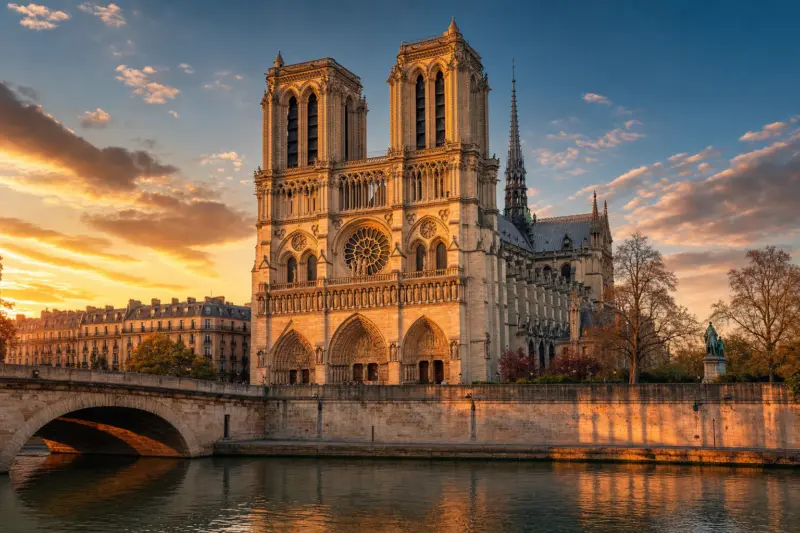
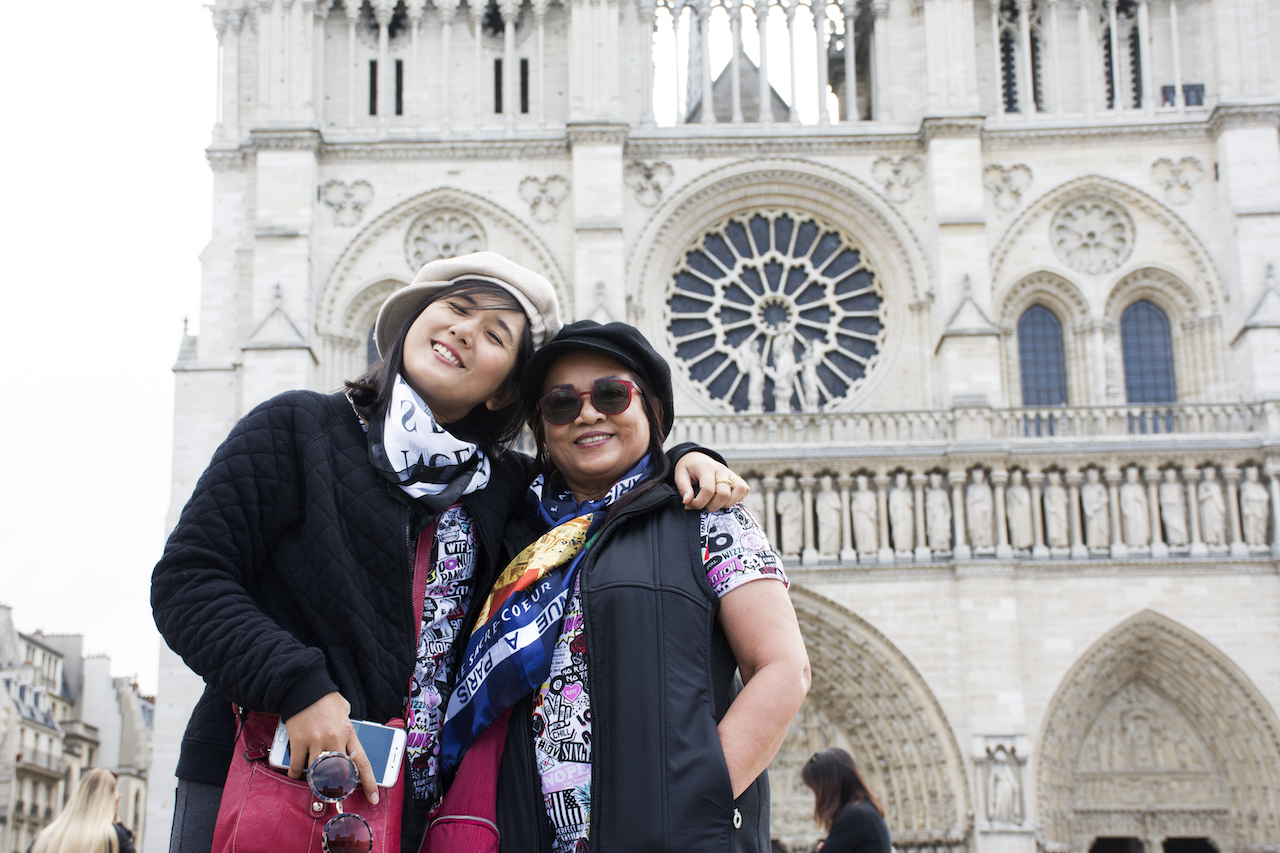
The island's skyline is dominated by Notre-Dame Cathedral, begun in 1163 under Bishop Maurice de Sully and substantially completed by 1345. Its twin 69-meter towers, flying buttresses, and three elaborately carved portals represent one of the finest examples of French Gothic architecture ever built. After the devastating fire of April 2019, which destroyed the 13th-century spire and much of the lead roof, a painstaking restoration effort drew on medieval construction techniques and over a billion euros in donations from around the world. Notre-Dame reopened to visitors in December 2024. On the same grounds, the Sainte-Chapelle — consecrated in 1248 by King Louis IX to house his collection of Passion relics, including what he believed to be Christ's Crown of Thorns — stuns visitors with 15 floor-to-ceiling stained-glass windows spanning 600 square meters, depicting over 1,100 biblical scenes in deep reds and blues. The Conciergerie, once the royal palace and later a revolutionary-era prison where Marie Antoinette was held in 1793 before her execution, completes the island's trio of defining monuments.
Walking the island today means crossing between layers of French history in the space of a few hundred meters. The western tip is anchored by the Pont Neuf — despite its name ("New Bridge"), it is the oldest standing bridge in Paris, built between 1578 and 1607 under Henry III and Henry IV — where street artists, booksellers, and tourists have congregated for over four centuries. The flower market on Place Louis Lépine, established in 1808, fills the air with color on weekdays and becomes a bird market every Sunday, a tradition dating back well over a century. The Square du Vert-Galant, a small park at the island's prow, offers an unobstructed river-level view of the Seine that few spots in the city can match.
The Île de la Cité is compact — roughly 900 meters long and 200 meters wide — which makes it entirely walkable in an afternoon. Begin at Sainte-Chapelle in the morning before crowds arrive (entry requires passing through the Palais de Justice security checkpoint), then work east toward Notre-Dame and the archaeological crypt beneath the parvis, which exposes Roman-era foundations and medieval streets. Metro line 4 stops directly at Cité station. Most of the island's major monuments charge admission, but strolling its quays, crossing the Pont Neuf, and finding Point Zéro cost nothing at all.
Private tours with a local guide, at your own pace.
Paris

Paris
Paris
Paris

Paris
Paris
Paris
Paris
Paris