7 hrs
Paris
Paris Private Full Day Tour: Montmartre, Sights & Eiffel Tower
✓ Free cancellation Kids friendly
4.6(109 reviews)
From €353/ person
Book NowTourist attraction
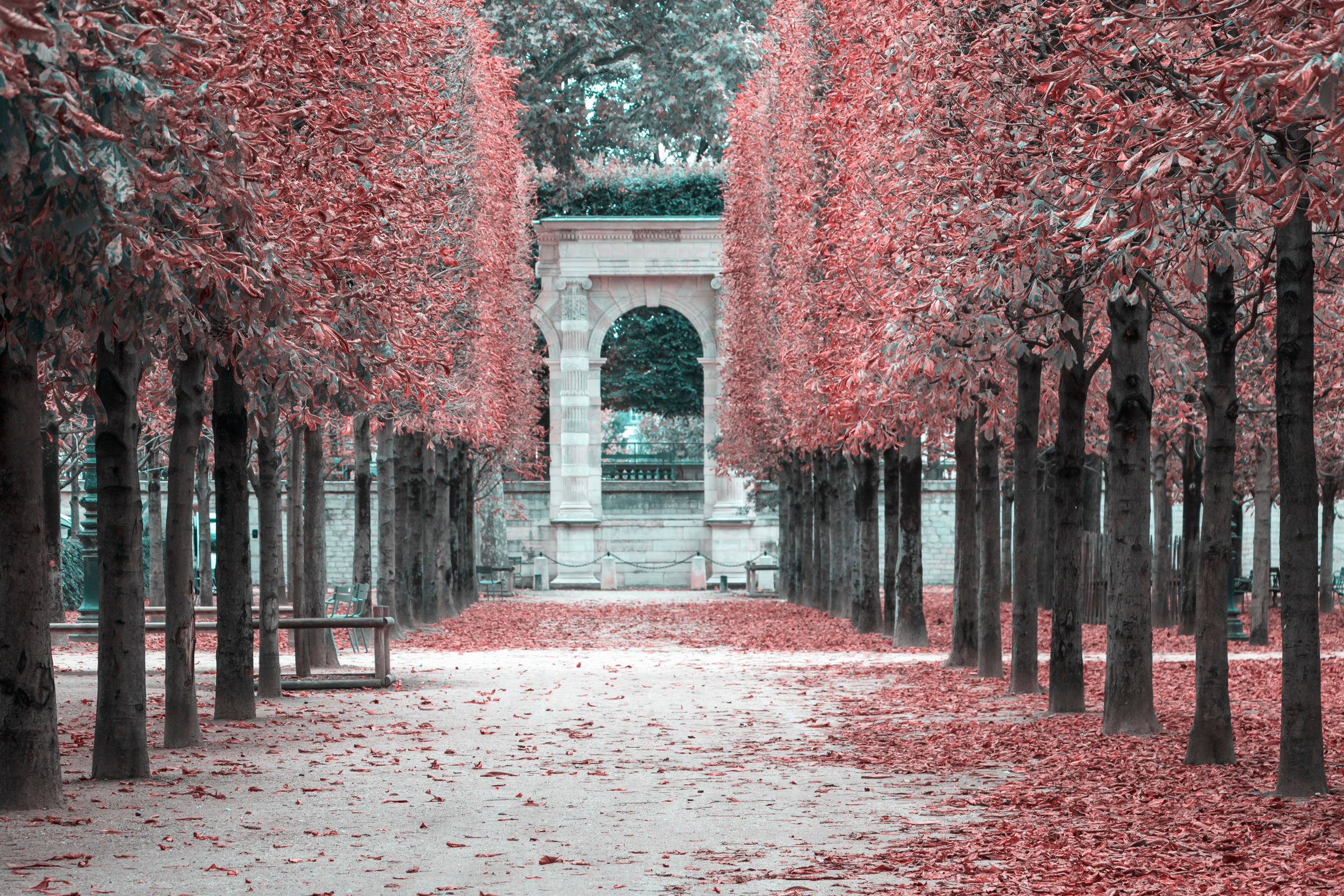
The Jardin du Luxembourg is one of Paris's grandest public spaces, covering approximately 23 hectares in the 6th arrondissement on the Left Bank. Its origins stretch back to 1612, when Marie de Medici — widow of Henri IV and regent of France — commissioned architect Salomon de Brosse to build the Palais du Luxembourg and its surrounding gardens. A native of Florence, Marie deliberately modeled the estate on the Boboli Gardens of her childhood, blending French formal design with Italian Renaissance sensibility: symmetrical flowerbeds, tree-lined allées, sculpted fountains, and an octagonal Grand Bassin that remains the park's centerpiece today. The site itself has a far older history — Gallo-Roman villas stood here as early as the 1st century AD, and in 1016, King Robert II (Robert the Pious) established a royal residence in the valley known as Vauvert, making it one of the earliest royal residences in Paris.
The gardens underwent profound transformation over the centuries. During the French Revolution, the Palais du Luxembourg served as a prison, holding figures such as the painter Jacques-Louis David and the revolutionary Georges Danton. The park itself was partially opened to the public for the first time during this era, a democratizing shift that permanently altered its character. The most sweeping physical changes came under Baron Haussmann during the Second Empire, when the southern boundary was redrawn and the Rue Auguste Comte cut through former garden land — reducing the park from roughly 30 hectares to its present 23. It was not until the end of the Second Empire that the garden's current boundaries were definitively fixed. The Palais du Luxembourg has served as the seat of the French Senate since 1799.
Today the gardens offer a layered experience unlike any other park in Paris. The Grand Bassin fountain draws crowds of children sailing wooden model boats — a tradition that has persisted since the 19th century. Surrounding the basin, 106 identical green metal chairs are scattered across gravel terraces; these iconic chairs, once rented by a fee collector, were nearly removed in the 1970s before a public outcry saved them. The park also contains an apiary founded in 1856 where beekeeping courses are still held, an orchard preserving over 350 varieties of apple and pear, outdoor tennis courts, a puppet theatre dating to 1933, and the Musée du Luxembourg — one of France's first public art galleries, opened in 1750.
The gardens open daily at 7:30 AM (8:00 AM in winter) and close at dusk; entry is free. The park is most atmospheric on weekday mornings, when chess players occupy stone tables near the Fontaine de Médicis, a moss-covered grotto fountain built in 1630 under Marie de Medici's direct patronage and considered one of the most intimate spots in the entire garden. The nearest RER stop is Luxembourg (RER B), and several Métro lines serve nearby Saint-Michel and Odéon stations. Flat, well-maintained gravel paths make most of the garden accessible year-round.
Private tours with a local guide, at your own pace.
Paris

Paris
Paris
Paris

Paris
Paris
Paris
Paris
Paris