7 hrs
Paris
Paris Private Full Day Tour: Montmartre, Sights & Eiffel Tower
✓ Free cancellation Kids friendly
5.0(40 reviews)
From €353/ person
Book Now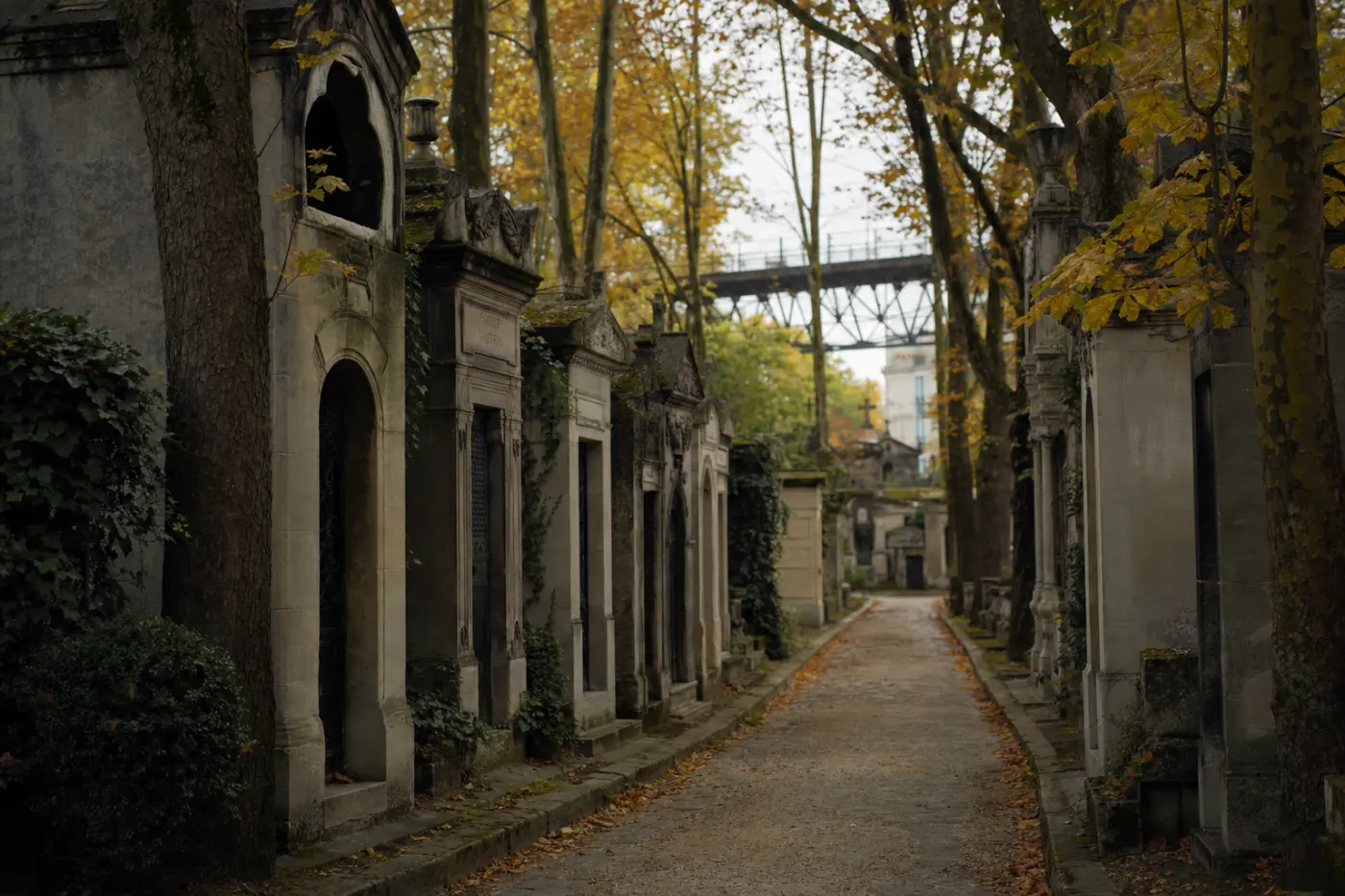
Tourist attraction
Officially named the Cimetière du Nord — though long known by its neighbourhood — Montmartre Cemetery opened in 1825 on the site of a former gypsum quarry north of central Paris. Its original name, le Cimetière des Grandes Carrières ("the cemetery of the large quarries"), reflects this industrial past. It was one of four large cemeteries established at the cardinal points of the city in the early 19th century, a deliberate urban reform to replace hundreds of overcrowded parish burial grounds whose poor sanitation had been spreading disease into surrounding neighbourhoods. At roughly 11 hectares, it is the third largest cemetery in Paris, after Père Lachaise to the east and Montparnasse to the south, and contains more than 20,000 graves.
Because it sits at the foot of the Butte Montmartre — a hill that by the late 19th century had become the undisputed centre of Parisian bohemian life — the cemetery became the natural resting place of France's creative class. Among its most celebrated permanent residents are composer Hector Berlioz (1803–1869), novelist Alexandre Dumas fils (1824–1895), painter Edgar Degas (1834–1917), filmmaker François Truffaut (1932–1984), and dancer and choreographer Vaslav Nijinsky (1889–1950). The Russian-born ballet legend was reinterred here in 1953, his tomb marked by a sculpture depicting him in the role of Petrushka. Novelist Heinrich Heine, who spent his final years in Paris, was also buried here in 1856.
Despite its function, Montmartre Cemetery is a strikingly serene and romantic place. Tree-lined gravel paths wind between elaborate family vaults, ornate stone monuments, and weathered neoclassical mausoleums draped in ivy. A 19th-century iron bridge — the Pont Caulaincourt — spans directly over a section of the cemetery, creating the unusual sight of heavy Parisian traffic rumbling above the graves below. This architectural quirk, combined with the quarry's sunken topography, gives the site a layered, almost theatrical quality unlike any other cemetery in France.
Visitors should allow at least 90 minutes to explore the grounds. Free maps identifying the most visited tombs are available at the main entrance on Avenue Rachel, just off the busy Place de Clichy. The cemetery is open daily, with slightly extended hours in summer. Photography is widely practiced and respectfully tolerated. Comfortable walking shoes are recommended, as the paths between divisions can be uneven. The site is managed by the City of Paris and admission is free.
Private tours with a local guide, at your own pace.
Paris

Paris
Paris
Paris

Paris
Paris
Paris
Paris
Paris
We use a single cookie, to remember this choice. We do not use analytics or advertising cookies. Read our cookie policy.