3 hrs
Milan
Milan Private Family Tour: Castle, Gelato & Dinosaurss
✓ Free cancellation Kids friendly
4.5(23 reviews)
From €247/ person
Book Now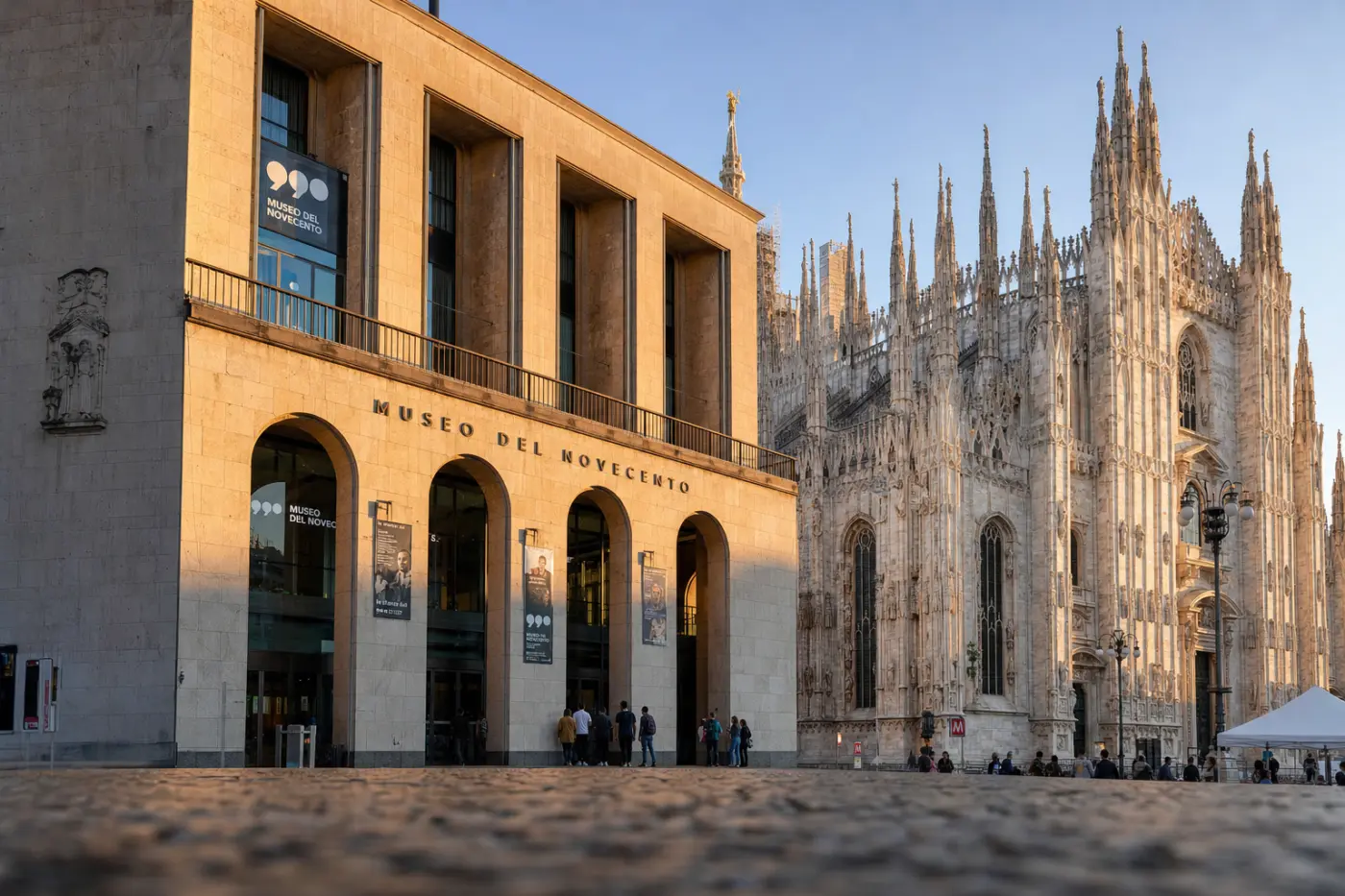
Tourist attraction
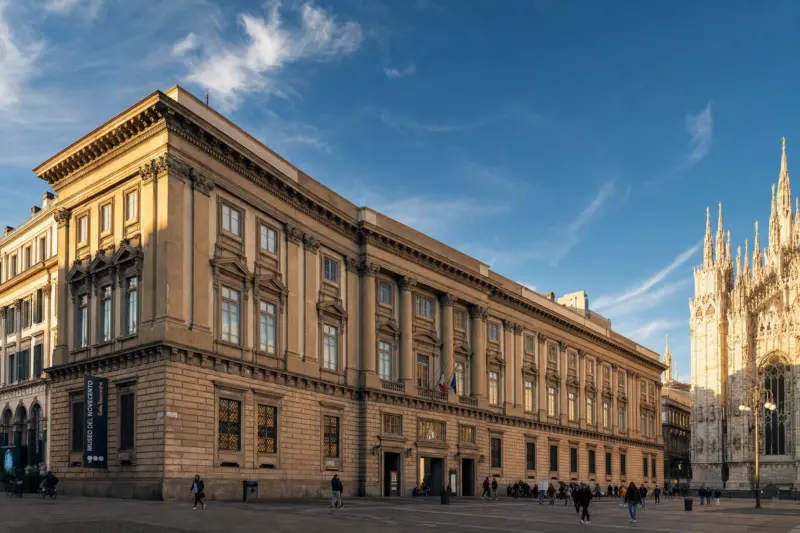
The Museo del Novecento opened on 6 December 2010 inside the Palazzo dell'Arengario, a severe rationalist building commissioned by Mussolini in the 1930s and completed in 1956 directly on Piazza del Duomo. The palace's name references the arengario — the balcony from which Fascist officials once addressed crowds — giving the museum a charged architectural history that sits in deliberate tension with the democratic, humanist art displayed within. The building was designed by Milanese architects Piero Portaluppi and Pier Giulio Magistretti, and its conversion into a museum was completed by Italo Rota and Fabio Fornasari, who introduced a spiraling internal ramp and a glazed footbridge connecting the Arengario to the adjacent Palazzo Reale.
The permanent collection spans over 4,000 works arranged chronologically across five floors, tracing the full arc of 20th-century Italian art. The sequence opens with Giuseppe Pellizza da Volpedo's monumental Il Quarto Stato (1901) — a 5.9-by-2.9-metre canvas depicting a workers' march that became one of the defining images of Italian socialist culture. From there, galleries move through Futurism, with key works by Umberto Boccioni including his 1910–11 paintings of urban dynamism, into the metaphysical stillness of Giorgio de Chirico's piazze series, the Arte Povera movement, and the radical spatial experiments of Lucio Fontana, whose slashed and punctured canvases — the Concetti Spaziali — are represented here in the largest institutional collection in the world. Giorgio Morandi's meditative bottle paintings and Alberto Burri's scorched burlap works round out a collection of exceptional range and depth.
The museum's architecture is itself a major draw. The internal spiral ramp — a deliberate echo of Frank Lloyd Wright's Guggenheim in New York — carries visitors upward past cascading natural light while the glazed facade progressively reveals the Cathedral of Milan's Gothic pinnacles and marble facade at increasingly close range. The top-floor terrace offers one of the most privileged views in the city: the Duomo's roofline at eye level, with the Alps visible on clear winter days. The footbridge to Palazzo Reale connects the permanent collection to the museum's rotating temporary exhibition spaces, which have hosted major retrospectives of Italian and international 20th-century figures.
Entry to the permanent collection is free on the first and third Tuesday of each month. The museum is closed on Mondays. Timed entry is recommended for weekends and during major temporary exhibitions, when queues at the Piazza del Duomo entrance can be substantial. The audio guide, available in Italian and English, provides essential context for the Futurist and Arte Povera galleries, where thematic density rewards slower looking. Budget at least two hours for the permanent collection alone.
Private tours with a local guide, at your own pace.
Milan

Milan
Milan

Milan
Milan
Milan