4 hrs
Valencia
Highlights & Secrets of Valencia Half-Day Private Tour with Local Tasting
✓ Free cancellation Kids friendly
4.8(55 reviews)
From €163/ person
Book Now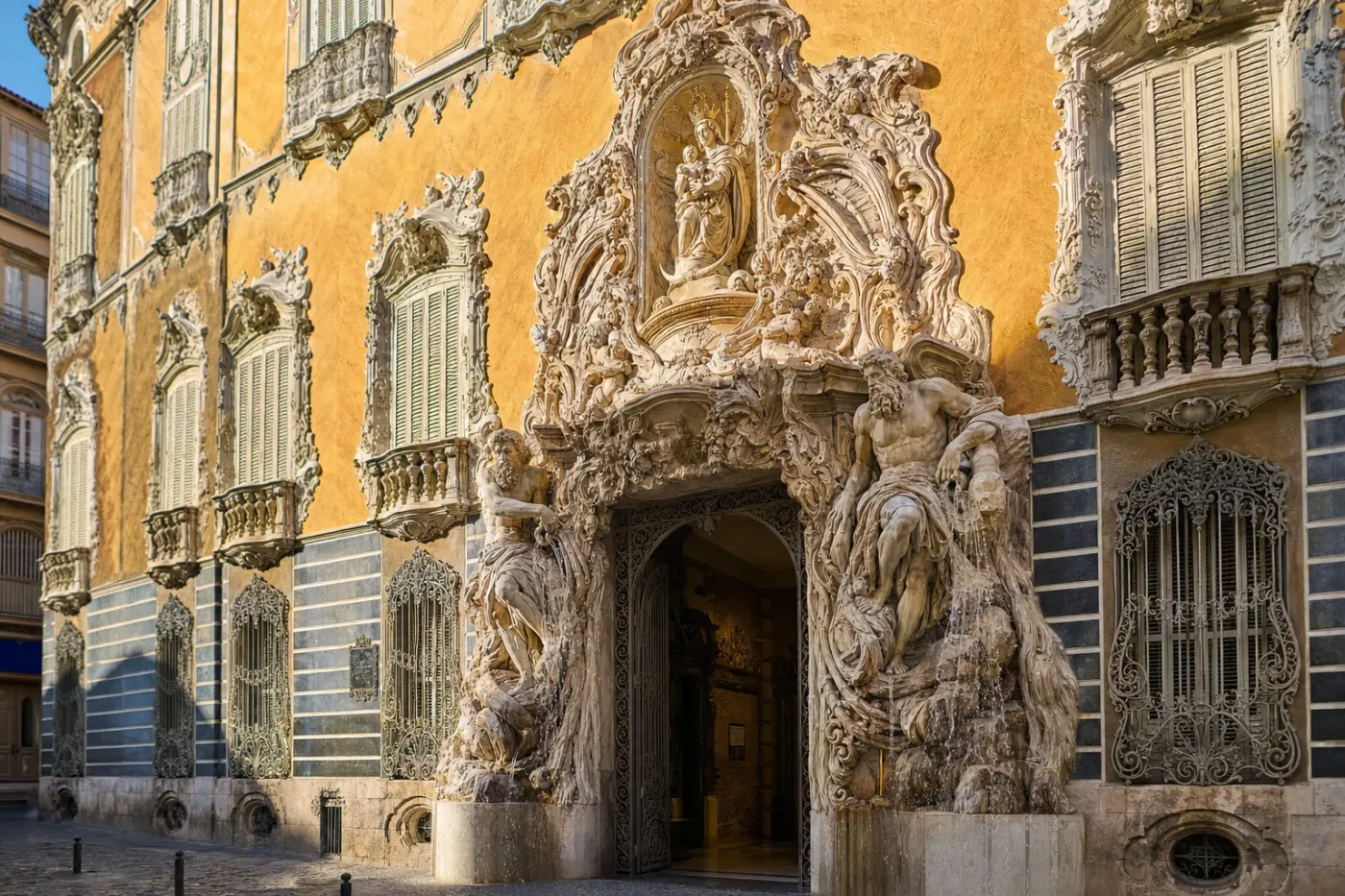
Tourist attraction
The Palacio del Marqués de Dos Aguas — Palace of the Marquis of Two Waters — is a palatial mansion on Calle del Poeta Querol in the heart of Valencia's historic centre. It began as a 15th-century Gothic residence belonging to the Rabassa de Perellós family, the aristocratic line that held the hereditary title of Marqueses de Dos Aguas, a name referencing the two rivers — the Turia and the Júcar — that flowed through their feudal territories. The building's current appearance owes everything to a sweeping Baroque transformation carried out in the mid-18th century, completed around 1744, under the direction of painter and decorator Hipólito Rovira. His alabaster portal is the defining spectacle: two colossal figures of river gods pour water from enormous urns, flanking a statue of the Virgin of the Rosary, all carved with almost hallucinatory detail by sculptor Ignacio Vergara. The facade is widely considered one of the most theatrical examples of Churrigueresque Baroque — the hyper-ornamental Spanish style — in the entire country.
The palace's later history is equally dramatic. In 1867 it was acquired by the Trenor family, wealthy Valencia merchants of Irish descent, who commissioned a lavish Neo-Rococo interior redesign that filled the rooms with gilt stucco ceilings, painted silk wall hangings, and mirrored salons. The Trenors hosted the cream of Valencian society here until the mid-20th century, and the palace retains the full atmosphere of a 19th-century aristocratic residence. In 1941 the Spanish state purchased the building, and in 1954 it opened as the Museo Nacional de Cerámica y de las Artes Suntuarias González Martí — named after the ceramics scholar Manuel González Martí, whose personal collection of some 1,500 pieces formed the founding donation. Today the national collection holds over 70,000 objects, tracing the history of Spanish ceramics from medieval Paterna and Manises lustleware through the great Valencian tile tradition to 20th-century studio pottery.
Visitors move through a sequence of period rooms whose decorative richness competes with the objects on display. The ground-floor carriages room contains an 18th-century gilded state coach, a remarkable survival. Upper galleries are devoted to Valencian azulejo tile production — including monumental painted tile panels — as well as European porcelain, Chinese export ware, and an entire kitchen reconstructed with original Valencian ceramic fittings. The third-floor Rococo ballroom, with its painted ceiling and original parquet, is frequently the most photographed interior in the building. A separate gallery traces the evolution of the ceramics craft from Roman-era finds through Moorish influence to the distinctive blue-and-white Manises style that made Valencia's ceramics internationally famous by the 15th century.
The palace is located just steps from the Plaza del Patriarca and the Calle de la Paz shopping street, making it easy to combine with other visits in the old city. Entry fees are modest — free on Saturdays afternoon and Sundays morning for EU citizens — and the collections are rarely crowded, even in high season. Allow at least 90 minutes to do the building and collection justice. Photography without flash is permitted throughout, and the alabaster portal is particularly well lit in the morning hours when the sun strikes the west-facing facade directly.
Private tours with a local guide, at your own pace.
Valencia
Valencia

Valencia
Valencia
Valencia
Valencia
Valencia
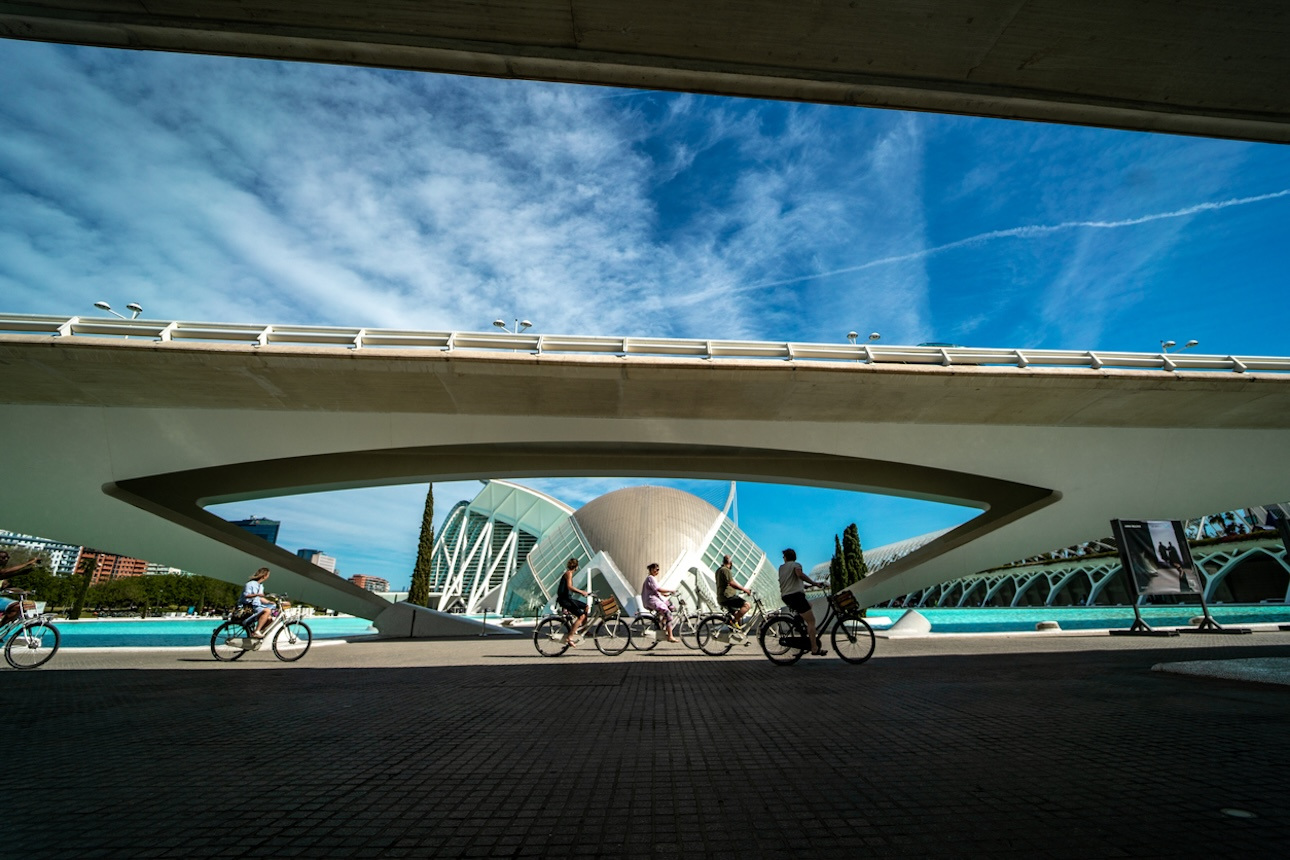
Valencia
We use a single cookie, to remember this choice. We do not use analytics or advertising cookies. Read our cookie policy.