7 hrs
Paris
Paris Private Full Day Tour: Montmartre, Sights & Eiffel Tower
✓ Free cancellation Kids friendly
4.6(109 reviews)
From €353/ person
Book Now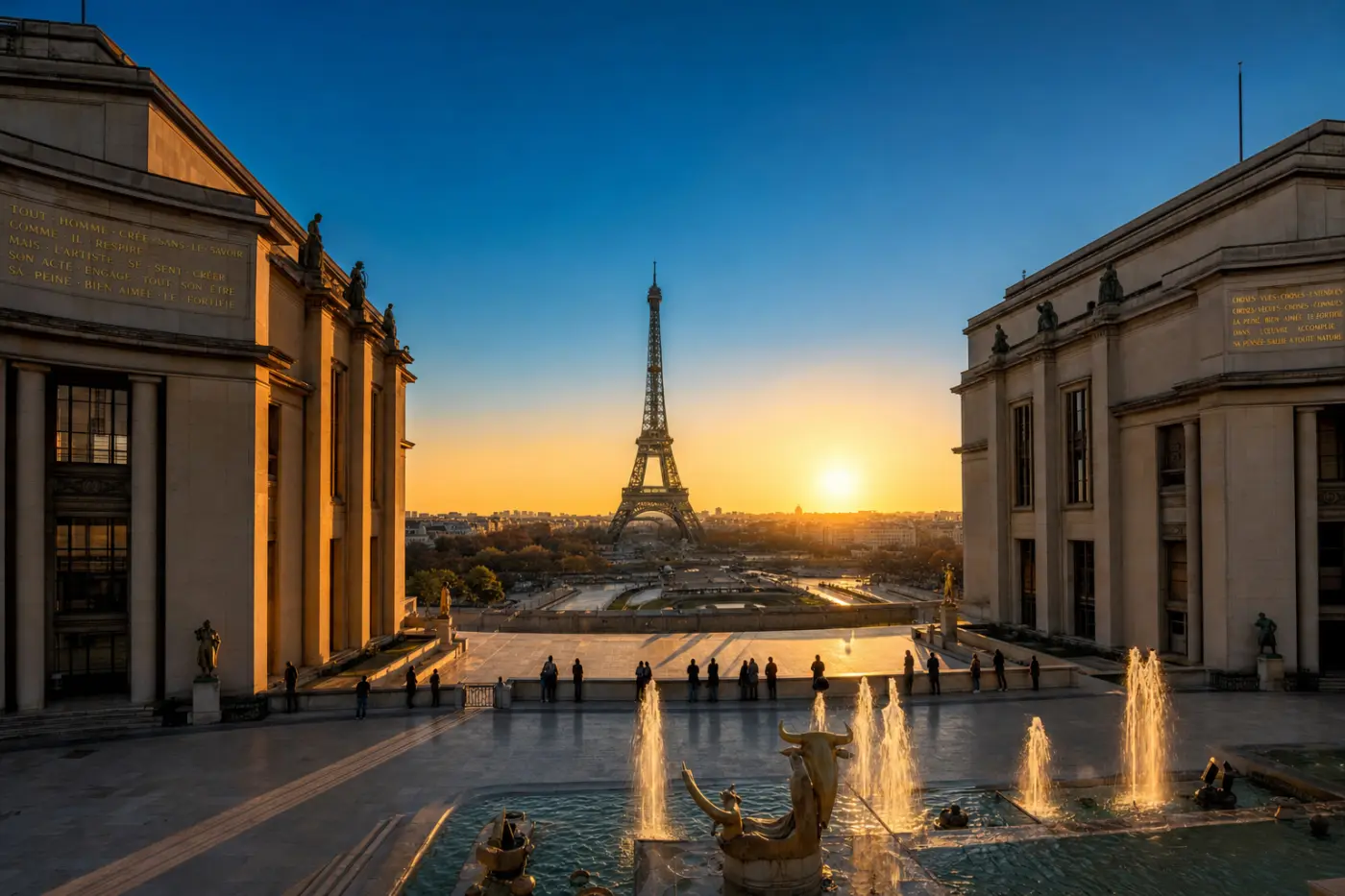
Tourist attraction
Standing on the Trocadéro hill in Paris's 16th arrondissement, the Palais de Chaillot is a sweeping neoclassical complex of two curved, symmetrical wings enclosing a grand terrace, fountains, and formal gardens that cascade toward the Seine. It was commissioned for the 1937 International Exposition — a World's Fair that attracted over 31 million visitors between May 25 and November 25 of that year — and replaced the older Palais du Trocadéro, itself built for the 1878 World's Fair and originally conceived as a monumental concert hall. Architects Louis-Hippolyte Boileau, Jacques Carlu, and Léon Azéma designed the current structure in a stripped classical style, faced in honey-toned stone and inscribed with gilded poetry by Paul Valéry along its colonnaded pavilions. The two wings do not connect at their tips, creating a deliberate open frame — one of the most calculated urban compositions in European architecture — that places the Eiffel Tower, built just 48 years earlier, directly on axis across the river.
The site carries a layered and at times dark history. On June 23, 1940, just days after the fall of France, Adolf Hitler made his only visit to Paris and was photographed at the Trocadéro terrace alongside architect Albert Speer and sculptor Arno Breker, with the Eiffel Tower rising behind him — an image that became one of the most reproduced propaganda photographs of the Second World War. Years later, in September 1948, the Palais de Chaillot served a far nobler purpose: the United Nations General Assembly convened in its Théâtre National de Chaillot, and on December 10, 1948, the Universal Declaration of Human Rights was adopted in the building — one of the most consequential documents in modern history.
Today the complex houses four major cultural institutions. The Cité de l'Architecture et du Patrimoine holds the world's largest collection of architectural models and casts, including full-scale reproductions of French cathedral portals. The Musée de l'Homme reopened in 2015 after a decade-long renovation and explores human evolution and cultural diversity with over 700,000 artifacts in its collections. The Musée National de la Marine traces French naval history, and beneath the esplanade, the Aquarium de Paris Cinéaqua offers a quieter, family-friendly detour. Each museum has its own admission fee and hours, so planning by institution is advisable.
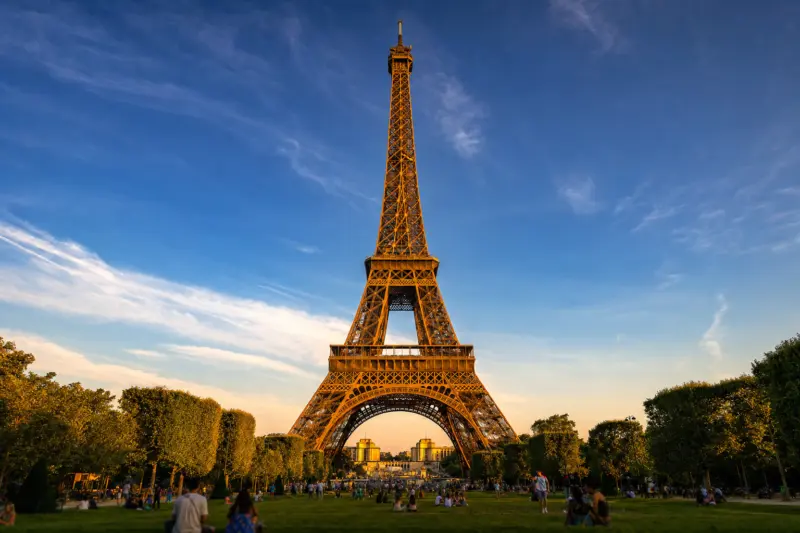
The Trocadéro esplanade itself is free to enter at all hours and is the single best vantage point in Paris for photographing the Eiffel Tower — especially at dusk, when the tower's illumination begins and the fountains catch the last western light. Arrive early in the morning to avoid tour groups that congregate here throughout the day. The nearest Métro stop is Trocadéro, served by lines 6 and 9, a direct ride from the Opéra or Nation. Comfortable shoes are recommended: the terraced gardens descend steeply to the river, and the walk across the Pont d'Iéna to the Eiffel Tower base takes roughly ten minutes on foot.
Private tours with a local guide, at your own pace.
Paris
Paris
Paris
Paris
Paris
Paris
Paris
Paris
Paris