2 to 3 hrs
Milan
Milan's Gems & Secrets: Duomo, Castle & Gelato Private Walking Tour
✓ Free cancellation Kids friendly
4.9(49 reviews)
From €158/ person
Book Now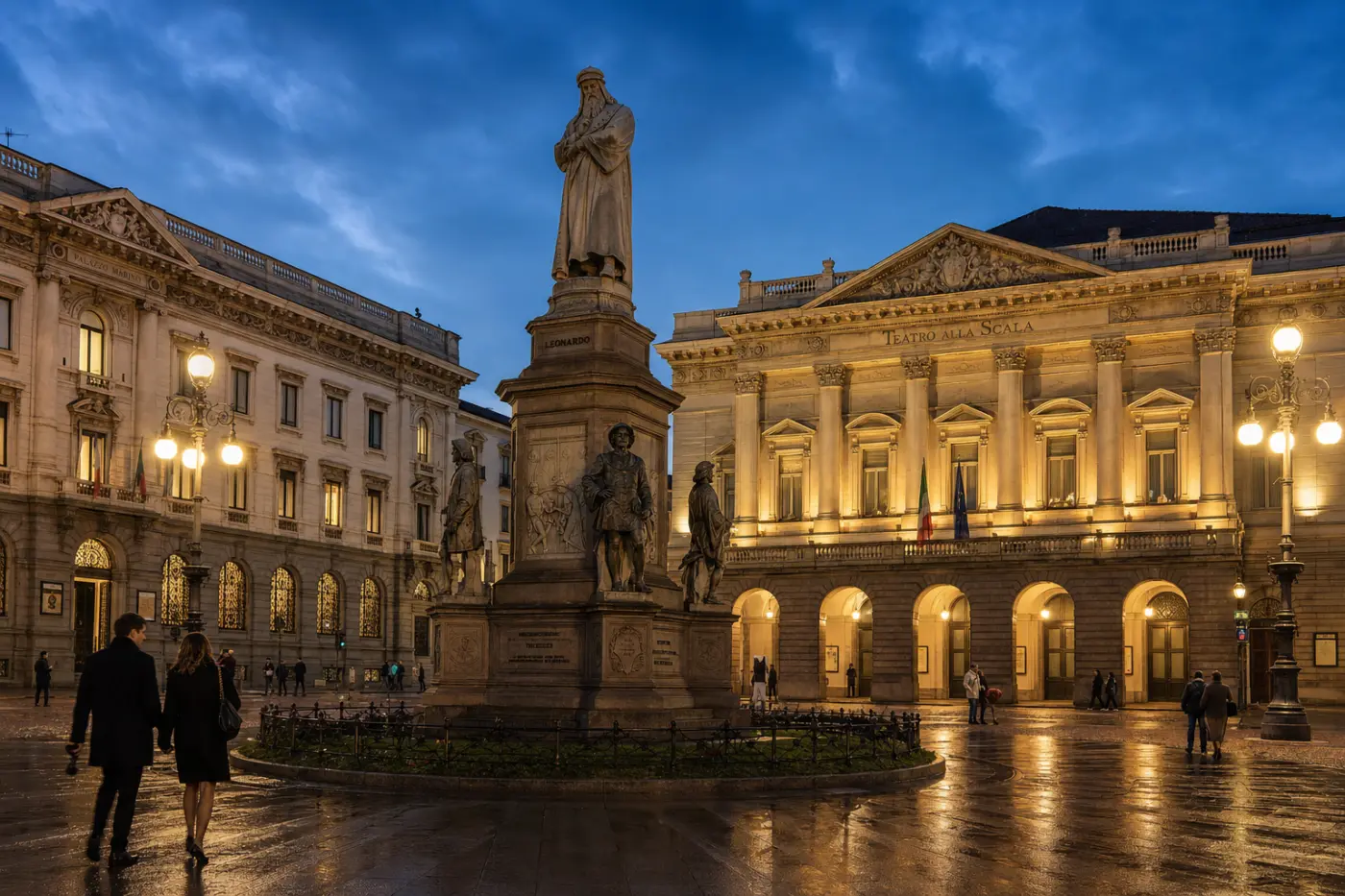
Tourist attraction
Piazza della Scala is a compact but ceremonially charged square in the heart of Milan's historic center, occupying the urban block between Via Manzoni and Via Marino. It takes its name from the Teatro alla Scala, whose severe Neoclassical façade — designed by Giuseppe Piermarini and inaugurated on 3 August 1778 — forms the square's dominant northern wall. Piermarini's design replaced a demolished church of Santa Maria alla Scala, from which both the theatre and the piazza inherited their name. The square itself was formally defined during the urban reorganization of late-18th-century Milan under Austrian Empress Maria Theresa, whose administrators sought to give the new opera house a suitably dignified forecourt.
At the center of the piazza stands one of Milan's most recognized monuments: the marble statue of Leonardo da Vinci, unveiled on 11 September 1872 and sculpted by Pietro Magni. Leonardo is depicted seated on a high pedestal, surrounded at the base by four of his most celebrated pupils — Giovanni Antonio Boltraffio, Andrea Solari, Cesare da Sesto, and Marco d'Oggiono — rendered in bronze relief. The choice of Leonardo as the square's focal point was deeply deliberate: installed during the decade after Italian unification, it positioned Milan as the intellectual and cultural capital of the new nation, linking the city's identity to its greatest Renaissance mind. The surrounding buildings reinforce this civic ambition — the Palazzo Marino, Milan's city hall since 1861, faces the theatre across the square, its 16th-century Mannerist courtyard by Galeazzo Alessi hidden behind an imposing façade completed only in 1892.
For visitors, the piazza functions as both a threshold and a destination. Standing here on an opera night — when the Teatro alla Scala's loggia windows glow amber and crowds in evening dress flow through the main entrance — conveys the full weight of the square's social role across nearly 250 years. The theatre's season traditionally opens on 7 December, the feast of Sant'Ambrogio, Milan's patron saint, an event that remains one of Italy's most watched cultural broadcasts. Even outside performance season, the façade repays close attention: Piermarini's restrained five-bay portico, with its Ionic pilasters and rusticated ground floor, set the template for Neoclassical theatre architecture across Europe.
The square is freely accessible at all hours and sits a three-minute walk from the Galleria Vittorio Emanuele II and the Duomo. The closest metro stop is Duomo (M1/M3) or Montenapoleone (M3), the latter placing you on Via Manzoni for a direct approach. Guided tours of the Teatro alla Scala's auditorium and the attached Museo Teatrale alla Scala — which holds instruments, costumes, portraits, and set designs spanning four centuries of opera history — depart regularly from the piazza side entrance. Book in advance during the December–April high season, as tour slots sell out quickly.
Private tours with a local guide, at your own pace.
Milan
Milan
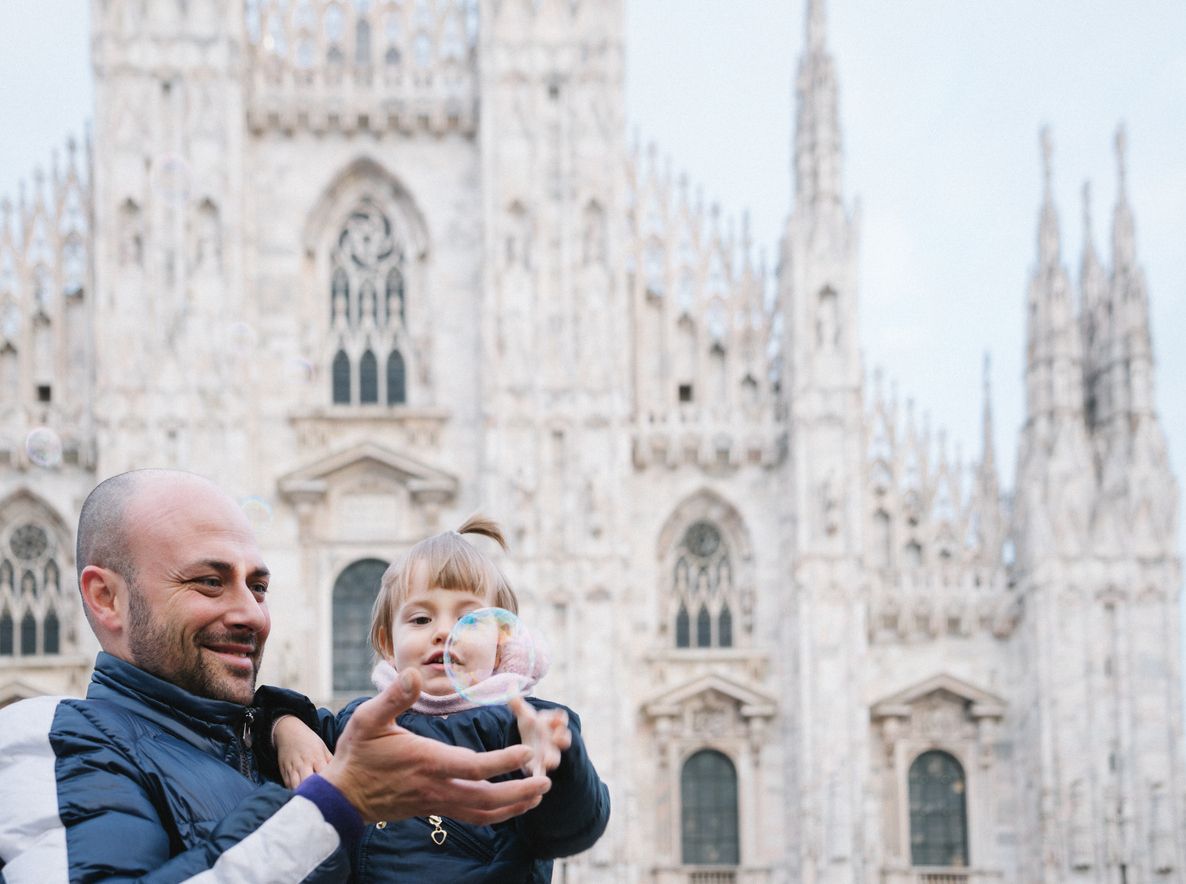
Milan
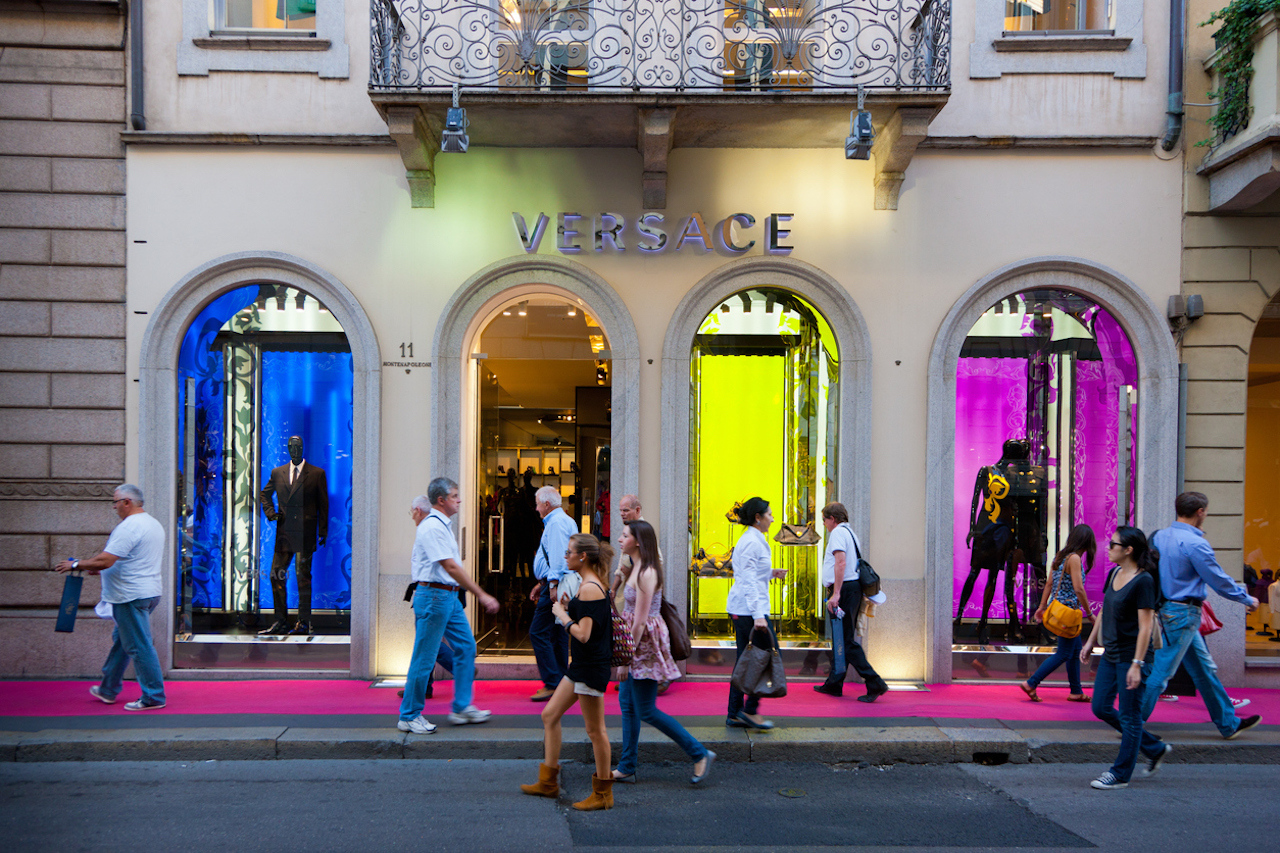
Milan

Milan

Milan
We use a single cookie, to remember this choice. We do not use analytics or advertising cookies. Read our cookie policy.