4 hrs
Paris
Paris Private Tour: Highlights, Top Quarters & Eiffel Tower
✓ Free cancellation Kids friendly
4.5(28 reviews)
From €185/ person
Book Now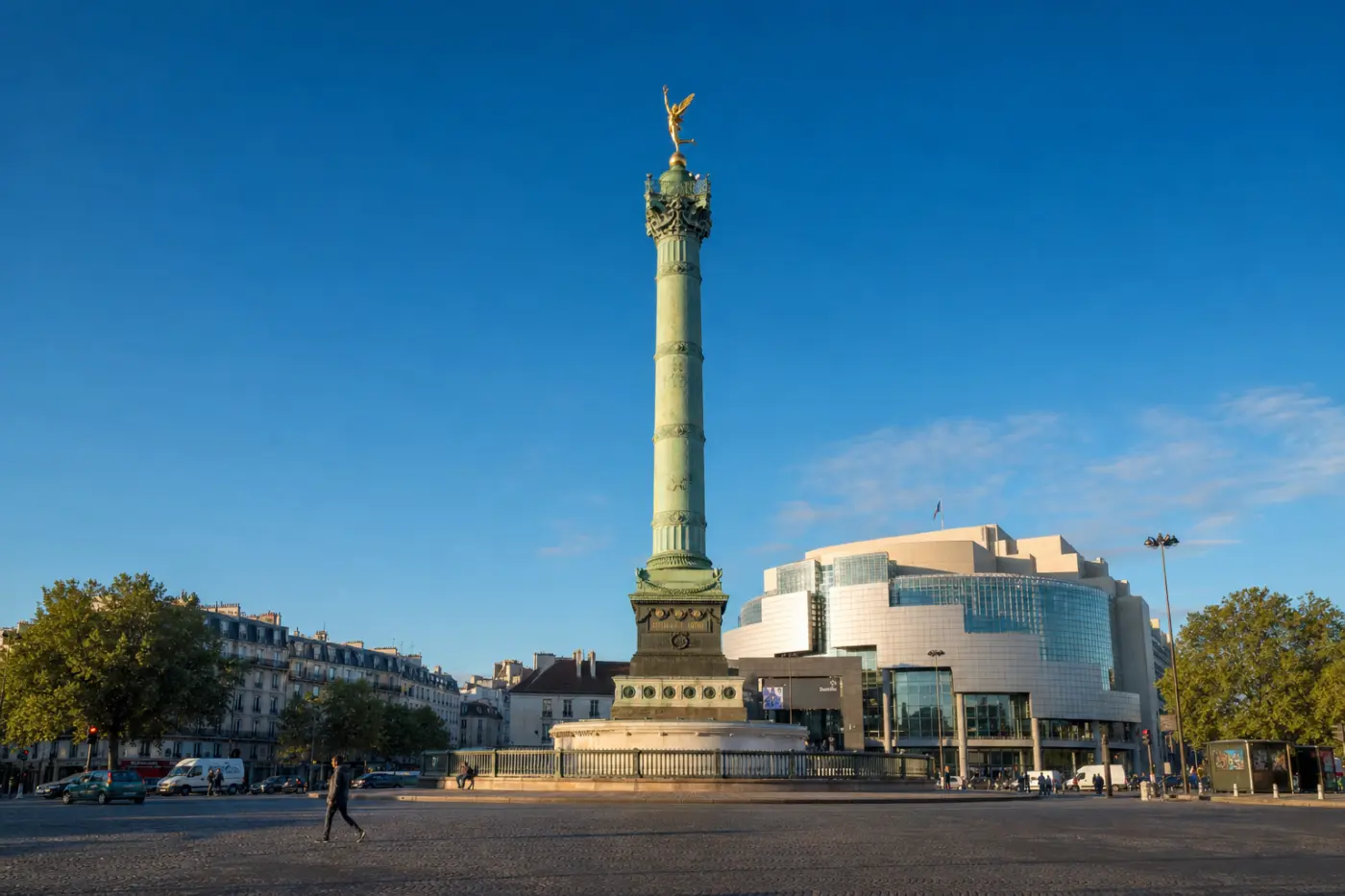
Tourist attraction
Place de la Bastille is a large public square spanning the 4th, 11th, and 12th arrondissements of Paris, occupying the exact ground where the Bastille fortress once stood. Built between 1370 and 1383 as a defensive gateway on the eastern edge of the city, the Bastille evolved into a royal prison under Louis XIII and became a potent symbol of monarchical tyranny. By July 1789, it held only seven prisoners — four forgers, two lunatics, and one libertine — yet its storming on July 14th by a crowd of roughly 900 Parisians triggered the French Revolution. The fortress was demolished within a year, its stones sold as souvenirs or used to build the Pont de la Concorde. Today, nothing of the original structure remains above ground, though outline stones embedded in the pavement mark the former position of its eight towers.
Dominating the centre of the square is the Colonne de Juillet (July Column), a 51.5-metre bronze Doric column erected between 1835 and 1840 by order of King Louis-Philippe. Contrary to what its location might suggest, the column does not commemorate the 1789 Revolution but rather the victims of the July Revolution of 1830, the "Trois Glorieuses" of July 27–29, which overthrew Charles X. The names of 504 Parisians killed in those three days are engraved on the shaft, and their remains — along with those of victims of the 1848 uprising — are interred in the base. The column is crowned by the gilded bronze "Génie de la Liberté" (Spirit of Freedom), a winged figure by sculptor Auguste Dumont holding a broken chain in one hand and a torch in the other.
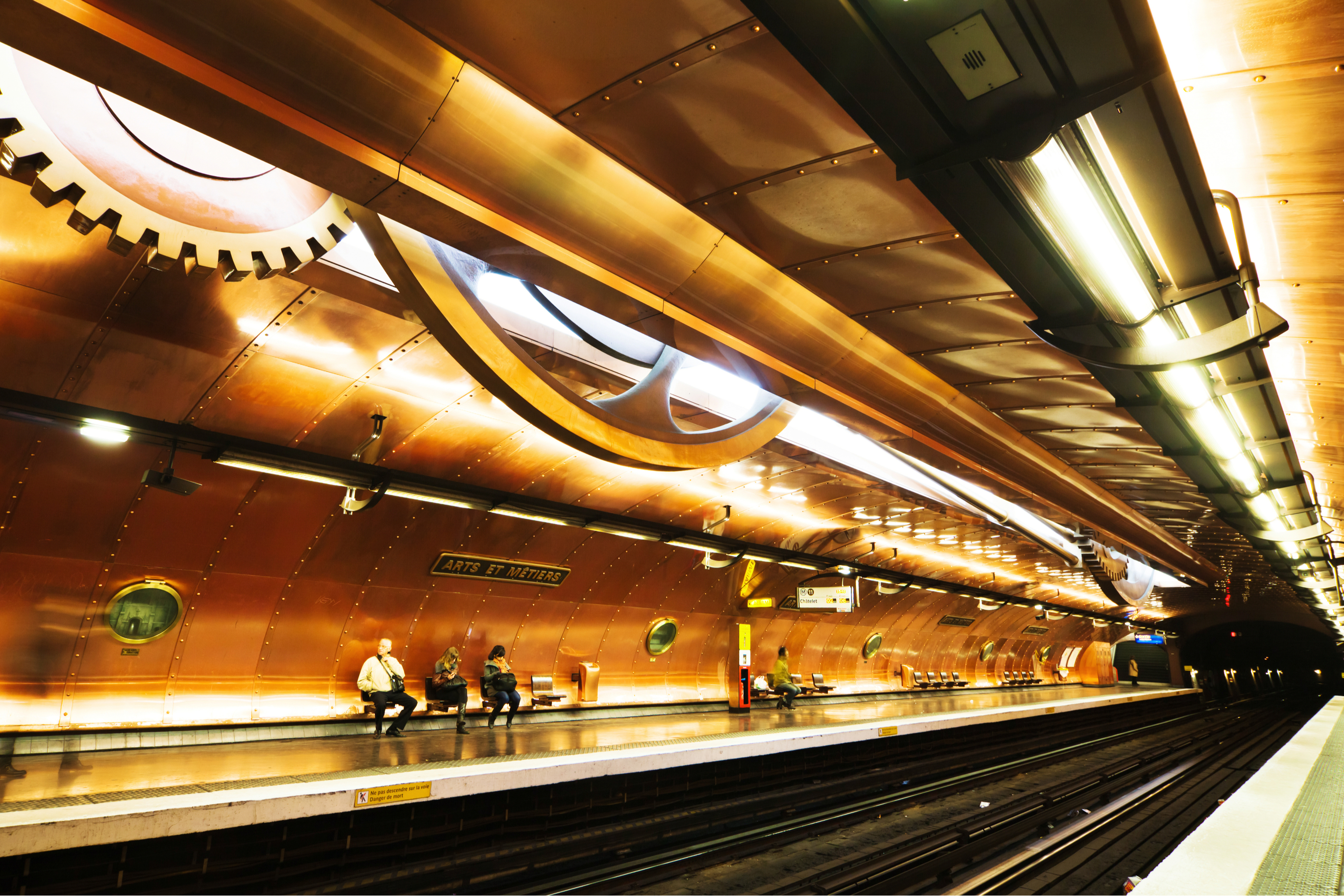
On the southeastern edge of the square sits the Opéra Bastille, an imposing modernist building inaugurated on July 13, 1989 — exactly two centuries after the storming — as part of President François Mitterrand's Grands Travaux programme. Designed by Canadian-Uruguayan architect Carlos Ott, it seats 2,745 and functions as the main venue of the Paris Opera. The adjacent Port de l'Arsenal marks where the Seine canal once fed the moat of the old fortress, now a pleasure-boat marina lined with linden trees. Métro Line 1 passes directly beneath the square, and an unused station — Bastille on the now-defunct Ligne de Vincennes — still exists under the platforms.
Visitors arriving on a Thursday or Sunday morning will find the Marché de la Bastille, one of Paris's largest and most animated street markets, stretching along Boulevard Richard-Lenoir. The square itself is a year-round gathering point: Bastille Day (July 14) brings enormous crowds for fireworks and concerts, while political demonstrations have traditionally departed from or converged on the square for over two centuries. To trace the footprint of the original fortress, look for the outline of the towers marked in darker cobblestones near the Rue Saint-Antoine entrance — a subtle but arresting reminder of the ground where modern French democracy was born.
Private tours with a local guide, at your own pace.
Paris
Paris

Paris
Paris
Paris

Paris
Paris
Paris
Paris
We use a single cookie, to remember this choice. We do not use analytics or advertising cookies. Read our cookie policy.