4 hrs
Valencia
Highlights & Secrets of Valencia Half-Day Private Tour with Local Tasting
✓ Free cancellation Kids friendly
4.8(55 reviews)
From €163/ person
Book Now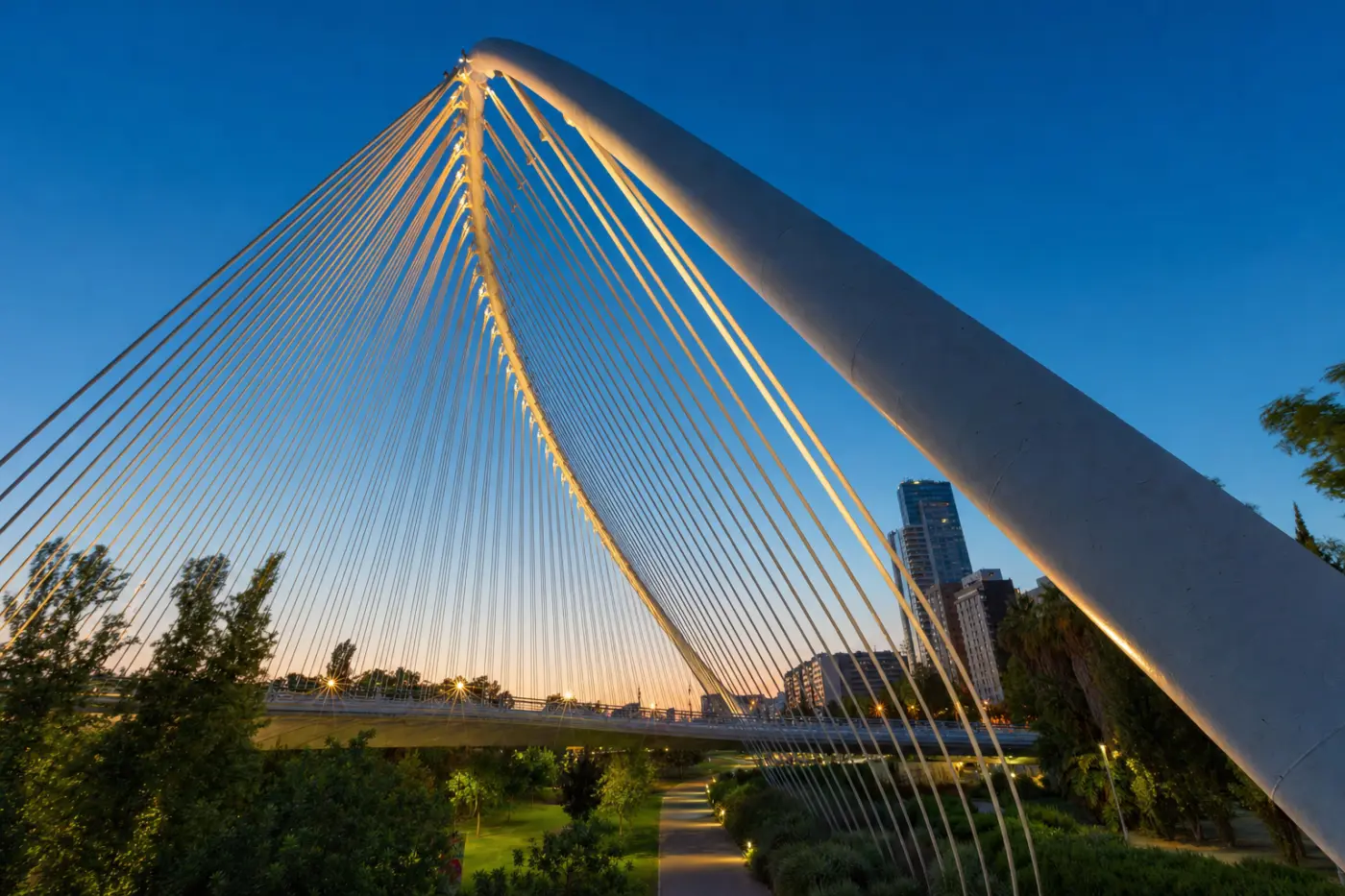
Tourist attraction
The Puente de la Exposición — known in Valencian as the Pont de l'Exposició and nicknamed La Peineta ("the hair comb") by locals — is a pedestrian and road bridge spanning the former bed of the Turia River in Valencia, Spain. Designed by the Valencia-born architect and engineer Santiago Calatrava, the bridge was inaugurated in 1995 to coincide with Valencia's hosting of events linked to its growing international profile. It stretches approximately 130 metres across the dry riverbed, now transformed into the linear Turia Garden park, connecting the Alameda district on the north bank with the Ayora neighbourhood to the south. The structure's most striking feature is a single inclined white steel arch, rising some 14 metres above the deck and held in asymmetric tension by a fan of steel cables — a silhouette that inspired its popular comb nickname.
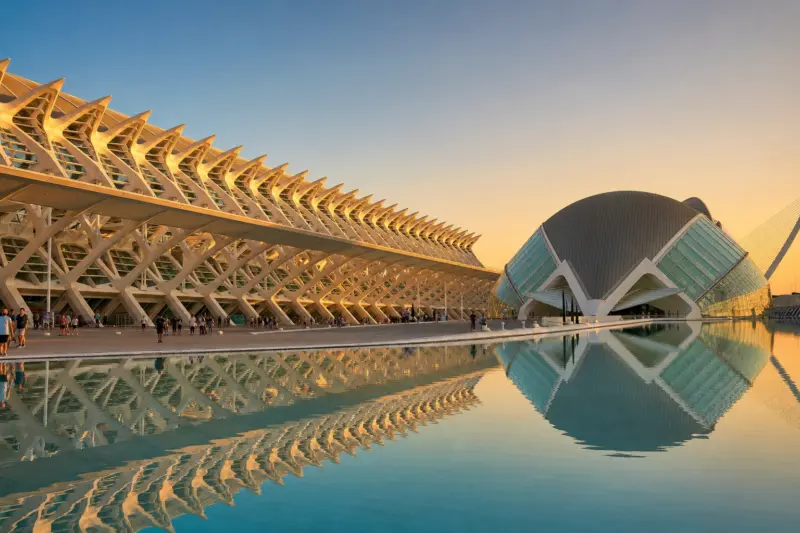
Calatrava, who was born in the nearby town of Benimamet in 1951 and trained as both an architect and a civil engineer in Zurich, returned to his home city with this commission at a moment when Valencia was aggressively reimagining its riverfront. The Turia had been diverted south of the city after the catastrophic flood of October 1957 that killed hundreds of people, and the nine-kilometre dry channel was gradually converted into a public park from the 1980s onward. The Puente de la Exposición was one of several new crossings designed to stitch together neighbourhoods that the original river had separated for centuries. Its completion in 1995 predated, but architecturally anticipated, Calatrava's far larger Ciudad de las Artes y las Ciencias complex (built 1996–2005) just a kilometre downstream, cementing his vision of Valencia as a showcase for expressive structural engineering in white concrete and steel.
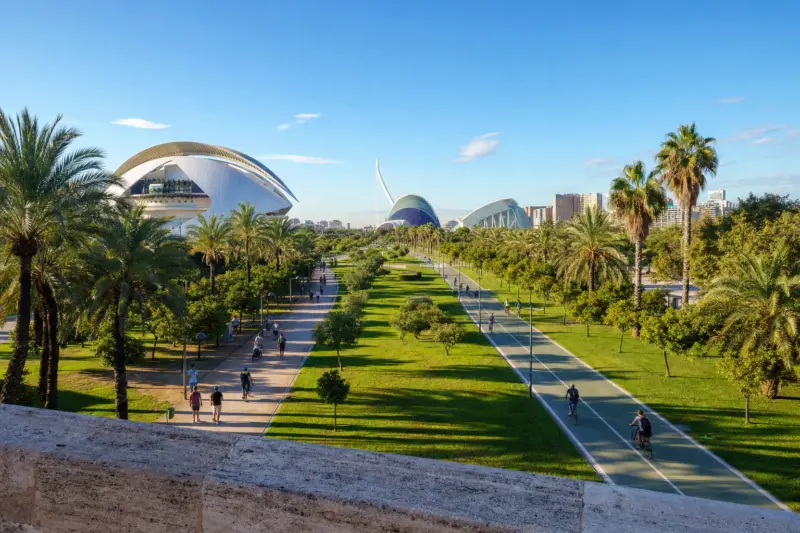
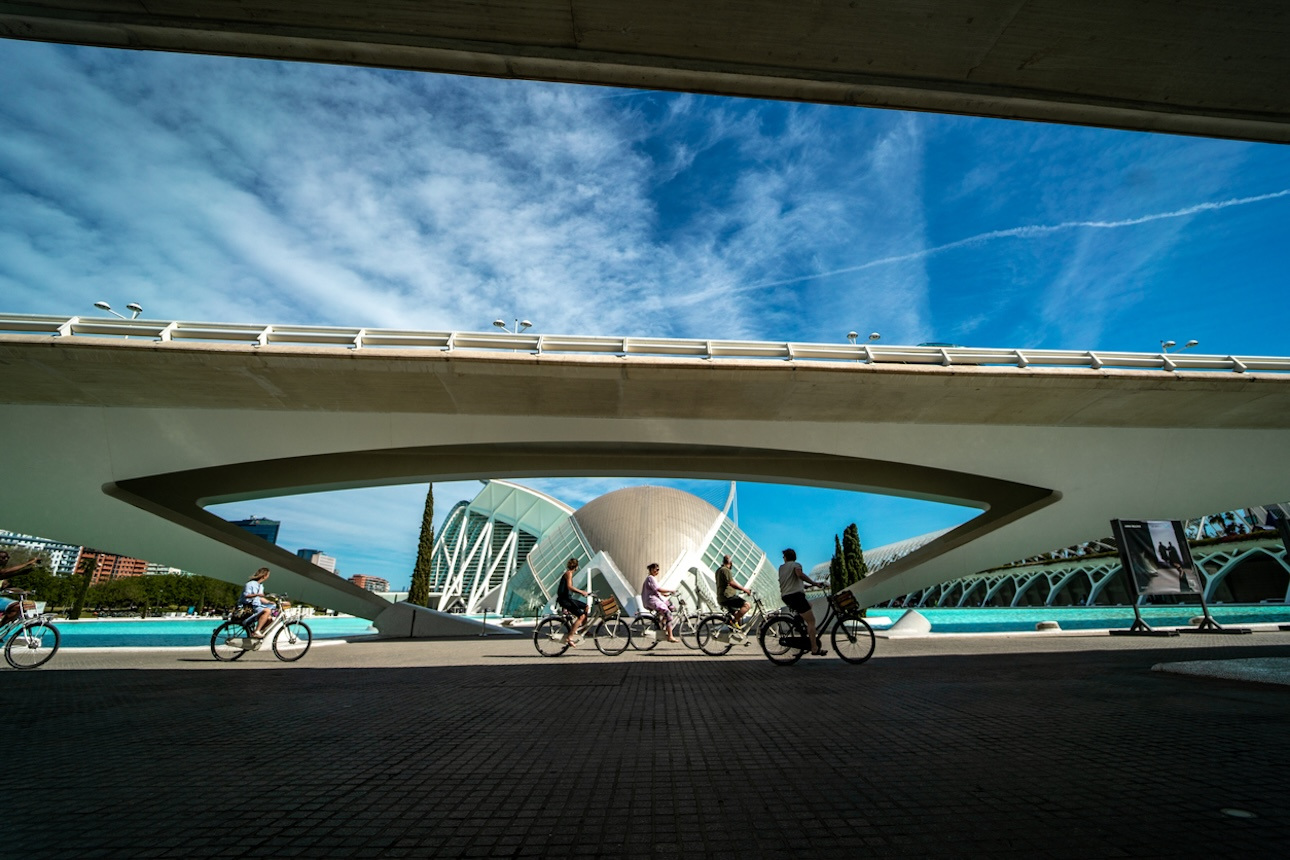
Visitors crossing the bridge experience an immediate sense of structural drama: the tilted arch leans away from vertical at a pronounced angle, and the asymmetric cable arrangement creates a visual tension that changes completely depending on the direction of approach. The deck is wide enough to accommodate two lanes of traffic alongside generous pedestrian walkways, and the views from mid-span take in the lush Turia Garden below — joggers, cyclists, and families moving through what was once a flood-prone river channel — with the spires of Valencia's historic centre visible to the west and the futuristic forms of the City of Arts and Sciences to the east. At night, targeted uplighting traces the arch and cables against the sky, making the bridge one of the most photogenic spots in the city after dark.
The bridge is freely accessible at all hours and sits directly above the Alameda metro station (Lines 5 and 7), making it effortless to reach from the city centre or the port district. It integrates naturally into a walk or cycle along the Turia Garden path, which connects the old city with the City of Arts and Sciences in under thirty minutes on foot. Visit at dusk to catch the arch illuminated against the fading sky and the garden filling with evening strollers — the scene captures Valencia's successful reinvention of its riverfront better than almost any other single viewpoint.
Private tours with a local guide, at your own pace.
Valencia
Valencia

Valencia
Valencia
Valencia
Valencia
Valencia
Valencia
We use a single cookie, to remember this choice. We do not use analytics or advertising cookies. Read our cookie policy.