10 hrs
Paris
Private Day Trip from Paris - Vineyards of Reims - Champagne Tour + French Lunch
✓ Free cancellation Kids friendly
4.9(18 reviews)
From €989/ person
Book Now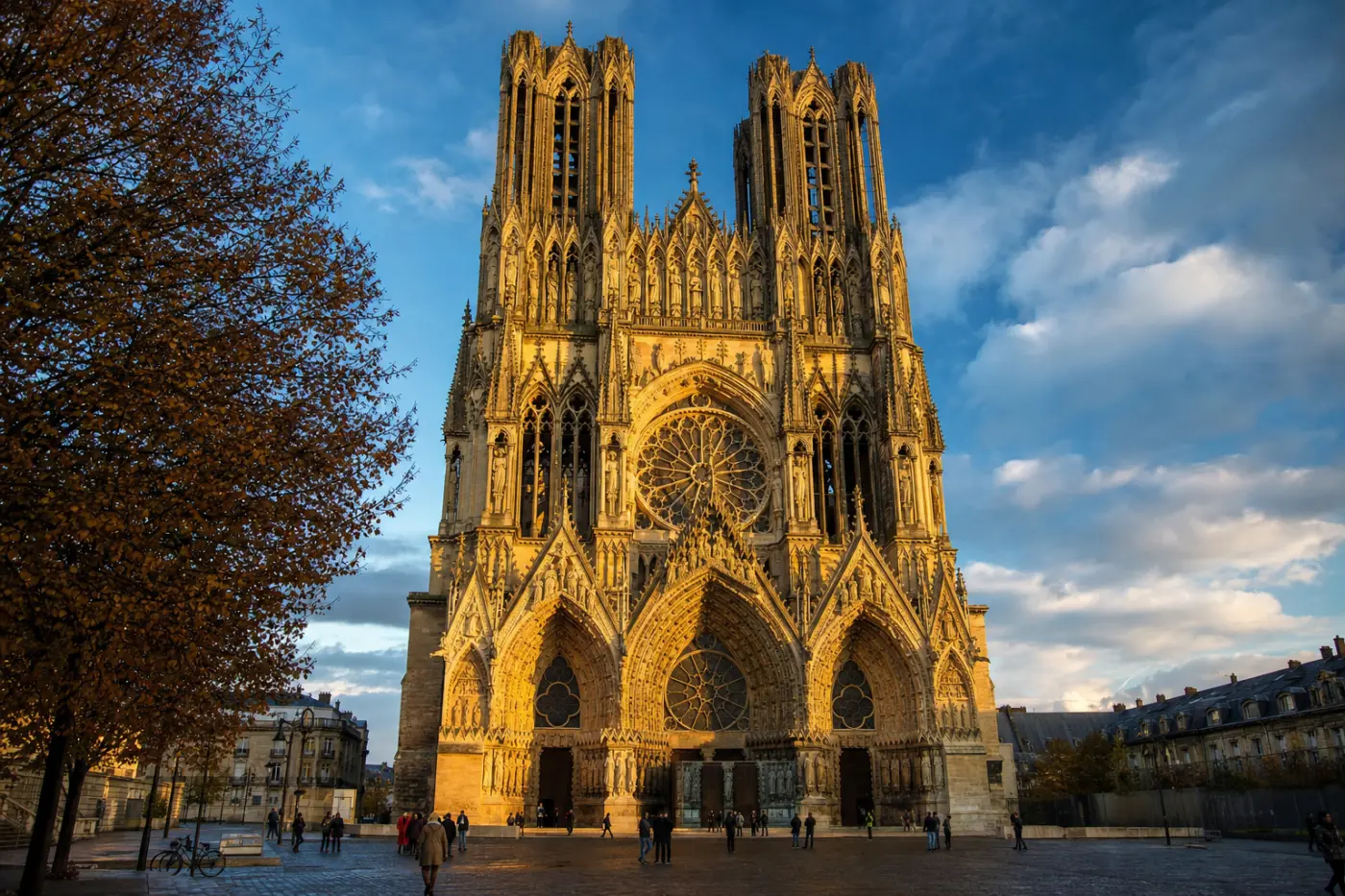
Tourist attraction
The Cathedral of Notre-Dame at Reims — formally distinct from Paris's Notre-Dame — stands in the city of Reims in the Champagne region of northeastern France, roughly 130 kilometres east of Paris. Construction on the current Gothic structure began in 1211, following a fire that destroyed the earlier Carolingian basilica, and the main building was substantially complete by around 1275, though work on the towers continued into the 15th century. The cathedral stretches 149 metres in length and its twin western towers rise to 81 metres, making it one of the most ambitious Gothic engineering projects of medieval Europe. UNESCO inscribed it as a World Heritage Site in 1991, recognising it alongside the nearby Palace of Tau and the Abbey of Saint-Rémi.
Reims Cathedral was the coronation church of the French monarchy for nearly 900 years. Beginning with the baptism of Clovis I by Bishop Remigius around 496 AD — an event that laid the theological foundation for the "Most Christian Kingdom of France" — the city became inseparable from royal legitimacy. From Louis VIII in 1223 to Charles X in 1825, 33 French kings were crowned here, most famously Charles VII in 1429, with Joan of Arc standing at his side bearing her standard. The cathedral's west façade is a masterwork of High Gothic sculpture, featuring over 2,300 carved figures, including the celebrated "Smiling Angel" (l'Ange au Sourire), a 13th-century limestone figure whose serene expression became an emblem of Reims itself. The interior preserves magnificent stained-glass windows, including three lancet windows in the apse designed by Marc Chagall in 1974, their deep blues depicting the history of Christianity in France alongside scenes from the Hebrew Bible.
Visiting the cathedral today means standing in a space where the weight of French national identity is physically encoded in stone and glass. The western portal's three doorways are laden with biblical scenes in carved relief, and the Gallery of Kings above features 56 colossal statues of French monarchs, each nearly five metres tall. The nave's soaring vaulted ceiling reaches 38 metres, and the interplay of light through the original 13th-century clerestory windows and Chagall's modern additions creates a layered visual experience across different times of day. The cathedral sustained severe damage during World War I — German artillery shelling in September 1914 ignited the timber scaffolding and destroyed the roof — and the painstaking restoration, funded in part by John D. Rockefeller Jr., continued through the 1930s.
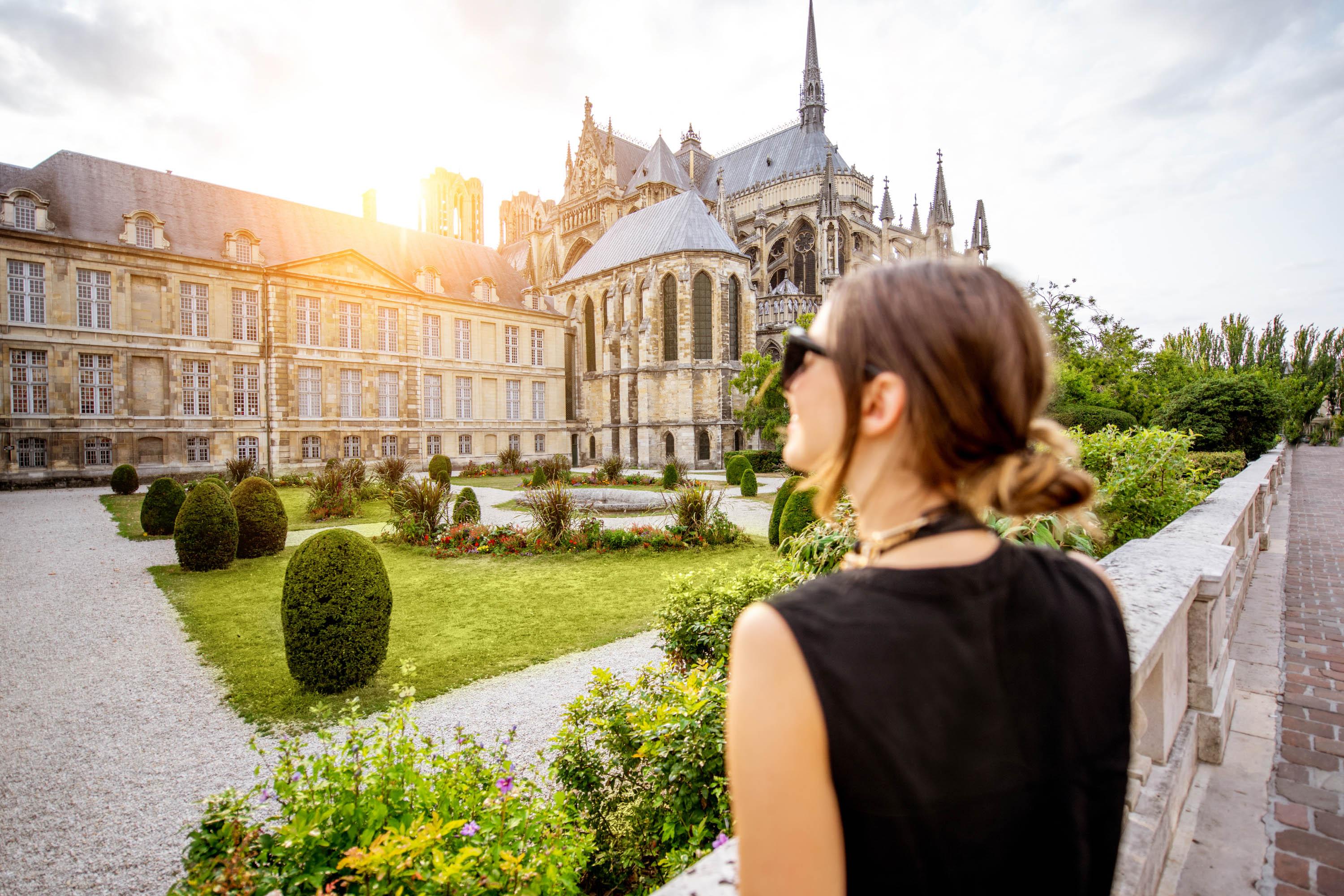
Reims is reachable from Paris in as little as 45 minutes on the TGV high-speed train from Gare de l'Est, making it a very viable day trip. The cathedral is free to enter, with guided tours and an audio guide available in multiple languages. The Palace of Tau, the former archbishop's residence directly adjacent to the cathedral, houses the original sculptural fragments removed from the façade for conservation — including the authentic Smiling Angel — and is well worth the admission fee. Visiting on a weekday morning offers the calmest experience; the cathedral remains an active parish church and Mass schedules affect access times.
Private tours with a local guide, at your own pace.
Paris

Paris

Paris
Paris
Paris

Paris
Paris
Paris
Paris
We use a single cookie, to remember this choice. We do not use analytics or advertising cookies. Read our cookie policy.