2.5 hrs
Brussels
Brussels Private Food Tour: Waffles, Fries, Beer & Local History
✓ Free cancellation Kids friendly
5.0(7 reviews)
From €206/ person
Book Now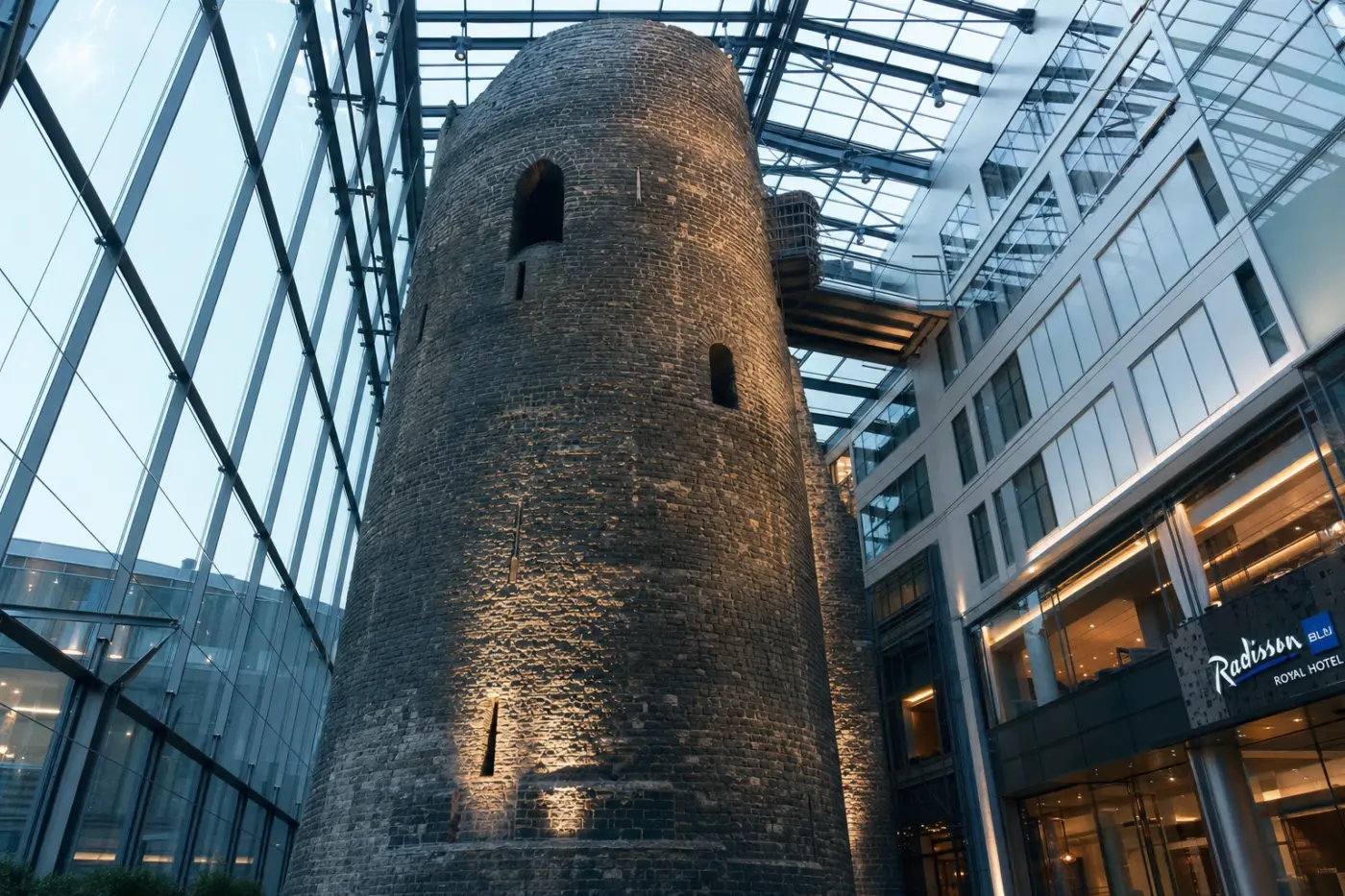
Tourist attraction
The Tour Noire — Black Tower in English, Zwarte Toren in Dutch — is one of the last surviving fragments of Brussels' first medieval city wall, a defensive circuit constructed in the late 12th and early 13th centuries to protect the growing commercial town on the Senne River. The cylindrical limestone tower, believed to date from around 1150–1200, formed part of a fortification ring that once enclosed the lower town with over fifty towers and six fortified gates. While nearly the entire wall was demolished across successive centuries to make way for urban expansion, the Tour Noire endured — partly because it was absorbed into the fabric of private buildings rather than left exposed as an isolated ruin.
The tower stands approximately 14 metres tall and is built from the pale carboniferous limestone quarried locally in the Brussels region, which over centuries darkened with weathering and soot — the likely origin of its name. Architecturally, it displays the compact, utilitarian character of Romanesque military construction: thick rubble-filled walls, a rounded plan designed to deflect projectiles, and narrow arrow-slit openings. It sat along the northern section of the first wall, in the neighbourhood that is today the Place Sainte-Catherine, a district that was itself the site of a filled-in harbour canal until the late 19th century. This layering of erased histories — the vanished harbour, the demolished wall — makes the tower a rare tangible anchor point in an otherwise heavily transformed urban landscape.
In the 20th century, rather than isolating or museumifying the structure, Brussels developers integrated the Tour Noire into the fabric of the NH Collection Brussels Grand Sablon — later the NH Brussels Grand Place Arenberg — hotel complex on the Rue de la Vierge Noire. Today, the tower rises dramatically through the hotel's glass atrium lobby, its medieval stonework juxtaposed against contemporary architecture in a manner that makes the age gap viscerally apparent. Visitors can examine the tower's exterior masonry at close range from within the hotel's public areas, reading the construction technique in the irregular coursing of the stone.
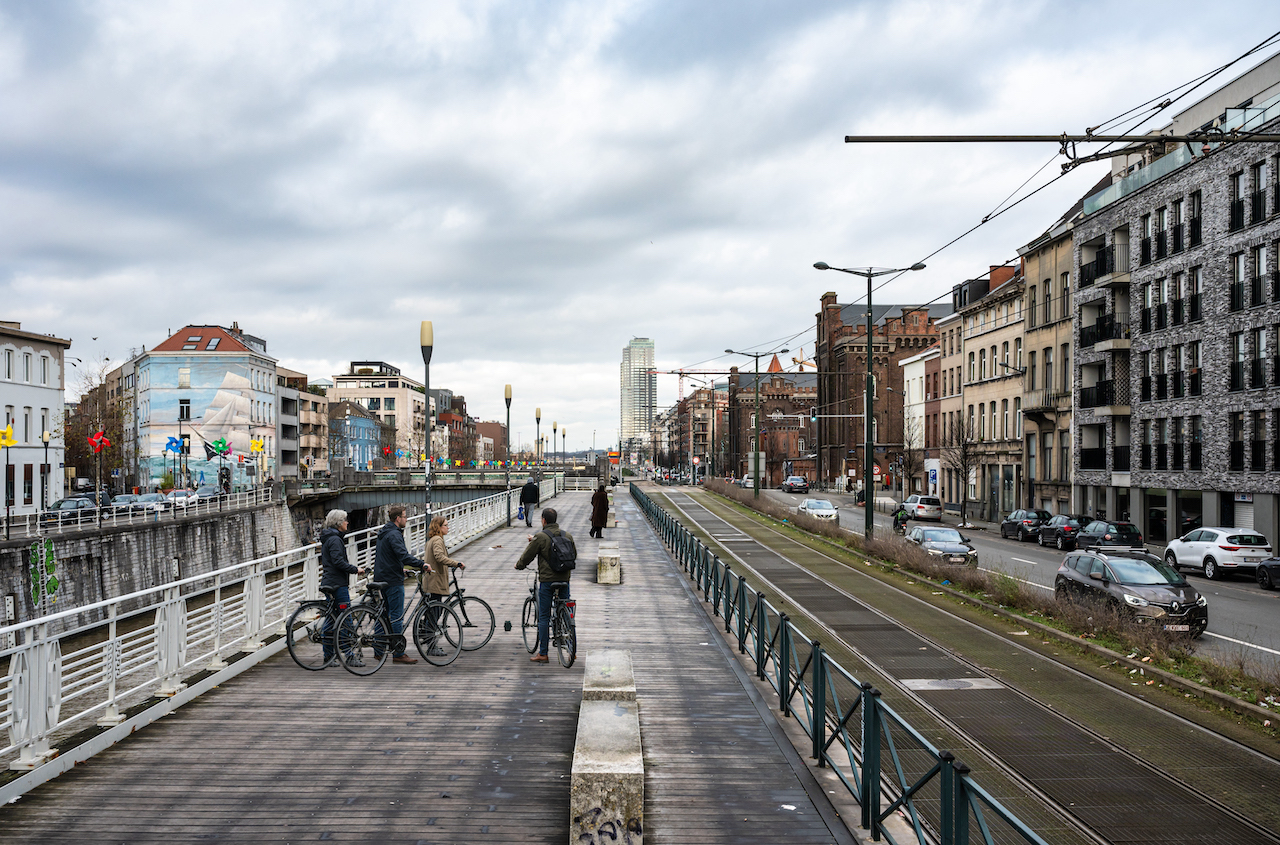
The tower is freely visible from the street and from the hotel lobby without admission charge. It sits a short walk north of the Grand-Place, making it a natural detour when exploring the lower town. The surrounding Place Sainte-Catherine retains a lively weekend market atmosphere, and the nearby Quai aux Briques and Quai au Bois à Brûler — former quaysides of the vanished inner harbour — extend the medieval and early-modern historical narrative outward from the tower itself. Early morning visits offer the clearest views of the stonework before the hotel lobby fills with guests.
Private tours with a local guide, at your own pace.
Brussels
Brussels
Brussels
Brussels
Brussels
Brussels
Brussels
We use a single cookie, to remember this choice. We do not use analytics or advertising cookies. Read our cookie policy.