10,5 hrs
Barcelona
Private Cadaqués and Dalí Museum Tour with Celler & Lunch Option
✓ Free cancellation Kids friendly
From €517/ person
Book Now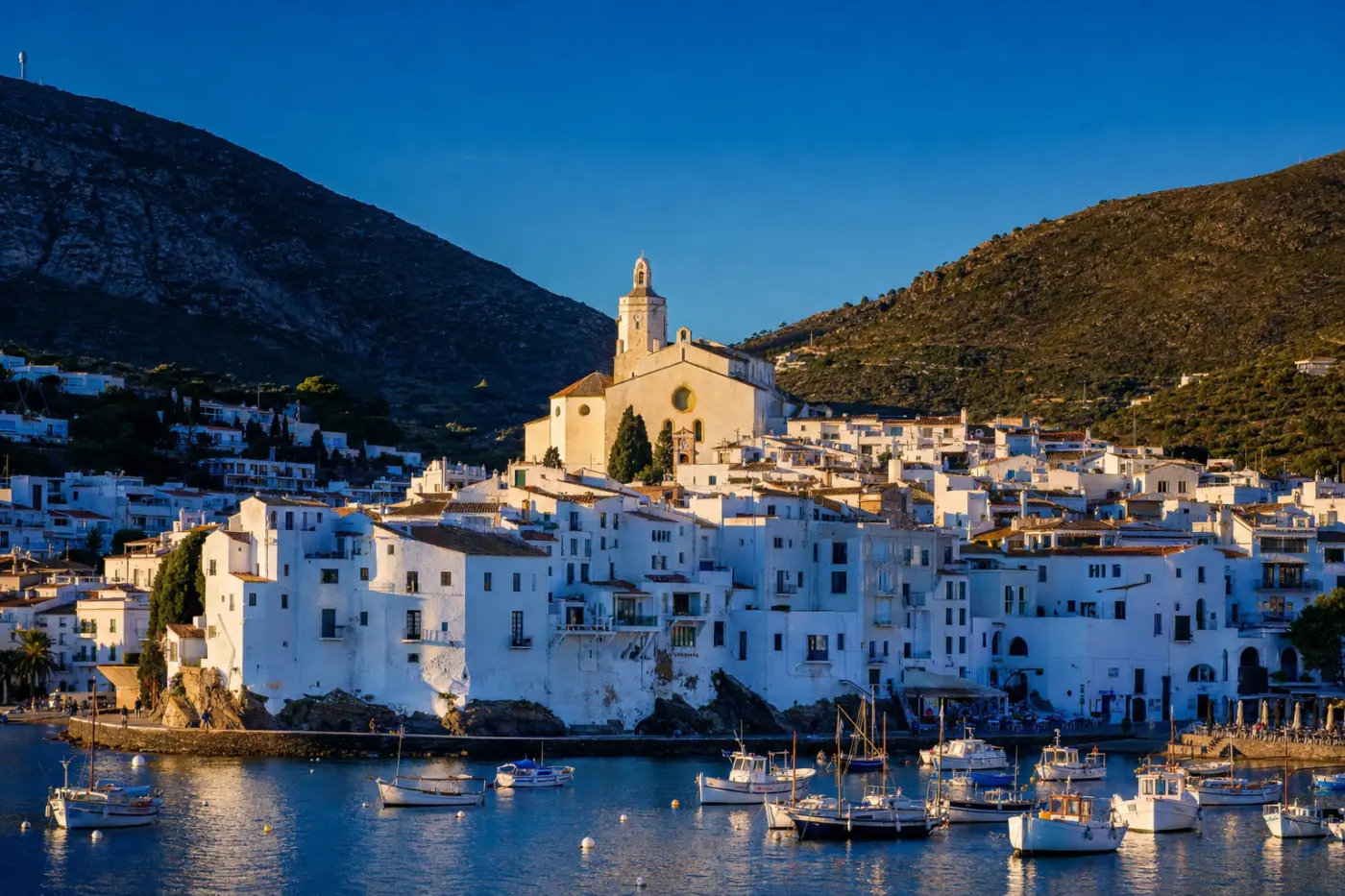
Tourist attraction
Cadaqués is a small fishing village perched on the northeastern tip of the Cap de Creus peninsula in the Alt Empordà comarca of Girona, Catalonia — often grouped under the broader Costa Brava region associated with Barcelona day trips. Sheltered by the rugged Serra de Rodes mountains and accessible for centuries only by sea or along a treacherous mountain road, the town developed in near-total geographic isolation. This insularity produced an exceptionally coherent architectural character: a dense cascade of cubic whitewashed houses tumbling down steep terraced hillsides to a crescent-shaped bay, anchored by the 16th-century Baroque church of Santa Maria, whose ornate stone altarpiece — carved between 1725 and 1727 by Joan Torras — is considered one of the finest examples of Catalan Baroque craftsmanship in the region.
The village became internationally renowned in the early 20th century when it captured the imagination of the European avant-garde. Pablo Picasso visited in the summer of 1910, spending several weeks painting alongside Georges Braque and producing Cubist works now attributed in part to the fractured, light-saturated landscape of the bay. Salvador Dalí's connection was far deeper and more permanent: born in nearby Figueres in 1904, he spent childhood summers in Cadaqués and in 1930 purchased a fisherman's cottage in the adjacent cove of Portlligat, which he gradually expanded over five decades into a surrealist labyrinth of interconnected rooms, terraces, and stuffed bears. The Casa-Museu Salvador Dalí at Portlligat — a 15-minute walk from the village center — is the only museum in the world housed in a building Dalí himself designed as a living space, and it remained his primary residence until 1982.
Visitors approaching Cadaqués by road descend a series of tight hairpin bends through cork oak and olive groves before the bay appears suddenly below — an arrival that has changed little since the road was first paved in the 1960s. The old town's narrow lanes, known locally as carrerons, are closed to motor vehicles, forcing exploration on foot past fishermen's houses, whitewashed chapels, and small galleries. The waterfront Passeig del Mar lined with terrace restaurants faces west, delivering spectacular late-afternoon light over the bay that made the town so irresistible to painters. The local cuisine centers on anchovies from the nearby L'Escala fishery and sea urchins harvested from the rocky Cap de Creus coastline.
Cadaqués is best visited between May and June or in September, when the summer crowds of July and August thin and the characteristic Tramontane wind — a cold, dry northerly that can reach 100 km/h — is less frequent. Parking is severely limited; visitors are strongly advised to use the official paid car parks at the village entrance and walk the remaining 10 minutes downhill. The Dalí house at Portlligat requires advance online reservations and limits entry to small groups, so booking several days ahead is essential during peak season. Cap de Creus Natural Park, surrounding the village on three sides, offers marked hiking trails to the easternmost point of the Iberian Peninsula.
Private tours with a local guide, at your own pace.
Barcelona
Barcelona
Barcelona
Barcelona
Barcelona
Barcelona
Barcelona
Barcelona
Barcelona
We use a single cookie, to remember this choice. We do not use analytics or advertising cookies. Read our cookie policy.