7 to 7,5 hrs
Barcelona
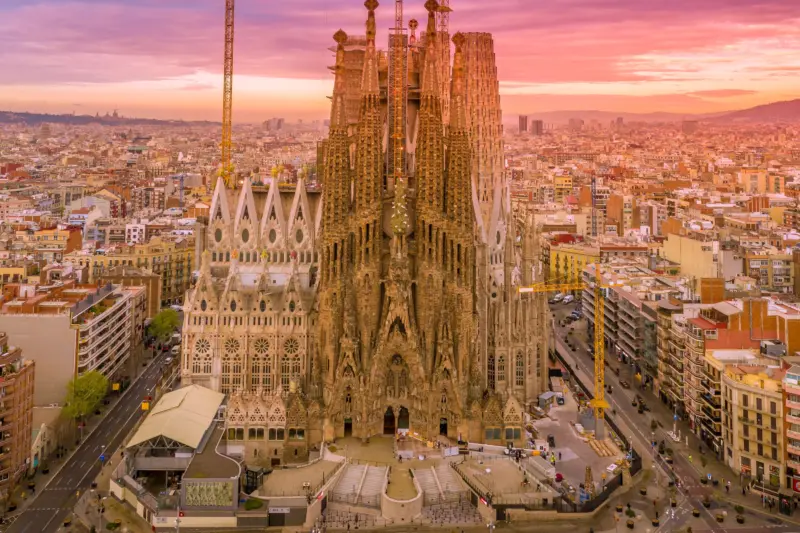
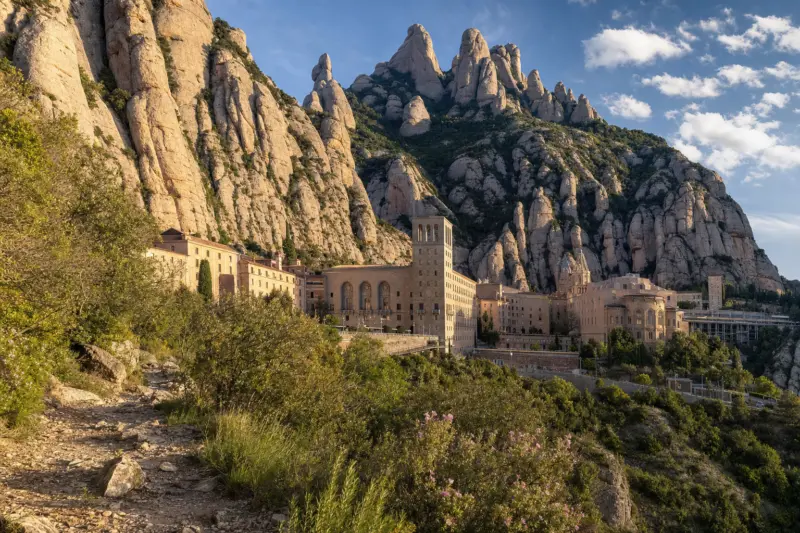
Barcelona & Montserrat Day Trip with Sagrada Familia Guided Tour
✓ Free cancellation Kids friendly
4.5(4 reviews)
From €134/ person
Book Now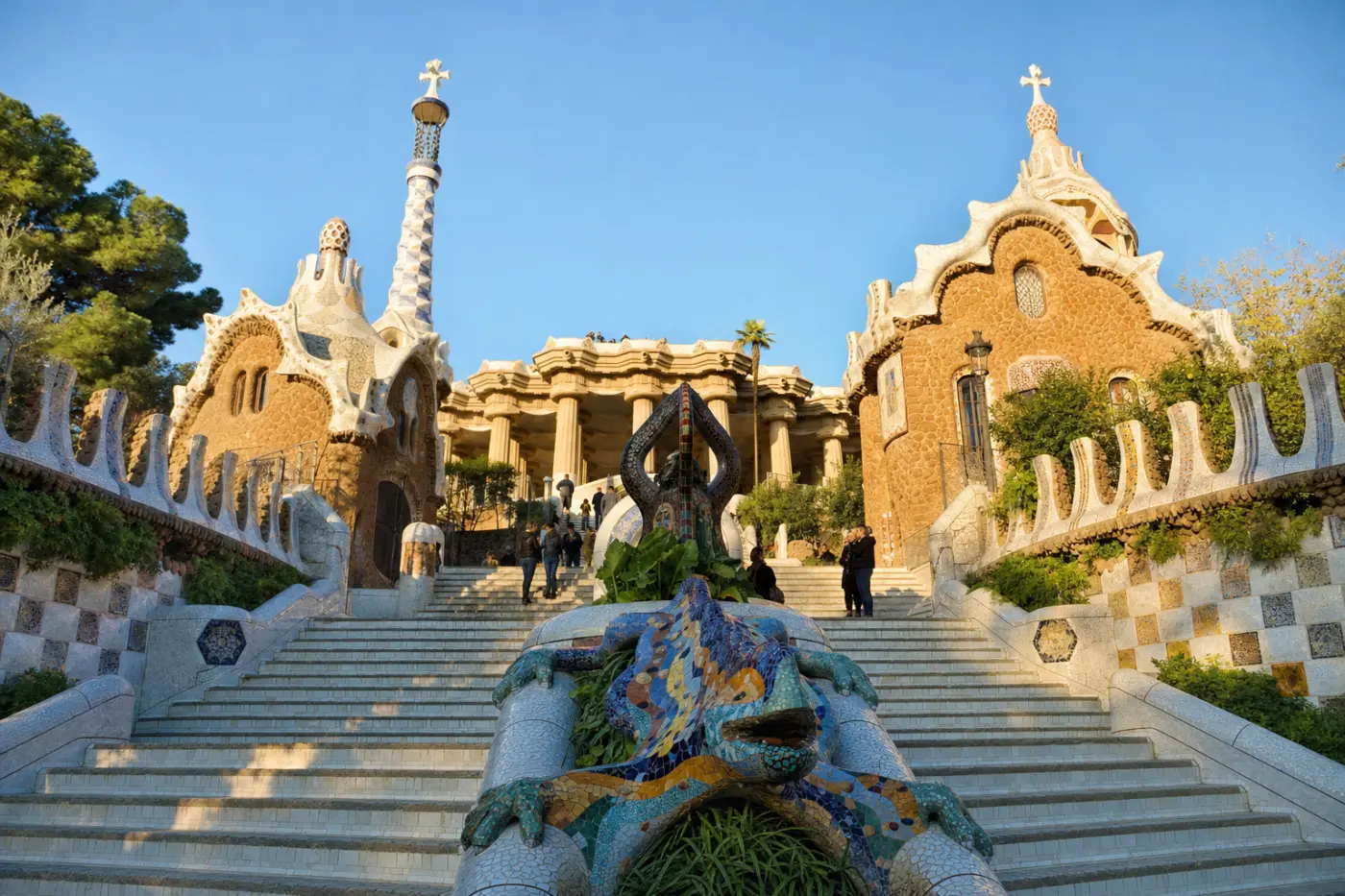
Tourist attraction
Park Güell is a monumental public garden complex occupying 17 hectares on the slopes of Carmel Hill in the Gràcia district of Barcelona. It was commissioned in 1900 by Catalan industrialist Eusebi Güell, who envisioned an English-style garden city of 60 private residences for Barcelona's upper class — an ambition reflected in the Anglicised spelling "Park" in its name. Antoni Gaudí was appointed architect, and he worked on the project from 1900 to 1914. The residential development was a commercial failure: only three plots were ever sold, one of which Gaudí himself purchased and inhabited from 1906 until 1925 (now the Casa Museu Gaudí within the park). In 1926, following Güell's death and the collapse of the original plan, the City of Barcelona acquired the estate and opened it as a public park. In 1984, UNESCO designated it a World Heritage Site as part of the collective "Works of Antoni Gaudí."
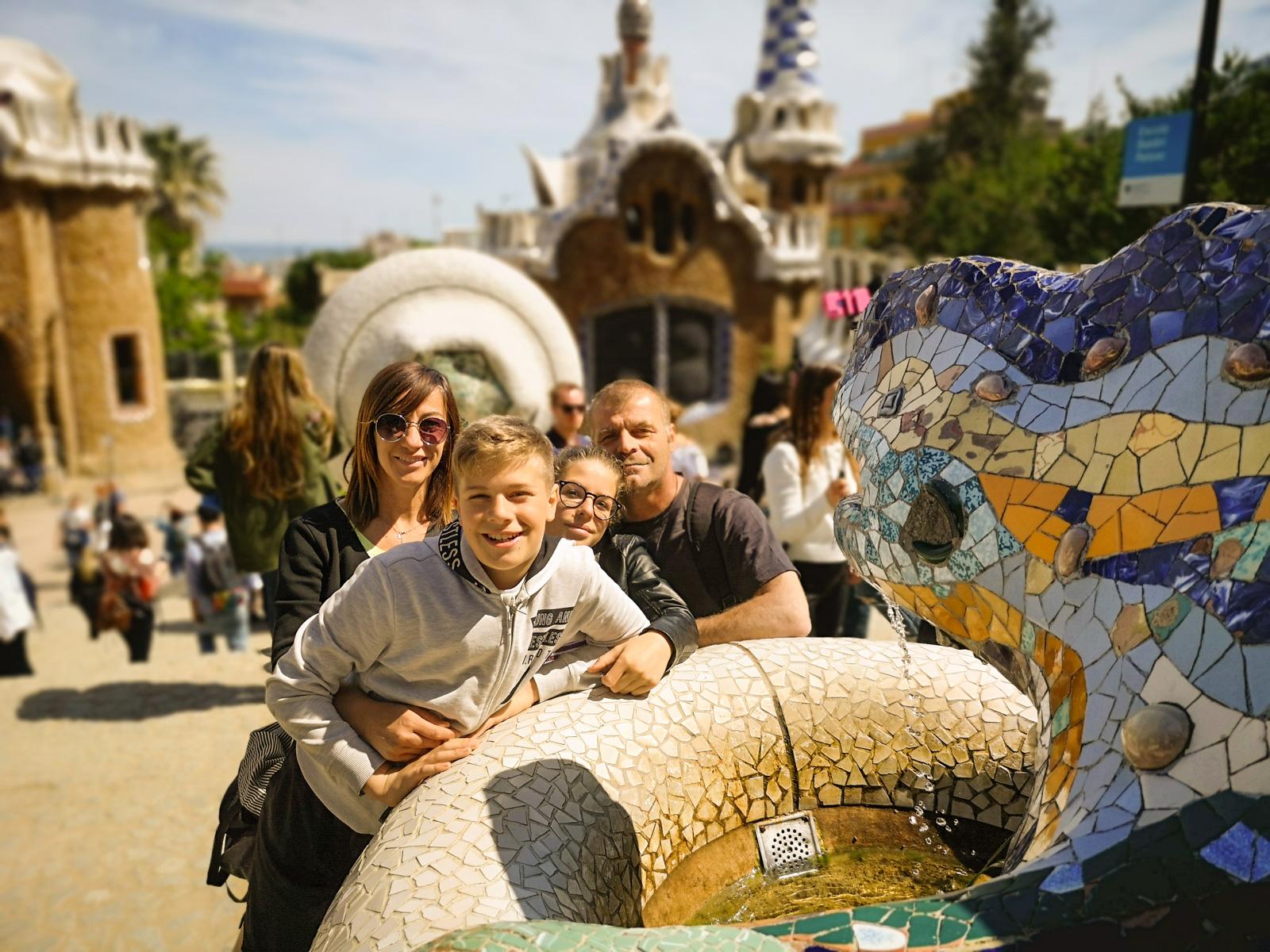
The park's architecture is a seamless fusion of Catalan Modernisme, organic naturalism, and Gaudí's deeply personal interpretation of Gothic structure. The monumental staircase at the main entrance — flanked by polychrome ceramic dragons, most famously the large mosaic salamander universally known as "El Drac" — leads up to the Hypostyle Hall (Sala Hipòstila), a forest of 86 Doric columns designed originally as an open-air market for the planned residential community. Above it sits the Gran Plaça de la Natura, an expansive terrace edged by a continuous serpentine bench of nearly 110 metres, entirely clad in trencadís — a technique of smashed ceramic tile fragments pioneered by Gaudí's collaborator Josep Maria Jujol. The bench's mosaic incorporates fragments of bottles, cups, and polychrome tiles, forming abstract and figurative patterns that reward close inspection. The park's viaducts and colonnaded footpaths are constructed from rough stone quarried on-site, their columns leaning at precise angles to carry the load of the hillside above — a structural logic Gaudí derived from his studies of natural forms such as tree trunks and bone structures.
Visitors who enter the Monumental Zone — the ticketed core of the park — experience a compressed sequence of Gaudí's spatial inventions: the shadowed cool of the Hypostyle Hall, the sudden expansiveness of the terrace with its panoramic sweep over Barcelona to the Mediterranean, and the intimate scale of the viaduct walkways threading through native pine, carob, and rosemary. The surrounding free-access green zones cover the majority of the park's area and offer quieter, less visited hillside paths with views across the city. The Casa Museu Gaudí, a pink tower house designed by Gaudí's associate Francesc Berenguer, displays the architect's personal furniture, drawings, and religious objects, offering a rare domestic portrait of his life and working methods.
Advance booking is strongly recommended for the Monumental Zone, which operates timed-entry slots to manage the four million annual visitors the park receives. Morning slots at opening time (currently 8:00 am) offer the best light for photography on the terrace and the least crowded experience at the dragon staircase. The park is served by Bus 24 and the dedicated Park Güell Bus (Bus 116), as the steep approach from the Lesseps or Vallcarca metro stations involves a substantial uphill walk. Flat, comfortable footwear is essential; the stone paths and uneven trencadís surfaces are challenging in heels. Visitors spending time in the free zones should carry water, especially between June and September when temperatures on the exposed hilltop regularly exceed 30°C.
Private tours with a local guide, at your own pace.
Barcelona
Barcelona
Barcelona
Barcelona
Barcelona
Barcelona

Barcelona
Barcelona

Barcelona
Barcelona
Barcelona
Barcelona
Barcelona
Barcelona
We use a single cookie, to remember this choice. We do not use analytics or advertising cookies. Read our cookie policy.