10,5 hrs
Barcelona
Private Cadaqués and Dalí Museum Tour with Celler & Lunch Option
✓ Free cancellation Kids friendly
From €517/ person
Book Now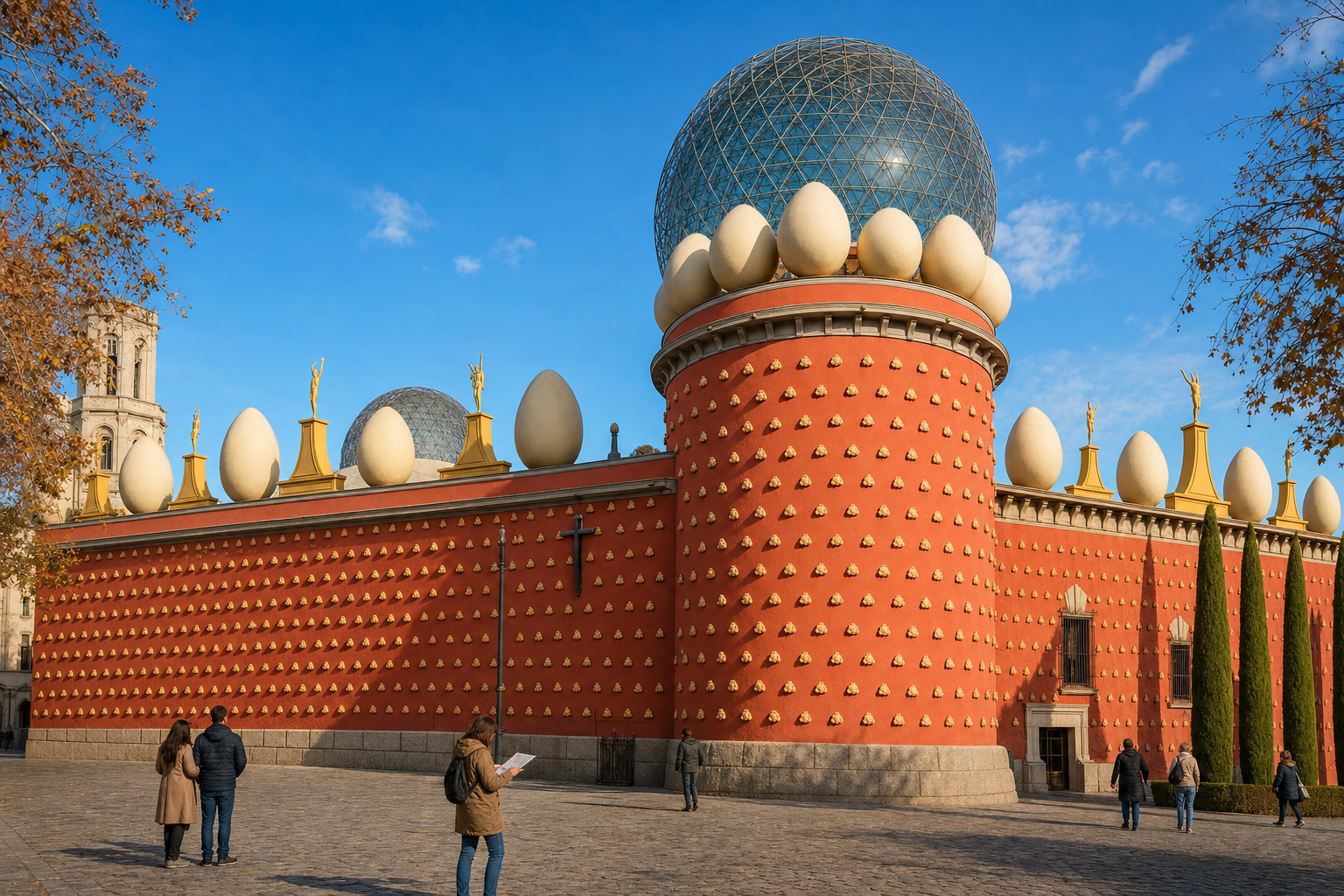
Check out other tourist attractions in the same city
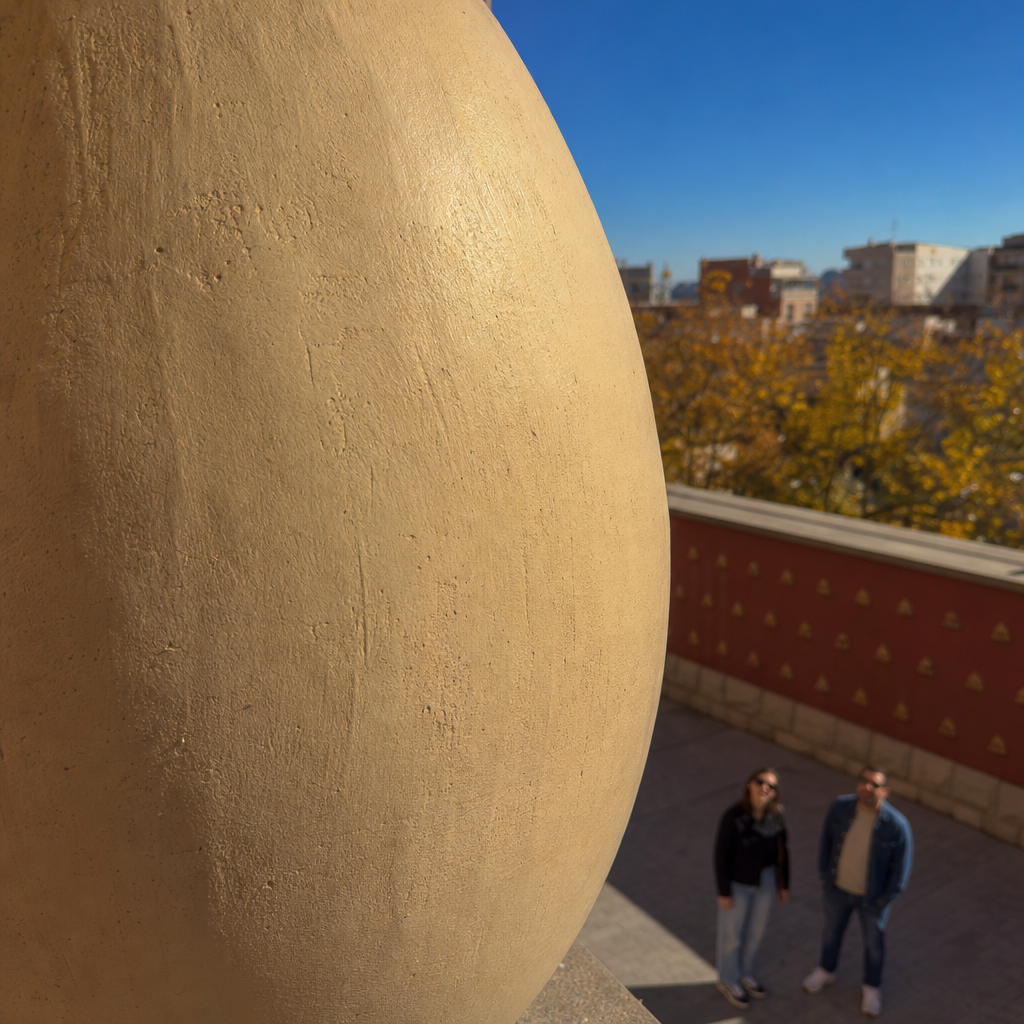
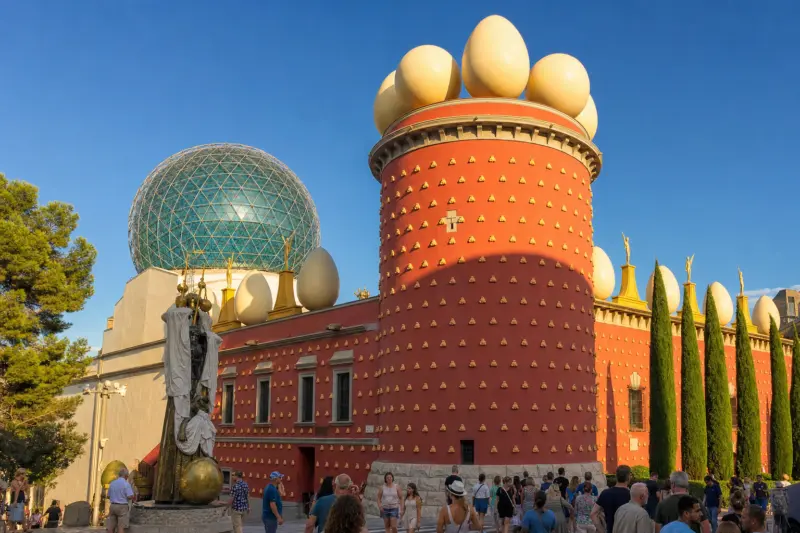
The Dalí Theatre-Museum in Figueres is not a museum that happens to look surreal. It is, by deliberate design, a surrealist object in its own right — Dalí called it "the largest surrealist object in the world," and he meant it architecturally. The building was constructed on the ruins of the town's Municipal Theatre, which had been bombed and gutted during the Spanish Civil War. Dalí chose that site on purpose: he had performed his first public exhibition there as a teenager, and he wanted the ruin itself to be the foundation. The shimmering geodesic glass dome that now crowns the building was engineered by Emilio Pérez Piñero, a Spanish architect celebrated for his collapsible lattice structures, and it was installed in 1974 when the museum opened to the public. Inside, virtually nothing is accidental. The courtyard's Cadillac has rain falling on the inside. The Mae West room can only be understood as a face from a fixed staircase viewpoint. Dalí spent eleven years designing the building before it opened, and he is buried in its crypt.
The story in Cadaqués is equally layered. In 1930, Dalí purchased a single fisherman's shack in the adjacent cove of Portlligat for almost nothing. Over the following four decades, he bought and absorbed every neighbouring shack as it became available, connecting them through a warren of corridors, studios, terraces and gardens until the compound reached roughly 1,400 square metres. The result is less a home than an autobiography in architecture: a stuffed polar bear stands in the entrance, an egg-shaped swimming pool sits in the garden, and a giant inflatable lip sofa — inspired by Mae West's mouth — occupies one of the reception rooms. There is a separate studio where the light is precisely calibrated for morning painting.
Seasonality changes which site you visit: between 1 September and 30 June, the LCT Costa Brava & Dalí + Winery tour includes Portlligat itself. In July and August, road congestion into Cadaqués makes access impractical for groups, so the itinerary pivots to Púbol — Gala's medieval castle, gifted to her by Dalí, where the artist famously required written permission from Gala to visit. That rule was not a joke: he was turned away at the gate without it. Knowing why you're going where you're going makes every room matter more.
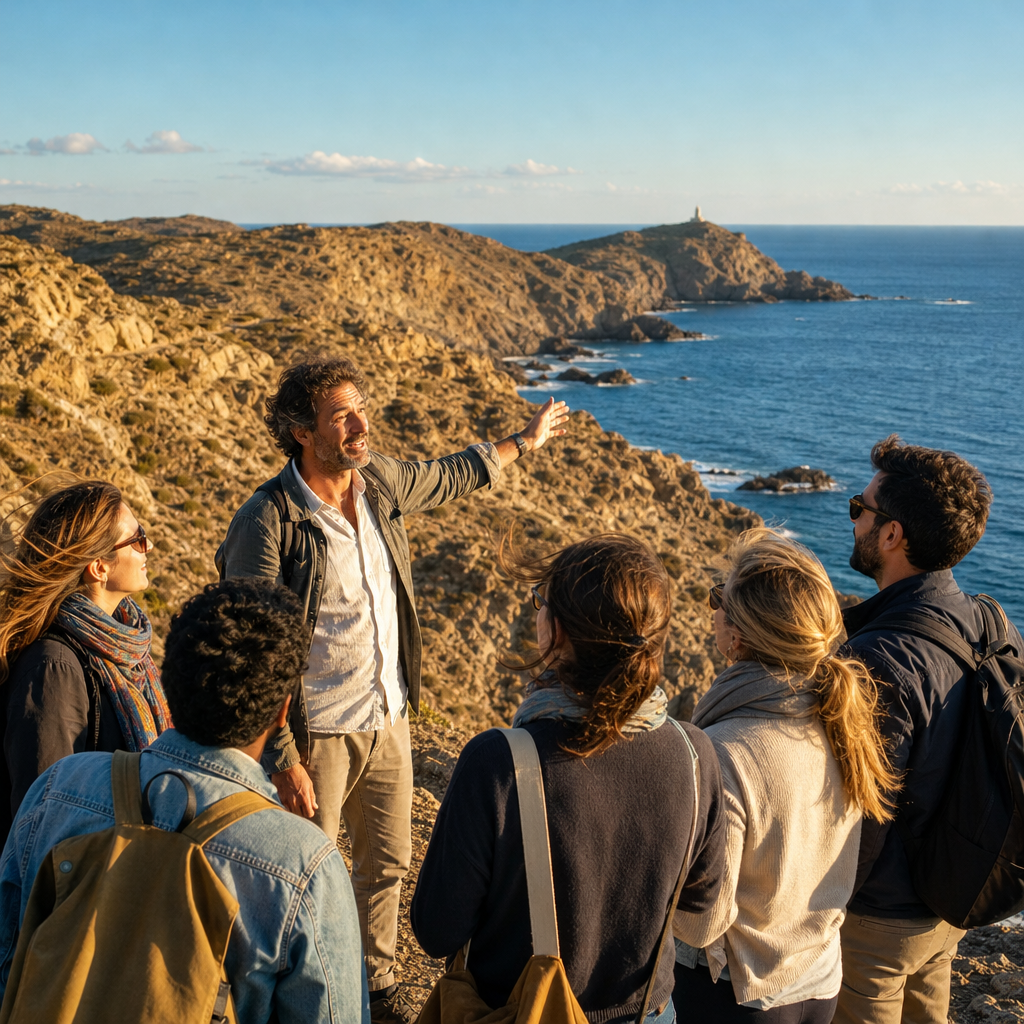
The name "Costa Brava" — Wild Coast — was coined not by a tourist board but by a journalist. In 1908, the Catalan writer Ferran Agulló used the phrase in an article describing the jagged, cliff-edged shoreline north of Blanes, and it stuck immediately. The wildness is literal: at Cap de Creus, the most easterly point of the entire Iberian Peninsula, the Pyrenees do not gradually flatten into the sea — they plunge into it. The result is a fractured, lunar coastline of eroded schist and granite that looks like nothing else in Spain. Cap de Creus is Catalonia's only coastal national park, and its rock formations — worn into mushroom shapes, arches and hollows by the tramuntana, the fierce north wind that dominates this corner of Catalonia — appear directly in Dalí's canvases. The melting watches of The Persistence of Memory (1931), the barren rock platforms, the bone-white skies: all of them are observational, not invented. Dalí was painting what he saw from Portlligat.
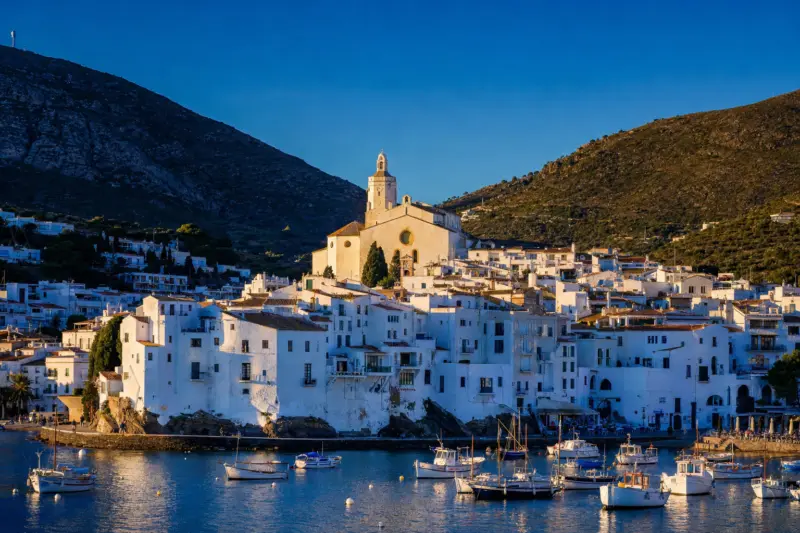
The drive from Barcelona covers roughly 155 kilometres northward along the AP-7 motorway through the Maresme coast and the Girona hinterland, and even the approach to Cadaqués is part of the experience. Until 1950, the village was effectively cut off from inland Spain by road — the mountains behind it were simply too steep for a viable route. Access was mainly by boat. That enforced isolation is precisely why Cadaqués became a magnet for artists and intellectuals in the first half of the twentieth century: it was reachable only by those who really wanted to reach it. Pablo Picasso came in 1910. Marcel Duchamp played chess on the terrace of the Meliton bar during the 1930s. Man Ray photographed the coves. Federico García Lorca wrote poetry in a rented room above the harbour. The road that finally connected Cadaqués to Roses in 1950 still requires navigating a dramatic mountain pass — arriving by car today, you understand viscerally why this place stayed secret for so long.
Pairing a Dalí itinerary with a broader look at Catalan rural heritage is also possible: the Medieval Villages of Catalonia with Farmhouse Lunch tour covers the region's layered history from a different angle, and works well as a companion day for anyone spending a full week based in Barcelona. The Costa Brava & Dalí + Winery tour meanwhile keeps its focus firmly on Cap de Creus, Figueres, and the coast.
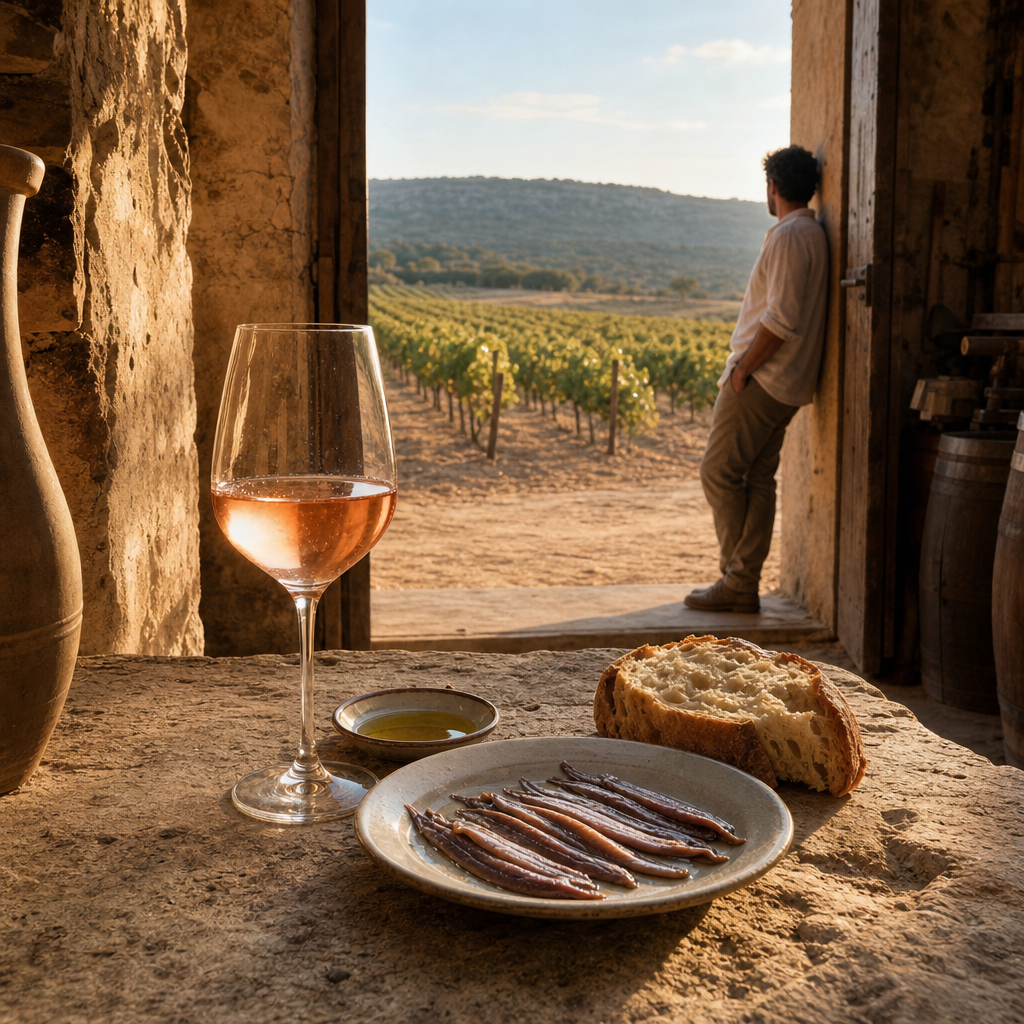
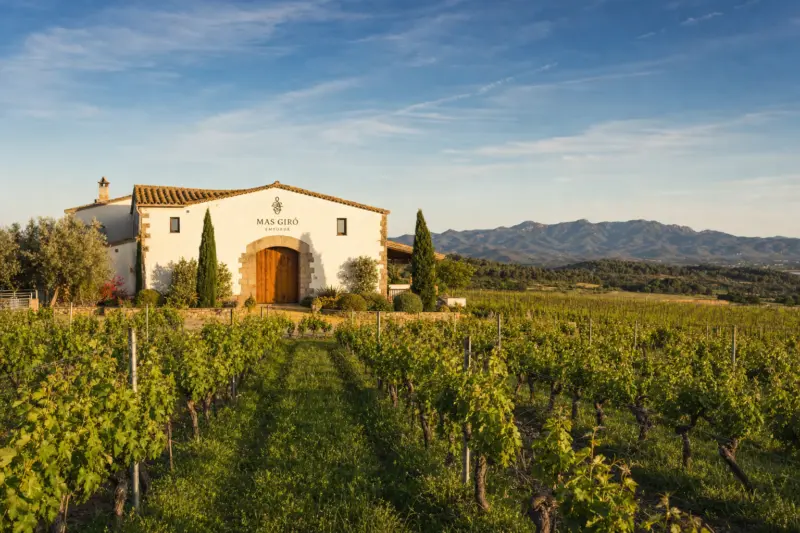
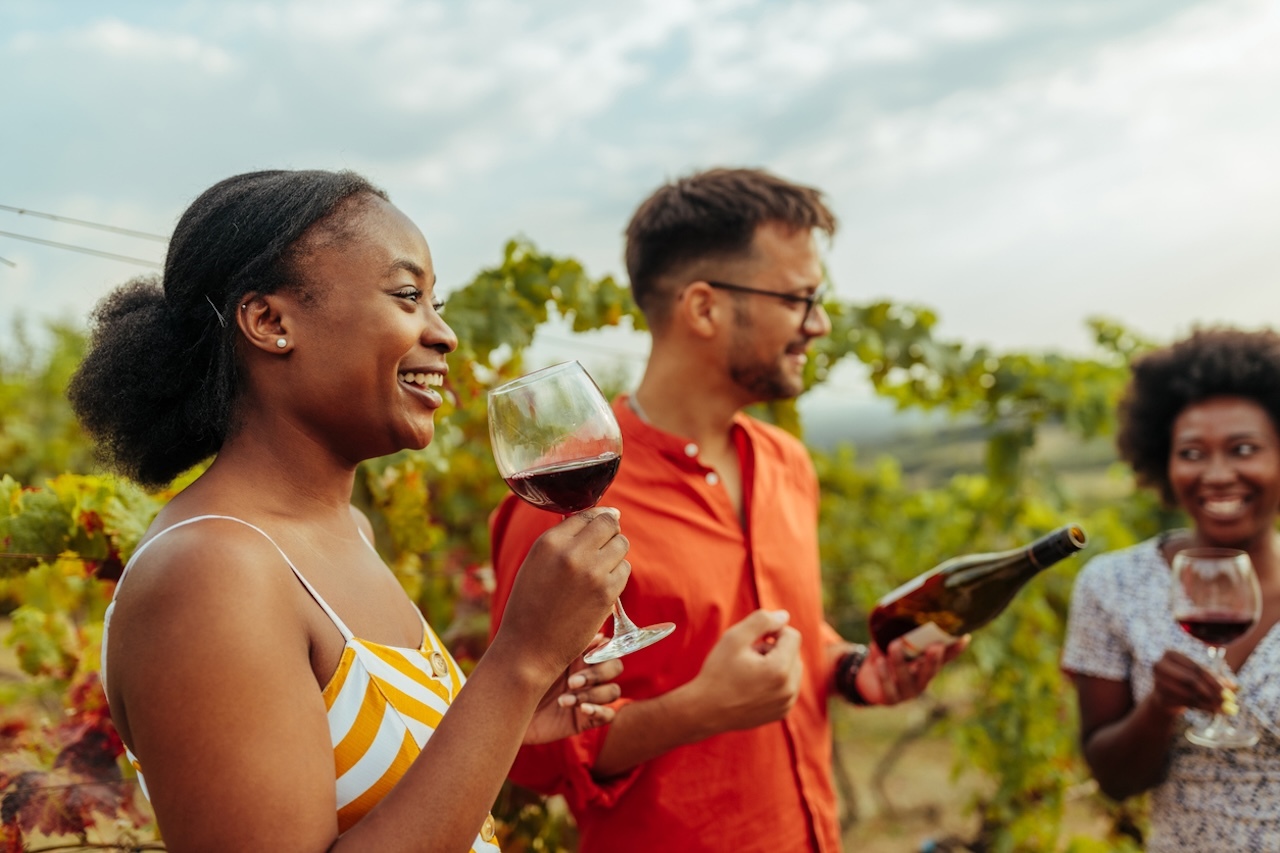
Every competitor article about a Dalí day trip from Barcelona ends at Figueres or Cadaqués. The LCT itinerary goes one step further, and it's the step that makes the most historical sense. The Empordà Denominació d'Origen (DO) wine region wraps directly around Figueres and Cadaqués — and viticulture here is not a modern agricultural footnote. Greek colonists who founded Emporion (modern Empúries) on this coastline in the 6th century BC brought vines with them. The region has been producing wine continuously, through Roman occupation, medieval monasteries and phylloxera crises, for roughly 2,600 years. The Celler Clos de Basella, visited on the tour, sits within this ancient winemaking landscape.
Dalí himself was a vocal and specific enthusiast of Empordà food and wine. He regularly hosted surrealist-themed dinners at the Teatro-Museo and at Portlligat, and both tables featured local anchovies from Cadaqués — still considered among the finest cured anchovies in Spain, packed in salt and olive oil by family operations in L'Escala — alongside seasonal seafood and the grenache- and carignan-based reds of the region. Eating and drinking locally was, for Dalí, an extension of his identity as an Empordanès, not a lifestyle choice.
The tramuntana wind that shapes the Cap de Creus rock formations and closes the mountain road into Cadaqués also shapes the vines. Winemakers in the Empordà DO consistently credit the tramuntana's stress — desiccating, relentless, arriving without warning — for the concentration and minerality that distinguishes the region's wines from softer Catalan appellations further south. What to taste: garnatxa blanca whites, which carry a saline, almost oceanic freshness; the local rosés, pale and aromatic; and aged reds from old-vine cariñena (carignan), which tend toward iron-tinged earthiness rather than fruit-forward approachability. If you want to explore another wine landscape around Barcelona, the Montserrat Vineyards & Wine day trip covers the Penedès region with similar depth. But on a Costa Brava day, the winery stop is not an add-on — it is the logical sensory conclusion to a day spent understanding a region defined by wind, rock and eccentric genius.
The Costa Brava & Dalí + Winery private tour is entirely private — no shared buses, no waiting for strangers, no compromise on pace. Your guide, your vehicle, your itinerary. The seasonal routing is handled for you: Portlligat and Cadaqués between September and June, Púbol and the Gala Castle in July and August, when summer congestion on the mountain road into Cadaqués makes the village inaccessible by coach. Dalí Museum tickets at the Teatro-Museo in Figueres sell out weeks in advance during the high season; LCT's tour includes skip-the-line access, which on a summer Saturday can mean the difference between ninety minutes in the queue and walking straight in.
If you're building a longer Barcelona itinerary around this day trip, there are several strong pairings. For Catalan rural history, the Medieval Villages with Farmhouse Lunch tour covers Besalú and the Girona hinterland. For wine closer to the city, Montserrat & Vineyards combines the monastery with Penedès cellars. Within Barcelona itself, options range from the Gaudí & Sagrada Família half-day and the full-day Barcelona highlights tour to the Foodie Gothic Quarter tour and the Highlights & Secrets walking tour. The full range of private experiences based in Barcelona is available on the LocalCoolTour location page — a good starting point if you're planning three days or more in the city.
Explore the city with a local guide
Barcelona
Barcelona
Barcelona
Barcelona
Barcelona
Barcelona
Barcelona
Barcelona
We use a single cookie, to remember this choice. We do not use analytics or advertising cookies. Read our cookie policy.