2 hrs
Brussels
Brussels: Private Family Tour. Highlights, Tasting & Museum
✓ Free cancellation Kids friendly
5.0(15 reviews)
From €156/ person
Book Now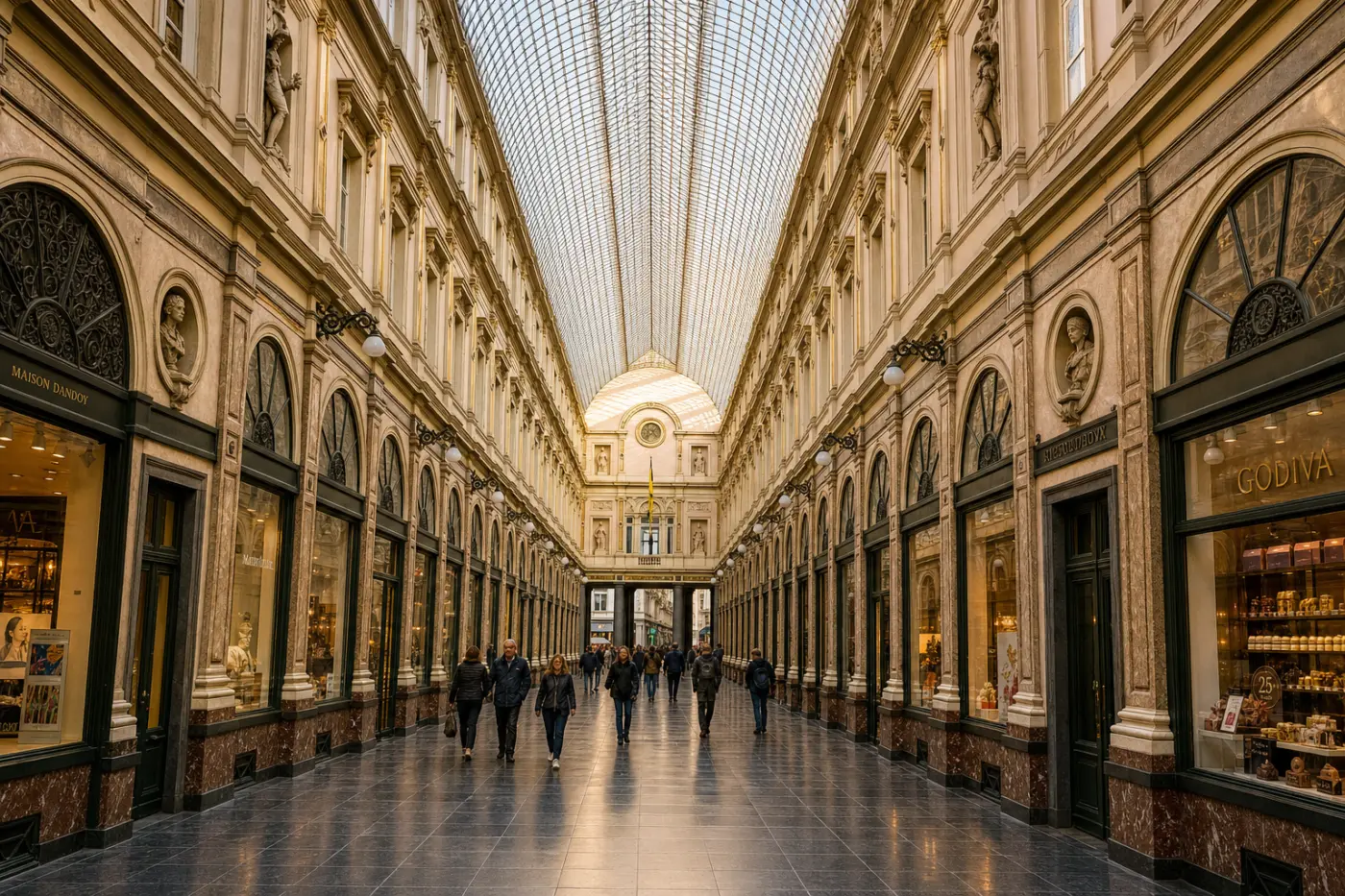
Tourist attraction
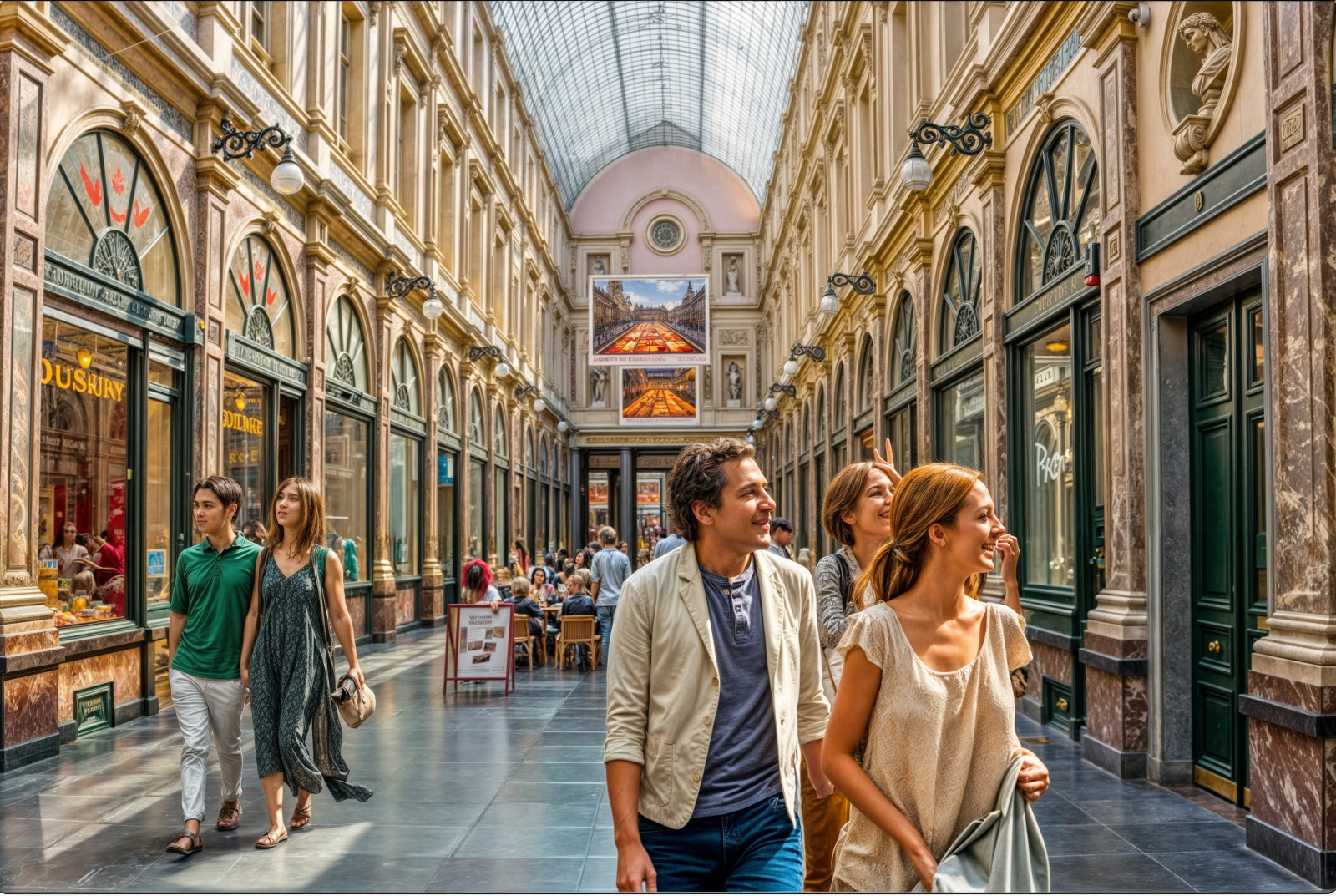
The Galeries Royales Saint-Hubert is a monumental Florentine Renaissance-style covered arcade running through the heart of Brussels, connecting the Rue du Marché aux Herbes with the Rue des Bouchers. Conceived around 1837 by the then-young architect Jean-Pierre Cluysenaer, the project had an ambitious social purpose: to rehabilitate one of the city's most impoverished neighbourhoods by replacing its cramped alleys with an elegant mixed-use building housing shops, apartments, theatres, and public promenading space. Construction began in 1846, and the official inauguration took place on 20 June 1847 in the presence of King Leopold I — making it one of the earliest large-scale covered arcades in the world, predating Milan's Galleria Vittorio Emanuele II by nearly two decades.
When it opened, Brussels joined the company of Paris and London as a city with a grand arcade, surpassing Milan, Moscow, and Berlin in doing so. Cluysenaer's signature achievement is the ingenious glass roof: a continuous barrel vault supported by self-bearing arched ironwork, glazed with fish-scale-patterned tiles specifically designed to maximise ventilation and prevent condensation — a quietly brilliant engineering solution that still functions today. The arcade's 213-metre length is divided into three named galleries — Galerie de la Reine, Galerie du Roi, and Galerie des Princes — each lined with neo-Renaissance pilasters, gilded mouldings, and carved stone detailing that earned the complex its popular 19th-century nickname, "the Umbrella of Brussels." Originally illuminated by gas candelabras, the galleries now use LED scenographic lighting capable of projecting coordinated sound and light displays across the vaulted interior.
The cultural life of the galleries runs deep. In 1939, the Cinéma des Galeries was established within the arcade, and in 1950 the Théâtre Royal des Galeries underwent a significant transformation, with Surrealist painter René Magritte commissioned to design its ceiling — one of the few interior architectural works by the artist. Victor Hugo, Alexandre Dumas, and Charles Baudelaire all frequented the galleries during the 19th century, the latter famously writing about Brussels from exile in one of its cafés. The buildings were listed as protected heritage by the Brussels-Capital Region in 1986, and since 1995 an extensive series of renovation campaigns has restored the façades, the glass roof, the Théâtre du Vaudeville, residential flats, and offices. A boutique hotel, the Hôtel des Galeries, has since opened within the complex, continuing the mixed-use vision Cluysenaer embedded in the original design.
Today the galleries remain privately owned by descendants of the original founding families, who have maintained the deliberate social and commercial mix Cluysenaer intended. Visitors walk through a living arcade — pralineries and chocolatiers (including the celebrated Neuhaus, which invented the Belgian praline here in 1912) sit alongside bookshops, jewellers, a theatre, a cinema, and working apartments above. The best time to visit is mid-morning on a weekday, when the golden light filters through the vaulted glass roof and the crowds are thin enough to look up and take in the full grandeur of the ironwork. The galleries are open to the public at all hours as a pedestrian thoroughfare, and entry is free.
Private tours with a local guide, at your own pace.
Brussels
Brussels
Brussels
Brussels
Brussels
Brussels
Brussels
We use a single cookie, to remember this choice. We do not use analytics or advertising cookies. Read our cookie policy.