3 hrs
Brussels
Brussels Off the Beaten Path: A Private Local Walking Tour
✓ Free cancellation Kids friendly
4.9(18 reviews)
From €186/ person
Book Now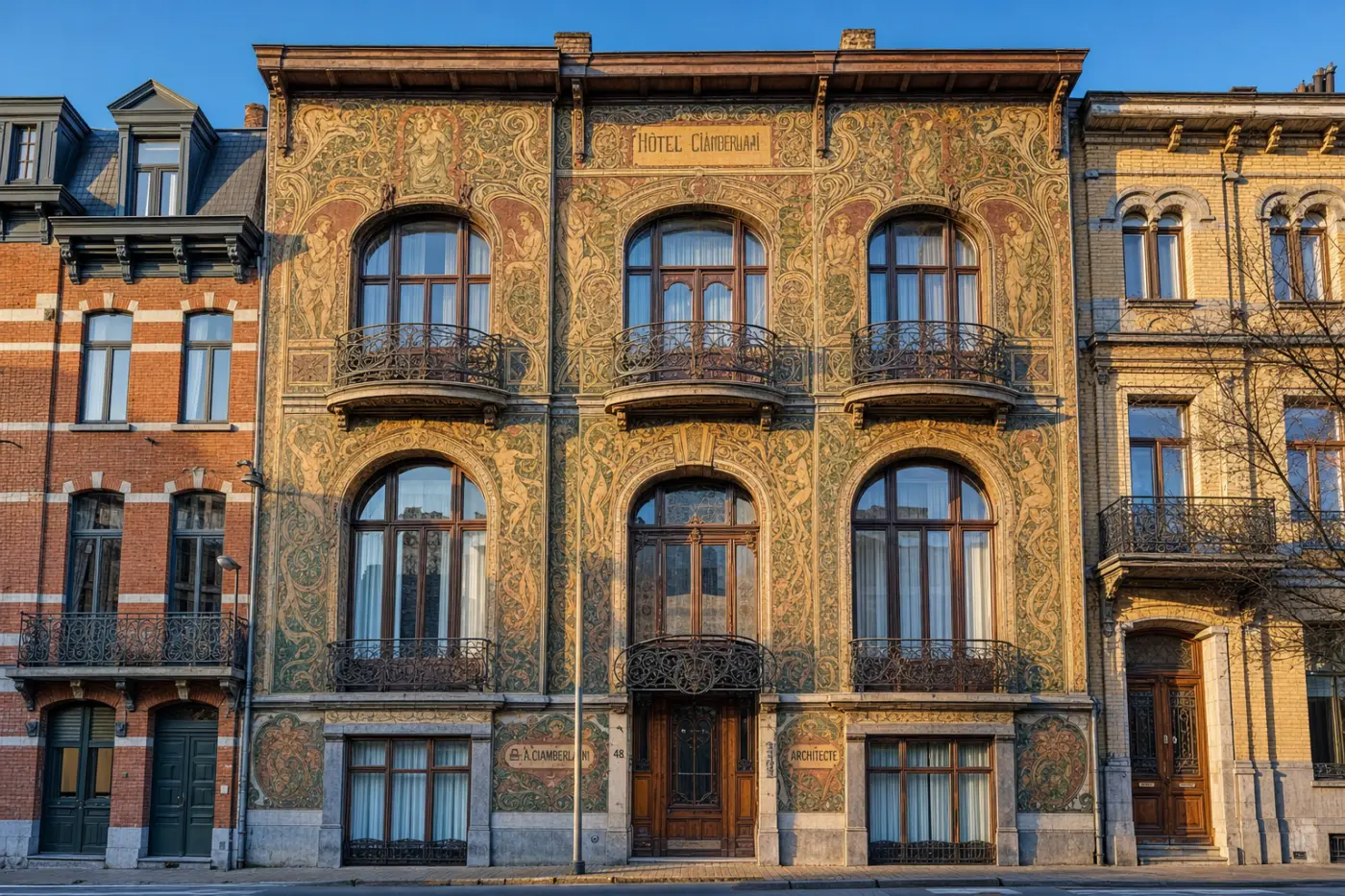
Tourist attraction
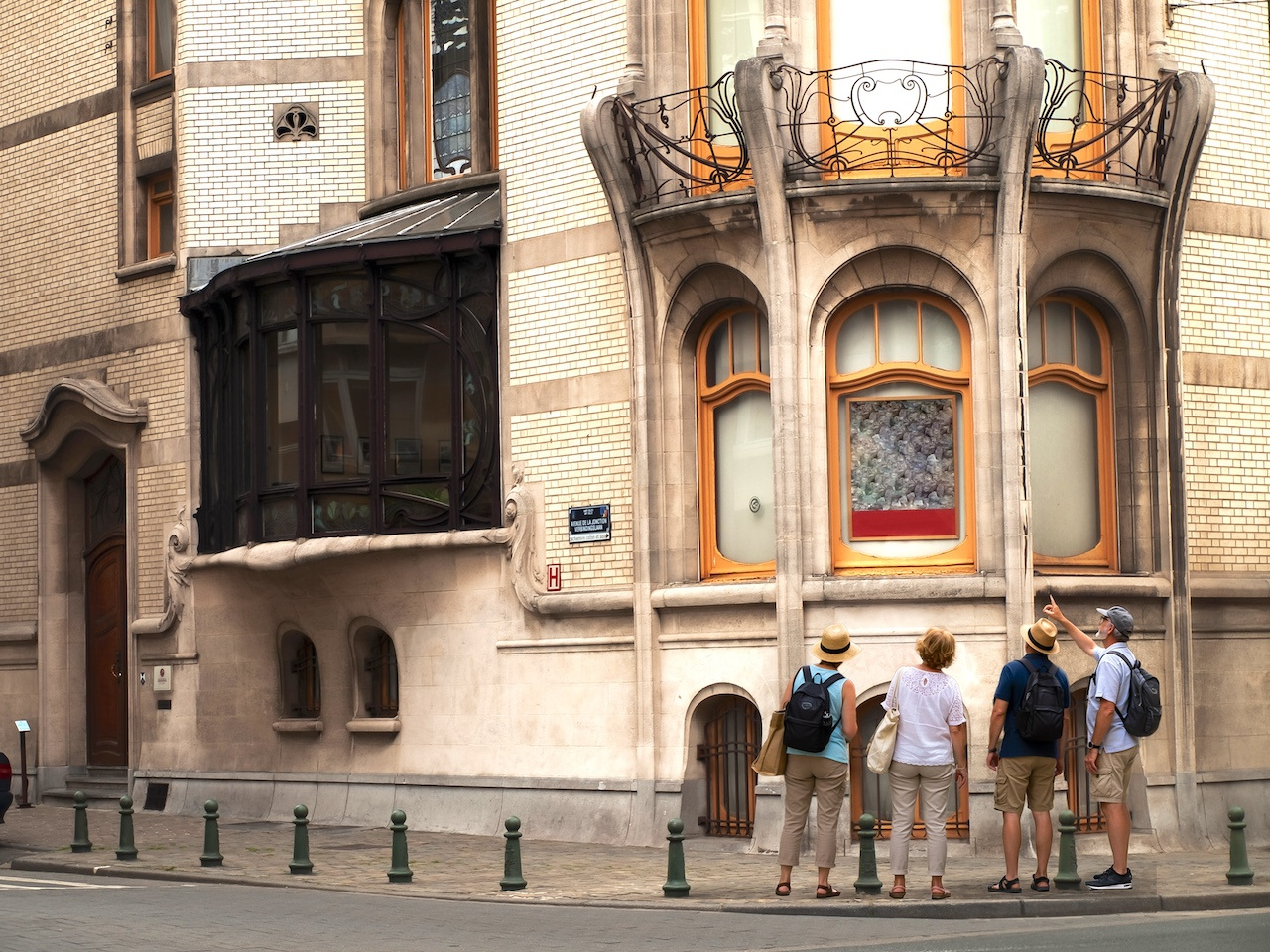
The Hôtel Ciamberlani, standing at 48 Rue Defacqz in the Ixelles municipality of Brussels, is one of the most significant early Art Nouveau buildings in Belgium. Designed in 1897 by architect Paul Hankar — a close contemporary and sometime rival of Victor Horta — the building was conceived as both a private residence and a working studio for the Belgian Symbolist painter Albert Ciamberlani. Unlike the sinuous, plant-like curves that define Horta's nearby Hôtel Tassel, Hankar's approach here was deliberately more geometric and rational, drawing on Japanese decorative arts and the structural logic of classical composition. The result is a building that occupies a distinct and intellectually rigorous corner of the Art Nouveau movement.
The facade is the building's defining glory. Stretching across a generous width unusual for Brussels townhouses of the period, it is dominated by a monumental sgraffito composition executed by decorative artist Adolphe Crespin under Ciamberlani's direct artistic supervision. The sgraffito technique — in which multiple layers of tinted plaster are applied and then selectively scratched away to reveal contrasting colors beneath — was elevated here to an almost mural-painting scale. The imagery is densely Symbolist: intertwined vegetal forms, allegorical female figures, and mythical motifs fill the wall surface between the arched windows and elaborate ironwork balustrades, making this facade arguably the most sophisticated example of sgraffito decoration in all of Brussels. The building was listed as a protected historic monument in 1983, and a major restoration campaign in 2010 preserved both the exterior sgraffito panels and the interior's original mosaics and stained glass.
The interior continued the total-artwork philosophy of Art Nouveau. Ciamberlani, as both client and contributing artistic director, ensured that the decorative program extended from the threshold inward — mosaic floors, stained glass panels filtering colored light into the studio, and ironwork details that echoed the facade's rhythms. A 1927 remodeling by architect Adrien Blomme introduced a ground-floor garage opening, the most visible alteration to the original scheme, though the upper floors and principal interiors remained largely intact. The building served as Ciamberlani's home and workplace until his death, and it subsequently became the official residence of the Argentine Ambassador to Belgium, a function it retains today.
Because the building is an active diplomatic residence, public access is limited but not impossible. The Hôtel Ciamberlani participates periodically in open-house events organized by networks such as the Iconic Houses Network and Brussels' own heritage open days (Journées du Patrimoine), offering rare interior access. Even without entry, the facade rewards a long, unhurried look: position yourself on the opposite pavement of Rue Defacqz to take in the full width of the sgraffito composition, ideally in morning light when the layered plaster colors are sharpest. The street itself sits within Ixelles' dense cluster of fin-de-siècle Art Nouveau architecture, making it a natural waypoint on any self-guided walking tour of Brussels' 1890s–1910s building stock.
Private tours with a local guide, at your own pace.
Brussels
Brussels
Brussels
Brussels
Brussels
Brussels

Brussels
We use a single cookie, to remember this choice. We do not use analytics or advertising cookies. Read our cookie policy.