2.5 hrs
Brussels
Brussels Private Food Tour: Waffles, Fries, Beer & Local History
✓ Free cancellation Kids friendly
5.0(7 reviews)
From €206/ person
Book Now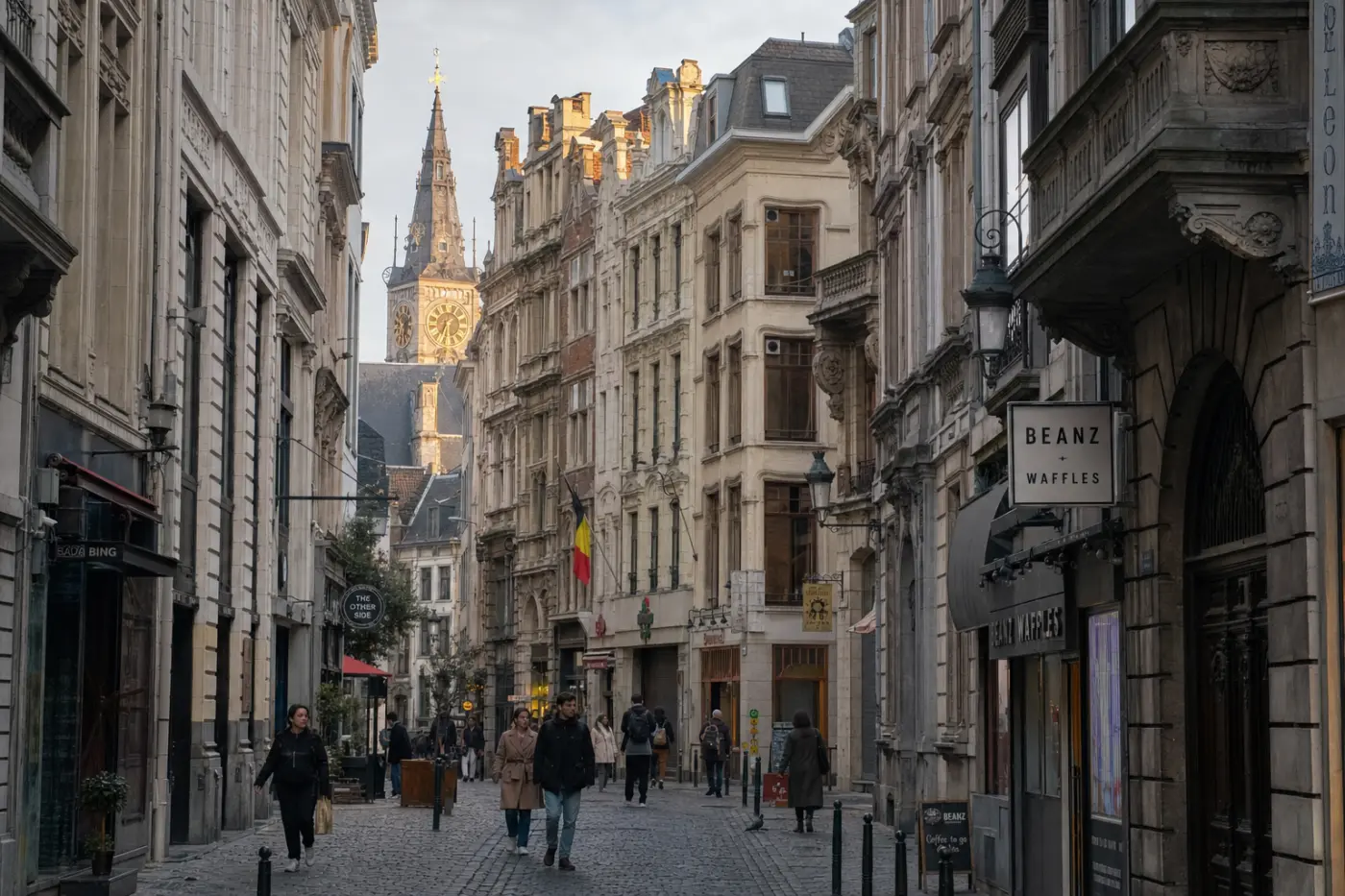
Tourist attraction
Rue de Tabora is a narrow, centuries-old street threading through the dense medieval fabric of central Brussels, running between Rue du Marché aux Poulets and Rue de la Bourse — just steps from the Grand-Place. For most of its existence it formed part of the longer Rue au Beurre, the old butter-market lane that served the commercial heart of the lower city. Its current name dates from 1916, when the Belgian government renamed the street to commemorate the capture of Tabora, the administrative capital of German East Africa, by the Belgian Force Publique under Inspector General Charles Tombeur. That September victory was one of the few pieces of encouraging news to reach a population that had been under German occupation since August 1914, enduring conditions that survivors later described as worse than the Second World War occupation — making the renaming a deeply felt act of civic defiance and pride.
The Battle of Tabora, fought in September 1916, marked the first time the Congolese Force Publique operated in large-scale conventional warfare rather than internal policing. Tombeur coordinated a two-pronged advance along the entire eastern border of the Belgian Congo, pushing back German colonial forces across hundreds of kilometres of East African bush before encircling and taking the city. Brussels, Namur, Ostend and dozens of other Belgian municipalities simultaneously renamed streets and squares "Tabora" — a collective act of commemoration that turned a remote colonial engagement into a household name across the country.
Beyond its wartime resonance, the street occupies prime urban real estate. The Church of Saint Nicholas, whose origins go back to the 11th century and whose current baroque façade with a classicist-style portal and large gilded clock faces onto the adjacent Rue au Beurre, anchors the neighbourhood architecturally. The street itself is lined with the kind of compact, tourist-frequented businesses that have populated this quarter for generations: Friterie Tabora, one of Brussels' best-known fry shops, and Le Funambule, a beloved waffle and crêpe counter, both draw steady queues of locals and visitors alike.
Rue de Tabora is best explored as part of a walking circuit of the lower city. Arrive from the Grand-Place via Rue au Beurre in the early morning to see the neighbourhood before the crowds build, and pair the visit with the interior of Saint Nicholas — one of Brussels' most underrated Gothic churches, with a Rubens painting and an unusually irregular floor plan caused by the medieval city walls that cut through it. The street is fully pedestrianised in feel, though technically open to service traffic, and is accessible from Bourse metro station (lines 2 and 6) within two minutes on foot.
Private tours with a local guide, at your own pace.
Brussels
Brussels
Brussels
Brussels
Brussels
Brussels
Brussels
We use a single cookie, to remember this choice. We do not use analytics or advertising cookies. Read our cookie policy.