3 hrs
Brussels
Brussels Off the Beaten Path: A Private Local Walking Tour
✓ Free cancellation Kids friendly
4.9(18 reviews)
From €186/ person
Book Now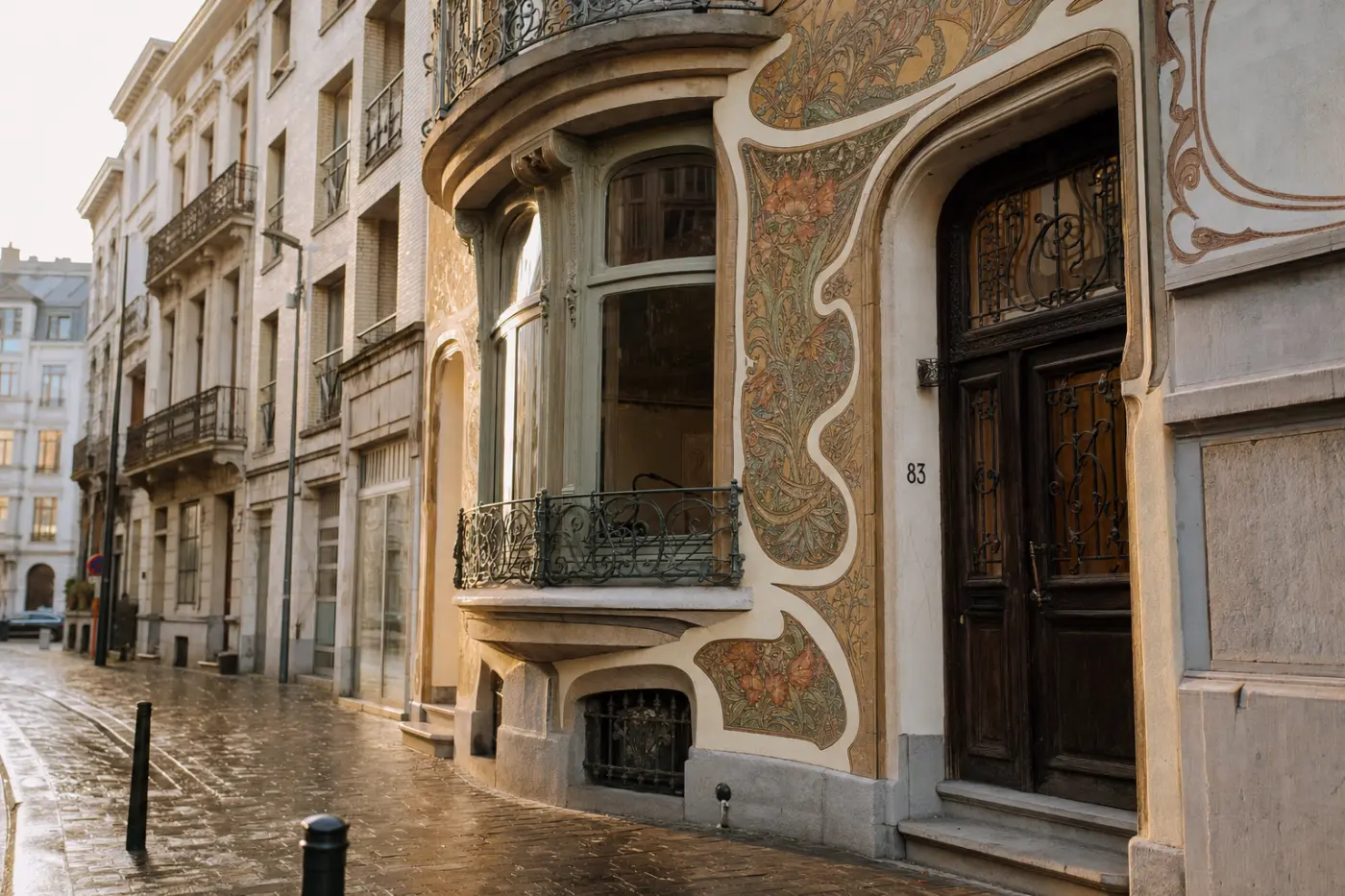
Tourist attraction
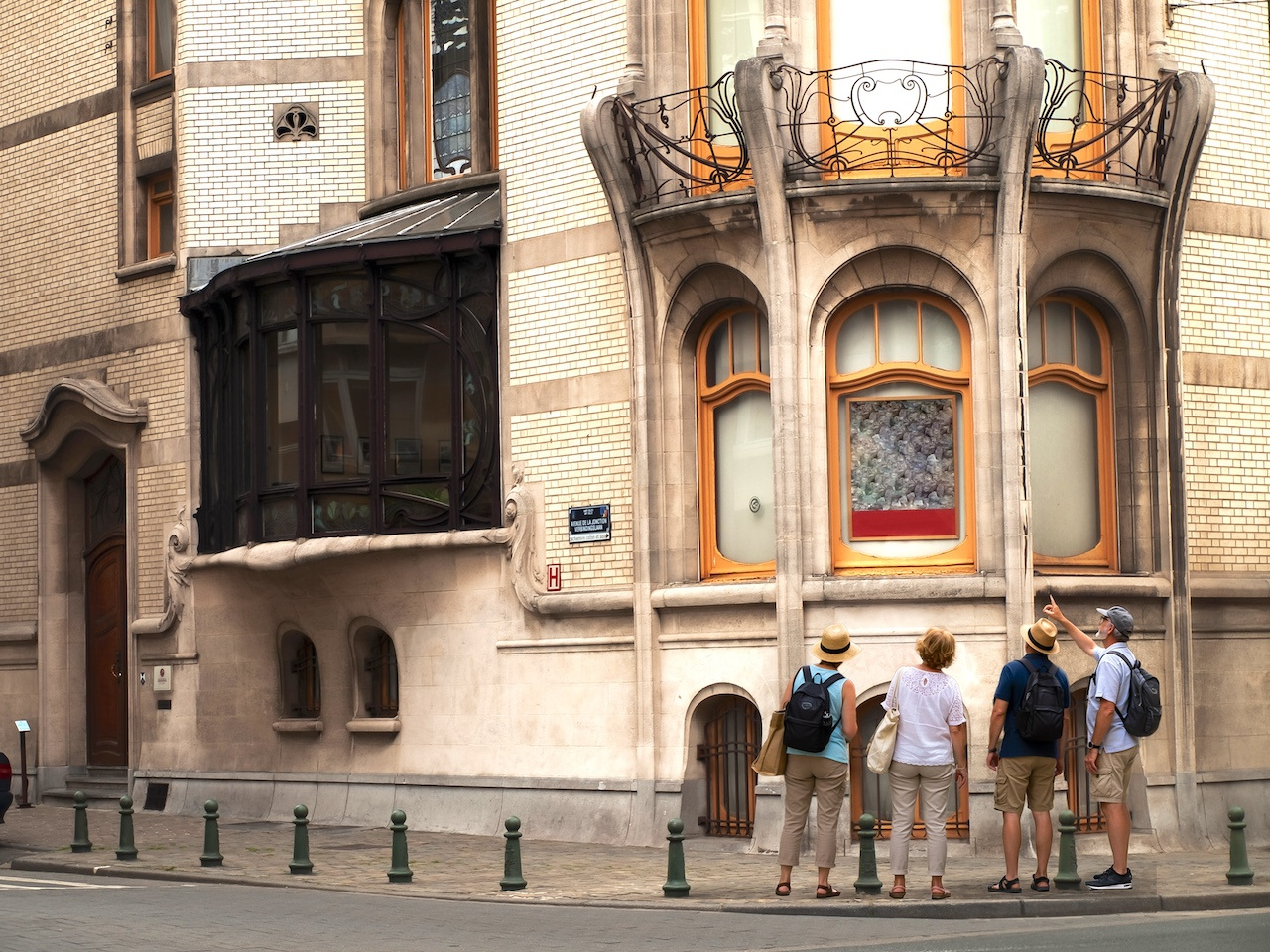
At 83 Rue Faider in the Ixelles municipality of Brussels stands Maison Roosenboom, a private townhouse designed in 1900 by the Belgian painter-architect Albert Roosenboom. The building belongs to the floral strand of Brussels Art Nouveau — the same movement that produced Victor Horta's Hôtel Tassel (1893) and the Maison Hannon (1902) — and is considered one of its finest surviving residential examples. Roosenboom approached the commission as both artist and architect, integrating decorative and structural elements into a single unified composition rather than treating ornament as an afterthought.
The façade is its most immediately striking feature: a curved bow window anchors the composition while sgraffito panels crafted by Privat Livemont — the celebrated Belgian poster artist best known for his 1896 Absinthe Robette lithograph — animate the render surface with sinuous botanical forms. Wrought-iron balcony railings echo the same floral vocabulary, and the original polychrome palette was meticulously documented and reinstated during the restoration that began in 2020. Inside, the entrance hall retains its geometric mosaic floor, the salon its painted ceiling panels, and the original wooden staircase — carved with the organic curves characteristic of the period — rises through the full height of the house. The building had been declared uninhabitable before conservators from urban.brussels undertook the multi-year project to return every surface to its 1900 condition using period-accurate techniques.
Guided tours, run by Korei Guided Tours in groups of up to twelve, take visitors through every significant space of the house over approximately one hour. The itinerary moves from the restored street façade through the entrance hall, up the original staircase, and into the principal reception rooms. Guides explain both the symbolic programme embedded in Livemont's sgraffiti — rooted in the Symbolist fascination with nature as metaphor — and the specific craft techniques used in 1900 and again in the 2020s restoration: how sgraffito is scratched through layers of coloured plaster while still wet, how mosaic tesserae were set, and how the ceiling paintings were stabilised and re-integrated. It is a rare opportunity to experience a Brussels Art Nouveau interior that has not been subdivided or modernised.
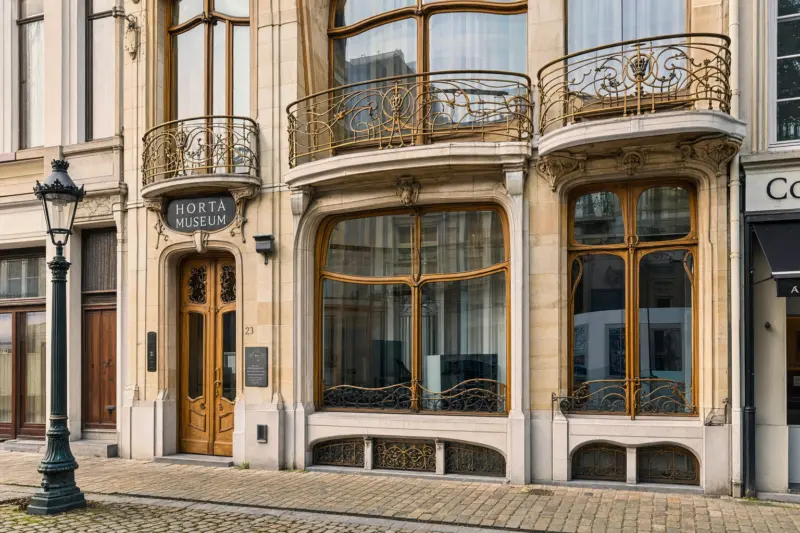
Maison Roosenboom is located in the heart of Ixelles, one of Brussels' densest concentrations of Art Nouveau architecture, and pairs naturally with a walk to the Horta Museum on Rue Américaine (roughly ten minutes on foot). The house is accessible to visitors with reduced mobility via a lift. Tours must be booked in advance through Korei Guided Tours and are conducted in small groups, so early reservation is strongly advised, particularly during the Open Monuments weekend each September when demand peaks significantly.
Private tours with a local guide, at your own pace.
Brussels
Brussels
Brussels
Brussels
Brussels
Brussels

Brussels
We use a single cookie, to remember this choice. We do not use analytics or advertising cookies. Read our cookie policy.