2.5 hrs
Brussels
Brussels Private Food Tour: Waffles, Fries, Beer & Local History
✓ Free cancellation Kids friendly
4.5(20 reviews)
From €206/ person
Book Now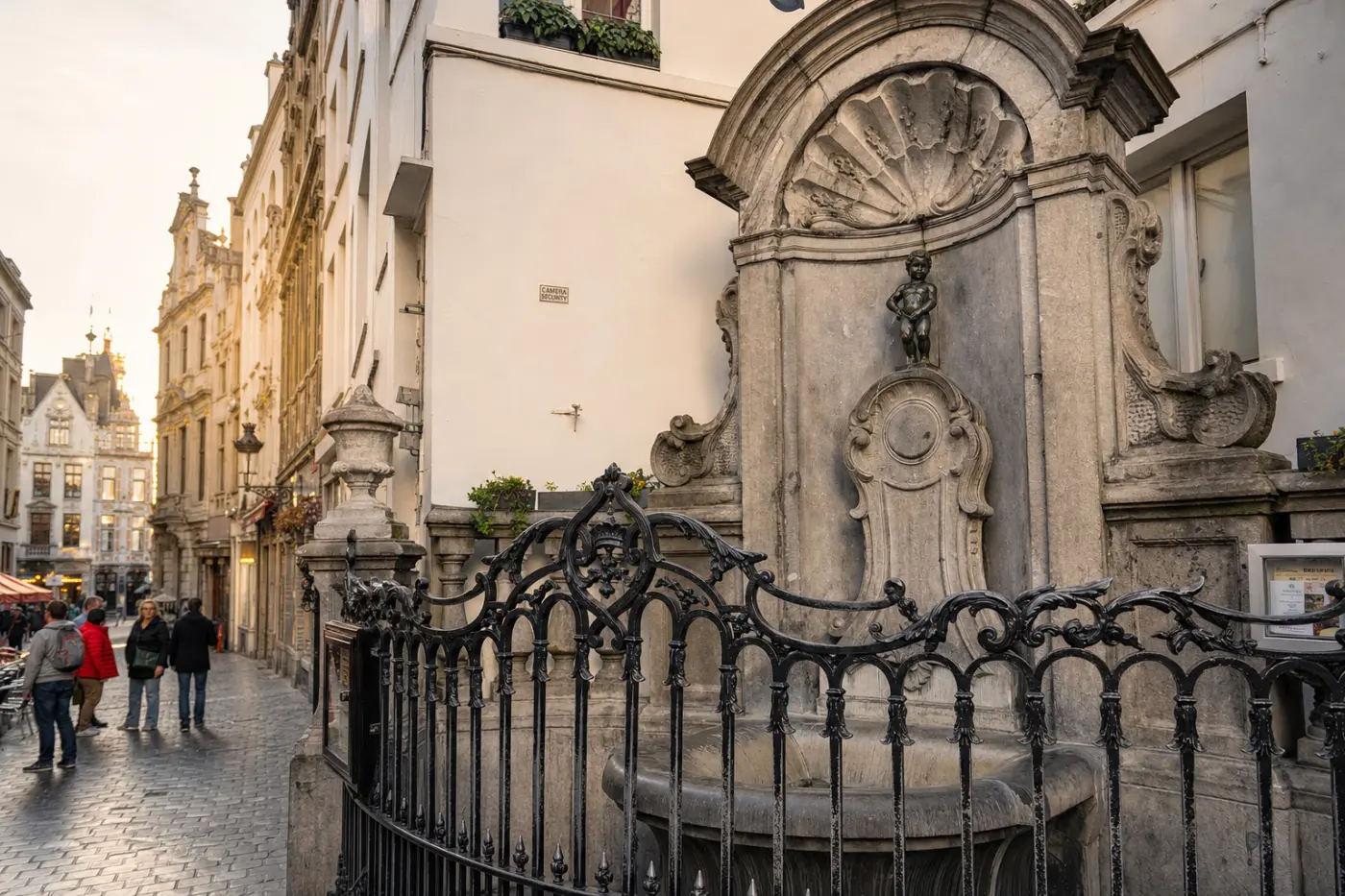
Tourist attraction
Standing just 55 centimetres tall on the corner of Rue de l'Étuve and Rue du Chêne, the Manneken Pis is a small bronze fountain sculpture depicting a naked boy urinating into a basin below. Designed by Flemish sculptor Hieronymus Duquesnoy the Elder, it was commissioned by the City of Brussels and installed in 1618–1619, replacing an even older stone version that had stood on the same site since at least the 14th century. The name itself is Brussels dialect for "Little Man Pee," and despite — or because of — its utter lack of grandeur, the statue has become the single most recognised symbol of the Belgian capital.
The origins of the figure are wrapped in competing legends. One account holds that a wealthy merchant's young son was found urinating against a tree after being lost in the city for two days, and the statue was erected in his honour. Another, more dramatic tale describes a boy who defused a bomb threatening the city walls by urinating on the fuse. A third legend credits Duke Godfrey III of Leuven, said to have been hoisted in a basket above troops in battle as an infant to boost morale — and who reportedly urinated on the enemy from above. None of these stories is verifiable, but all three reflect the Bruxellois fondness for the irreverent and the absurdist. What is documented is that the current bronze casting was stolen by French troops in 1747, recovered, and that King Louis XV of France subsequently gifted the statue an elaborate baroque costume as a formal act of reparation — setting the precedent for the extraordinary wardrobe tradition that continues today.
That wardrobe now numbers over 1,000 officially registered costumes, maintained by the Musée de la Ville de Bruxelles just steps away on the Grand-Place. Manneken Pis is dressed in rotating outfits year-round — anywhere from Elvis Presley to a Chinese Mandarin to a Belgian footballer — according to a published calendar. On ceremonial days, the fountain basin is connected to a beer tap and flows with Belgian ale, freely dispensed to passersby. The costume collection was inaugurated in 1698 when the Elector of Bavaria gifted the first outfit, and has since received contributions from heads of state, foreign embassies, and fan clubs from dozens of countries.
Visiting the statue requires almost no planning: it sits a three-minute walk southwest of the Grand-Place and is accessible at all hours. Crowds peak between 10am and 3pm; arriving in the early morning or at dusk offers a noticeably quieter experience and better light for photographs. A full schedule of dressing ceremonies — some accompanied by music and civic processions — is published on the official Visit Brussels website. While the statue's scale consistently surprises first-time visitors expecting something monumental, that deflation of expectation is itself the point: Manneken Pis is Brussels refusing, as it always has, to take itself too seriously.
Private tours with a local guide, at your own pace.
Brussels
Brussels
Brussels
Brussels
Brussels
Brussels
Brussels