3 hrs
Brussels
Brussels Off the Beaten Path: A Private Local Walking Tour
✓ Free cancellation Kids friendly
4.9(18 reviews)
From €186/ person
Book Now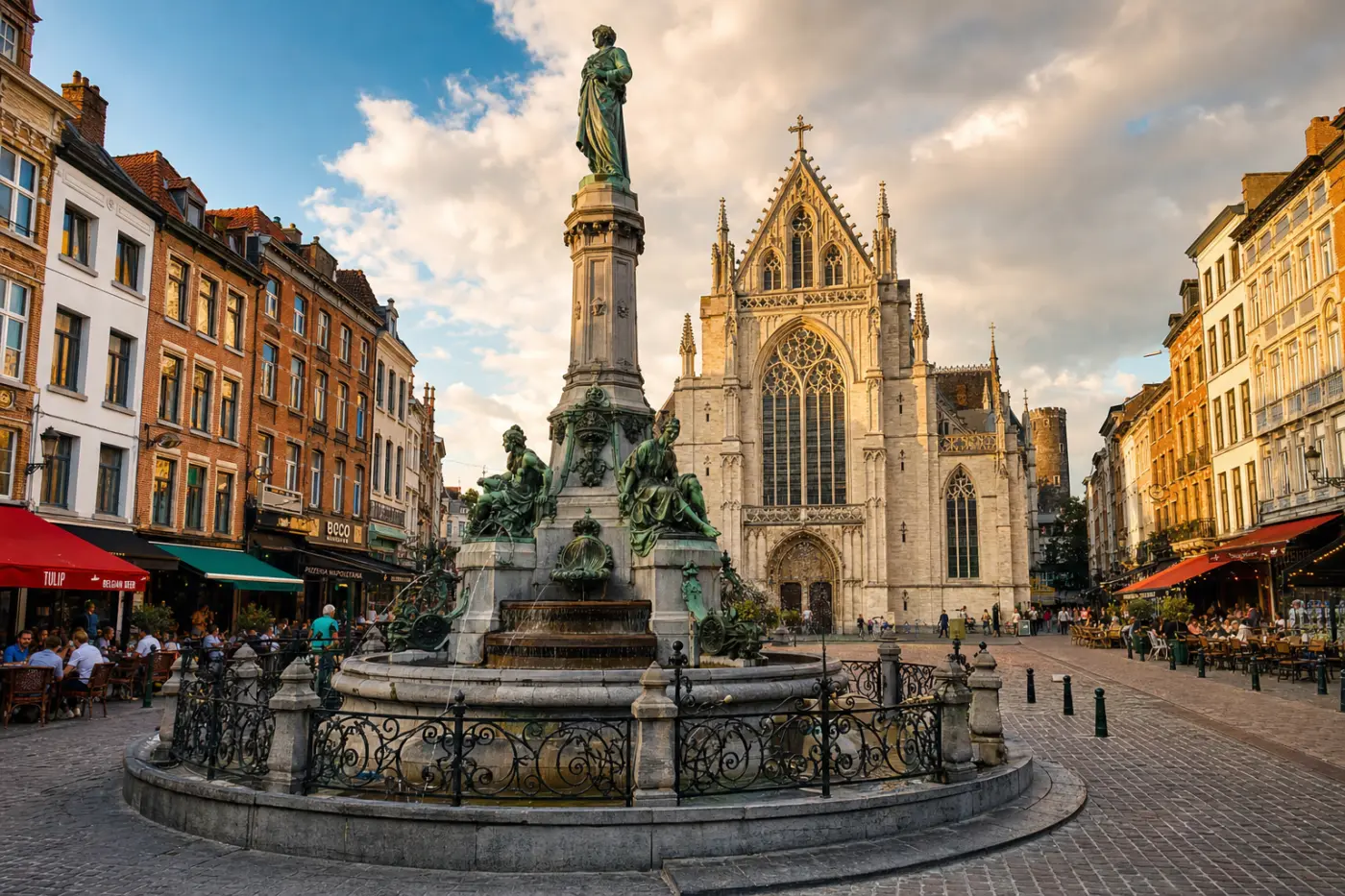
Tourist attraction
Known to every self-respecting Bruxellois as "le Vismet," the Marché aux Poissons — officially the Quai aux Briques and Quai au Bois à Brûler — occupies the site of Brussels' former inner-city port. The long, open rectangle you walk today is not a natural plaza but a filled-in dock: the channel that once linked the city to the Willebroek Canal and brought North Sea catches, grindstones, and wine barrels directly into the medieval capital. The fish market itself operated here from 1884 to 1955, relocated from the Rue des Halles after traders in the new covered market found it impossible to work alongside the overpowering smell of fresh fish. That four-decade smell, it seems, was enough to name the entire neighborhood for generations.
The square is a textbook example of what locals wryly call Brussels' "moving monuments syndrome" — the city's habit of dismantling historic structures during infrastructure works and reassembling them elsewhere. The ornate Anspach Fountain, built to honor liberal mayor Jules Anspach, originally stood in the Place de Brouckère. It was dismantled in 1973 during metro construction and rebuilt here in 1981 — but even then stripped of its massive stone pedestal, because metro tunneling was planned beneath the new location too. At the opposite end of the square stands St. Catherine's Church, designed by Joseph Poelaert (architect of the monumental Palace of Justice) in a deliberately ambiguous style: Gothic in scale to satisfy the Catholic establishment, but austerely plain in ornamentation to appease Brussels' liberal city government — a physical embodiment of the Belgian political compromise. Crucially, this church is itself a relocated replica of an earlier one on the Rue Sainte-Catherine.
Amid all this repositioning, two structures remain on their original ground: the detached bell tower of the former church and the Tour Noire (Black Tower), a substantial remnant of Brussels' 13th-century city ramparts. The Tour Noire stands as the oldest visible structure in the neighborhood, a rough-stone survivor that predates everything around it by half a millennium. Together these two towers anchor the square's historic identity and give it a vertical drama that the low-slung café terraces and restaurant awnings only enhance.
Today the Marché aux Poissons is Brussels' premier seafood dining district, its quays lined with moules-frites restaurants, oyster bars, and fish merchants that keep alive the market's culinary legacy. The neighborhood, now branded "St. Cath," is liveliest at lunch and in the early evening, when restaurant terraces spill out onto the brick-paved quays. Visit on a weekday morning to appreciate the architecture without crowds, and do not leave without walking behind the church to see the Tour Noire up close — it is free, unhyped, and genuinely medieval.
Private tours with a local guide, at your own pace.
Brussels
Brussels
Brussels
Brussels
Brussels
Brussels
Brussels
We use a single cookie, to remember this choice. We do not use analytics or advertising cookies. Read our cookie policy.