3 hrs
Brussels
Brussels Off the Beaten Path: A Private Local Walking Tour
✓ Free cancellation Kids friendly
4.9(18 reviews)
From €186/ person
Book Now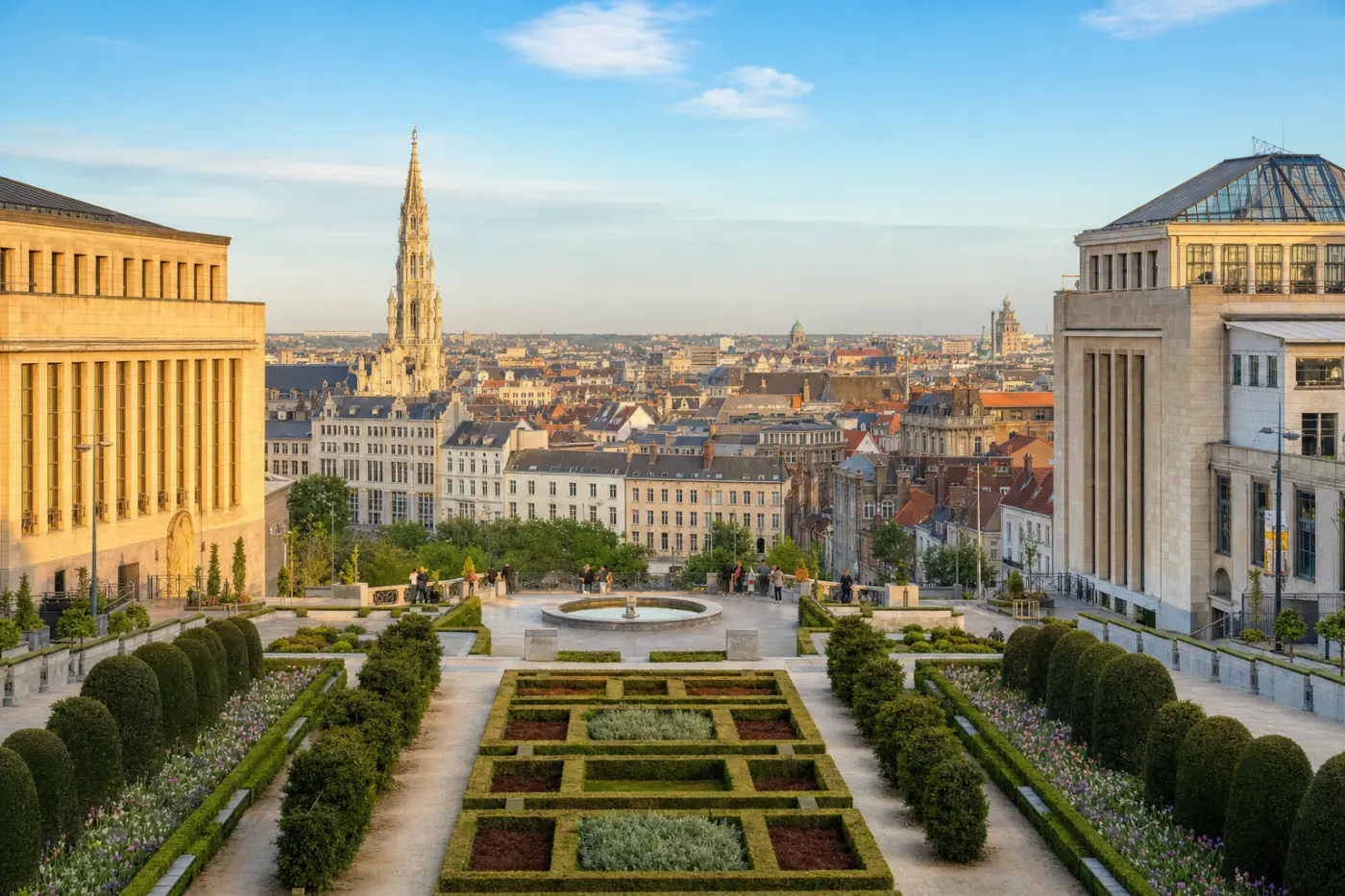
Tourist attraction
Mont des Arts — Kunstberg in Dutch — is a terraced public garden and cultural district occupying the hillside that links Brussels' aristocratic upper town (the Royal Quarter and the Coudenberg plateau) to its commercial lower town. Before the twentieth century this slope was a dense working-class neighbourhood of narrow streets and workshops wedged between the royal palace and the city's trading heart. King Leopold II, who spent the late nineteenth century remodelling Brussels into a capital with the monumental scale of Paris or Vienna, envisioned replacing it with a "hill of the arts": a grand ensemble of museums, libraries and exhibition halls. The name — art hill in French, Kunstberg in Dutch — dates from that period and has never changed.
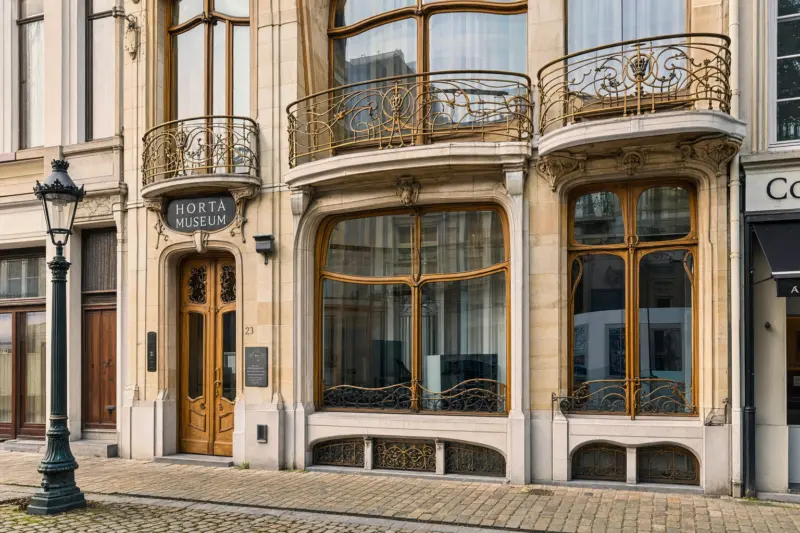
The first realisation of the idea came with the 1910 Brussels International Exposition, when temporary ornamental gardens and exhibition palaces were laid out on the slope. When the fair closed the structures vanished, leaving the ambition intact but the hillside incomplete for decades. Competing architectural schemes, two world wars and chronic financing disputes kept the site an open gap in the city fabric until after 1945, when a coherent modernist ensemble was finally built. By the time the 1958 World's Fair (Expo 58) brought millions of visitors to Brussels, the redesigned Mont des Arts had shifted in purpose: rather than glorifying a dynasty, it was conceived as a civic space from which ordinary residents could look out over their entire city. The surrounding cultural institutions reflect different layers of that history — BOZAR, the Centre for Fine Arts designed by Victor Horta, opened in 1928; the Royal Library of Belgium (today KBR) was largely erected in the 1950s and 1960s and anchors the eastern side of the square; and the Royal Museums of Fine Arts, together with the Magritte Museum, complete one of the densest museum quarters in Europe a short walk away.
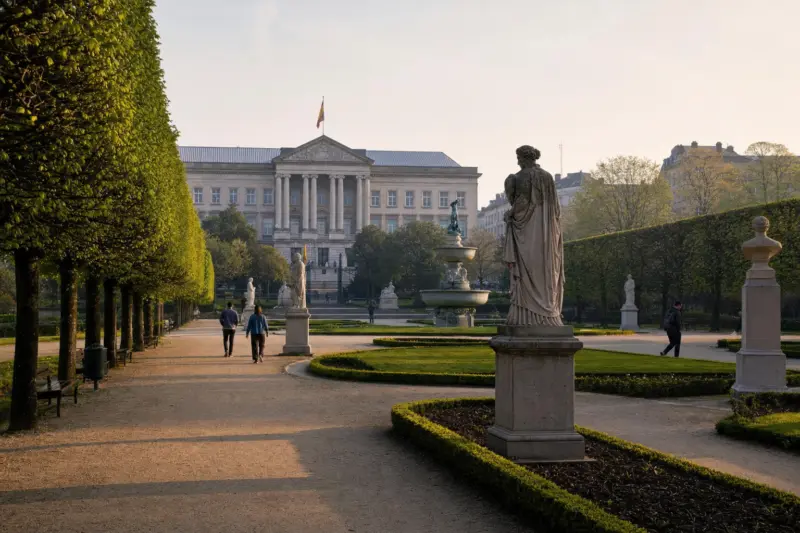
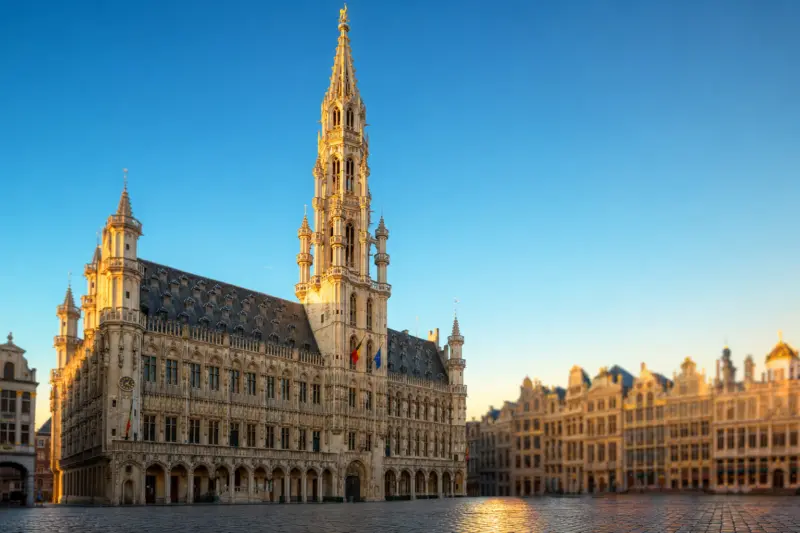
The cascading terraced gardens that give the site its character were designed by Belgian landscape architect René Pechère in the post-war decades. His symmetrical scheme of clipped hedges, geometric lawns, seasonal flower beds and a central fountain softens the weight of the modernist stone-and-glass buildings that frame the square on three sides, while the fourth side opens onto an unobstructed panorama of the old town. From the upper balustrade, visitors look down across rooftops to the Gothic tower of Brussels Town Hall on the Grand Place, with the twin spires of the Sablon churches to the left and, on clear days, the silhouette of the Atomium on the horizon. The plantings have been renewed several times since the 1990s, most recently with updated lighting that extends the viewpoint's appeal into the evening.
Mont des Arts is managed by the Brussels-Capital Region, open 24 hours a day and entirely free of charge — tickets are only required for the surrounding museums and BOZAR exhibitions. The best light for photography arrives in the hour before sunset, when the limestone façades turn warm gold. Tripods are tolerated outside scheduled events; drones are prohibited on the square. Most museums in the district close on Mondays, and the Brussels Card covers entry to several of them, making Mont des Arts a natural starting point for a full day of culture in the Belgian capital.
Private tours with a local guide, at your own pace.
Brussels
Brussels
Brussels
Brussels
Brussels
Brussels

Brussels
We use a single cookie, to remember this choice. We do not use analytics or advertising cookies. Read our cookie policy.