3 hrs
Brussels
Brussels Private Bike Tour: Highlights, Parks & Drinks
✓ Free cancellation
5.0(10 reviews)
From €232/ person
Book Now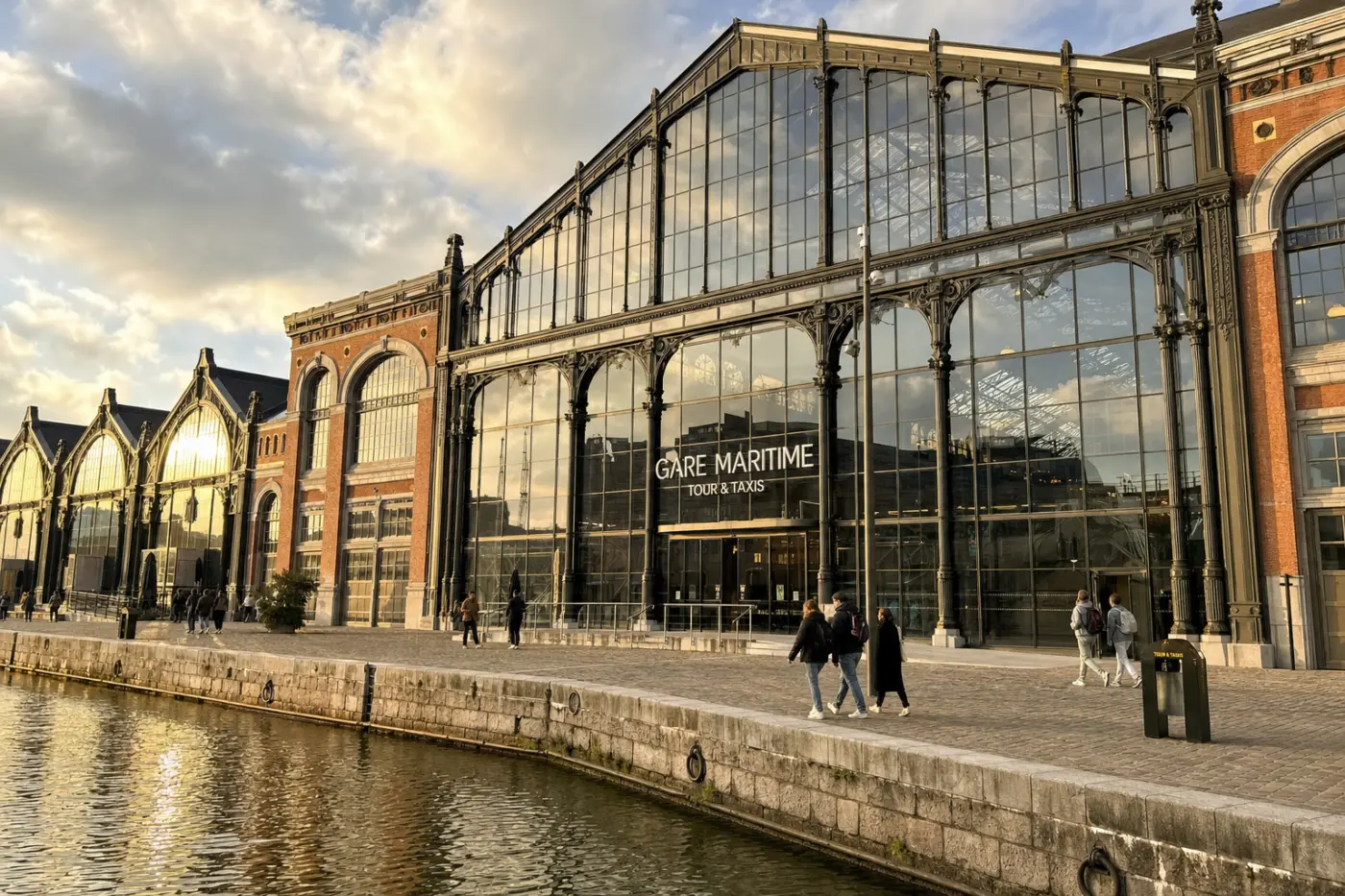
Tourist attraction
Tour & Taxis — formally known as the Site Royal Tour & Taxis — occupies 40 hectares along the Brussels Canal on the border of Laeken and the city centre, making it one of the largest brownfield regeneration projects in Belgium. The name derives not from taxis or towers but from the von Thurn und Taxis family, the German-Italian dynasty that held the Imperial postal monopoly across the Habsburg Netherlands from the early 16th century. Their Brussels relay depot stood near this site for over two centuries before the land was repurposed. The current complex was constructed between 1902 and 1907 as a state-of-the-art customs clearance and warehousing hub, designed by architects Henri Maquet and Joseph Van Neck in an eclectic style that blends neo-Renaissance brickwork with the exposed iron-and-glass construction of the great 19th-century railway halls.
The centrepiece is the monumental Entrepôt Royal (Royal Warehouse), a vast iron-framed hall with a soaring glass roof spanning roughly 35,000 square metres — comparable in ambition to the great market halls of Paris and Brussels' own Grand Place arcades. Alongside it stands the Gare Maritime (Maritime Station), completed in 1907, where goods arriving by canal barge were offloaded, inspected by customs officers, and re-dispatched across the country by rail. At its peak in the early 20th century, the site processed a significant share of Belgium's import and export tonnage, its quays busy with coal, grain, and colonial goods from the Belgian Congo. Operations gradually declined after World War II as containerisation and road freight bypassed the inland canal system, and the complex fell into disuse by the 1990s.
Classified as protected heritage in 1998, the site was acquired by the Wilma group and subsequently by Extensa, who launched a phased mixed-use redevelopment that continues today. The Gare Maritime — restored between 2017 and 2020 by the Flemish firm Bureau Bouwtechniek — now houses offices, restaurants, a food market, and event spaces beneath its original glazed vault, retaining exposed cast-iron columns, original floor tiles, and canal-side loading bays as deliberate architectural memory. The broader masterplan, designed by urban planning studio Witry & Witry in collaboration with several firms, is adding thousands of new residences, schools, and parkland, with the Royal Park Tour & Taxis inaugurated in 2019 as Brussels' largest new public green space in decades.
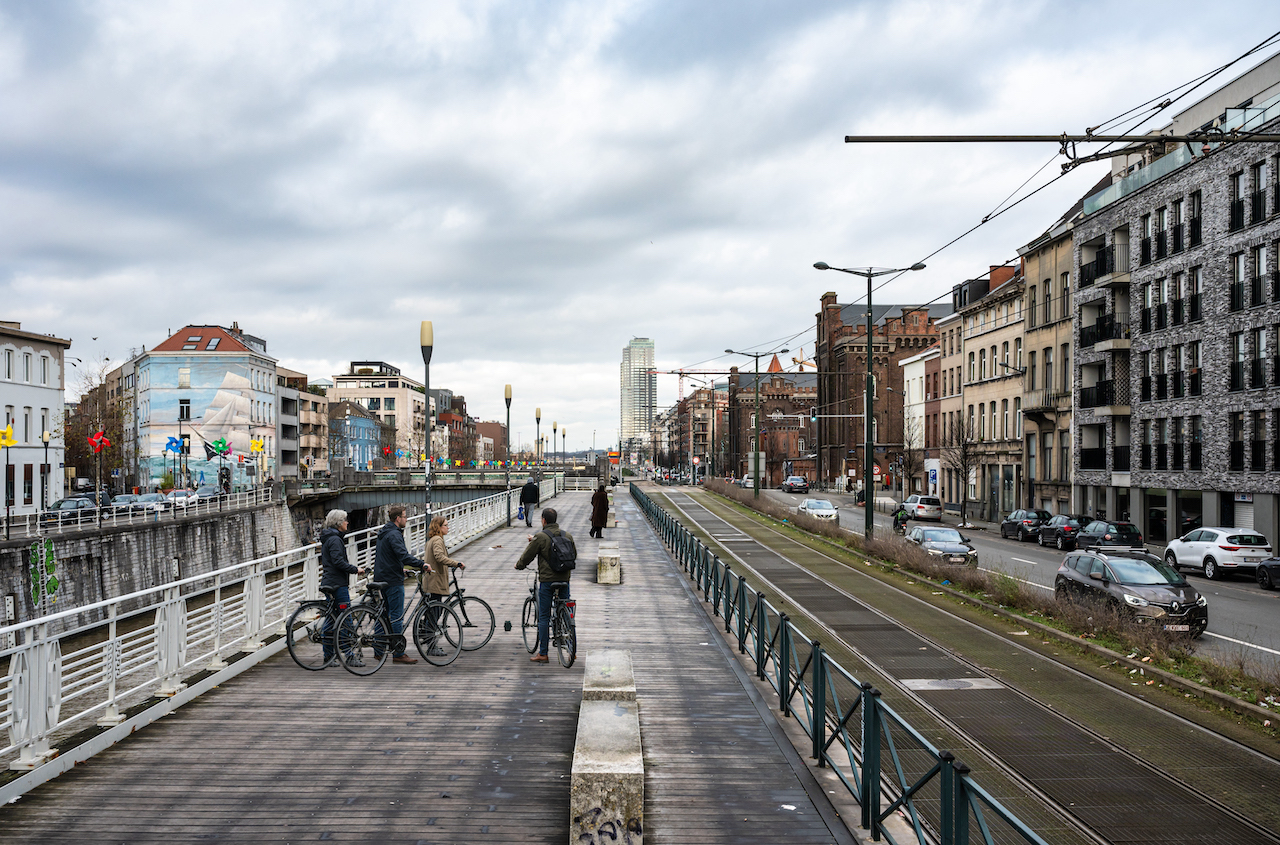
Visitors today can walk freely through the Gare Maritime on market days — the weekly Sunday market (Brussels' largest organic and artisan market, running since 2009) draws thousands of locals — and explore the canal-side promenade where the original stone quay walls and iron mooring rings survive intact. The adjacent Royal Warehouse hosts major cultural events, trade fairs, and concerts several times a year. The site is best reached by tram (line 51, Tour & Taxis stop) or by cycling along the Brussels Canal towpath from the city centre, a flat 20-minute ride that itself traces the historic waterway opened in the 1560s under Charles V to connect Brussels to Antwerp and the sea.
Private tours with a local guide, at your own pace.
Brussels
Brussels
Brussels
Brussels
Brussels
Brussels
Brussels
We use a single cookie, to remember this choice. We do not use analytics or advertising cookies. Read our cookie policy.