6.5 hrs
Barcelona
Montserrat Private Day Trip. Monastery Tickets & Pick up included
✓ Free cancellation Kids friendly
4.8(313 reviews)
From €121/ person
Book Now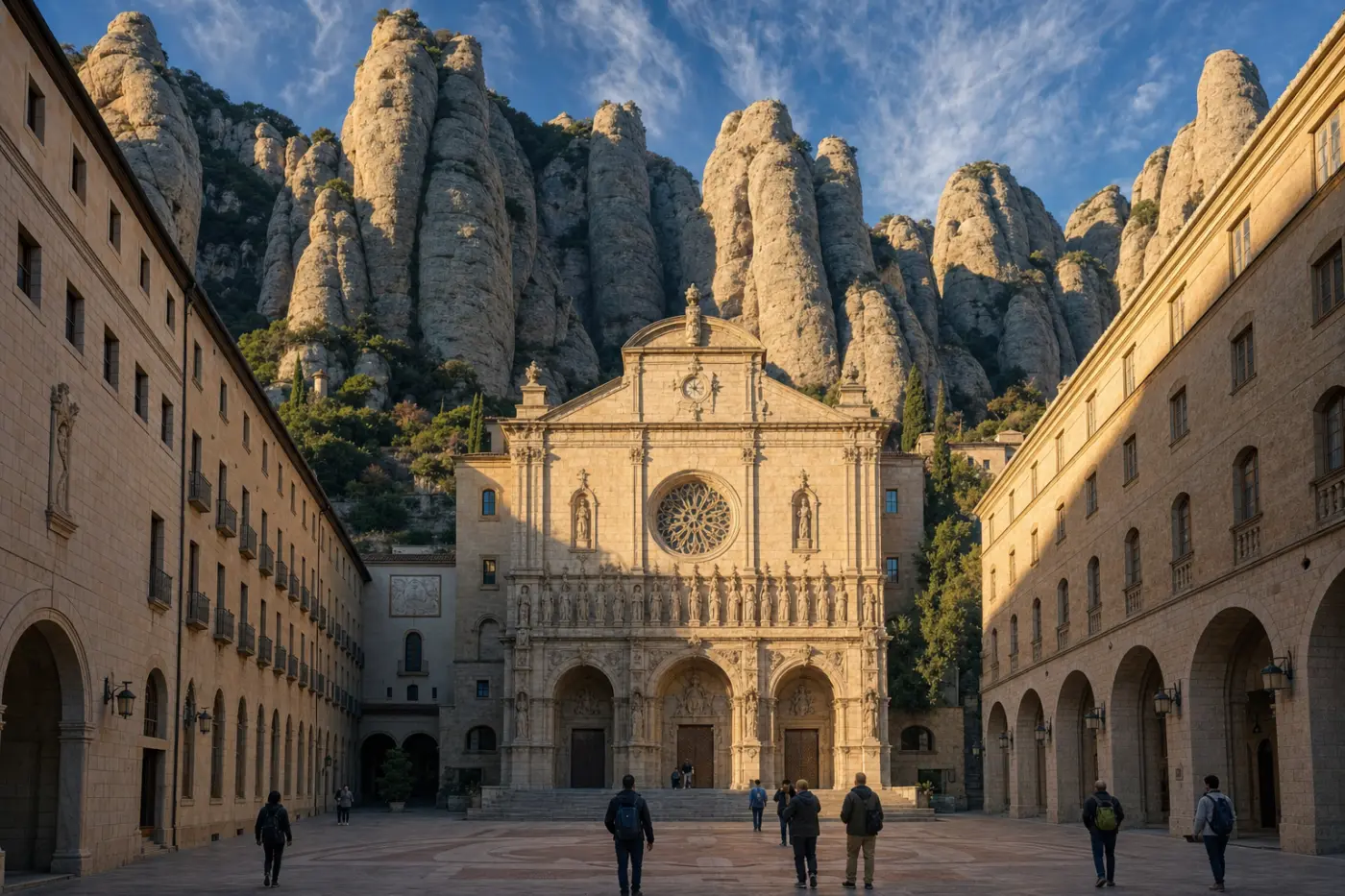
Tourist attraction
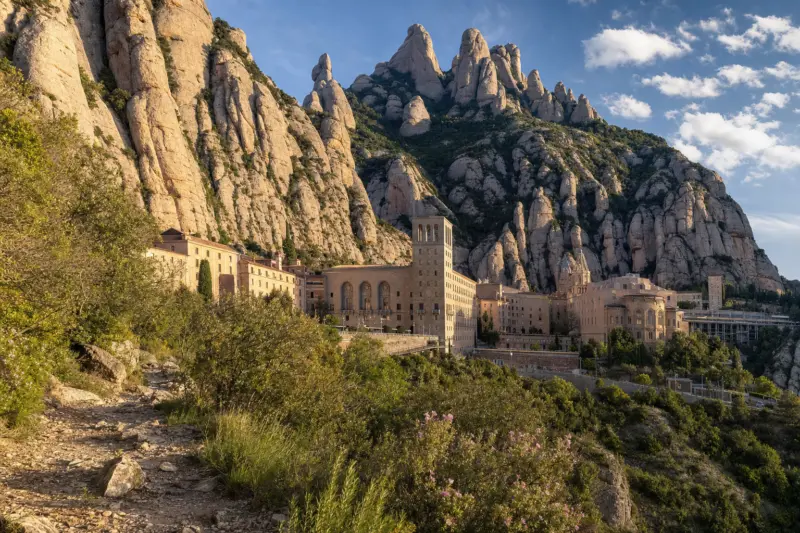
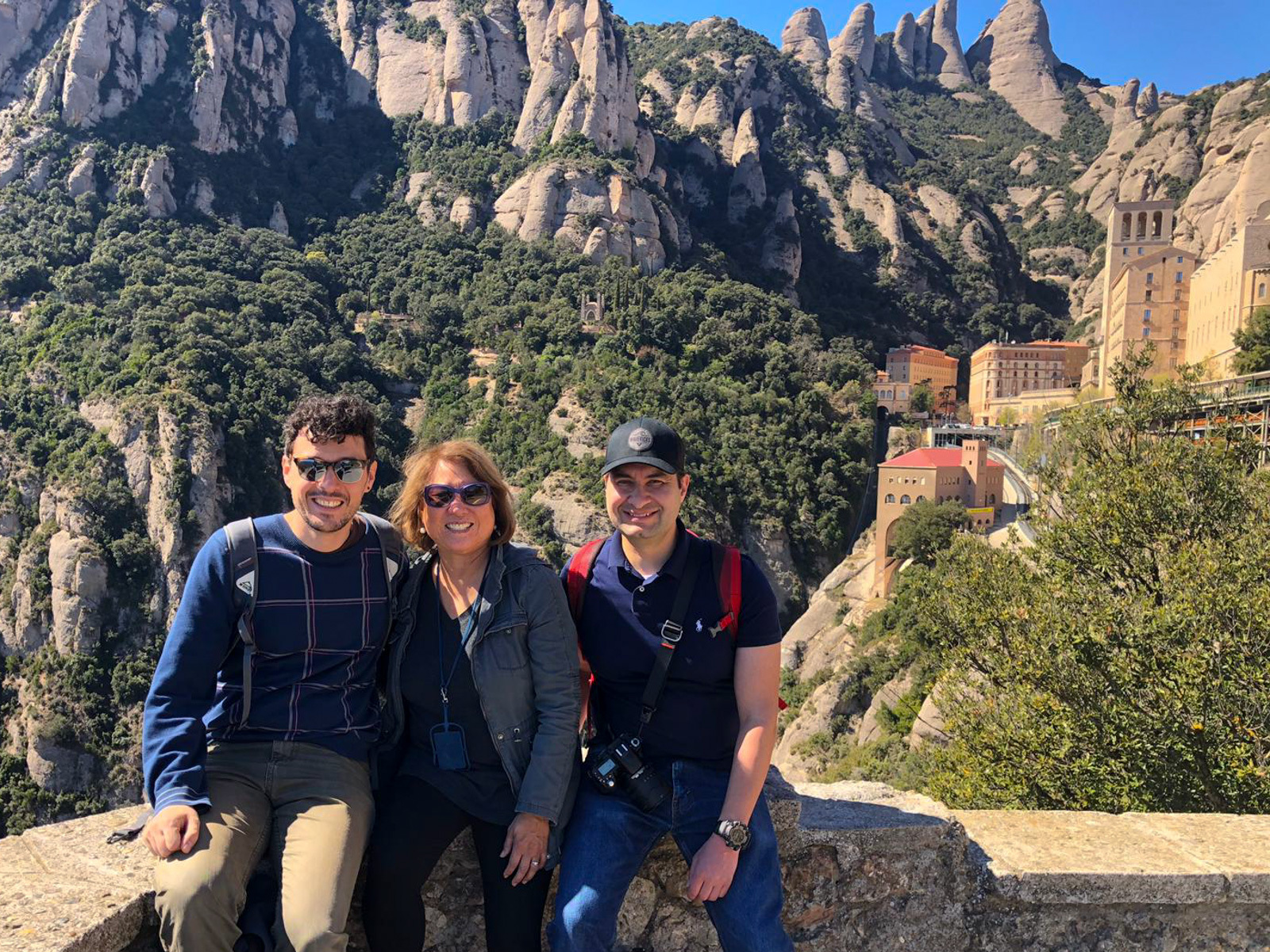
Plaça de Santa Maria is the grand entrance square of the Santa Maria de Montserrat Abbey — the Benedictine monastery founded in 1025 and perched at 720 metres above sea level on the jagged massif of Montserrat Mountain, 59 kilometres northwest of Barcelona. The square serves as the ceremonial threshold between the outside world and one of the most spiritually charged complexes in Catalonia, framed on all sides by the monastery's neogothic and Romanesque Revival facades, souvenir arcades, and the towering saw-toothed rock needles — the "serrated" formations that give the mountain its Catalan name. It was here, in front of what is now the basilica entrance, that pilgrims arriving by mule track would have made their first prostrations before the Black Madonna (La Moreneta) since the early medieval period.
The square's current form reflects centuries of rebuilding. The original Romanesque monastery was destroyed by Napoleonic troops during the Peninsular War in 1811 and again ransacked during the ecclesiastical confiscations of 1835. Reconstruction began in earnest in 1858 under the direction of Abbot Miguel Muntadas, who re-established the Benedictine community and commissioned the neogothic basilica façade that now anchors the square's western end. The ornate three-portal entrance, completed in 1901, is decorated with stone sculptures of the apostles and scenes from the life of the Virgin, giving Plaça de Santa Maria its definitive architectural character. The 1925 addition of Modernista-influenced cloisters on the monastery's northern wing completed the ensemble visible today.
Visitors arriving in the square — whether via the Aeri de Montserrat cable car (opened 1930), the Cremallera rack railway, or on foot — encounter the full theatrical impact of the monastery set against the vertical conglomerate rock faces. The square is the departure point for visiting the basilica's most revered object: the 12th-century polychrome wooden statue of the Black Madonna, venerated as the patron saint of Catalonia since 1881 when Pope Leo XIII granted her a Canonical Coronation. At 1:00 p.m. daily (and at 6:45 p.m. on Fridays), the Escolania de Montserrat — one of Europe's oldest boys' choirs, documented as far back as the 13th century — performs the Virolai hymn and the Salve Regina from inside the basilica, drawing crowds that fill the square with music echoing off the stone walls.
Plaça de Santa Maria is freely accessible at all times, though the basilica and statue chamber have specific visiting hours (generally 7:30 a.m. to 8:00 p.m.). The square becomes extraordinarily crowded between 11:00 a.m. and 2:00 p.m.; arriving before 10:00 a.m. or after 4:00 p.m. rewards visitors with a far more contemplative atmosphere. Dress modestly — shoulders and knees must be covered to enter the basilica. The square itself sits at the hub of all mountain trails, including the Sant Joan funicular (access to the hermitage ruins at 1,000 m) and the two-hour ascent to the Sant Jeroni summit at 1,236 metres, where on clear days the Pyrenees and the Balearic Islands are visible simultaneously.
Private tours with a local guide, at your own pace.
Barcelona
Barcelona
Barcelona
Barcelona
Barcelona
Barcelona
Barcelona
Barcelona
Barcelona
Barcelona
Barcelona
Barcelona
Barcelona
We use a single cookie, to remember this choice. We do not use analytics or advertising cookies. Read our cookie policy.