11 hrs
Barcelona
Private Full Day Trip to Medieval Villages of Catalonia + Lunch front of a Lake
✓ Free cancellation Kids friendly
4.8(20 reviews)
From €647/ person
Book Now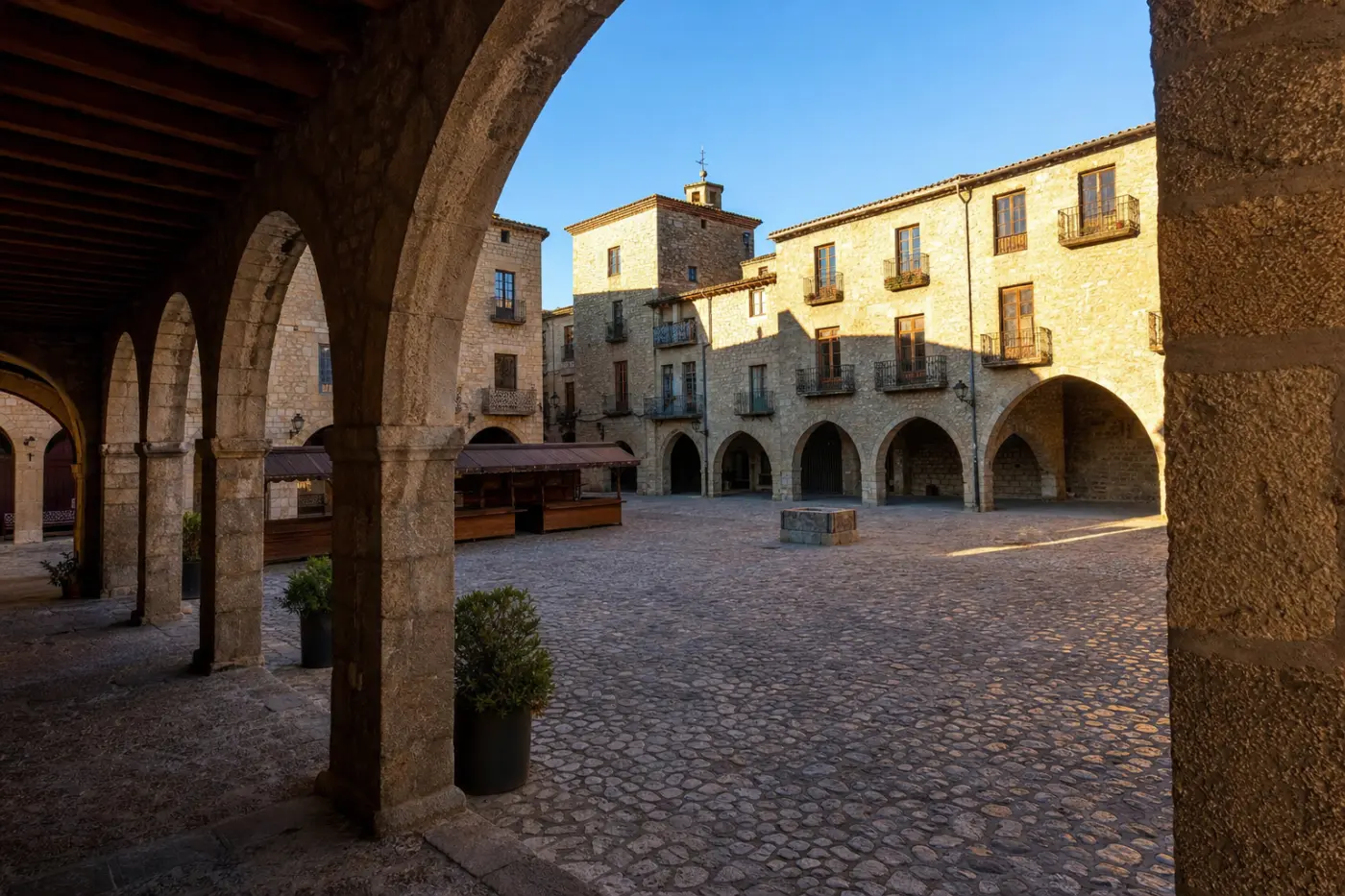
Tourist attraction
Plaça Major is the central square of Besalú, a small walled town of just 2,467 inhabitants in the Garrotxa comarca of the province of Girona, roughly 50 kilometres north of Barcelona. The square sits at the core of a medieval urban fabric that has remained largely intact since the 11th and 12th centuries, framed by stone arcaded porticoes — the characteristic covered walkways that allowed merchants and townsfolk to trade sheltered from both rain and summer heat. In 1966, the entire town of Besalú was declared a National Historic Monument (Conjunt Històric Artístic), freezing its streetscape in a form that would be recognisable to any resident of the medieval County of Besalú.
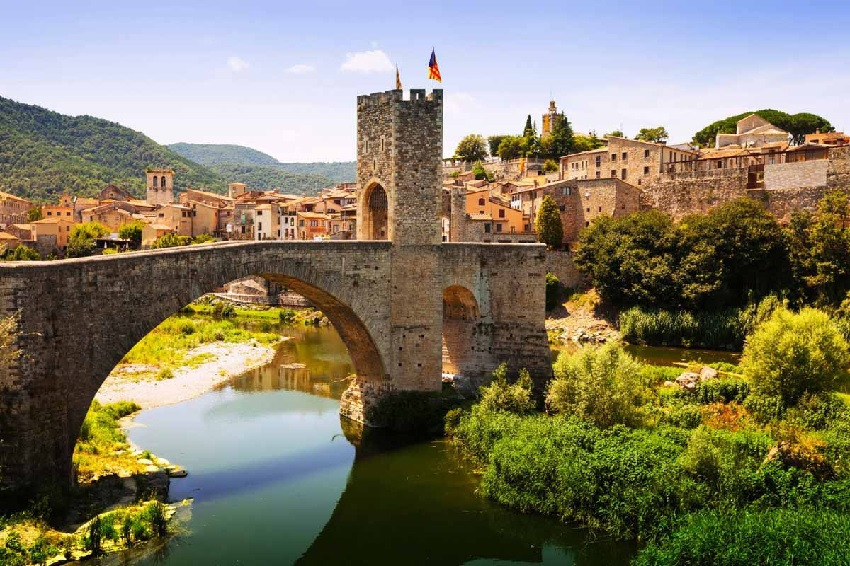
The square's significance cannot be separated from the political history of the county itself. Besalú was the capital of an independent county for more than a century, issuing its own currency and governing a substantial territory across what is now northern Catalonia. The county was connected to the broader Carolingian project through Wilfred the Hairy, who held the county in the 9th century before going on to unite several Catalan counties and found the dynasty of the House of Barcelona. The County of Besalú was finally absorbed by the County of Barcelona in 1111, after which the town lost its political primacy but retained its dense architectural heritage. The arcaded buildings around Plaça Major date predominantly from the Romanesque period, the same era that produced the town's celebrated 12th-century Pont Vell over the Fluvià river — a bridge whose irregular zigzag alignment was not a medieval miscalculation but a deliberate engineering response to the volcanic basalt outcrops in the riverbed.
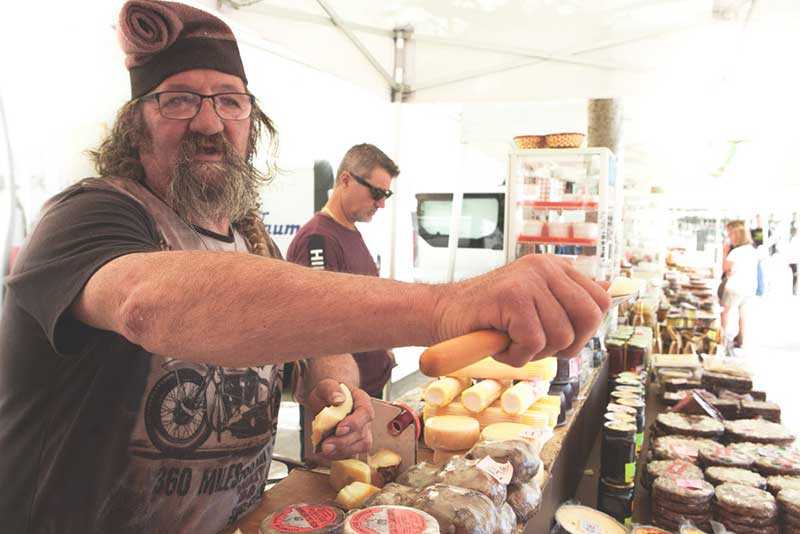
Walking into the square today, visitors find themselves enclosed by honey-coloured stone façades whose ground floors open into deep arcaded galleries. The porticoes host a weekly market, a tradition that has anchored civic life on this site for centuries. The square also functions as the main orientation point for exploring the surrounding old town: the Romanesque church of Sant Pere (founded 977, rebuilt in the 11th century), the remnants of the medieval synagogue near the river, and the extraordinary 12th-century mikveh — a Jewish ritual bath discovered in 1964 when a resident broke through the floor while digging a well, later confirmed by rabbis as one of only four medieval mikva'ot preserved in Europe and the sole surviving example in Spain.
Besalú is accessible from Barcelona by bus (approximately 2 hours via Girona) or by car via the AP-7 and C-66. The town is compact enough to explore entirely on foot, and Plaça Major makes the ideal starting point. The mikveh requires advance booking for a guided visit, as access is restricted to small groups. Market day falls on Tuesday mornings. Early arrival — before 10 a.m. — rewards visitors with the square almost entirely to themselves, its stone arches lit by low morning light filtering in from the east.
Private tours with a local guide, at your own pace.
Barcelona
Barcelona
Barcelona
Barcelona
Barcelona
Barcelona
Barcelona
Barcelona
Barcelona
We use a single cookie, to remember this choice. We do not use analytics or advertising cookies. Read our cookie policy.