3 hrs
Brussels
Brussels Private Bike Tour: Highlights, Parks & Drinks
✓ Free cancellation
5.0(10 reviews)
From €232/ person
Book Now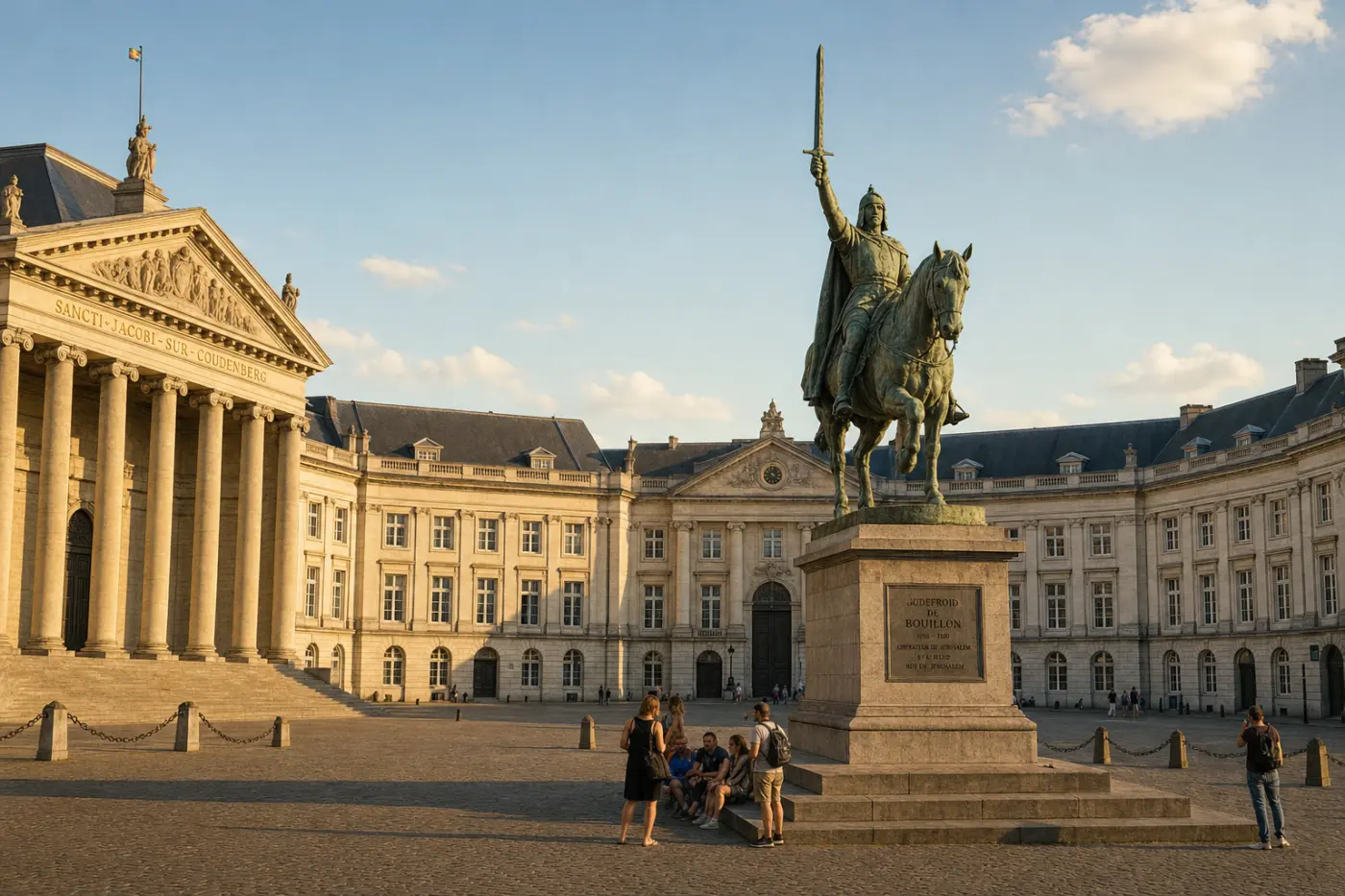
Tourist attraction
Place Royale — Koningsplein in Dutch — is Brussels' finest neoclassical square, occupying the crest of the Coudenberg hill in the city's Royal Quarter. It was constructed between 1775 and 1782 on the leveled ruins of the Coudenberg Palace, the great Gothic and Renaissance seat of the Dukes of Burgundy and Habsburg emperors that burned to the ground in 1731 after a fire broke out during a court celebration. Rather than rebuild the palace, Habsburg governor Prince Charles of Lorraine commissioned French architects Barnabé Guimard and Jean-Benoît-Vincent Barré to design an entirely new urban ensemble in the rationalist spirit of the French Enlightenment, modeled directly on the royal squares of Paris and Nancy. The result is a precisely octagonal space enclosed by eight uniform pavilions of cream-colored stone, each fronted by pedimented porticos of Ionic pilasters — a geometry that projects authority, symmetry, and civic order with unmistakable intent.
At the center of the square stands the bronze equestrian statue of Godfrey of Bouillon, the Frankish nobleman from the lower Meuse region who led the First Crusade and became the first ruler of the Kingdom of Jerusalem in 1099. Sculpted by Eugène Simonis and unveiled in 1848 — just seventeen years after Belgian independence — the statue was a deliberate act of nation-building, anchoring a medieval hero of pan-European stature to the soil of the new Belgian state. Godfrey raises his sword toward the sky; below him, four allegorical figures represent the peoples he united. On the northern edge of the square, the Church of Saint-Jacques-sur-Coudenberg completes the composition: designed by Guimard after Barré's original plans were revised, it was consecrated in 1787 and presents a monumental Ionic colonnade that mirrors the surrounding pavilions in material and rhythm, binding church and civic space into a single architectural statement.
The square sits at a geographical and cultural crossroads. To the south lies the Royal Palace of Belgium; to the north, the stairways descend toward the Mont des Arts cultural district and the BELvue Museum — housed in the former Bellevue Hotel, which adjoins the palace grounds and displays the history of the Belgian monarchy. Beneath the square itself, excavations conducted since the 1990s have revealed intact foundations and underground chambers of the Coudenberg Palace, now accessible as an archaeological site. Visitors can walk through what were once the grand halls where Charles V held court and where the Peace of Augsburg was signed in 1555 — a physical reminder that the elegant neoclassical pavement underfoot conceals six centuries of dynastic history.
Place Royale is freely accessible at all hours and remains animated year-round. The surrounding streets host the Royal Museums of Fine Arts of Belgium, making the square a natural starting point for a day in Brussels' museum district. The best light falls on the square in the late afternoon, when the low sun catches the pale stone of the pavilions and throws long shadows across Simonis's equestrian bronze. Trams and metro lines connect the square to the Grand-Place in under ten minutes, but the walk down through the Mont des Arts garden offers one of the finest urban panoramas in northern Europe.
Private tours with a local guide, at your own pace.
Brussels
Brussels
Brussels
Brussels
Brussels
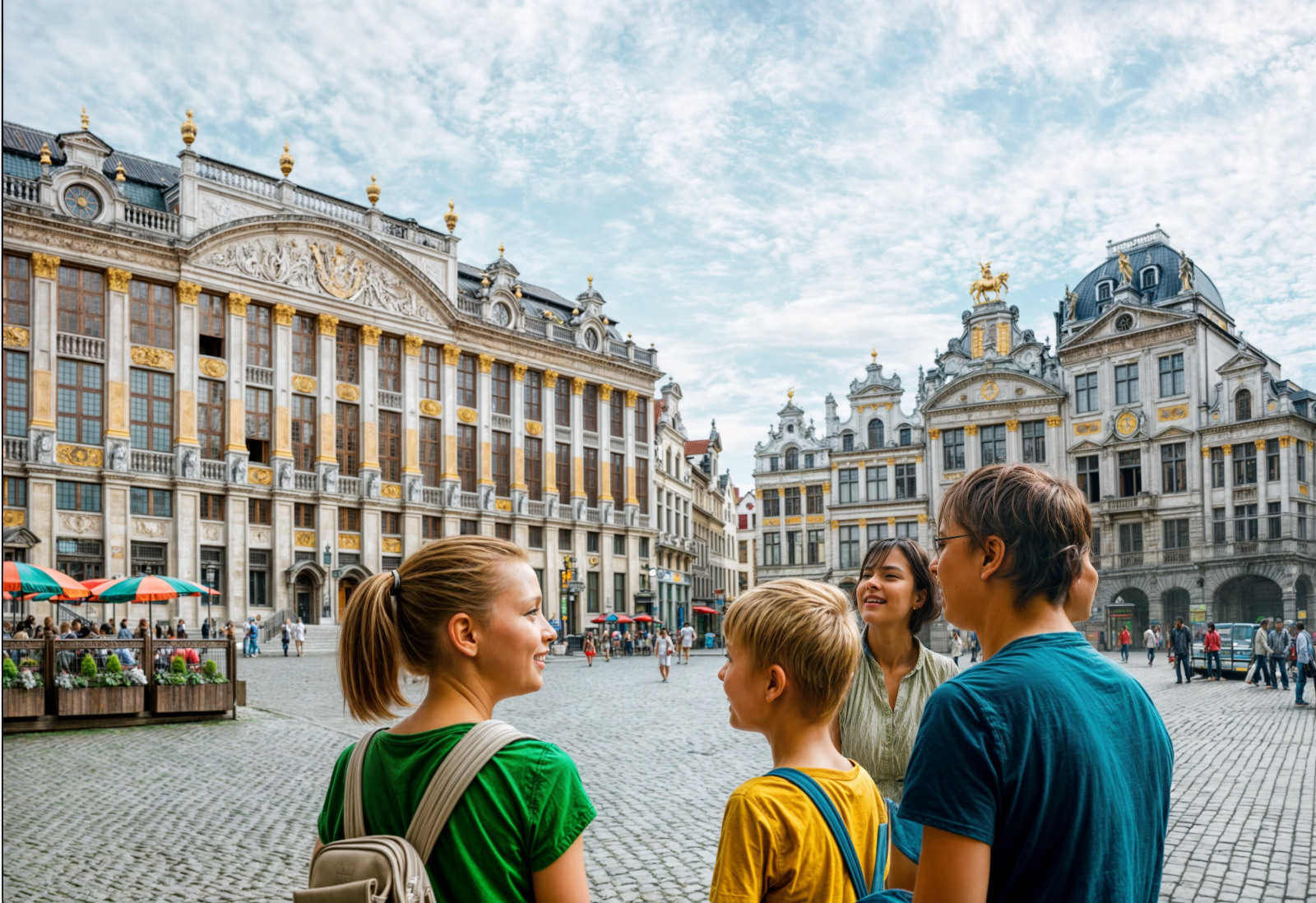
Brussels

Brussels
We use a single cookie, to remember this choice. We do not use analytics or advertising cookies. Read our cookie policy.