3 hrs
Brussels
Brussels Off the Beaten Path: A Private Local Walking Tour
✓ Free cancellation Kids friendly
4.9(18 reviews)
From €186/ person
Book Now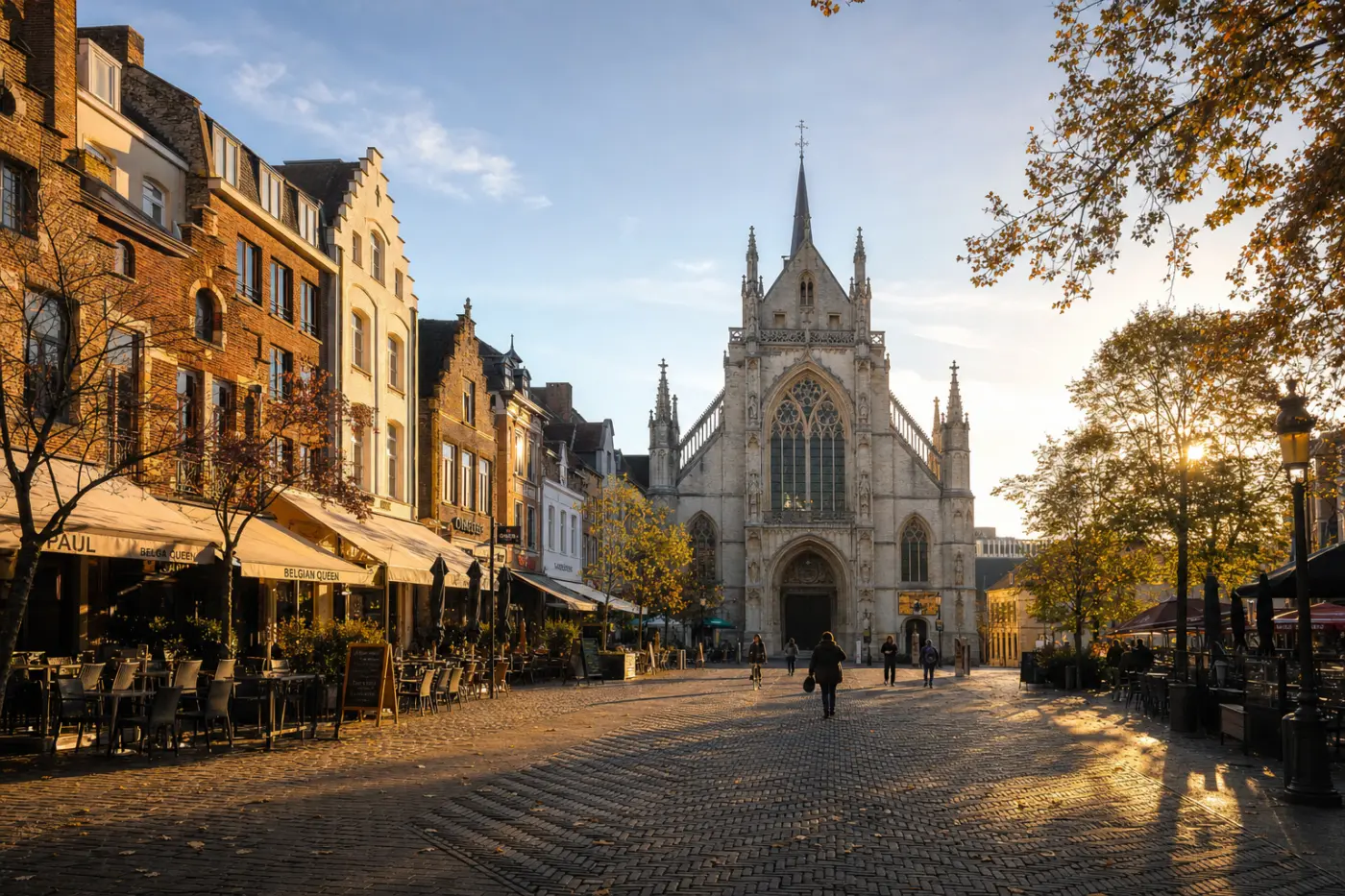
Tourist attraction
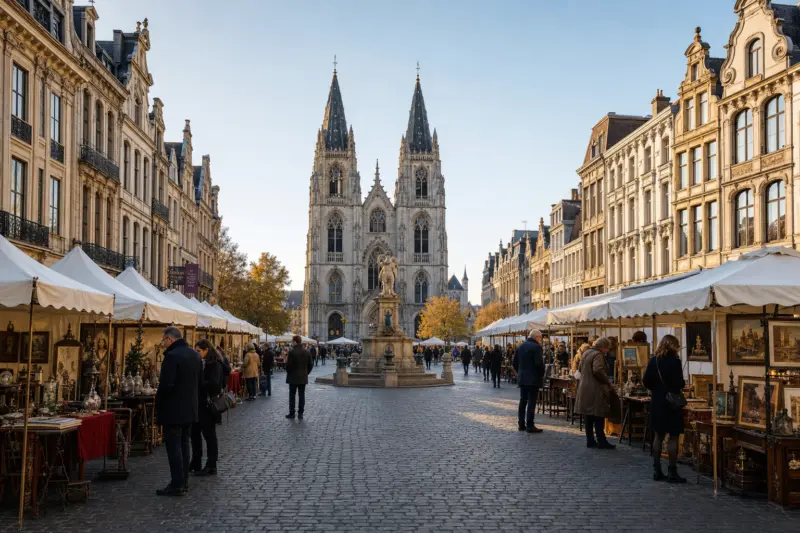
Place Sainte-Catherine sits at the heart of old Brussels on the site of what was once the city's main port basin. That basin was filled in 1853, and from 1884 onward the reclaimed ground hosted a thriving open-air fish market — known to every self-respecting Bruxellois as "le Vismet" (from vismarkt, Dutch for fish market). The market operated here until 1955, and the name stuck long after the stalls disappeared. The square's layout took shape through development works beginning in 1870, and by around 1910 the neighboring Place de Grue, rue de Laeken, and Place du Samedi had all been absorbed into the broader Sainte-Catherine quarter.
The square's dominant landmark is the Church of Saint Catherine, built between 1854 and 1874 to designs by Joseph Poelaert — the same architect who would later build Brussels' colossal Palace of Justice — and completed by his disciple Wynand Janssens. The result is a deliberate architectural compromise: Gothic in its proportions to satisfy Catholic patrons, yet notably austere in ornament to appease Brussels' liberal city government. The church physically divides the square into two halves and is flanked by two towers that are the only monuments on the square still standing in their original locations. One is the steeple of the earlier church; the other is the Tour Noire (Black Tower), a surviving section of the 13th-century city ramparts, classified as a protected monument in 1937. A second notable feature — the ornate fountain honoring mayor Jules Anspach — originally stood at Place de Brouckère, was dismantled during metro construction in 1973, and was rebuilt here in 1981, though without its massive stone pedestal because further metro works were already planned beneath the square.
The surrounding quays, Quai aux Briques and Quai au Bois à Brûler, preserve the memory of the old port in their very paving stones and brick facades. Several houses that survived the French bombardment of Brussels in 1695 still stand in the district. The Pachéco Institute — formerly the Hospice Pachéco — adds another layer of history with its serene interior courtyard. A major renovation in 2003 widened the central square and footpaths, removed through-traffic between the church and the place, and created the relaxed, pedestrian-friendly atmosphere visitors find today.
For visitors, the square is best experienced at two extremes of the day: at lunch or dinner along the seafood restaurants lining the quays, where moules-frites and sole meunière remain the undisputed stars, and in December, when one of Brussels' most beloved Christmas markets fills the space between the church and the old wharves. The nearest metro station is Sainte-Catherine on lines 1 and 5, placing the square within easy walking distance of the Grand-Place (roughly 10 minutes on foot). Go early on a weekday morning to appreciate the architecture without the crowds, and look for the Tour Noire tucked between the buildings on the northern side — easily missed, yet over 700 years old.
Private tours with a local guide, at your own pace.
Brussels
Brussels
Brussels
Brussels
Brussels
Brussels
Brussels
We use a single cookie, to remember this choice. We do not use analytics or advertising cookies. Read our cookie policy.