3 hrs
Barcelona
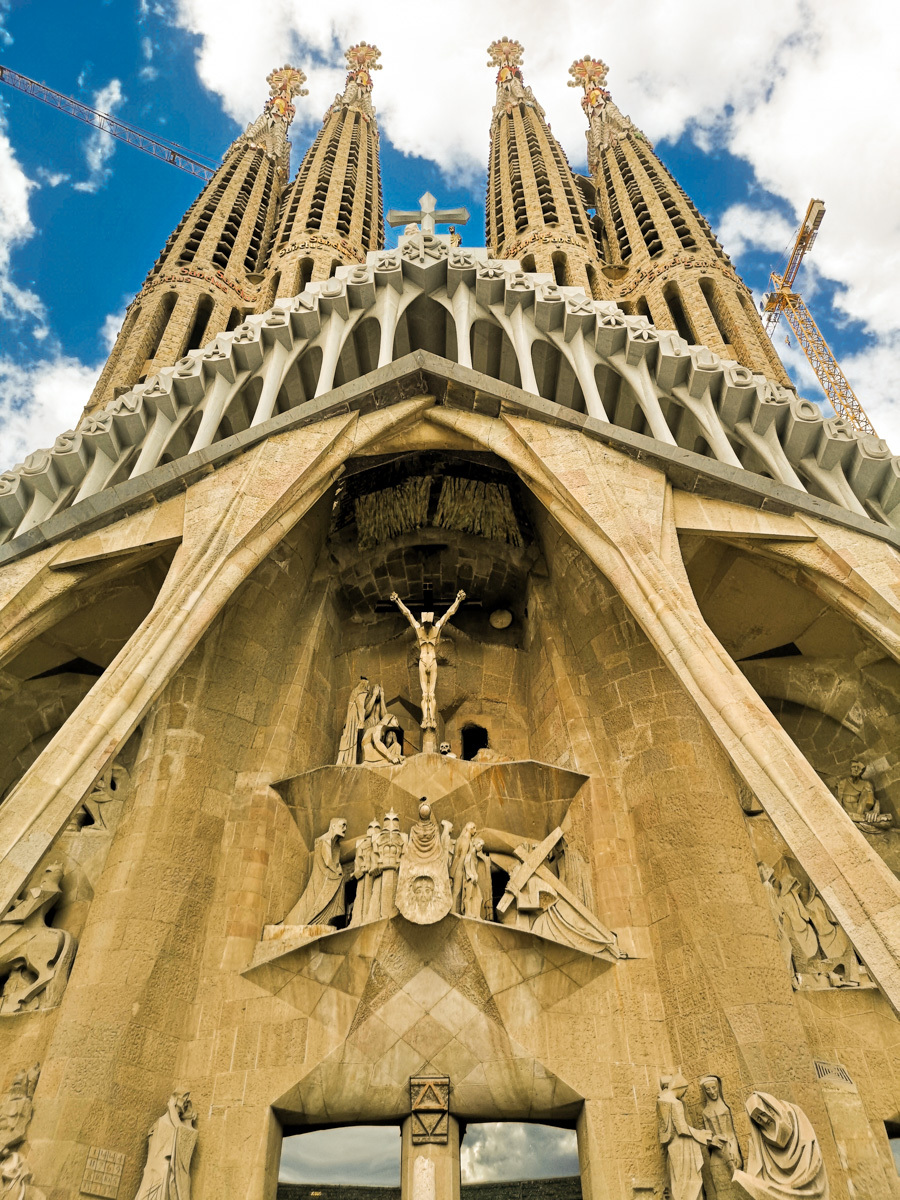
Sagrada Familia & Gaudi Tour Private or Small Group with Tickets
✓ Free cancellation Kids friendly
4.8(1403 reviews)
From €197/ person
Book Now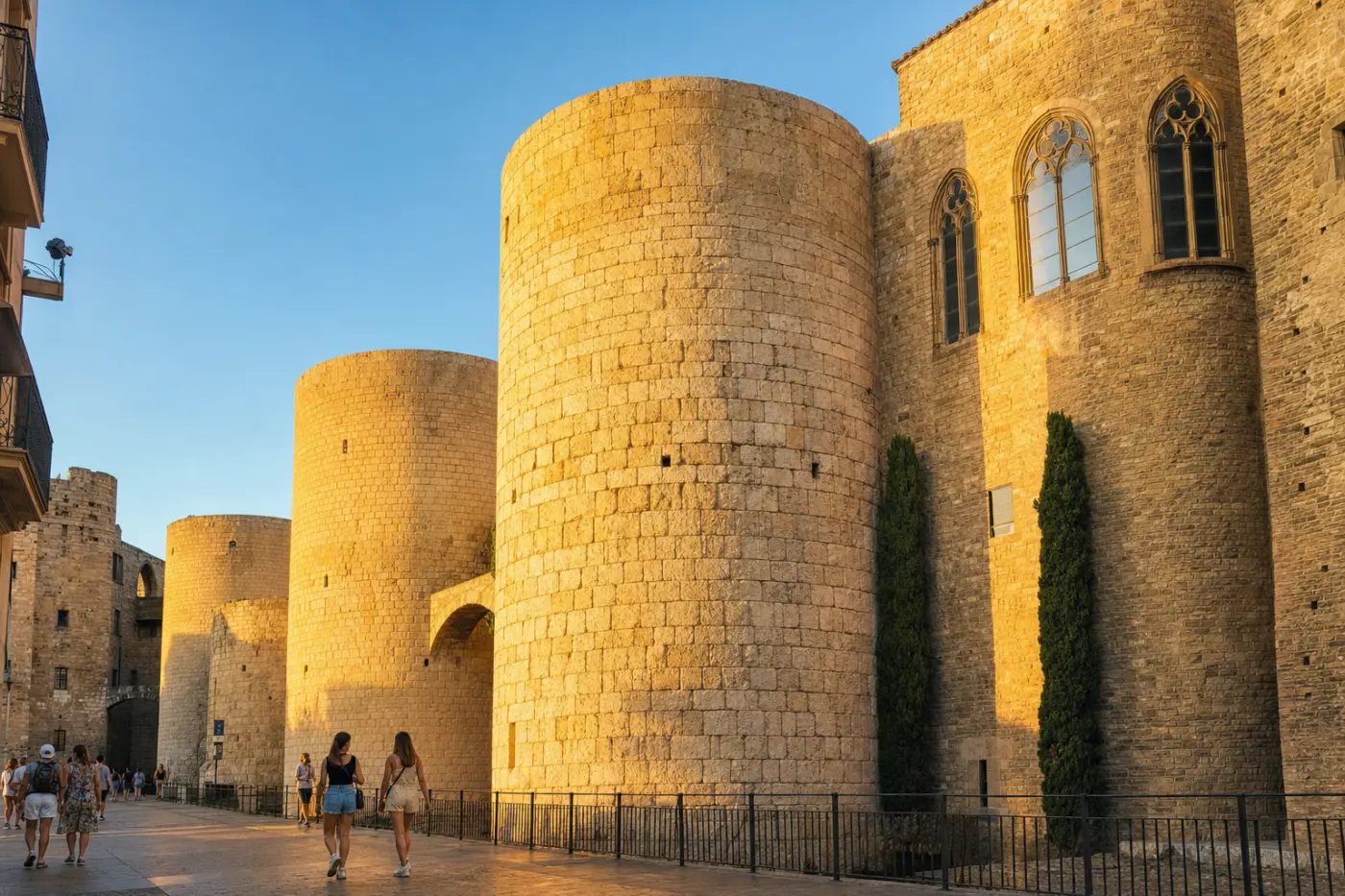
Tourist attraction
The Roman walls of Barcino are the most visible surviving remnant of the city the Romans founded between 15 and 13 BC on the crest of Mount Taber — a low hill, barely 16.9 metres above sea level, that now corresponds to Plaça de Sant Jaume in the Gothic Quarter. The colony they established, Colonia Iulia Augusta Faventia Paterna Barcino, was laid out as a classic Roman castrum: a rectangular grid of streets anchored by a forum, a temple dedicated to Augustus, and an enclosing defensive wall. That wall, built in the 1st century AD from local limestone and opus incertum, originally stretched roughly 1,270 metres, enclosed an area of about 10 hectares, and was punctuated by 76 semicircular towers and four main gates aligned with the cardinal points. Sections of this structure survive today embedded in or immediately adjacent to medieval and later buildings throughout the Barri Gòtic, reaching heights of up to 8 metres in places.
The most dramatic stretch of wall is visible along Carrer de la Tapineria and Plaça de Ramon Berenguer el Gran, where three full towers rise above street level beside the medieval Palau Reial Major — a layering of Roman, Romanesque, and Gothic stonework that is one of the most striking streetscapes in Spain. A second well-preserved section runs along Carrer del Sotstinent Navarro. The walls gained a second life in the late 3rd and early 4th century AD, when Barcino briefly became an imperial residence: Emperor Diocletian's administrative reforms elevated the city's status, and the fortifications were substantially reinforced and heightened with a new outer face of large ashlar blocks, giving them the double-skinned appearance still visible today. By the 5th century, Barcino had served as the capital of the Visigothic Kingdom under Ataulf, who brought his court here in 415 AD, underscoring just how strategically important these walls had made the city.
Visitors can walk the perimeter of the ancient colonia in under thirty minutes, following a route that the Barcelona City Council has marked with interpretive panels. At Plaça Nova, two of the original cylindrical gate towers of the northern entrance — the Porta Praetoria — survive almost intact to their full Roman height, their courses of large stone blocks contrasting sharply with the 16th-century aqueduct arcade built directly on top of them. Beneath the streets, the Museu d'Història de Barcelona (MUHBA), accessed from Plaça del Rei, provides underground access to 4,000 square metres of in-situ Roman ruins including mosaics, fish-salting vats, and a laundry, giving full archaeological context to what the walls once enclosed.
The walls are freely accessible at street level at all hours; there is no admission charge to view the exterior sections. The MUHBA underground circuit requires a ticket (prices vary; free on the first Sunday of the month and Sunday afternoons). The closest metro stop is Jaume I (L4, yellow line), a two-minute walk from the main wall sections along Carrer de la Tapineria. Morning visits offer the best light on the stonework and avoid the dense afternoon crowds that concentrate around the nearby Cathedral. Comfortable walking shoes are strongly recommended, as the surrounding lanes are cobblestone throughout.
Private tours with a local guide, at your own pace.
Barcelona
Barcelona
Barcelona
Barcelona
Barcelona
Barcelona

Barcelona
Barcelona
We use a single cookie, to remember this choice. We do not use analytics or advertising cookies. Read our cookie policy.