2.5 hrs
Brussels
Brussels Private Food Tour: Waffles, Fries, Beer & Local History
✓ Free cancellation Kids friendly
4.5(20 reviews)
From €206/ person
Book Now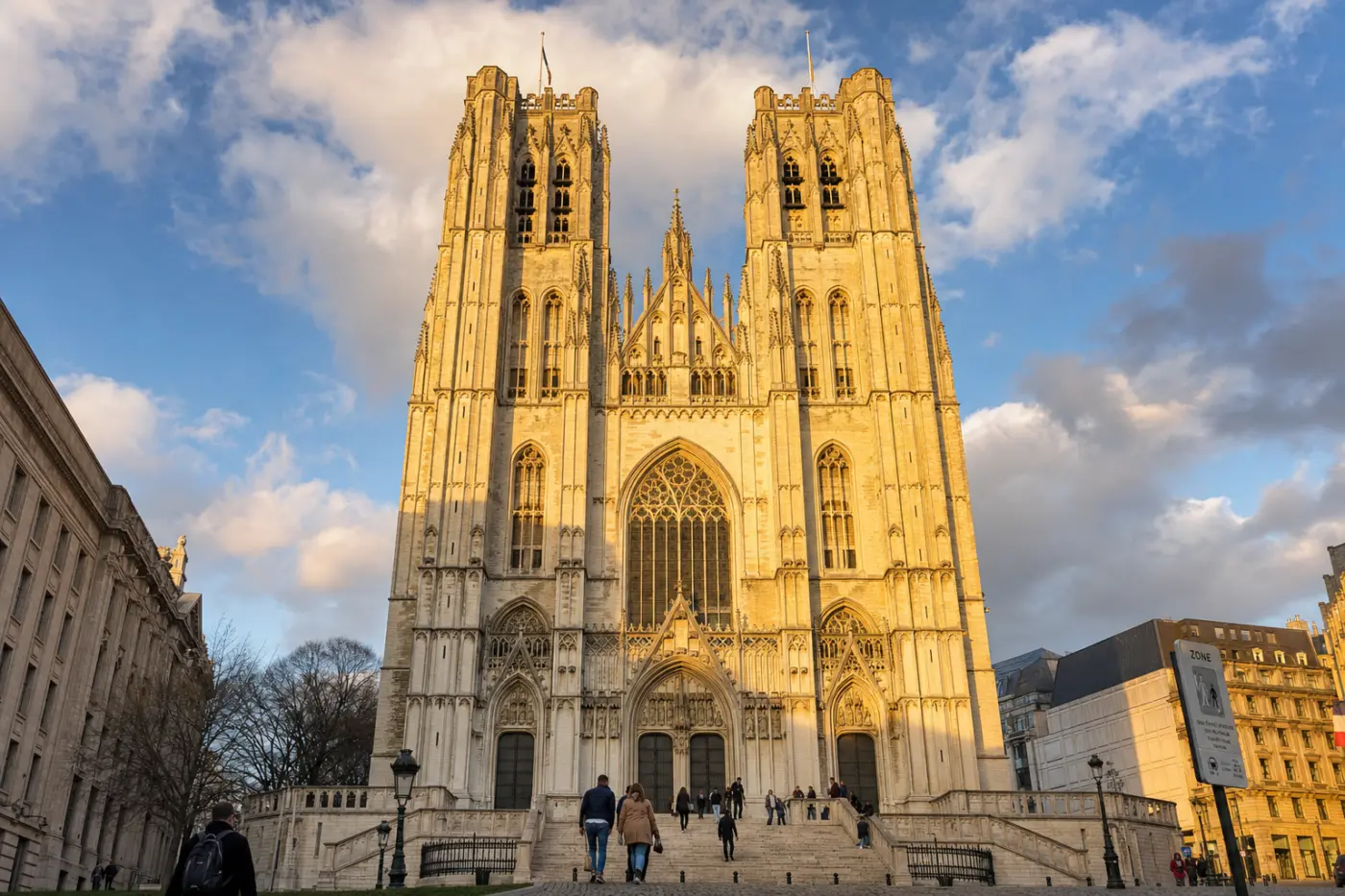
Tourist attraction
Rising above the Treurenberg Hill in central Brussels, the Cathedral of Saint Michael and Saint Gudula is Belgium's premier place of worship and one of the finest surviving examples of Brabantine Gothic architecture in Europe. Its origins reach back as far as the 8th or 9th century, when a small chapel dedicated to Saint Michael stood on this hilltop site. Around 1047, the Romanesque church built by Lambert II, Duke of Brabant, received the relics of Saint Gudula — a noblewoman of Brabant believed to have died between 680 and 714 — transferred from the Church of Saint Gaugericus on Saint-Géry Island. That translocation permanently linked two patron saints to both the cathedral and the city of Brussels itself. In the early 13th century, Henry I, Duke of Brabant, commissioned an expansion that added twin round towers, and by 1226 his successor Henri II ordered a full Gothic renovation. Construction in the soaring Brabantine Gothic style continued for nearly 300 years, with the cathedral reaching completion in 1519, just before the reign of Emperor Charles V.
The exterior is built entirely of cream-coloured stone quarried at Gobertange in Walloon Brabant, giving the façade a distinctive warm pallor that shifts dramatically with the light. The two western towers stand 64 metres tall and frame a grand entrance portal flanked by buttresses and blind tracery. Unlike French Gothic cathedrals, which favour circular rose windows, the Brussels cathedral follows the Brabantine tradition: tall, slender windows with elaborate stone tracery fill the nave and transepts with diffuse northern light. Inside, the choir holds the mausoleums of the Dukes of Brabant and Archduke Ernest of Austria, while the treasury preserves a remarkable collection of sacred art and medieval reliquaries associated with Saint Gudula. The cathedral was formally elevated to cathedral status — having previously functioned as a collegiate church — only in 1962, when the Diocese of Mechelen-Brussels was restructured.
For centuries the cathedral has served as the stage for Belgium's most solemn national ceremonies. Royal weddings, state funerals, and Te Deum services marking Belgian national holidays have all been celebrated within its nave. King Albert II, King Philippe, and their predecessors have all marked the defining moments of the Belgian monarchy here. Beyond its civic role, the cathedral holds deep religious significance: Saint Michael, the Archangel and Guardian of the Catholic Church, has been the protector of Brussels since the Middle Ages, while Saint Gudula — described in her 11th-century biography, the Vita Gudilae, as the daughter of Duke Witger of Lotharingia — remains the city's most venerated patroness.
Visitors enter free of charge, though a small fee is charged to access the treasury and the Romanesque archaeological crypt beneath the nave, where foundations of the original 11th-century church are preserved. The cathedral is open daily, and Mass is celebrated regularly, so timing a visit outside of liturgical hours allows for quieter exploration of the stained glass, choir sculptures, and funerary monuments. The hilltop location, a short walk uphill from the Central Station (Gare Centrale), means the western façade catches the afternoon sun directly — the ideal time for exterior photography. Wear comfortable shoes, as the surrounding Treurenberg quarter involves cobblestone streets and steps.
Private tours with a local guide, at your own pace.
Brussels
Brussels
Brussels
Brussels
Brussels
Brussels
Brussels