2.5 hrs
Brussels
Brussels Private Food Tour: Waffles, Fries, Beer & Local History
✓ Free cancellation Kids friendly
4.5(20 reviews)
From €206/ person
Book NowTourist attraction
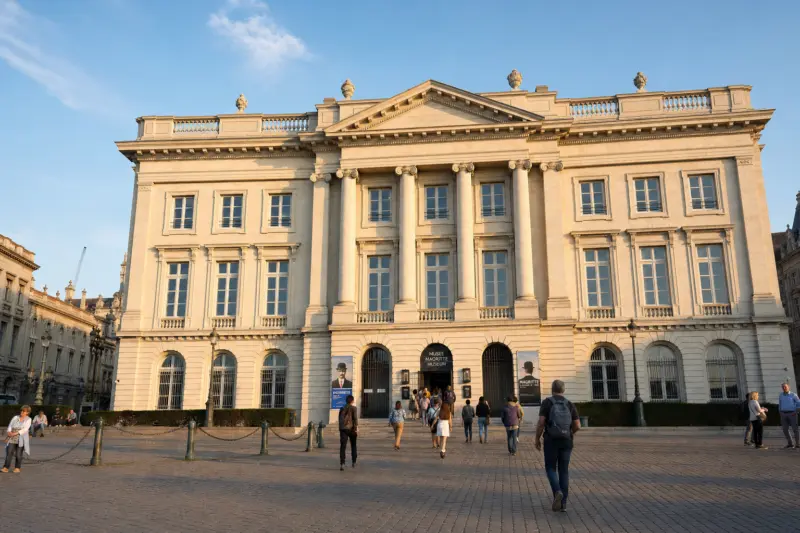
La Monnaie — known in Dutch as De Munt — is Belgium's national opera house and one of the most historically charged cultural institutions in Europe. It stands on the Place de la Monnaie in central Brussels, on the site of a mint established under the Duchy of Brabant, which gave the theatre its name. The first opera house on this site opened in 1700, but the current Neo-classical building was constructed in 1819 by architect Louis Damesme, then substantially rebuilt and expanded by Joseph Poelaert — the architect later responsible for the monumental Palais de Justice — following a catastrophic fire in 1855. The result is a grand colonnaded facade topped by a pediment relief sculpted by Jacques-Gilles Barbier, depicting the harmony of human passions through allegorical figures.
No event in the theatre's history rivals the night of 25 August 1830. During a performance of Daniel Auber's opera La Muette de Portici — a work depicting a Neapolitan uprising against Spanish rule — the duet "Amour sacré de la patrie" so inflamed the audience that spectators poured into the streets and the revolutionary fervour spread across the city within hours. Within weeks, the Southern Netherlands had declared independence from the Kingdom of the Netherlands, and Belgium was born as a sovereign state. The opera house thus holds the extraordinary distinction of being the physical birthplace of a nation. Belgium's official independence was recognised by the major European powers at the London Conference in January 1831.
Throughout the 19th and 20th centuries, La Monnaie built a reputation for premiering ambitious works and nurturing world-class talent. The soprano Maria Callas performed here, and the house became particularly celebrated under the artistic direction of Maurice Huisman (1959–1981) and then Gérard Mortier (1981–1991), whose tenure transformed it into one of Europe's most adventurous opera companies, attracting directors such as Peter Brook and staging productions that deliberately provoked and re-examined the operatic canon. Today the theatre seats approximately 1,100 and maintains a resident orchestra, chorus, and ballet company.
Visitors attending a performance enter through the colonnade into a lavishly restored auditorium featuring red velvet, gilded tiers, and a painted ceiling — a space that rewards arriving early to absorb before the curtain rises. The theatre also opens for guided tours on selected dates, which include access to backstage areas, the rehearsal halls, and the historic stage machinery. The Place de la Monnaie outside is pedestrianised and sits minutes from the Grand-Place; the nearest metro stop is De Brouckère on lines 1 and 5. Book tickets well in advance for main-season productions, as popular runs sell out months ahead.
Private tours with a local guide, at your own pace.
Brussels
Brussels
Brussels
Brussels
Brussels
Brussels
Brussels