3 hrs
Valencia
Valencia Art Nouveau Private Tour with Oceanográfic Option
✓ Free cancellation Kids friendly
4.5(45 reviews)
From €121/ person
Book Now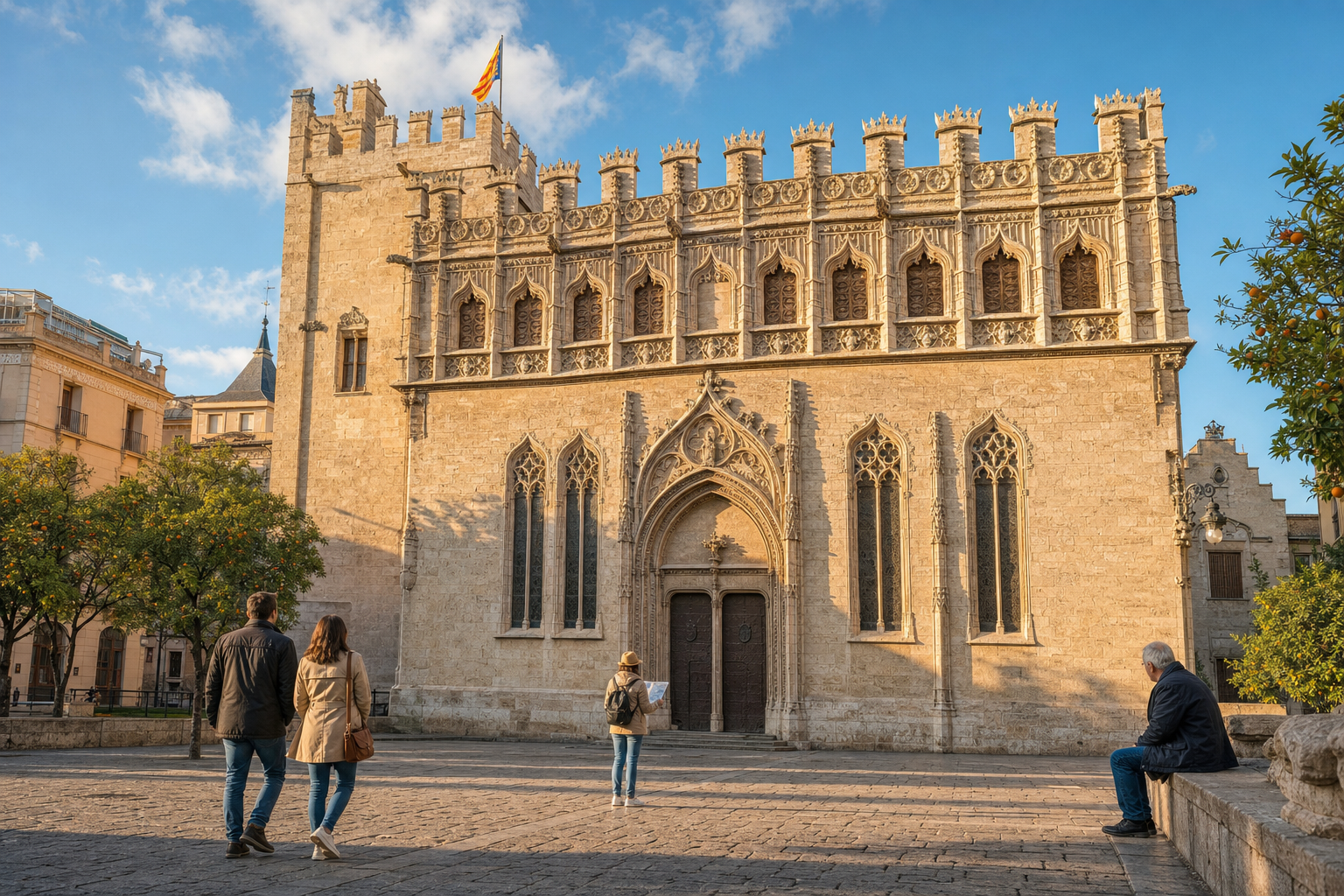
Check out other tourist attractions in the same city

Valencia
Valencia
Valencia
Valencia
Valencia
Valencia
Valencia

Valencia
Valencia
Valencia
Valencia
Valencia
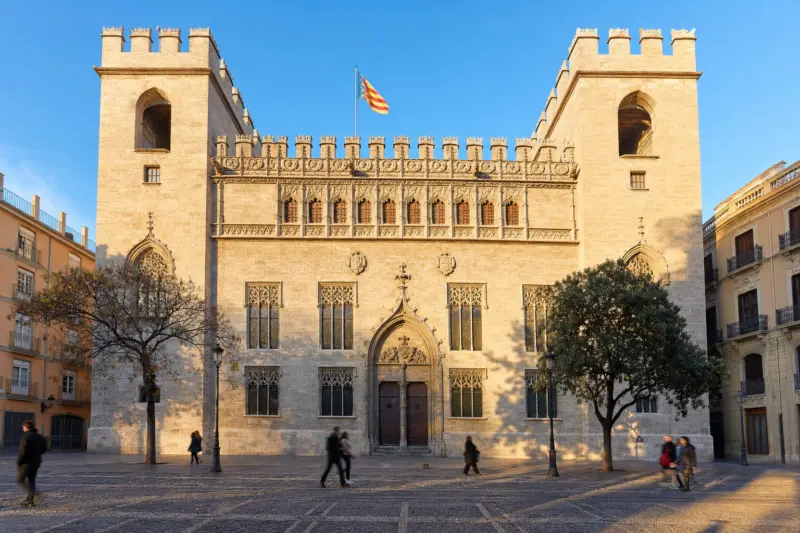
By the mid-1400s, Valencia was handling more raw silk than any other city on the western Mediterranean seaboard — more than Barcelona, more than Genoa. The city's silk industry had exploded after the Crown of Aragon consolidated trade routes across the region, and Valencian merchants found themselves brokering deals of a scale the existing 14th-century exchange simply could not accommodate. The old building was cramped, structurally compromised, and — perhaps most critically — no longer a credible address for contracts worth fortunes. Something grander was needed, and the city council had the money to build it.
In 1483, Valencia's municipal authorities commissioned Pere Compte to design and oversee construction of a new exchange. Compte was not an unknown quantity: he was the same master builder responsible for the elegant tower of Valencia Cathedral, and his technical reputation was unimpeachable. Construction ran from 1483 to 1548 — a span of 65 years — meaning the Hall of Columns was already open for business and closing silk deals before Columbus returned from his second voyage to the Americas in 1496.
What made La Lonja legally distinct from a market was its status as a certified bourse. Contracts signed on its trading floor carried the force of law and were enforceable by the Consular Court of the Sea, which operated from within the same complex. This was not a place to browse goods — it was a place to make binding commercial law. That legal gravity is baked into the building's very fabric.
UNESCO inscribed La Lonja de la Seda in 1996, recognising it as an outstanding example of Late Gothic secular architecture. It remains one of the very few commercial buildings — not a church, not a palace — to hold that designation in Europe. If you want the full historical context brought to life on the streets around it, the Highlights & Secrets of Valencia private tour covers La Lonja's neighbourhood in depth, as does the Architectural Tour Valencia.
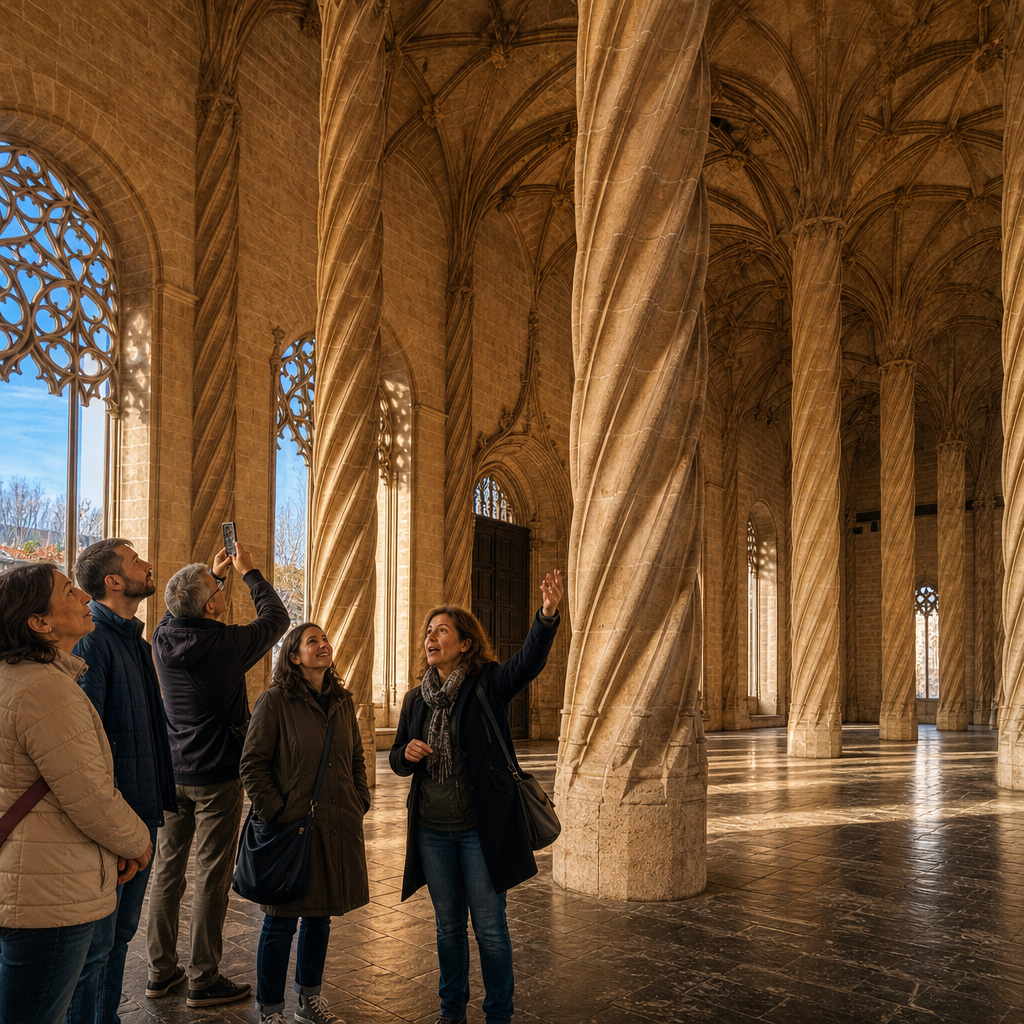
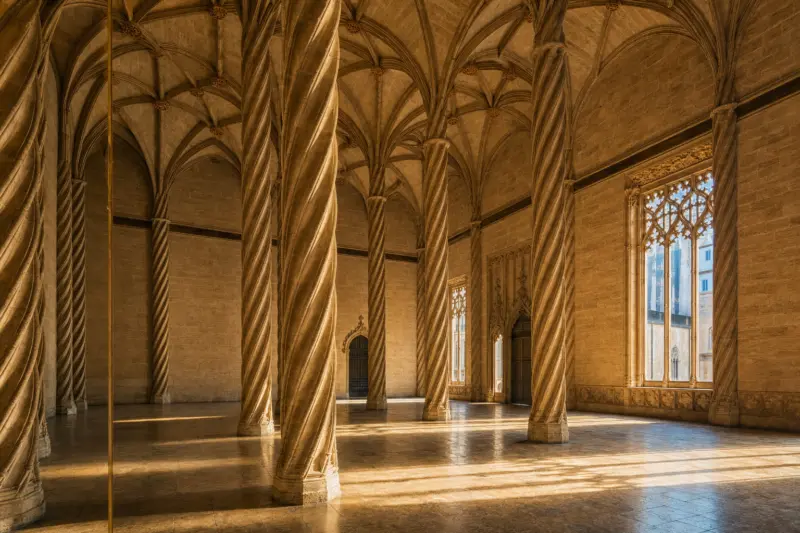
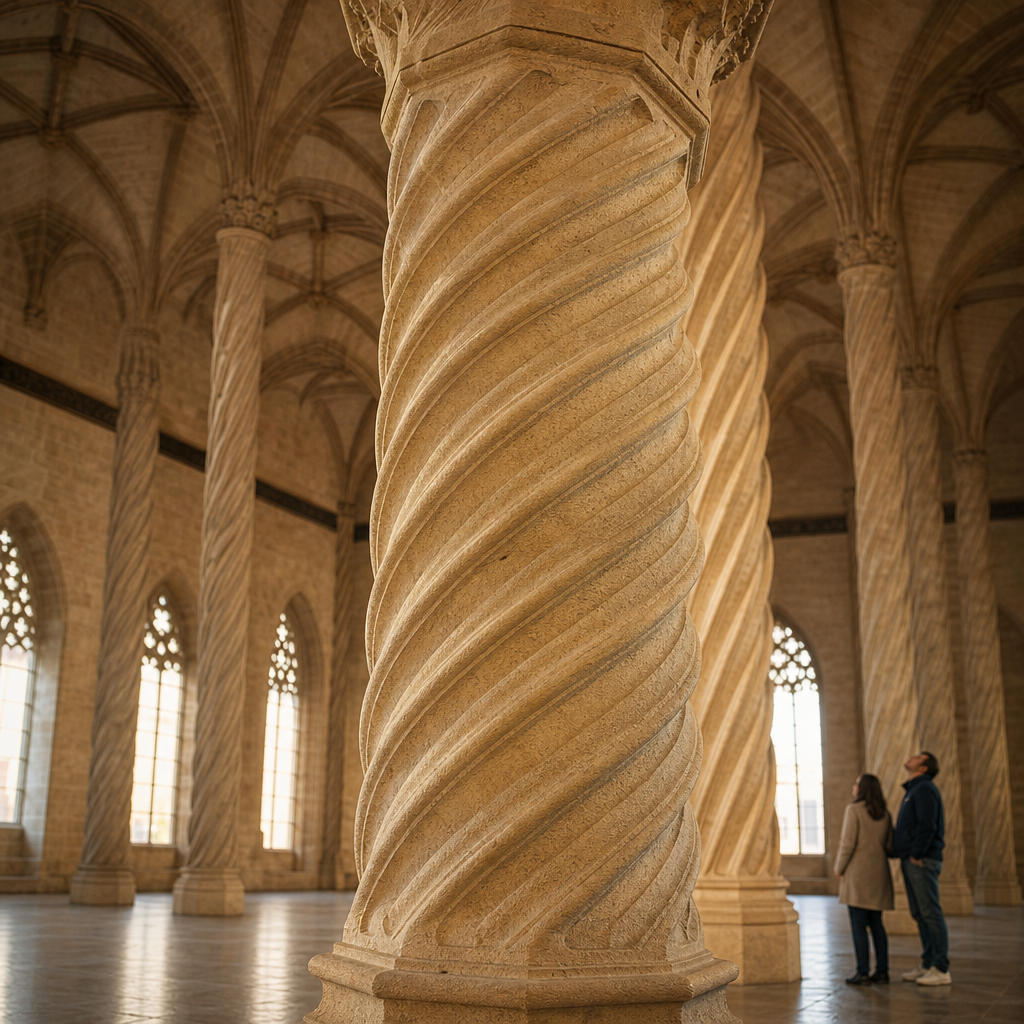
The Hall of Columns — the Sala de Contratación — is where most visitors stop, and rightly so. Fifteen helical columns rise 17.4 metres without a single intermediate support, allowing the vaulted ceiling to appear to float above roughly 1,000 square metres of unobstructed trading floor. The twist of each column almost certainly references the warping threads of a silk loom — a piece of architectural symbolism so precise it borders on propaganda. Pere Compte was building an argument in stone: this city is wealthy, this city is serious, and this is the room where its commercial greatness is transacted.
Connected to the hall by a covered walkway, the tower tells a different story. Its lower floor was Valencia's first dedicated merchant prison — not for criminals, but for debtors. The distinction matters: the city's legal system treated unpaid commercial obligations as a civic emergency. The upper floor directly above housed the Consular Court of the Sea, meaning a debtor could be imprisoned, tried, and sentenced without ever leaving the building. The original Gothic paintings and the restored merchant court bench survive on the upper floor and are almost always empty of other visitors.
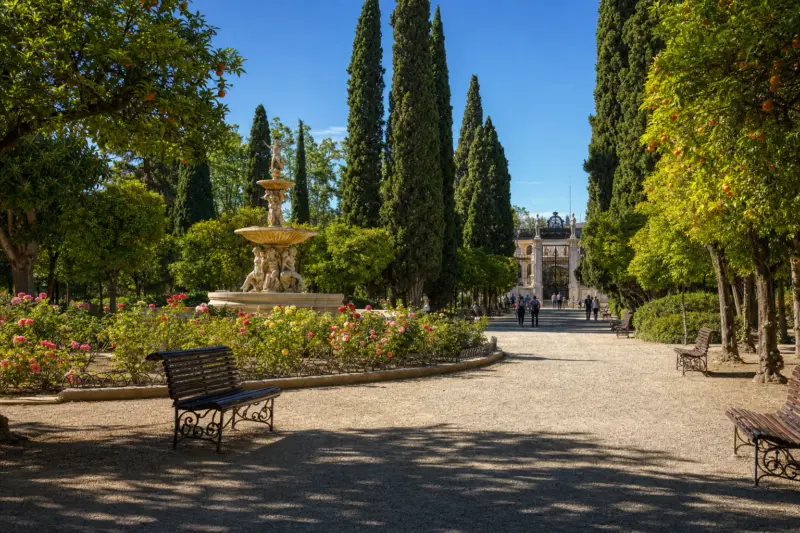
The Patio de los Naranjos — the Orange Tree Courtyard — connects the exchange to the adjacent Consulado del Mar building. The orange trees planted there are the same variety cultivated in Valencia since Moorish rule, making the courtyard a quiet living thread between the city's Islamic past and its Christian mercantile present. Take the time to sit; most visitors treat it as a corridor and miss the point entirely.
On the exterior, the gargoyles deserve attention. They are not religious imagery — they depict hybrid monsters and figures associated with usury and corrupt trade, morality warnings carved directly into the walls of a commerce building. The exterior frieze runs 190 metres. The building covers 2,500 m² in total, small enough to visit in 45–60 minutes and to make it one of the best entrance-price-to-experience ratios in Spanish heritage tourism. The Architectural Tour Valencia decodes all of this detail on-site, and the Kickstart Valencia tour includes La Lonja as a landmark stop for first-time visitors.
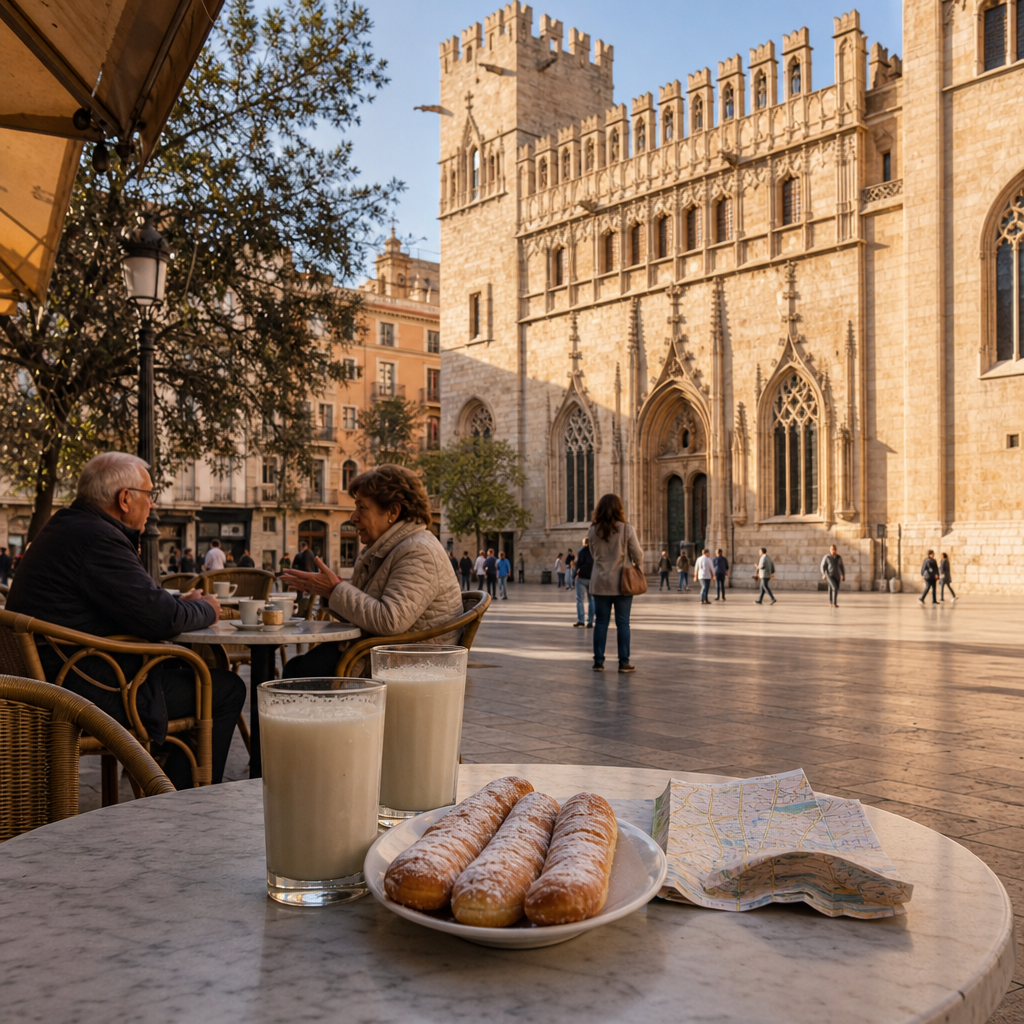
General admission to La Lonja de la Seda costs €2 — making it one of the cheapest UNESCO World Heritage site entries in Europe. Guided tours are available from €8; audio guides cost €4. Entry is completely free on Sundays and public holidays. Opening hours run Tuesday to Saturday 10:00–19:00; Sunday and public holidays 10:00–14:00. The building is closed on Mondays.
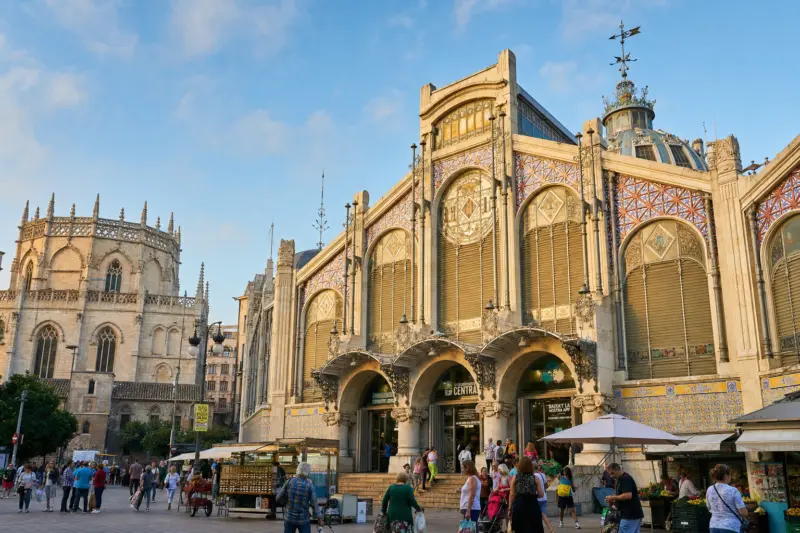
La Lonja sits directly opposite the Mercado Central de Valencia, which means Saturday mornings bring noise and foot traffic that spill across the square. If you care about atmosphere inside the Hall of Columns, aim for 10:30–11:30, when sun enters through the south-facing windows and the helical columns cast their best shadows. Avoid the 12:00–14:00 window in summer — this is when cruise-ship tour groups converge and the trading floor becomes genuinely difficult to appreciate.
Most visitors spend 20 minutes in the Hall of Columns and leave. That is a mistake. The upper floor of the tower — home to the Consular Court room with its original Gothic paintings and restored merchant bench — is almost always empty and worth every step of the stairs. The Orange Tree Courtyard is a genuine rest stop, not a throughway, and the exterior gargoyle frieze rewards a slow circuit of the building before you enter.
For a natural half-day itinerary, La Lonja combines perfectly with the Mercado Central and the Plaza de la Virgen into a 2.5-hour heritage-and-food loop through the old city — the exact corridor covered by the Kickstart Valencia tour. Those who want to extend the day into Valencia's museums and waterfront paella scene will find the Valencia Full Day tour maps a seamless itinerary.
The history and architectural detail in this article is exactly what a Local Cool Tour private guide brings to life on the ground — not a rehearsed script, but a genuine conversation shaped around what you find interesting. La Lonja appears as a landmark stop on the Kickstart Valencia tour, ideal for first-time visitors who want a confident orientation to the old city. The Architectural Tour Valencia gives the building the deep reading it deserves, room by room and gargoyle by gargoyle. The Valencia Full Day weaves La Lonja into a complete picture of the city — history, contemporary design, and a proper paella lunch. The Highlights & Secrets of Valencia tour adds the layers the guidebooks omit.
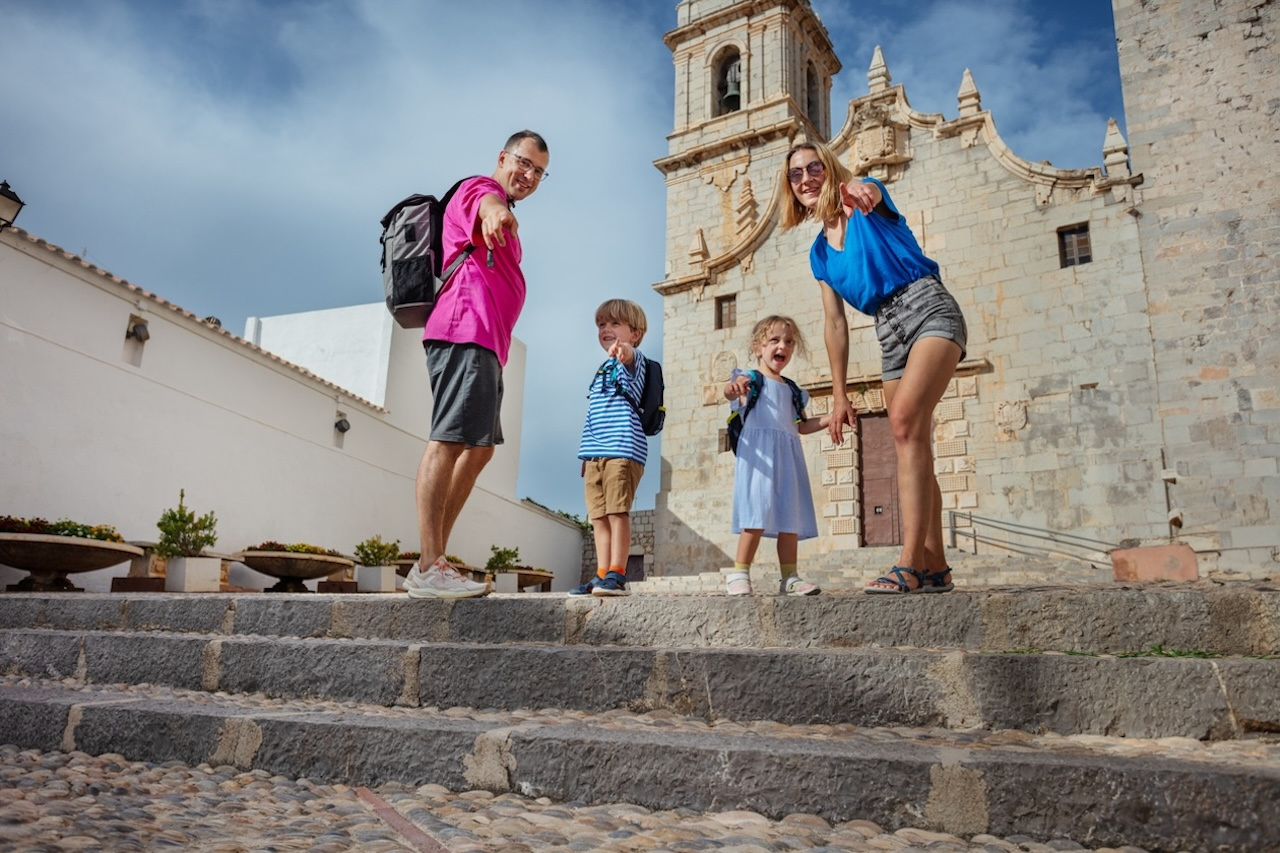
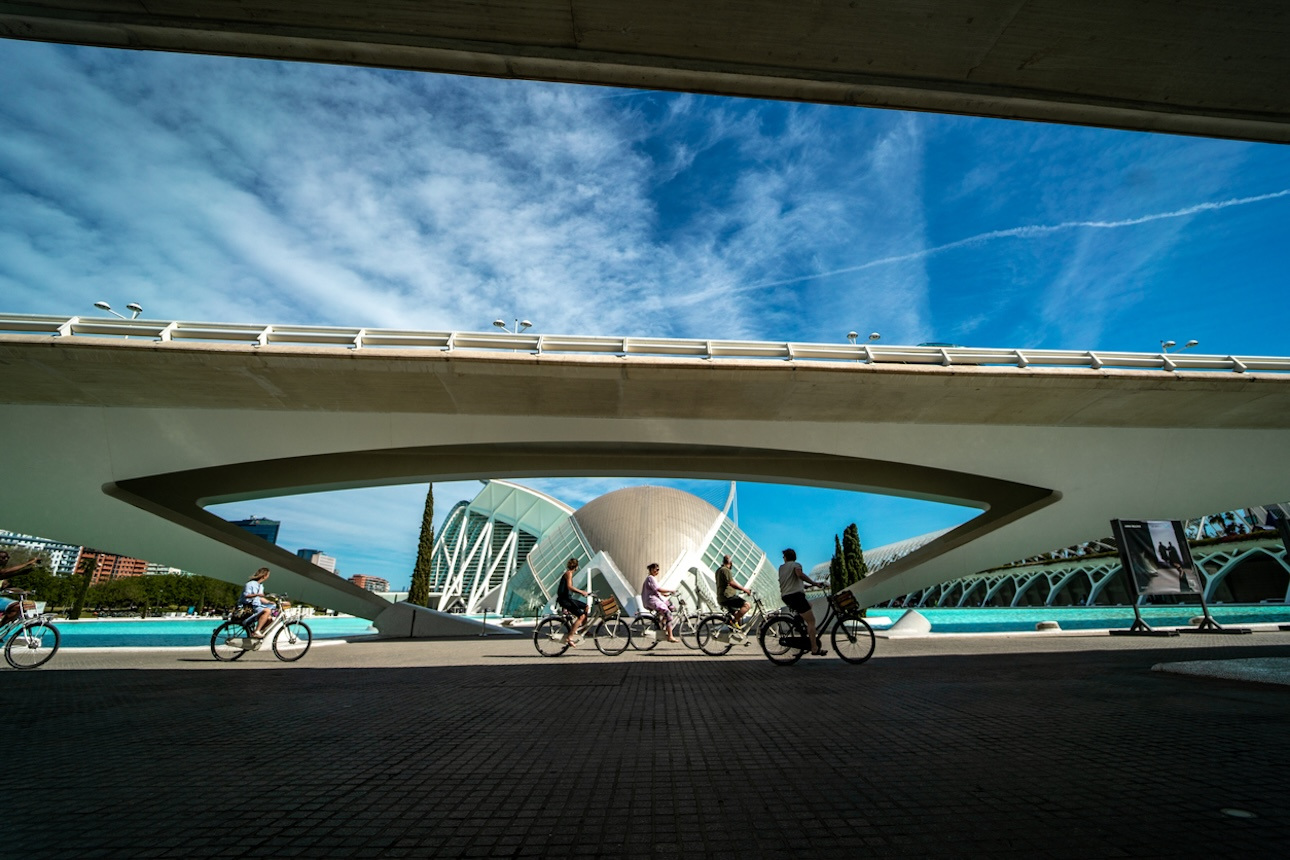
Further options include the Food & Drinks Valencia tour, the Valencia Bike Tour, the Valencia Family Tour, and a full-day Albufera Day Trip for those who want to reach the wetlands that supply Valencia's rice. Browse the full range on the Valencia tours page and find the itinerary that fits your trip.
Explore the city with a local guide
Valencia

Valencia
Valencia
Valencia
Valencia
Valencia

Valencia
Valencia
We use a single cookie, to remember this choice. We do not use analytics or advertising cookies. Read our cookie policy.