3.5 hrs
copenhagen
Copenhagen Alternative Private Tour: Vesterbro & Christianshavn
✓ Free cancellation Kids friendly
4.9(19 reviews)
From €311/ person
Book Now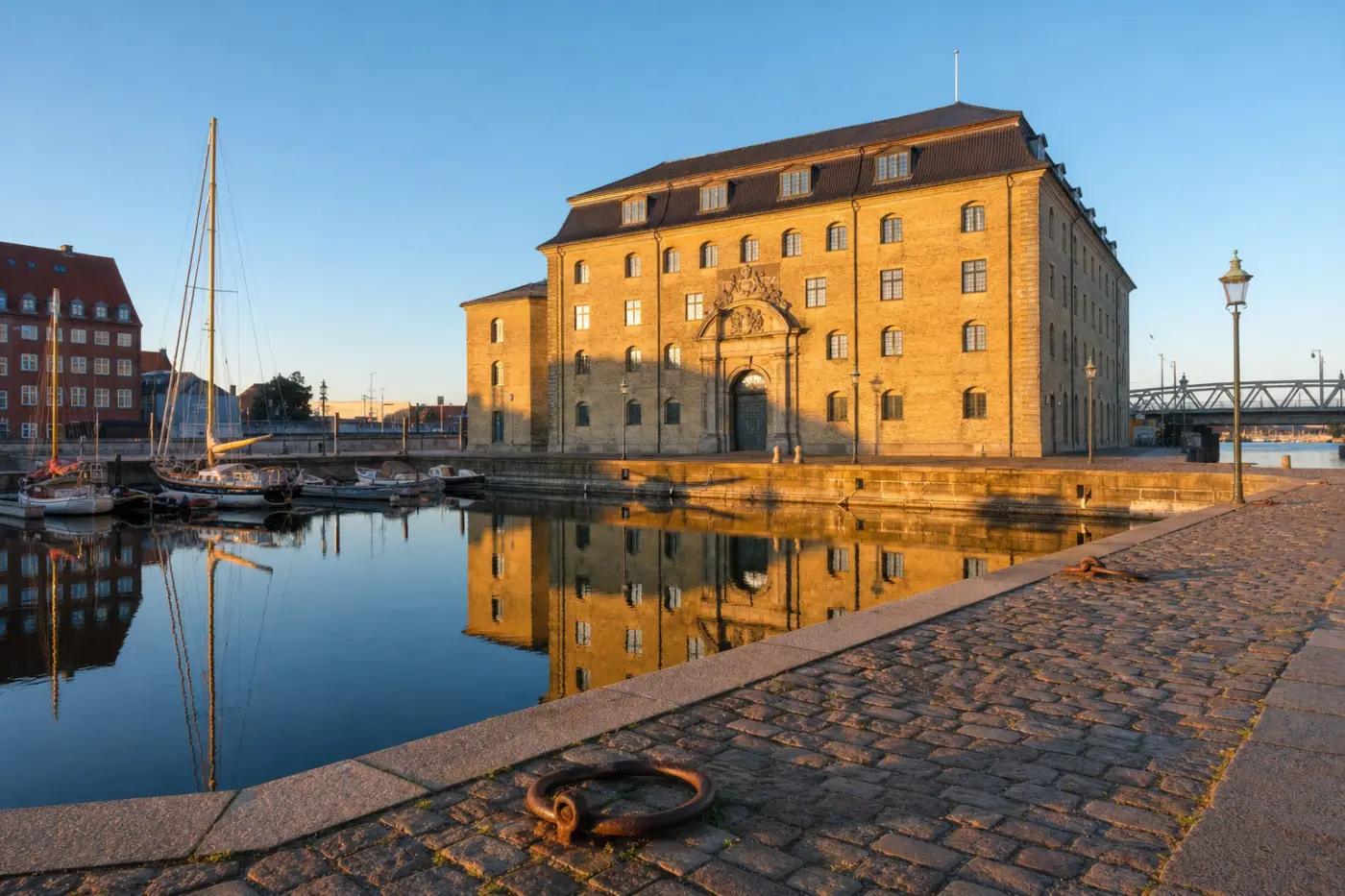
Tourist attraction
Asiatisk Plads — today the address of Denmark's Ministry of Foreign Affairs (Udenrigsministeriet) — sits on the Christianshavn waterfront just south of Knippelsbro bridge, and for most of the 18th century it functioned as the beating commercial heart of the Danish kingdom. The square takes its name from the Danish Asiatic Company (Det Asiatiske Kompagni), a royal chartered trading house established in 1732 under King Christian VI. At its peak in the 1750s and 1760s, the company operated regular routes to Canton (Guangzhou) in China and to the Coromandel Coast of India, importing porcelain, silk, tea, and spices that were then re-exported across northern Europe, generating revenues that rivalled the state's own tax income.
The company's warehouse complex on this site was designed by the architect Nicolai Eigtved — the same master planner responsible for Frederiksstaden and Amalienborg Palace — and construction was completed around 1750. The main warehouse building (Pakhuset) is a substantial four-storey Baroque structure in yellow brick with a rusticated sandstone portal, built directly onto the quay so that ships could unload directly into the ground-floor storage bays. A smaller inner harbour basin, still visible today, allowed vessels to moor protected from the main channel of the Øresund approaches. The ensemble represents one of the best-preserved examples of Danish mercantile Baroque architecture outside Slotsholmen. The company was wound up in 1843 after Danish colonial trade collapsed in the wake of the Napoleonic Wars and the British bombardment of Copenhagen in 1807, which crippled the merchant fleet.
When you stand at the small inner basin today, you are standing at the exact point where Canton-bound ships were loaded and provisioned before making the five-to-six-month voyage around the Cape of Good Hope. The quayside retains its original granite cobblestones and iron mooring rings. The main warehouse building was converted into government offices in the 19th century and has housed the Foreign Ministry since 1980, lending the square a quiet, official atmosphere quite different from the tourist bustle of nearby Nyhavn — though the two waterfronts are only a ten-minute walk apart along the harbour promenade.
Asiatisk Plads is freely accessible on foot from Knippelsbro (cross on the left-side pavement and descend the harbour stairs) or by harbour bus, alighting at the first stop after the bridge. The inner courtyard and quayside are open to visitors during daylight hours; the warehouse buildings themselves are not publicly accessible. The square is at its most atmospheric in early morning light, when the yellow brick glows against the water and the city is still quiet — a rare chance to absorb a genuinely historic Copenhagen streetscape without crowds.
Private tours with a local guide, at your own pace.
copenhagen

copenhagen
copenhagen

copenhagen
copenhagen
We use a single cookie, to remember this choice. We do not use analytics or advertising cookies. Read our cookie policy.