5 hrs
Copenhagen
Copenhagen Private Full Day Tour with Lunch Option
✓ Free cancellation Kids friendly
4.8(138 reviews)
From €334/ person
Book Now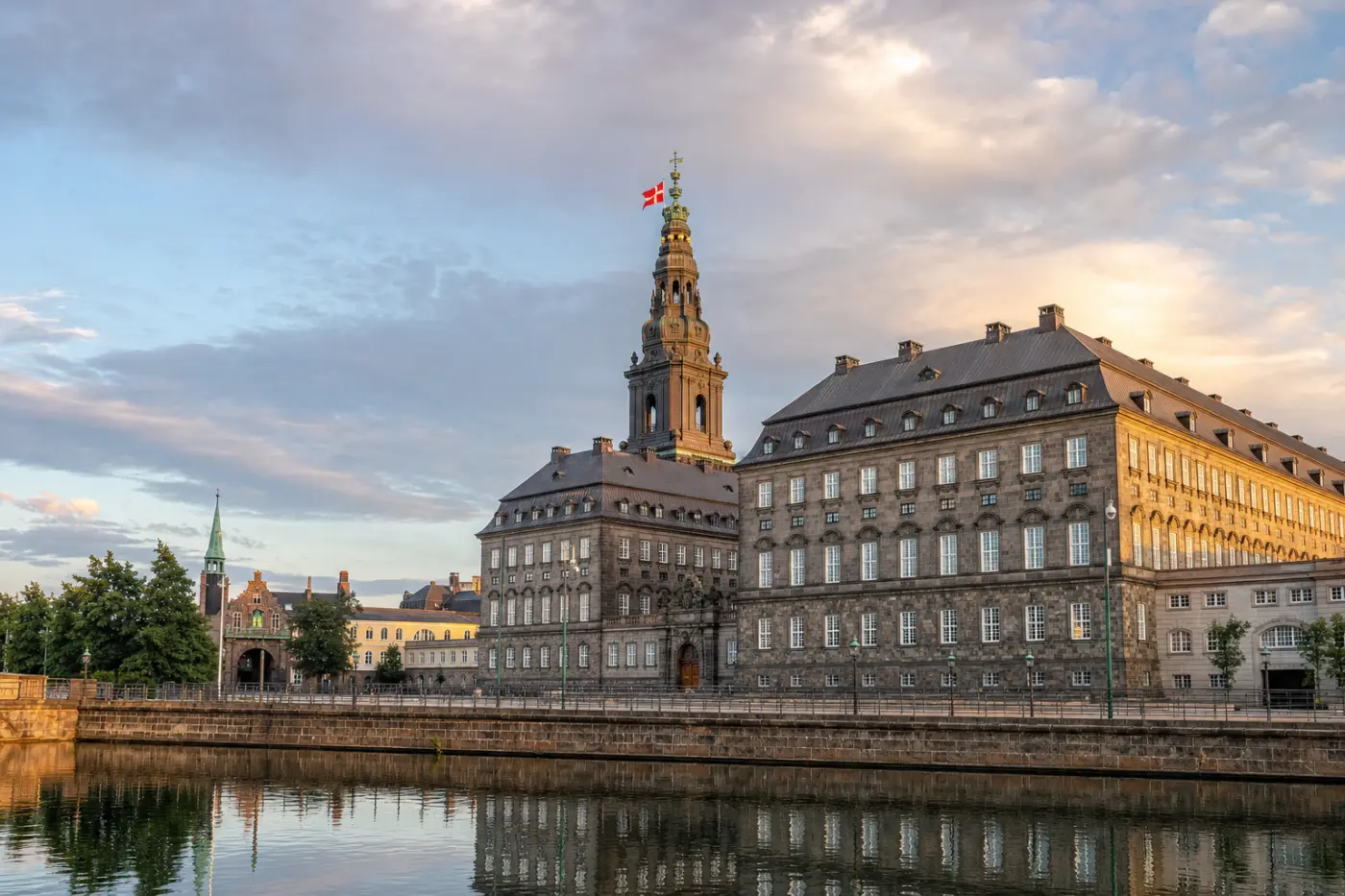
Tourist attraction
Christiansborg Palace stands on the small island of Slotsholmen in central Copenhagen, occupying a site that has held a royal fortress or palace continuously since Bishop Absalon built his fortified residence there in 1167. The current building — the third to bear the Christiansborg name — was completed in 1928 in a restrained Nordic Neo-Baroque style designed by architect Thorvald Jørgensen, its granite facades and 106-metre copper-clad tower dominating the Copenhagen skyline. What makes Christiansborg constitutionally unique is that it simultaneously houses the Danish Parliament (Folketing), the Supreme Court, and the Prime Minister's Office, making it the only building in the world where a country's legislative, judicial, and executive branches all operate under one roof. The Danish Royal Family uses the palace's State Rooms for official functions, though the monarchy's primary residence has been Amalienborg since a catastrophic fire gutted the second Christiansborg in 1884.
The site's layered history is literally excavated beneath your feet. Ruins of Bishop Absalon's original stone castle, demolished in 1369, and the first Renaissance-era Christiansborg Palace (built 1733–1745 under Christian VI, destroyed by fire in 1794) are preserved in the basement ruins — one of Copenhagen's most visited underground archaeological sites. The second palace rose from those ashes but was ravaged by a second fire in 1884, leaving only the Riding Grounds, the Court Theatre, and the Palace Church standing from that era. The Palace Church, rebuilt after the 1884 fire and reopened in 1826, is a striking Neoclassical hall church with a coffered barrel vault; it remains the setting for royal baptisms and confirmations to this day.
Visitors can access a remarkable number of spaces within Christiansborg. The Royal Reception Rooms — a suite of 21 state apartments — are open to the public on most days, featuring the Great Hall with its 17 monumental tapestries designed by Bjørn Nørgaard between 1990 and 2000, depicting 1,000 years of Danish history from the Vikings to the late 20th century. The Tower offers the highest free public viewpoint in Copenhagen, with panoramas stretching across the harbour, the spires of the old city, and on clear days across the Øresund strait to Sweden. The Royal Stables below the palace complex still house horses and coaches used for state ceremonies, and the original riding grounds dating from the 1740s remain intact.
Plan at least two to three hours to do Christiansborg justice, as the ruins, state rooms, tower, and stables each carry separate timed-entry tickets that can be purchased individually or as a combined pass — the combination ticket offers meaningful savings. The palace is closed on Mondays outside the summer season, so check the official calendar before visiting. Slotsholmen itself is freely walkable, and the canal-side perspective from the Frederiksholms Kanal bridge, with the palace's granite bulk reflected in the water, is one of the great unobstructed architectural views in Scandinavia. Early morning visits avoid the midday tour-group peak and give the tapestry-hung Great Hall an especially still, atmospheric quality.
Private tours with a local guide, at your own pace.
Copenhagen

Copenhagen
Copenhagen
Copenhagen
Copenhagen
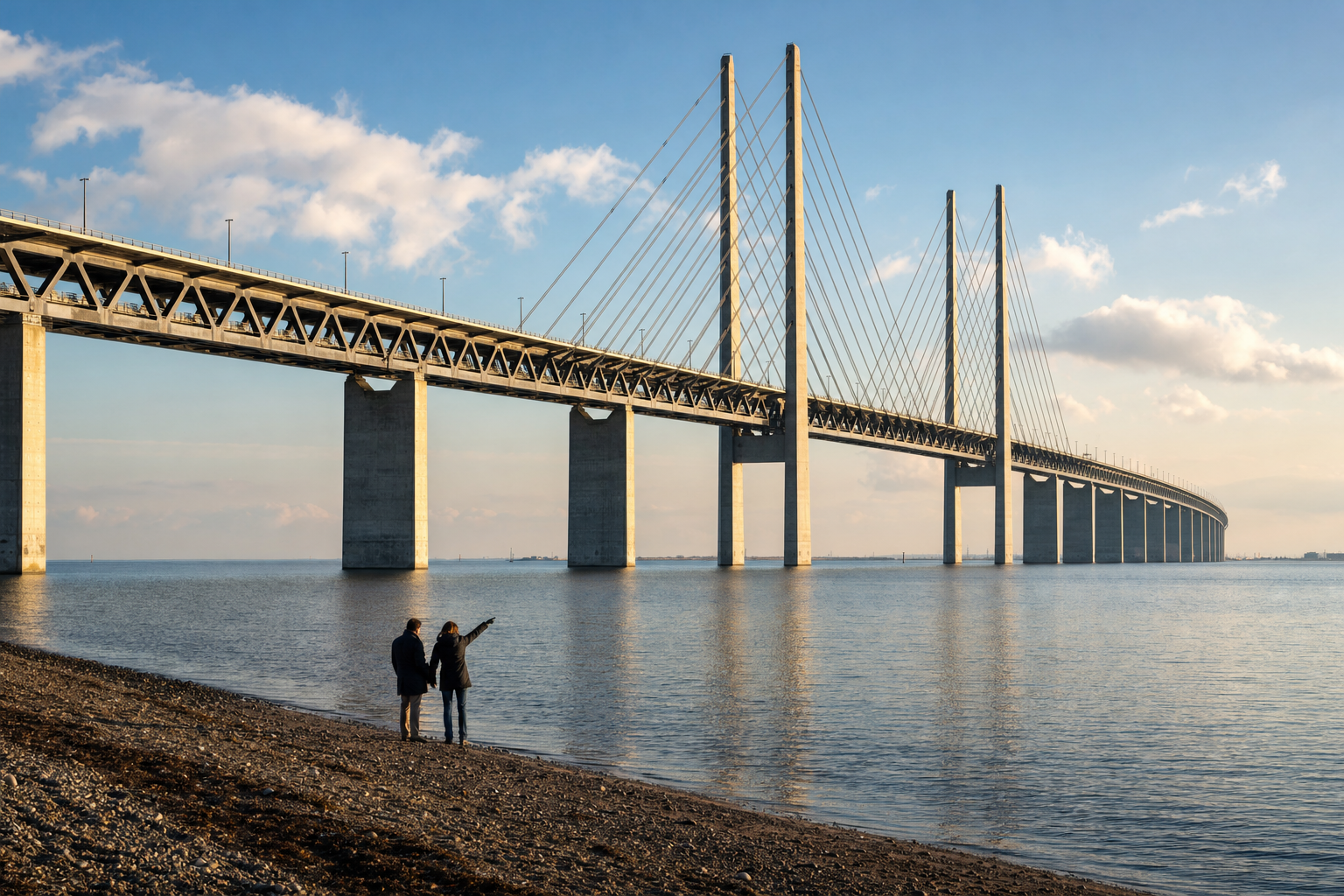
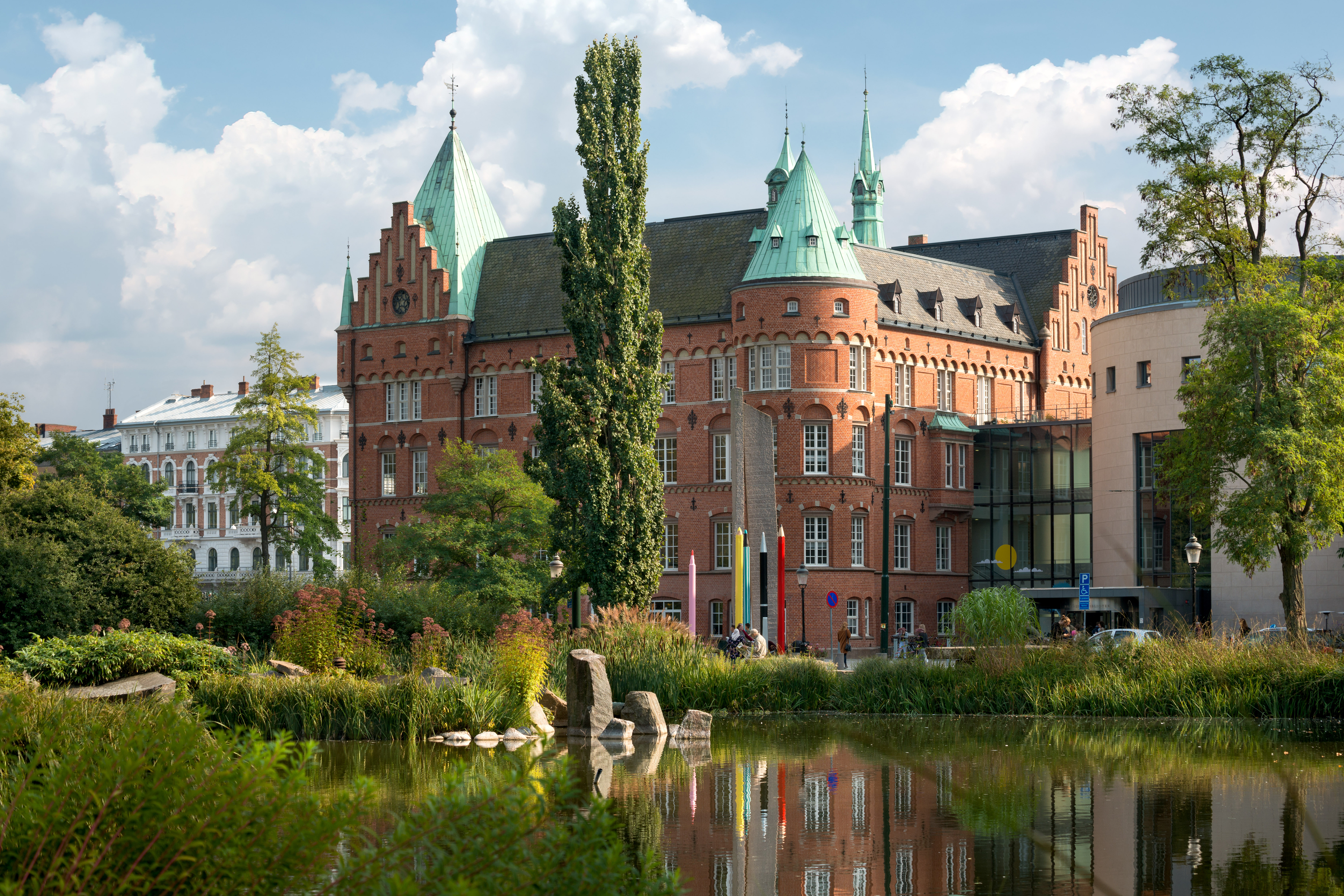
Copenhagen sits just 35 minutes from one of Scandinavia's most quietly compelling cities — yet most visitors never make the crossing. Malmö, Sweden's third-largest city, is separated from the Danish capital by the Øresund Strait and connected by one of Europe's most audacious feats of engineering: a 16-kilometre fixed link that tunnels under the seabed, surfaces on an artificial island, and then soars across the water on a cable-stayed bridge. Since the Øresund Bridge opened in July 2000, the two cities have functioned almost as a single metropolitan region, with commuters, students, and food lovers crossing daily. What you find on the Swedish side is genuinely different from Copenhagen — less polished for tourism, more multicultural, architecturally daring, and with a food scene shaped by 175 nationalities. Whether you have a single free afternoon or a full day to spare, a Malmö day trip from Copenhagen is one of the best decisions you can make.
Read more →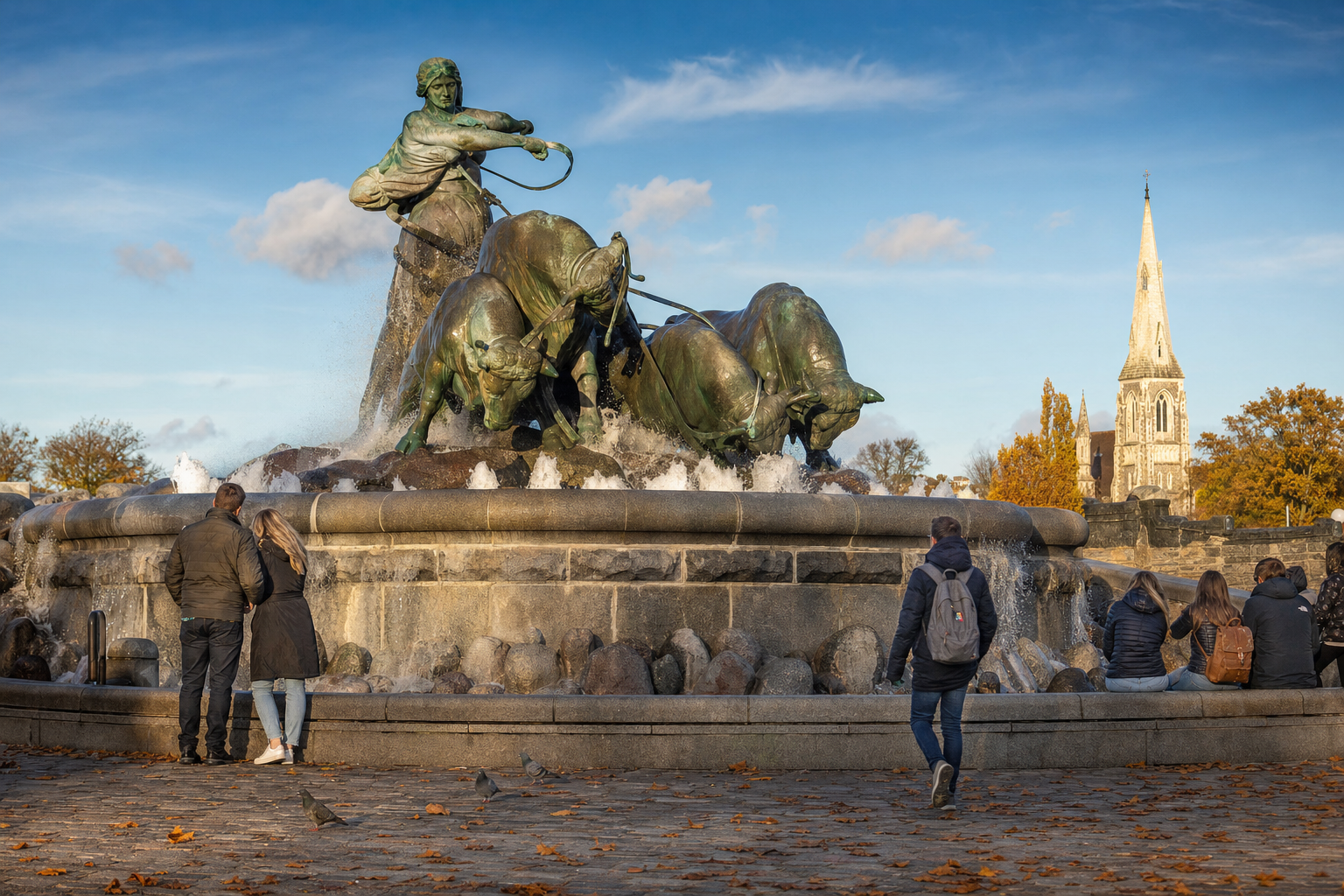
In 1908, Copenhagen unveiled one of the most dramatically charged public sculptures in all of Scandinavia — a towering bronze goddess urging four straining oxen through a violent, world-creating plough. The Gefion Fountain (Gefionspringvandet) stands at the edge of Langelinie Park, water cascading around a scene that is, quite literally, the origin story of the ground beneath the city. The myth it depicts — a Norse goddess who tricked a Swedish king into giving away an entire landmass in a single night — is not decorative folklore. According to the 13th-century Prose Edda by Snorri Sturluson, Gefion's overnight heist carved Zealand (the island on which Copenhagen sits) directly out of what is now Sweden. That makes this fountain something rare: a public monument that tells you exactly why the city exists where it does. Most visitors photograph it on the way to the Little Mermaid and move on. Those who pause long enough to read the myth, study the bronze, and understand the 14-year commission behind it leave with something far more interesting than a snapshot.
Read more →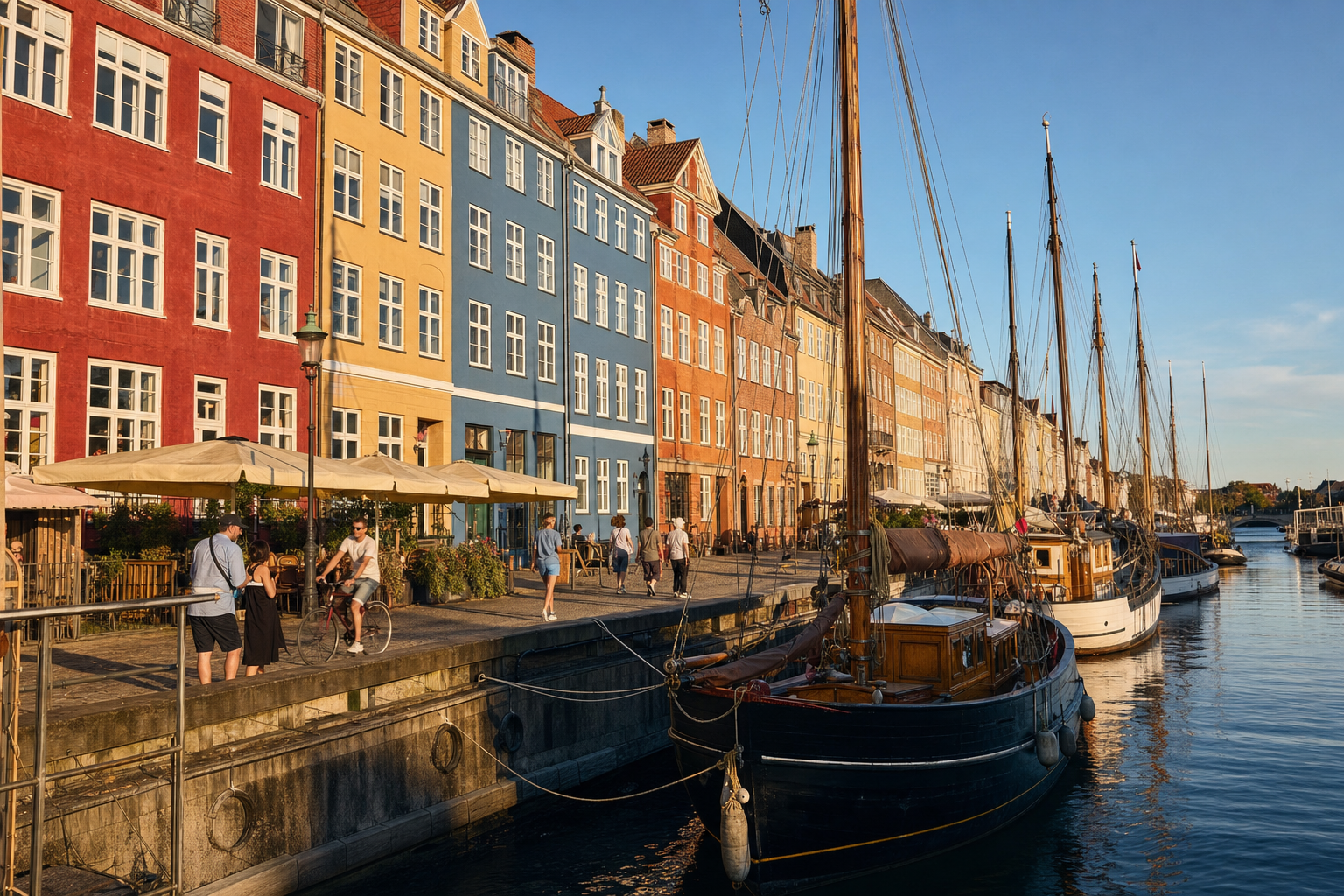
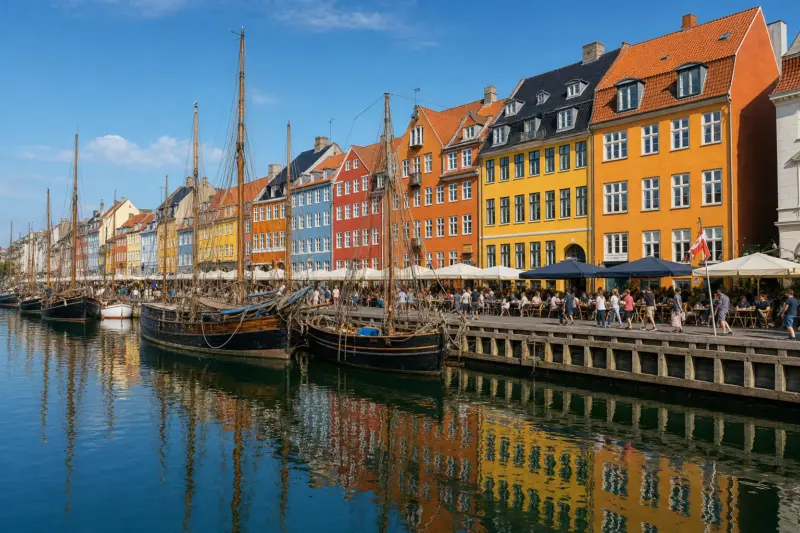
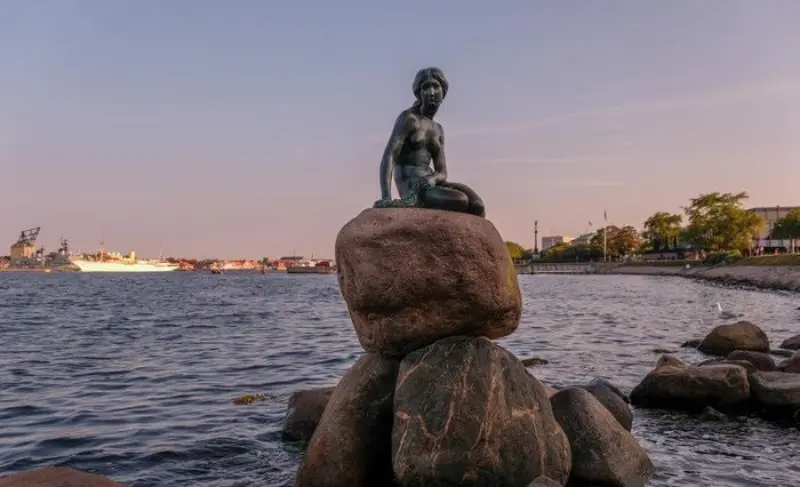
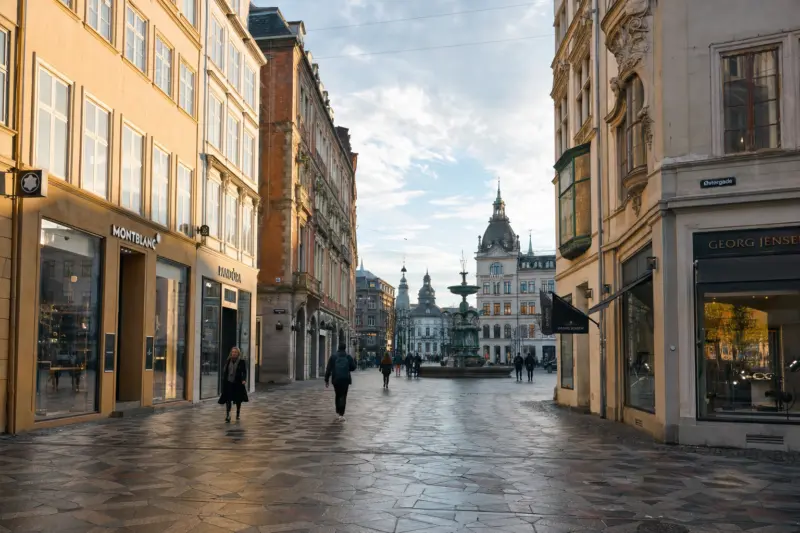
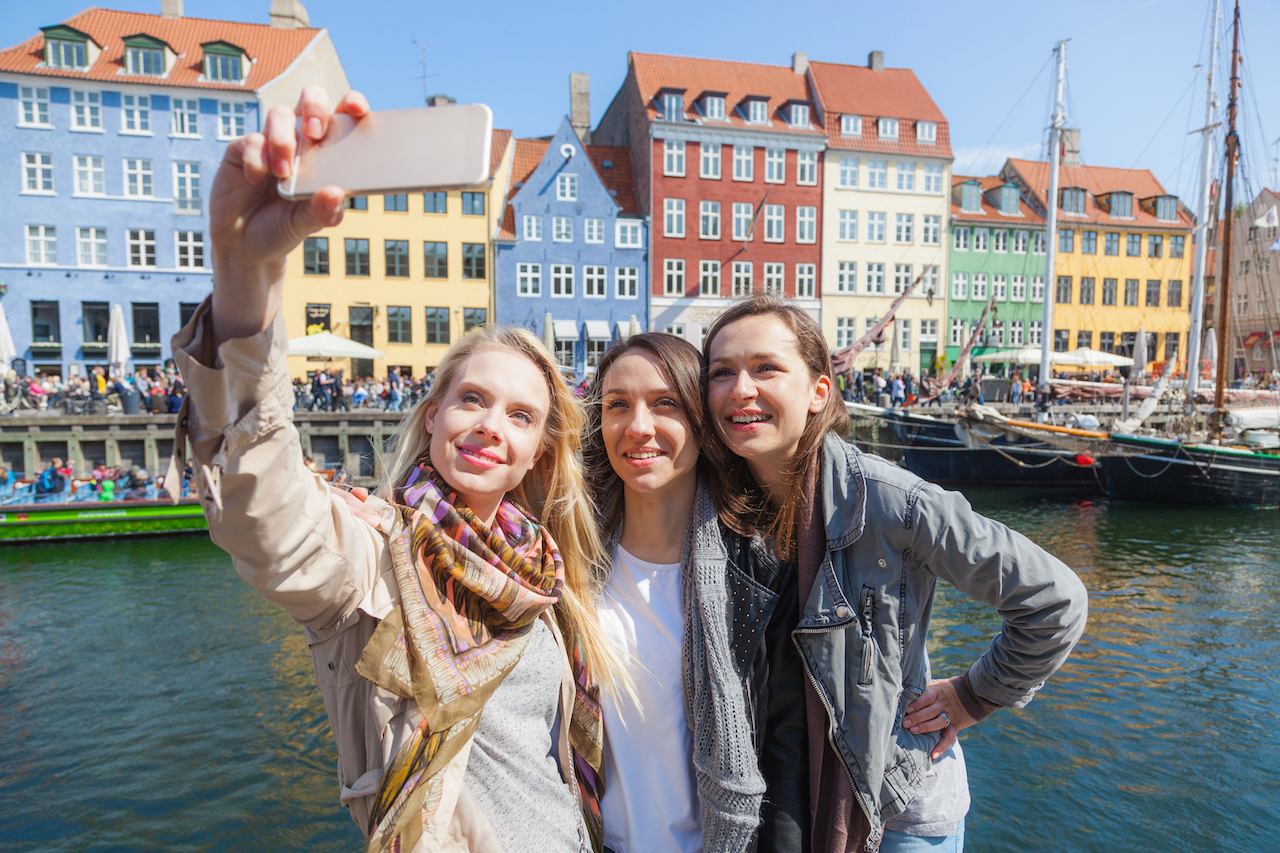
In 1671, Swedish prisoners of war were forced to dig the canal that would become Nyhavn — today one of the most photographed waterfronts in Europe. That paradox, beauty built on a history most visitors never hear, is Copenhagen in a nutshell. The Danish capital sits on the island of Sjælland, packs more Michelin-starred restaurants per capita than almost any city on earth, and somehow manages to feel like a large village where cyclists outnumber cars and neighbours still leave their prams outside cafés. But the version most tourists experience — colourful Nyhavn facades, a quick photo of The Little Mermaid, a lap of Strøget — barely scratches the surface. This guide goes further, pairing the city's landmark sights with the stories behind them, mapping the neighbourhoods that locals actually love, and cutting through the noise on where and how to eat like a Copenhagener. Whether you have two days or a full week, this is where your planning starts.
Read more →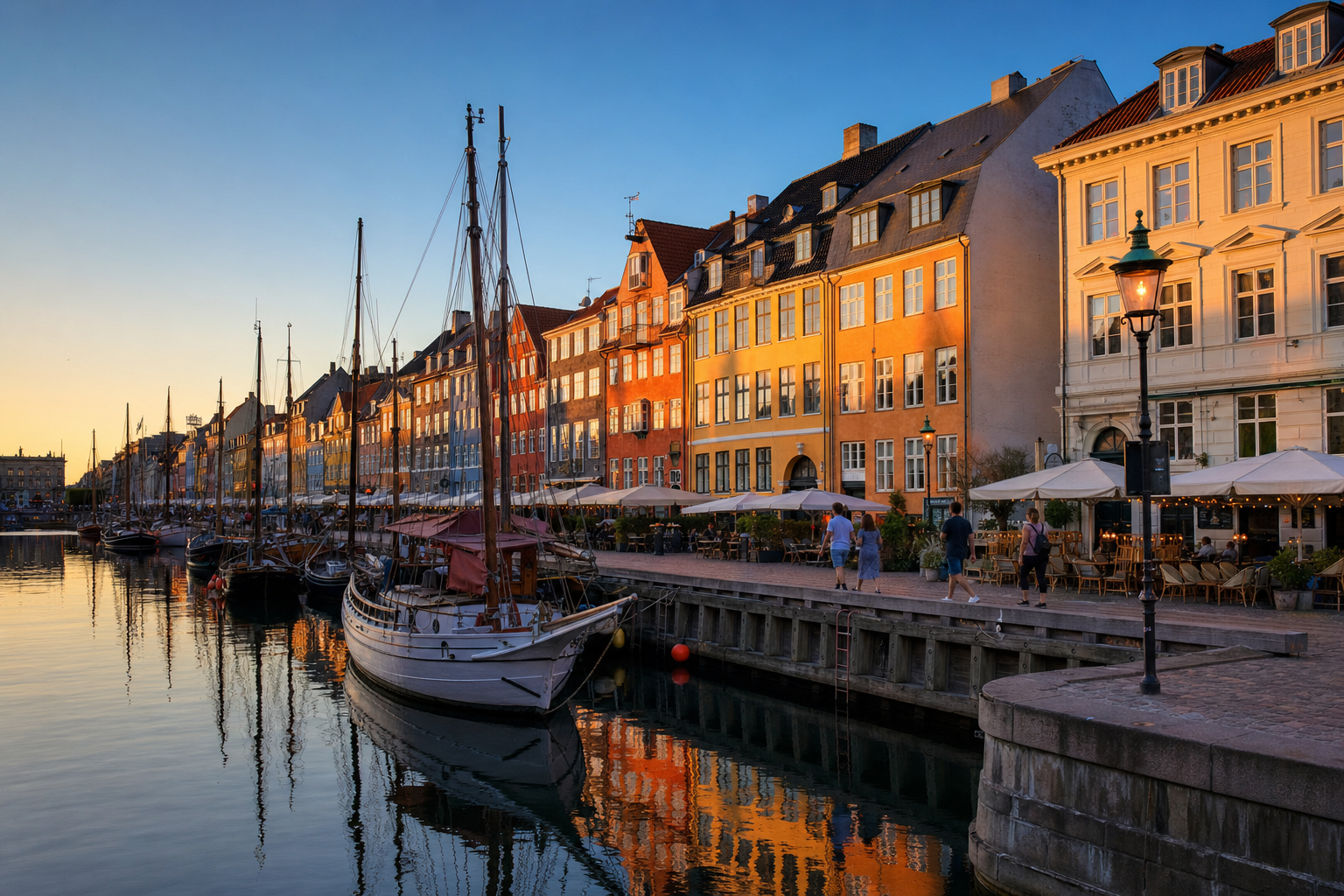
On the 23rd of June each year, Copenhagen does something most cities can't: it barely gets dark. Sitting at roughly 55°N latitude — the same as Moscow and Edinburgh — the Danish capital stretches summer daylight to nearly 17 hours, turning evening canal walks along Nyhavn into something that feels almost surreal. Yet the same geography that gifts Copenhagen long, luminous summers also compresses its December days to just 7 hours of usable light. Choosing when to visit this city of 671,714 people isn't simply a matter of avoiding rain — it's about understanding how radically different Copenhagen becomes from one month to the next. The canal colours change. The crowd density shifts. The cultural calendar rewrites itself entirely. Whether you're drawn by Tivoli Gardens in full summer bloom, the quiet warmth of a hygge-soaked February afternoon, or the sweet spot of a May morning on an uncrowded bicycle lane, this guide cuts through the generic advice and gives you the specific facts you need to pick your perfect Copenhagen window.
Read more →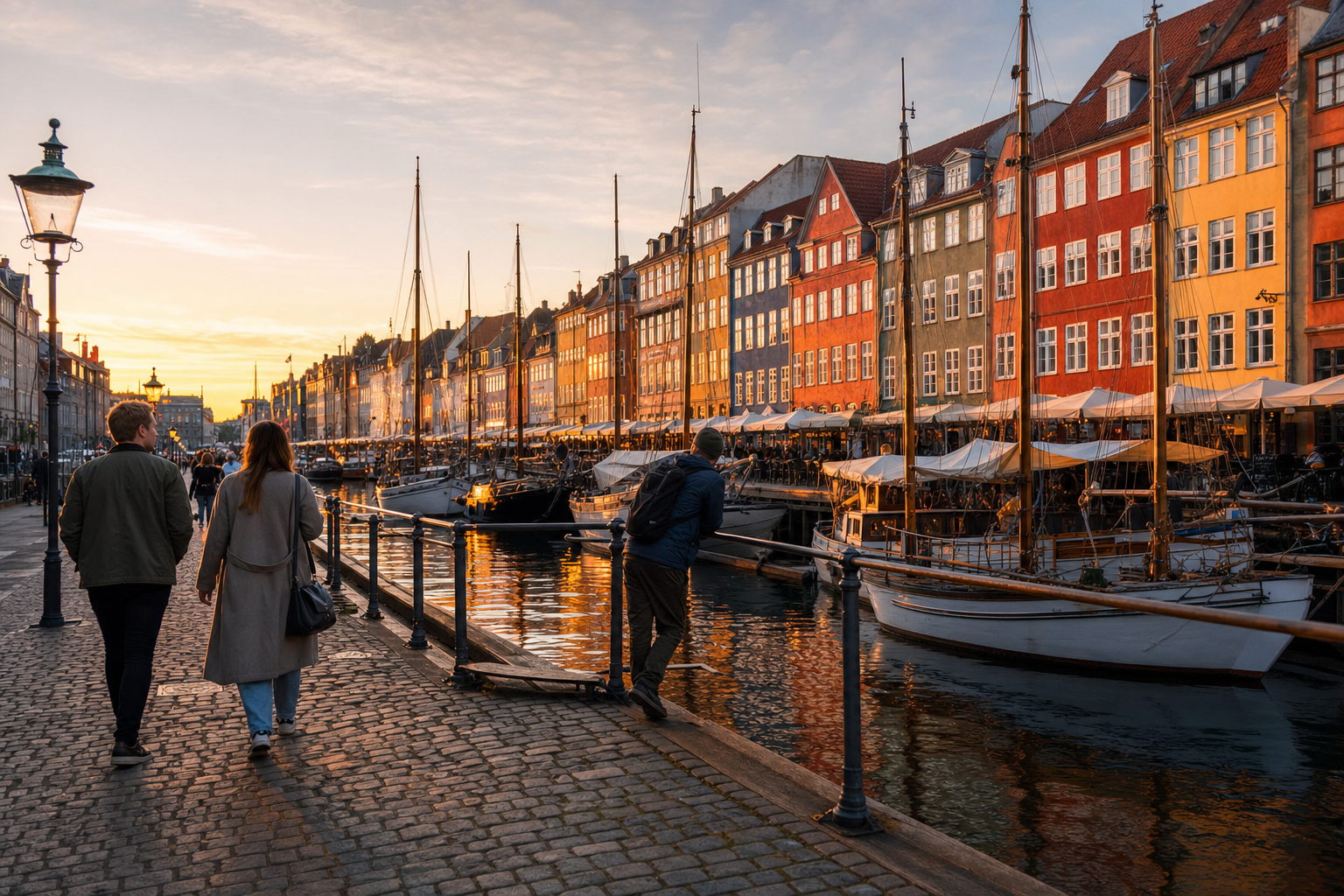
Copenhagen rewards the curious traveller who looks beyond the pastel facades. In 1167, a bishop named Absalon built a fortress on a small island in the Øresund strait — that single act of medieval pragmatism gave birth to what is today one of Europe's most liveable, forward-thinking capital cities. Nearly nine centuries later, Copenhagen still wears its entire history on its sleeve: a royal canal dug by prisoners of war, a self-governed freetown operating under its own social rules, and a harbour so thoroughly cleaned up that locals swim laps in it on summer lunch breaks. Three days is genuinely enough time to move from the medieval core to the contemporary waterfront, to cross into Sweden for a morning, and to eat some of the most thoughtful food in the world. This itinerary is built around walking distances, local rhythms, and the specific stories that make each place meaningful — not just photogenic. Here is how to spend 72 hours in Copenhagen the way a local actually would.
Read more →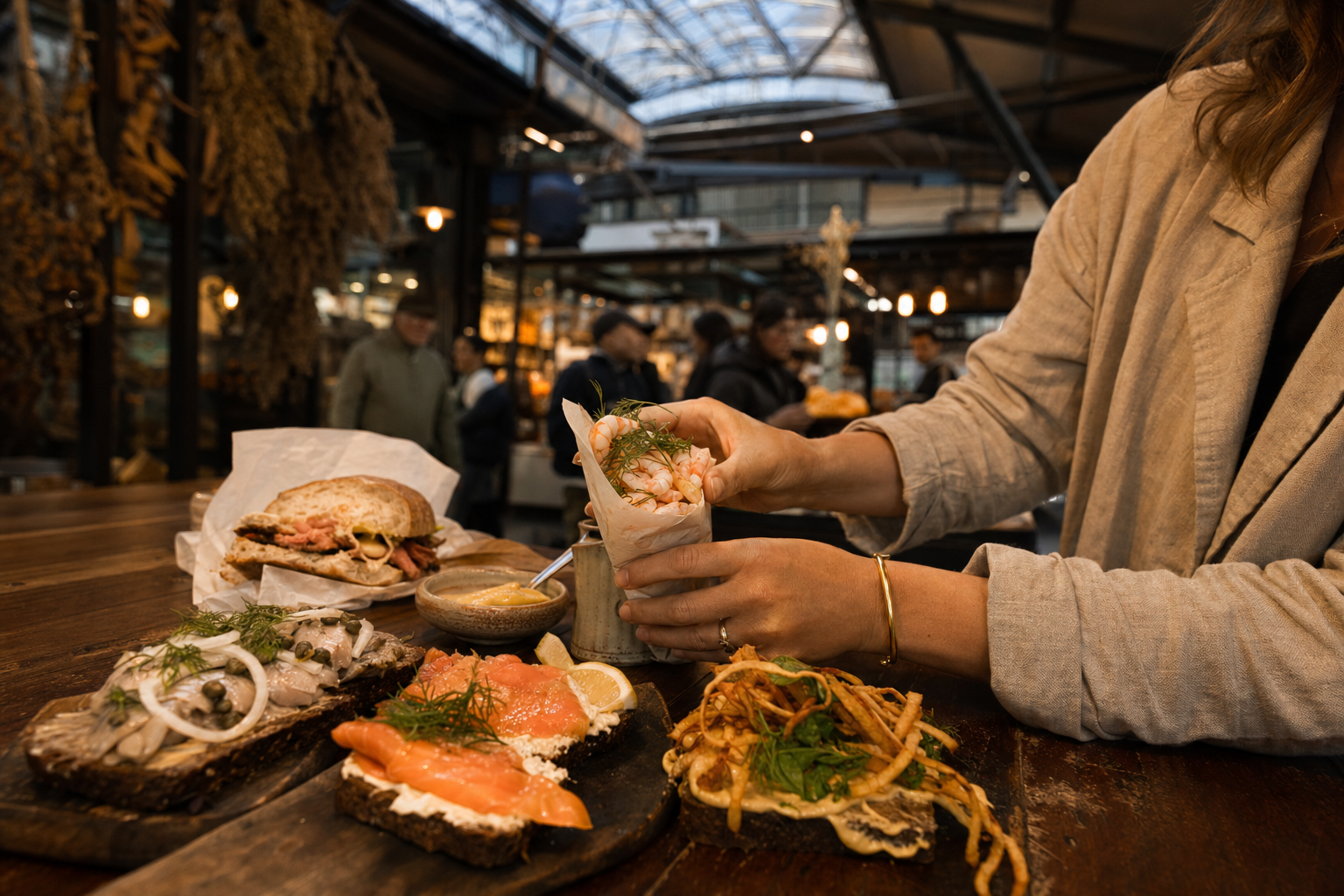
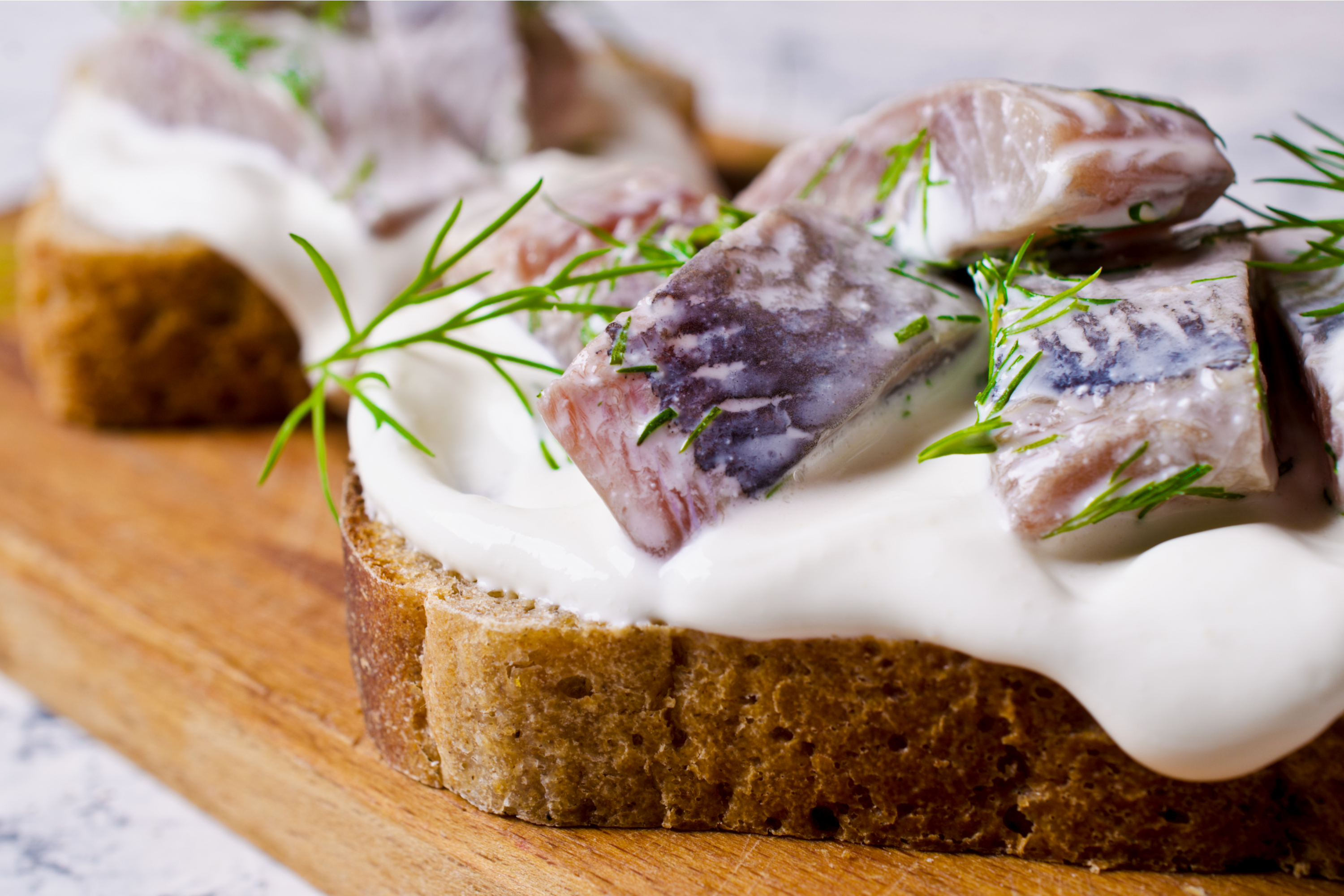
In 2003, a small restaurant opened in a converted warehouse on Copenhagen's Christianshavn waterfront. Its name was Noma, and within a decade it had been ranked the world's best restaurant four times, triggering a culinary revolution that turned a Scandinavian capital known for pickled herring and rye bread into one of the most talked-about food cities on the planet. But Copenhagen's relationship with exceptional food runs far deeper than one iconic chef's tasting menu. It stretches back to Viking-era preservation techniques, 19th-century open-faced sandwiches eaten by dockworkers, and Austrian bakers who accidentally invented what the world now calls a "Danish pastry." Today, the city holds more Michelin stars per capita than almost any other Nordic capital, yet its most honest flavours are still found at a market stall, a neighbourhood bakery, or a harbour-side lunch that stretches unhurried into the afternoon. This guide traces that full story — from the historical roots of New Nordic Cuisine to the specific streets, markets, and dishes that make a Copenhagen food tour one of the great eating experiences in Europe.
Read more →We use a single cookie, to remember this choice. We do not use analytics or advertising cookies. Read our cookie policy.