3.5 hrs
copenhagen
Copenhagen Alternative Private Tour: Vesterbro & Christianshavn
✓ Free cancellation Kids friendly
From €311/ person
Book Now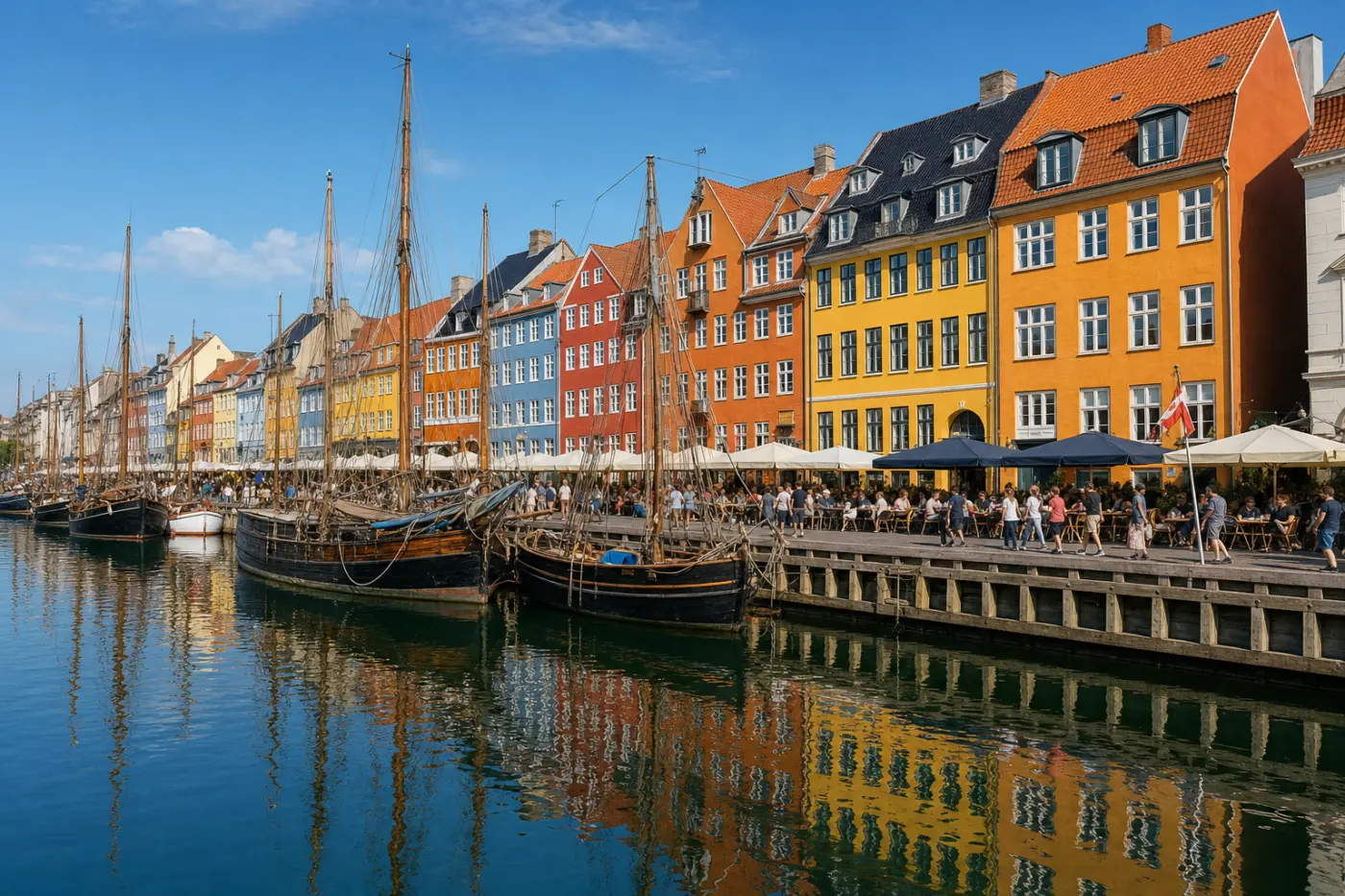
Tourist attraction
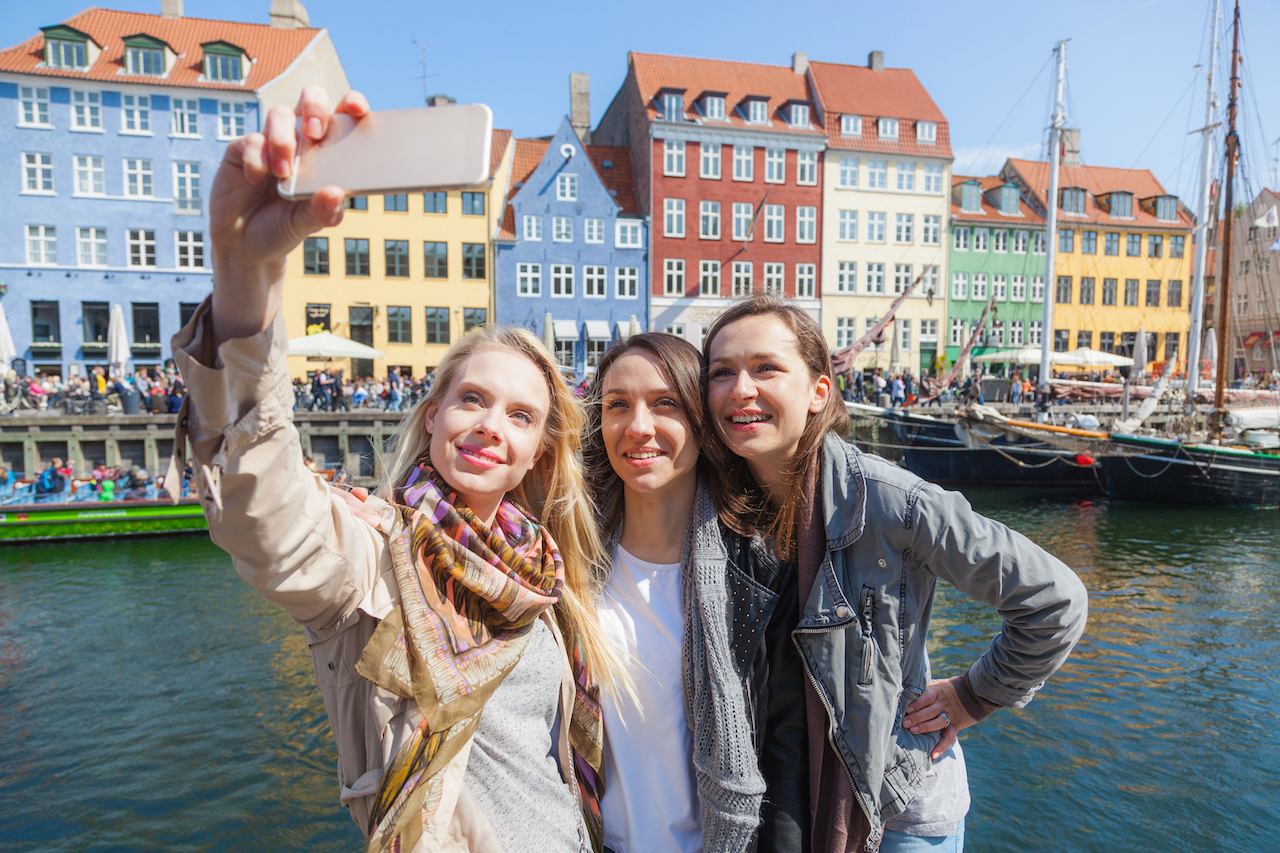
Nyhavn — Danish for "New Harbour" — is a 17th-century waterfront canal and entertainment district stretching 450 metres from Kongens Nytorv square to the harbour front of Copenhagen. Commissioned by King Christian V, construction began in 1671 with the goal of allowing merchant ships to sail goods directly into the heart of the city. The canal was dug largely by Swedish prisoners of war captured during the Dano-Swedish wars, a grim historical footnote behind one of Europe's most photographed streets. For nearly three centuries it functioned as a working port, lined with sailors' taverns, brothels, and chandleries before its commercial role faded in the 20th century.
The district's most celebrated former resident is Hans Christian Andersen, who lived in Nyhavn at three separate addresses — No. 20, No. 67, and No. 18 — during different periods of his life between 1818 and 1875. It was at No. 20, a narrow yellow house on the sunny north quay, that he wrote some of his earliest fairy tales, including The Tinderbox, Little Claus and Big Claus, and The Princess and the Pea, all published in 1835. A memorial anchor near the canal entrance commemorates his long association with the neighbourhood. The striking row of 17th- and 18th-century townhouses — painted in ochre, terracotta, cerulean, and rust red — were built by prosperous merchants and sea captains, and their step-gabled and Baroque facades have survived largely intact, making Nyhavn one of Denmark's best-preserved examples of pre-industrial urban architecture.
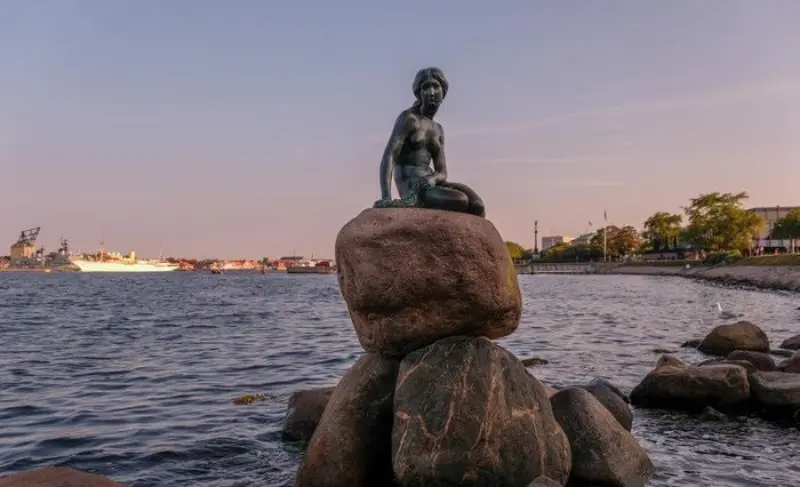
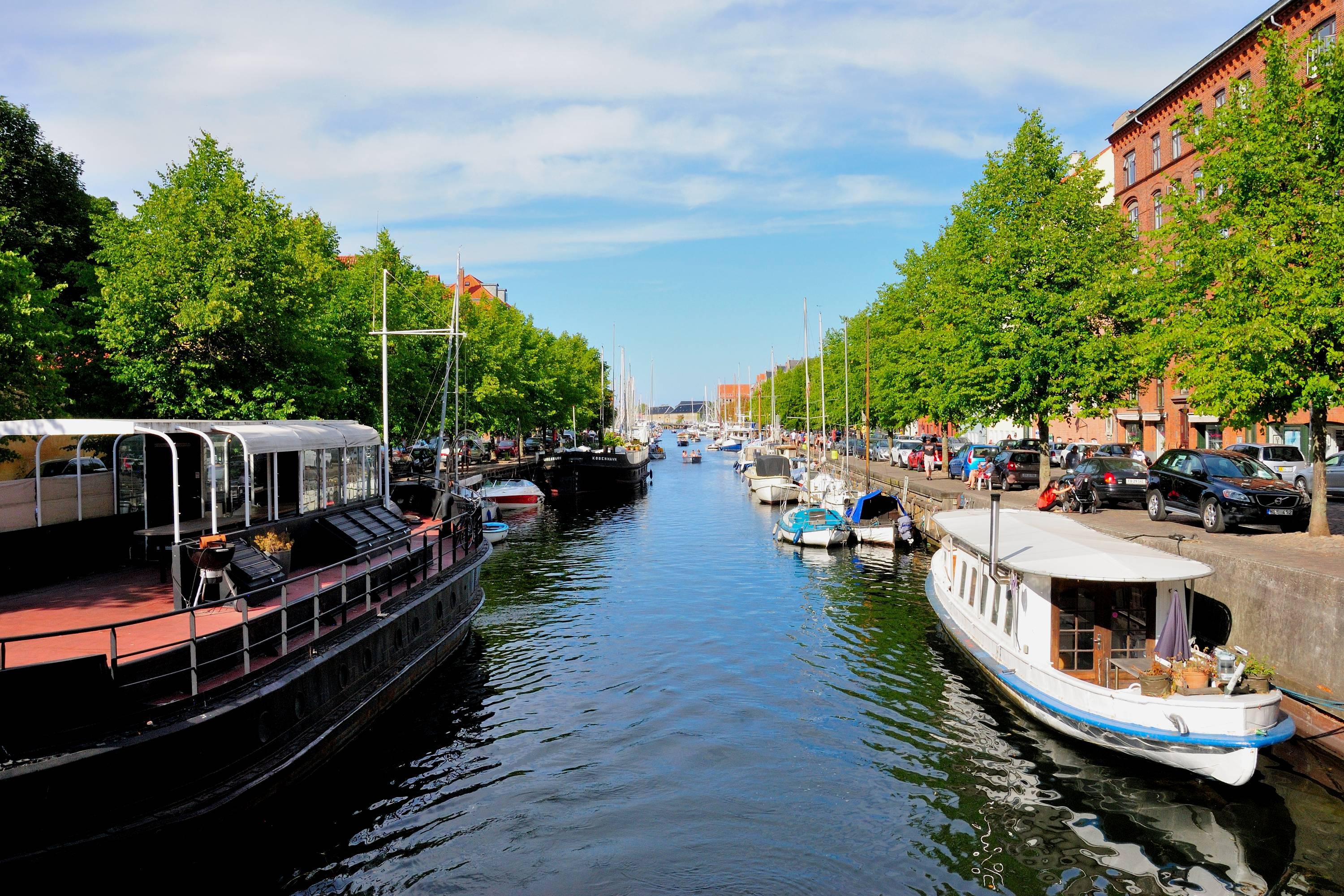
Today the canal is permanently moored with a fleet of historic wooden vessels, several of which date to the late 19th and early 20th centuries and form part of the Copenhagen City Museum's ship collection. The south quay (Søndre side) sits in shadow for much of the day and retains a quieter, more residential character, while the north quay (Nordre side) catches the afternoon sun and is packed with open-air restaurant terraces from April through September. Visitors can board hop-on, hop-off canal boats directly from Nyhavn, making it the most convenient departure point for exploring the city's broader harbour, including the waterways leading to Christianshavn and the landmark Little Mermaid statue at Langelinie.
To experience Nyhavn at its most atmospheric, arrive before 10 a.m. when the restaurant crowds thin and the morning light hits the coloured facades at a low, golden angle ideal for photography. In winter, particularly around December, the quayside transforms into a traditional Christmas market, one of Copenhagen's oldest, with mulled wine stalls and lantern light reflecting off the dark canal water. The nearest metro and S-train hub is Kongens Nytorv station, a two-minute walk from the canal head, served by Metro lines M1 and M2.
Private tours with a local guide, at your own pace.
copenhagen
copenhagen
copenhagen

copenhagen

copenhagen
We use a single cookie, to remember this choice. We do not use analytics or advertising cookies. Read our cookie policy.