2 hrs
Lisboa
Private Lisbon Kickstart Tour - City Highlights for newcomers
✓ Free cancellation Kids friendly
5.0(10 reviews)
From €87/ person
Book Now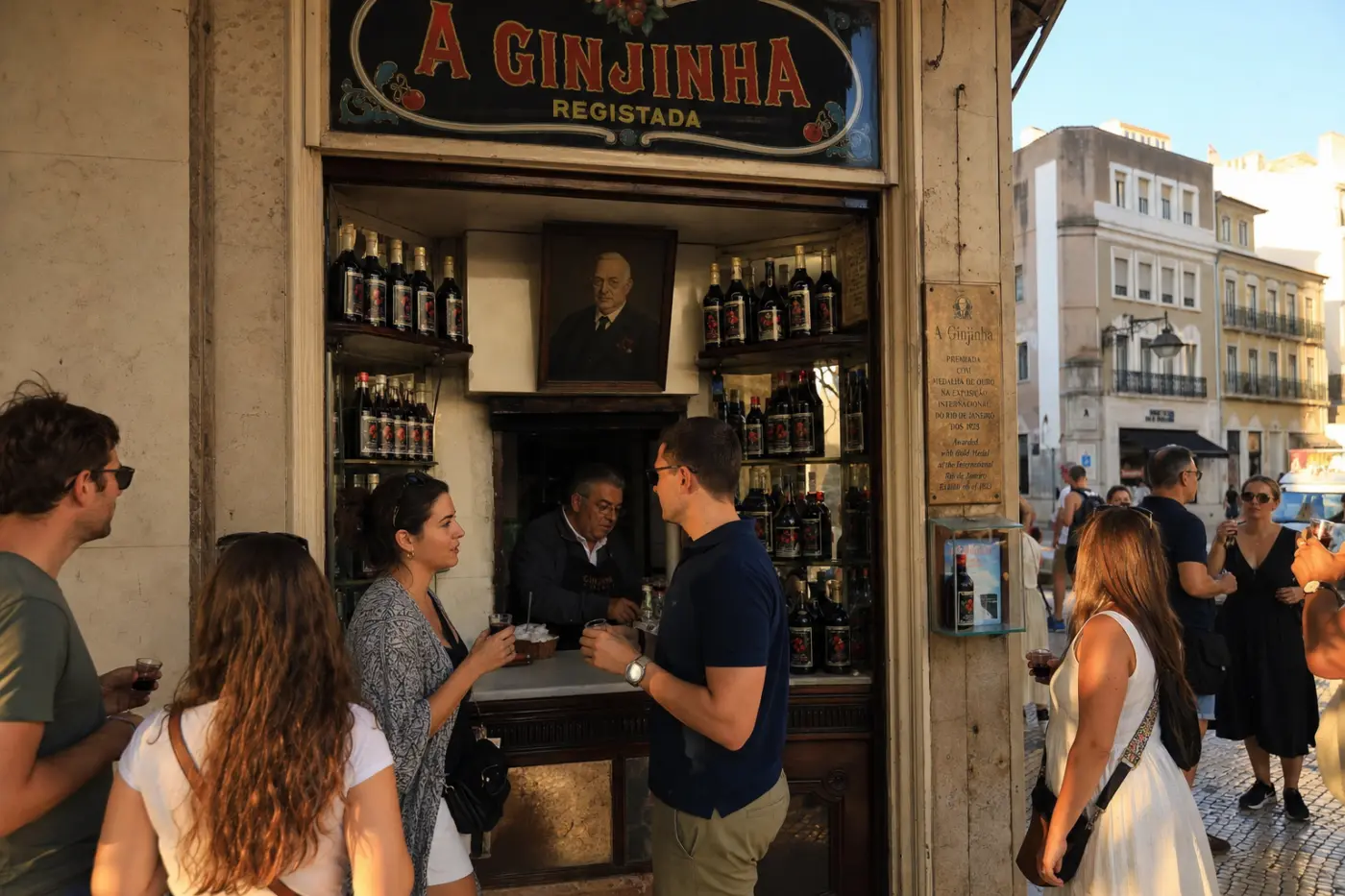
Tourist attraction
A Ginjinha — also called Ginjinha Espinheira after its founding family — is a standing-room-only bar barely wider than a doorway, tucked into a shopfront just off Rossio plaza in Lisbon's Baixa district. It has sold exactly one product since Francisco Espinheira opened it in 1840: a small glass of ginja, a sweet cherry liqueur made by infusing Morello cherries (ginja cherries) in aguardente, a fiery Portuguese distilled spirit, then softening the result with sugar and cinnamon. The recipe was not Espinheira's invention alone — a friar from the nearby Igreja de Santo António suggested the aguardente-infusion method as a faster, cheaper alternative to the traditional fermented cherry liqueur that had until then been a luxury reserved for the upper classes. The innovation democratised the drink overnight, and the bar has been run by the same family across five generations ever since.
Ginja's place in Lisbon's social fabric goes well beyond nostalgia. During the early twentieth century, small measures were routinely given to children as a folk remedy for minor ailments — a practice that cemented the drink's reputation as a kind of edible heritage. The older Portuguese who gather outside A Ginjinha most afternoons grew up with that association, and their affection for the place is genuine rather than performative. Two rival bars followed Espinheira's success: Ginjinha Sem Rival (Without Rivals) opened directly across the street in 1890, and Ginjinha Rubi started on Rua de Barros Queirós in 1931 — all three within a short, sociable walk of each other.
Ordering at A Ginjinha is a two-word transaction: "com" (with cherries) or "sem" (without). The cherries, having been soaked in the liqueur for months, carry a concentrated alcoholic punch of their own and are worth trying at least once. A single shot costs around €1.55, making it one of the most affordable authentic experiences in any European capital. The bar has no seating; patrons collect their glass at the counter, step back onto the pavement, and join the loose congregation of locals and travellers that forms here at almost any hour of the day.
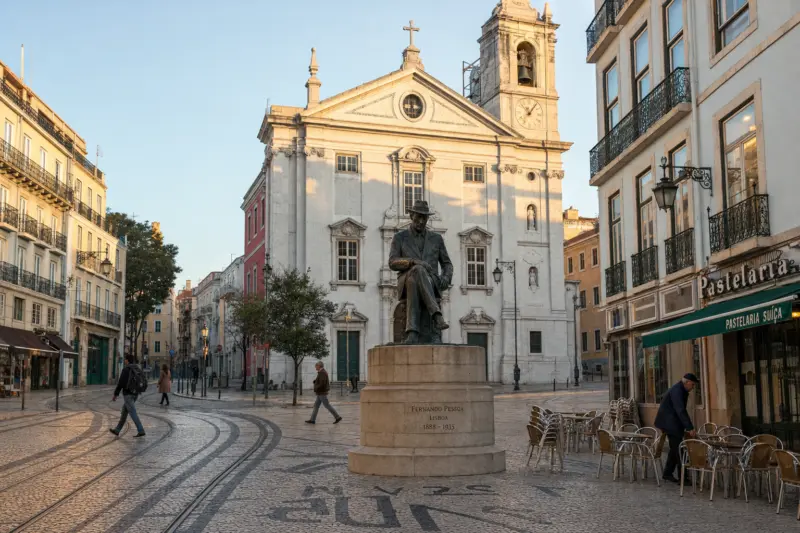
A Ginjinha sits on Largo de São Domingos, a one-minute walk from the north end of Rossio square, and is easy to find by following the small crowd that perpetually spills onto the pavement outside. The bar opens early in the morning and closes late, and it is busiest from mid-afternoon onward. If you want to compare recipes, the two rival bars are within sight of each other, making a self-guided ginja crawl one of the most pleasant and inexpensive ways to spend an hour in the Baixa.
Private tours with a local guide, at your own pace.
Lisboa
Lisboa
Lisboa
Lisboa
Lisboa
Lisboa
Lisboa

Lisboa
Lisboa
We use a single cookie, to remember this choice. We do not use analytics or advertising cookies. Read our cookie policy.