7 to 7,5 hrs
Barcelona
Barcelona & Montserrat Day Trip with Sagrada Familia Guided Tour
✓ Free cancellation Kids friendly
4.5(17 reviews)
From €134/ person
Book Now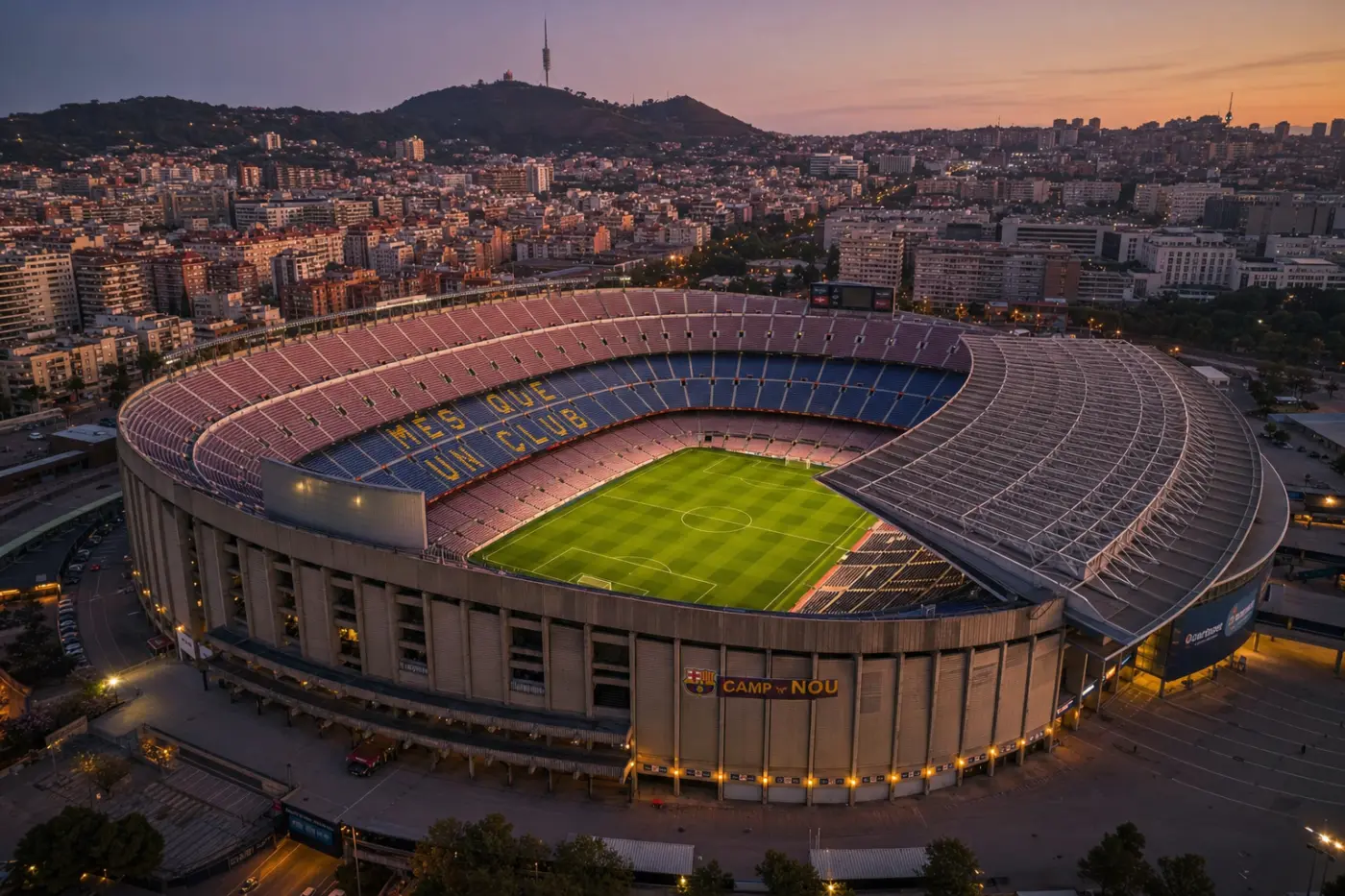
Tourist attraction
Camp Nou — Catalan for "New Ground" — is the home stadium of FC Barcelona and, with an official capacity of 99,354, the largest football stadium in Europe and the third-largest in the world. Situated in the Les Corts district of Barcelona, the stadium was inaugurated on 24 September 1957, replacing the club's previous ground at Les Corts field, which had become too small for the club's rapidly growing fanbase. Designed by architects Francesc Mitjans Miró and Josep Soteras Mauri, the original bowl structure was built to hold 93,000 spectators; a third tier added in 1982 ahead of the FIFA World Cup pushed capacity to its current scale. In 2022, the club began a landmark renovation project — known as the "Espai Barça" — to modernise the stadium while retaining its iconic elliptical silhouette, temporarily relocating first-team fixtures to the Estadi Olímpic Lluís Companys.
The stadium's history is inseparable from Catalan cultural identity. During the Franco dictatorship, when public expressions of Catalan language and culture were suppressed, Camp Nou became one of the few spaces where tens of thousands could gather and affirm a collective identity — making the club's motto "Més que un club" (More than a club) not a marketing phrase but a historical fact. The ground hosted the 1982 World Cup final group-stage matches, the 1989 and 1999 UEFA Champions League finals, and witnessed defining moments from Johan Cruyff, Ronaldinho, Lionel Messi — who scored a record 672 competitive goals for the club — and countless other legends. It also holds the world record for the highest attendance at a UEFA Champions League match: 98,772 for the 2019 quarter-final against Manchester United.
Attached to the stadium is the FC Barcelona Museum, the most visited museum in Catalonia with over 1.5 million visitors annually. Its permanent collection includes the club's 27 La Liga titles, 5 UEFA Champions League trophies, and Ballon d'Or awards won by Barça players. The self-guided tour — branded as "Camp Nou Experience" — takes visitors through the press room, the visiting team's dressing room, the players' tunnel, and pitchside, providing an immersive sense of the stadium's atmosphere even on non-match days. The museum's audiovisual installations trace the club's founding in 1899 by Swiss entrepreneur Joan Gamper through to the modern era.
For visitors planning a trip, the Camp Nou Experience tour runs daily and advance booking is strongly recommended, particularly in summer when queues can be substantial. The nearest metro station is Palau Reial or Les Corts on Line 3 (green line), placing the stadium roughly 10 minutes on foot from either stop. Match tickets sell out months in advance for high-profile fixtures, so check the official FC Barcelona website early. The stadium's club shop, one of the largest football merchandise stores in the world, is open independently of tour hours — worth a visit even for those without tour tickets.
Private tours with a local guide, at your own pace.
Barcelona
Barcelona
Barcelona
Barcelona
Barcelona
Barcelona

Barcelona
Barcelona

Barcelona
Barcelona
Barcelona
Barcelona
Barcelona
Barcelona