3 hrs
copenhagen
Copenhagen Food & Drink Private Tour - Scandinavian Delights Tasting
✓ Free cancellation
4.8(245 reviews)
From €261/ person
Book Now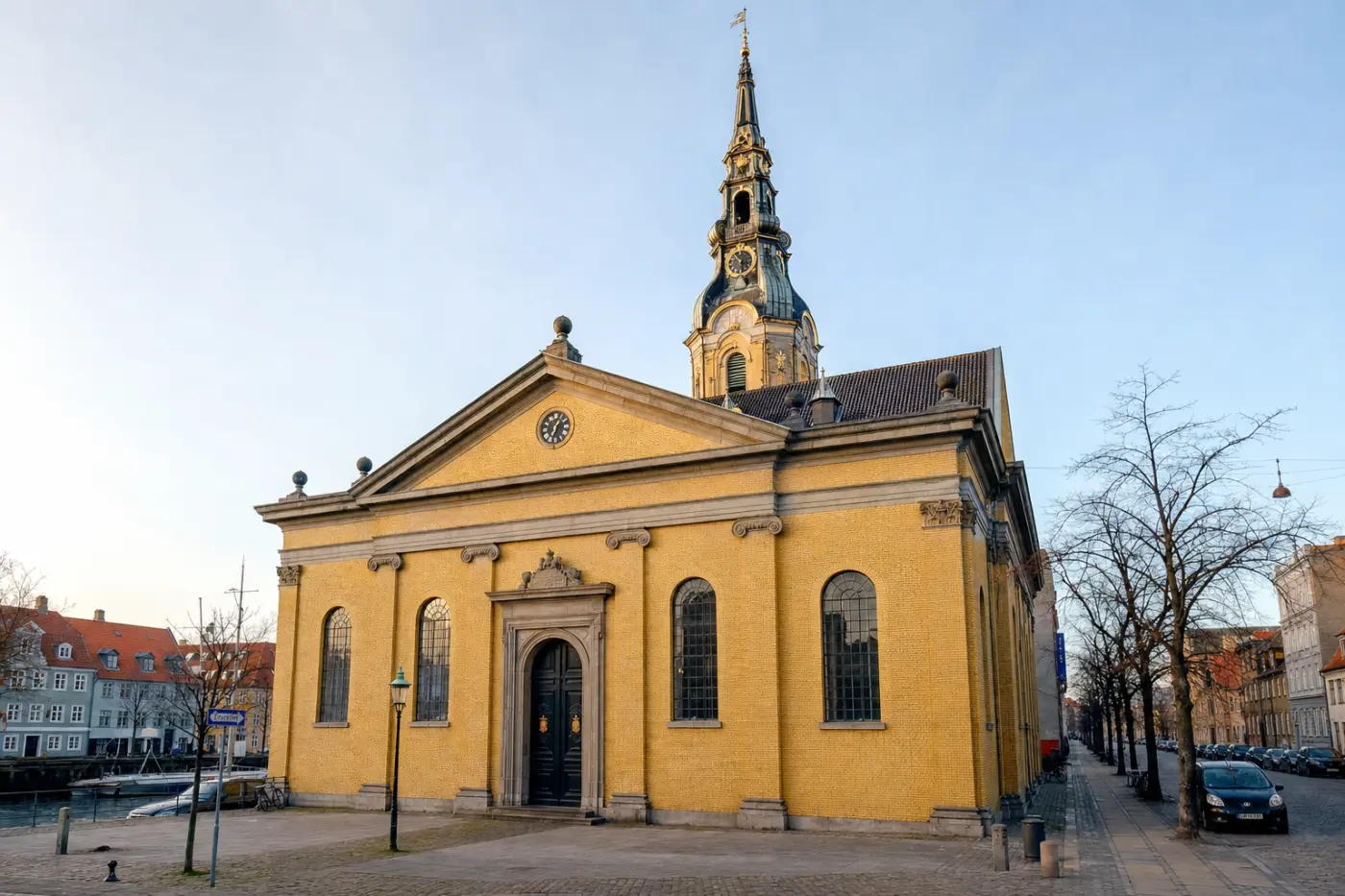
Tourist attraction
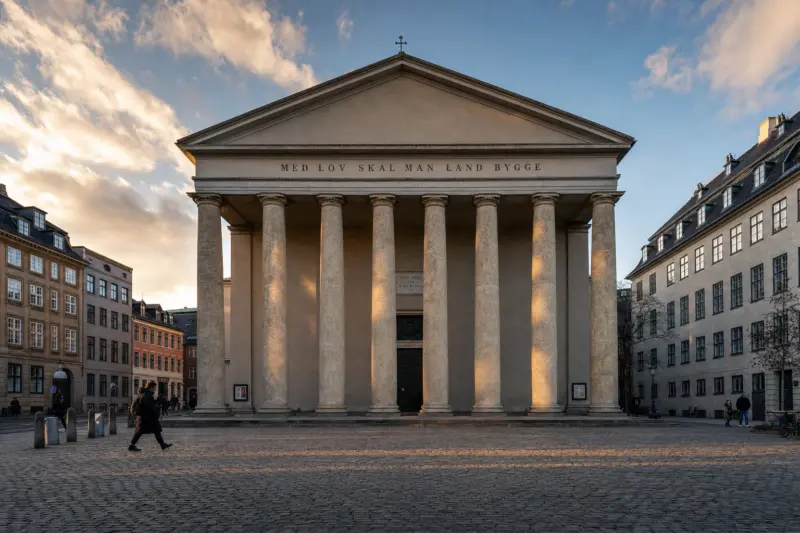
Christians Kirke stands on Strandgade in the Christianshavn district of Copenhagen, a yellow-brick Rococo church whose origins trace directly to the ambitions of a royal king and a thriving immigrant community. When Christian IV founded Christianshavn in 1617 as a merchant township, a substantial population of German traders and craftsmen settled there. Despite Christianshavn's incorporation into Copenhagen before 1674, this German community resisted worshipping at St. Peter's Church alongside the rest of the city's German residents, preferring their local Church of Our Saviour. It was not until they petitioned King Christian VI that permission was granted to build a dedicated house of worship. The king donated the building lot — a former saltern at the southern end of Strandgade — and authorised a public lottery to fund construction, earning the church its long-standing nickname: the Lottery Church.
The commission for the design fell to Nicolai Eigtved, the king's foremost court architect and the genius behind the Frederiksstaden district. Eigtved died in 1754 before construction began, and his son-in-law, Royal Master Builder Georg David Anthon, took over supervision. The church was consecrated in 1759 under its original name, Frederiks Tyske Kirke (Frederik's German Church), and served its German congregation until that community dissolved in 1886. In 1901 the name was changed to Christians Kirke, both to honour Christian IV as the founder of Christianshavn and to prevent confusion with Frederik's Church — the Marble Church — across the harbour in Frederiksstaden. Anthon also designed the distinctive spire, added in 1769, which rises 70 metres above a tower of yellow Flensburg brick with sandstone detailing around the portal and tall, round-arched windows framed by Ionic pilasters.
The interior is the church's most astonishing feature, and the word most visitors reach for is theatrical — deliberately so. Rather than orienting the nave along the building's long axis, the architect placed it across the shorter sides, creating an unusually wide space. Three tiers of gallery boxes rise on the northern, western, and southern walls, each arranged to give an unobstructed sightline to the east wall's podium, which functions precisely like a stage. The altarpiece that dominates this "stage" is a vertical triptych of functions: altar table at the base, pulpit above it, and the pipe organ crowning the whole composition — the organ installed in 1759 by master builder Hartvig Jochum Müller, later replaced by a pneumatic instrument in 1917 by I. Starup, and updated again in 1976 to the current instrument designed by P.-G. Andersen. Opposite, on the western wall above the main entrance, sits the royal box, completing the theatre analogy with architectural precision.
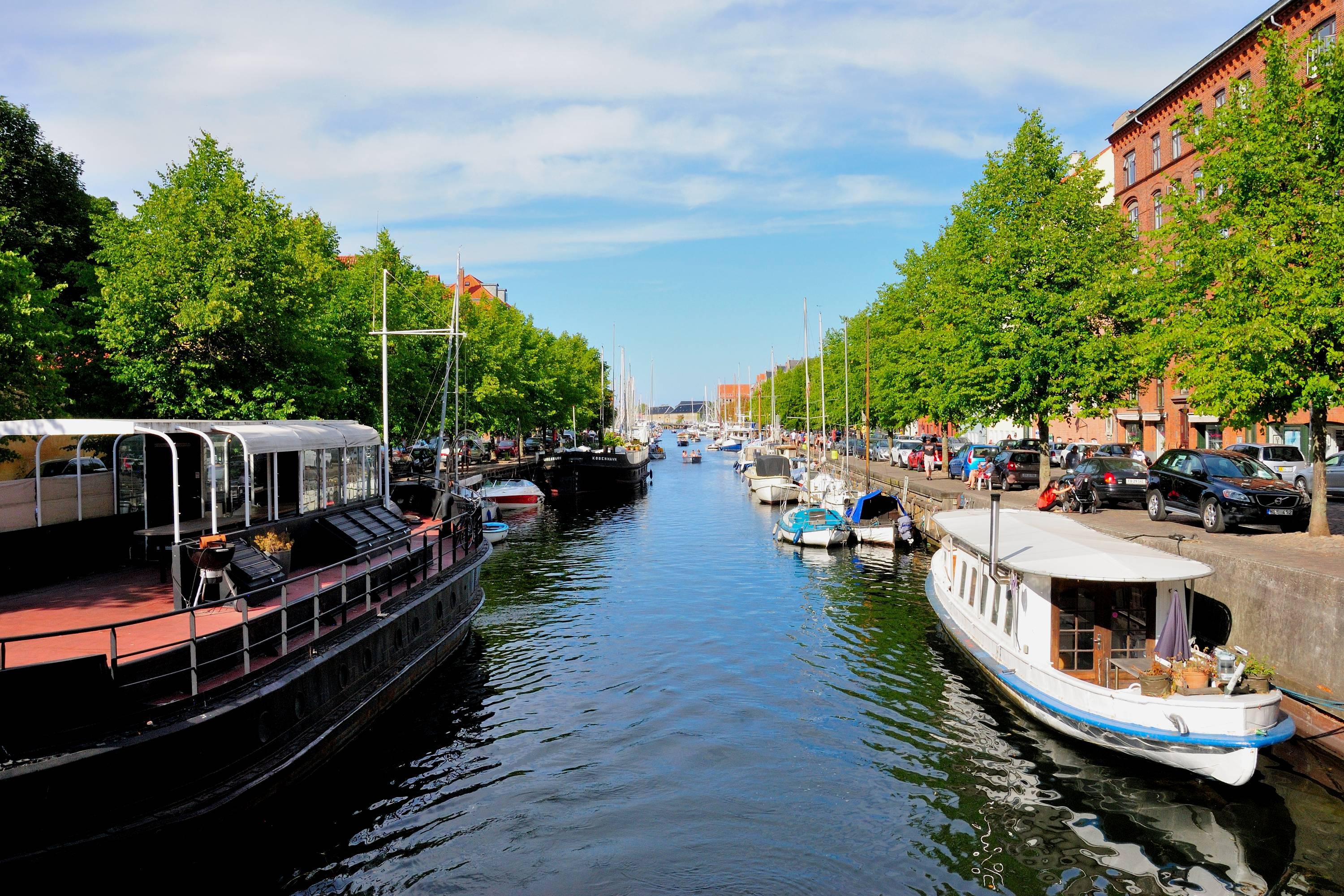
Beneath the nave lies a crypt covering the church's full footprint, divided into 48 individual burial chapels that have been in continuous use since the consecration in 1759 and remain active today. Since 1991, Christians Kirke has served as a regular parish church for Christians Parish, covering part of Christianshavn and the island of Slotsholmen. Visitors should not miss a slow walk through the gallery tiers, where the layered boxes and gilded railings create a perspective rarely encountered in Scandinavian ecclesiastical architecture. The church is a short walk from the Christianshavn Metro station and sits near the canal, making it a natural complement to a stroll along Strandgade.
Private tours with a local guide, at your own pace.
copenhagen
copenhagen
copenhagen
copenhagen
copenhagen
We use a single cookie, to remember this choice. We do not use analytics or advertising cookies. Read our cookie policy.