3 hrs
Lisboa
Lisbon Like a Local Private Tour - Avoid the Tourist Route
✓ Free cancellation Kids friendly
5.0(1 reviews)
From €120/ person
Book Now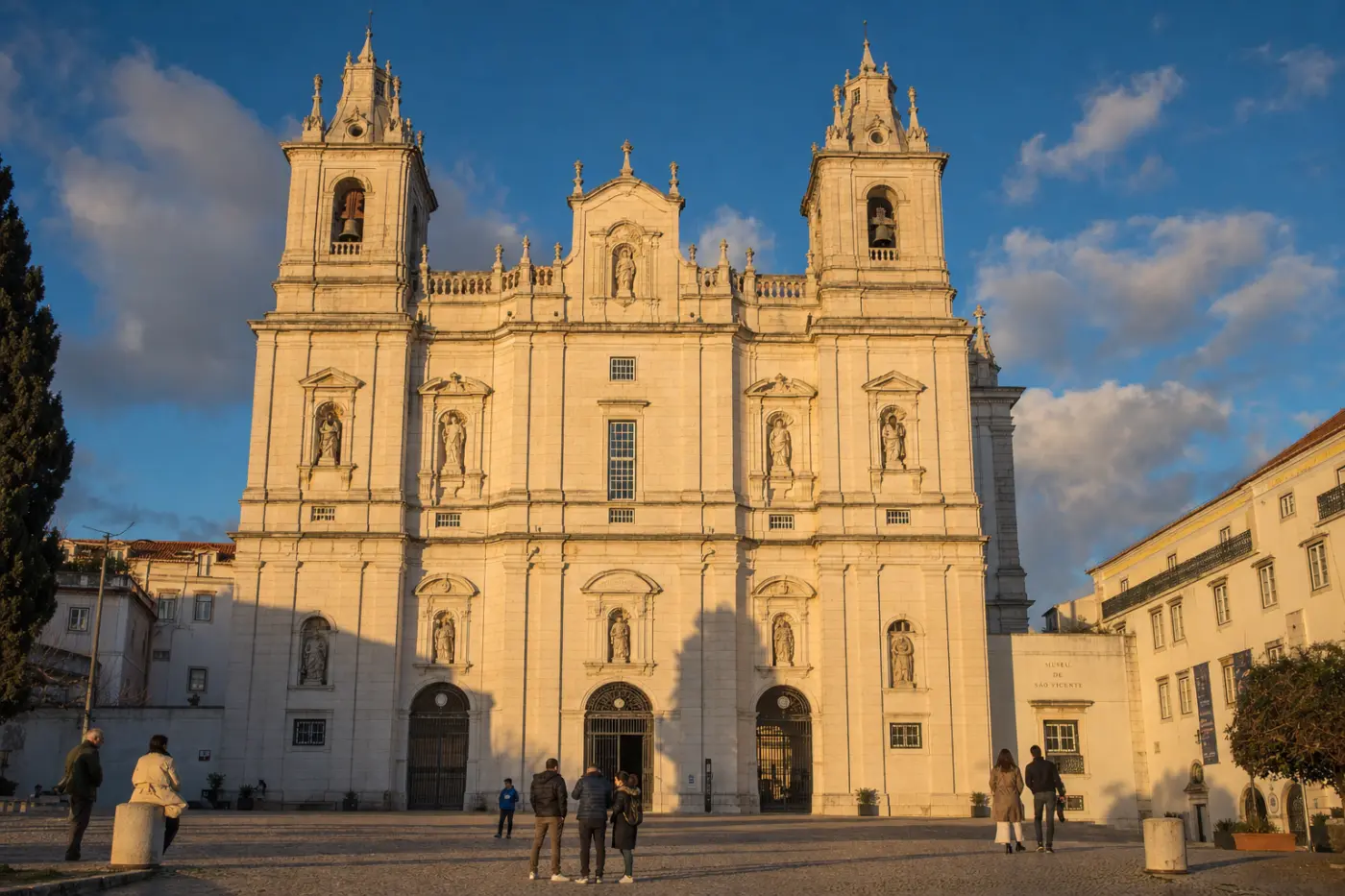
Tourist attraction
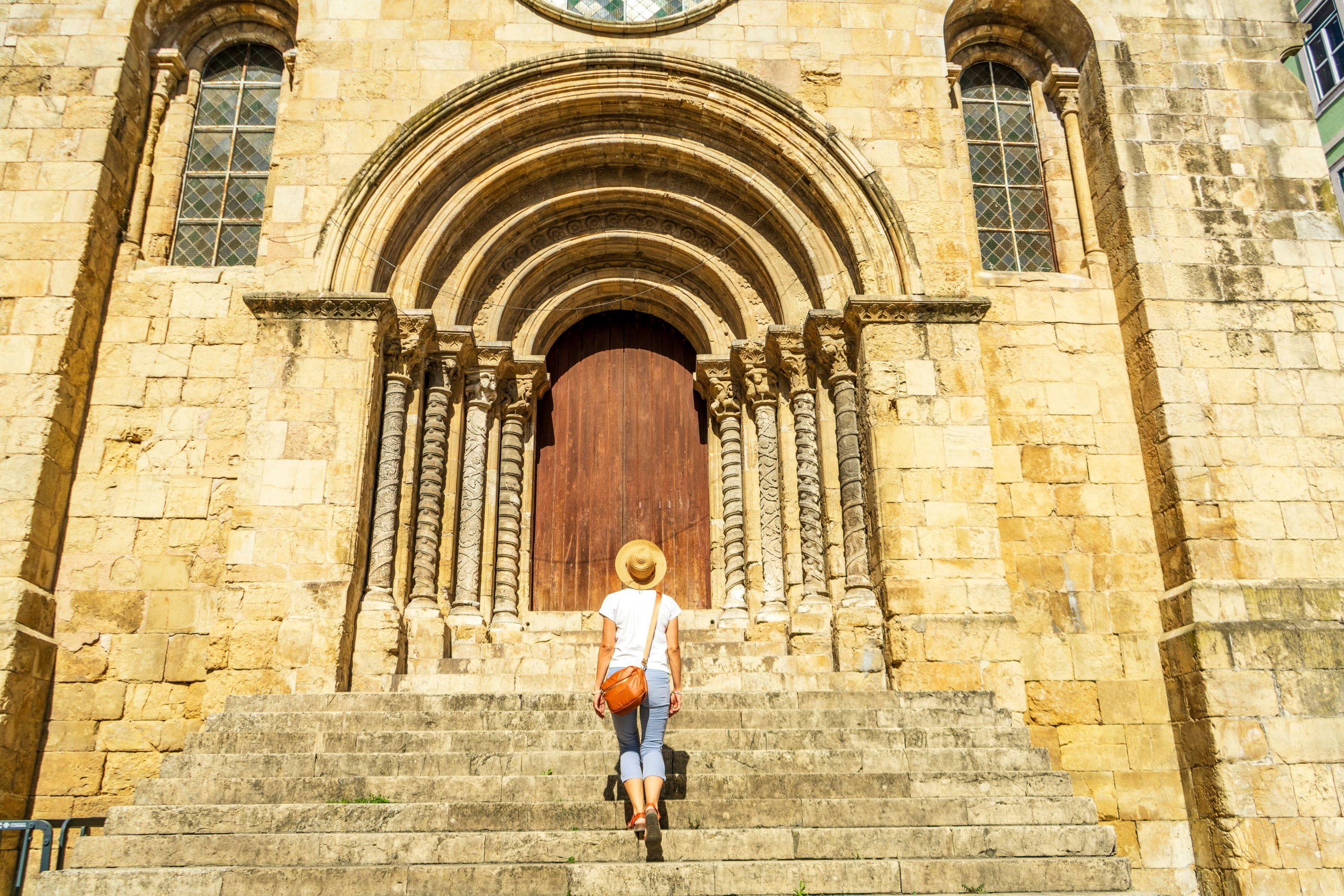
The Church of São Vicente de Fora stands on the eastern hills of Lisbon as one of the most historically charged monuments in Portugal. Its origins trace directly to the Siege of Lisbon in 1147, when King Afonso Henriques — founding monarch of Portugal — vowed to build a church dedicated to Saint Vincent, patron saint of Lisbon, on the very ground where crusader military encampments had stood during the conquest of the city from Moorish rule. The Augustinian Canons Regular (Cónegos Regrantes de Santo Agostinho) were entrusted with the monastery from its foundation, making São Vicente de Fora a cornerstone of Lisbon's Christian refoundation. The name itself — "de Fora," meaning "outside" — refers to its original position beyond the medieval city walls.
The imposing structure visitors see today is not the 12th-century original but a sweeping Mannerist reconstruction ordered by King Felipe I of Portugal (Philip II of Spain) following the Iberian Union of 1580. The project drew some of the era's foremost architectural minds: Juan de Herrera, designer of El Escorial, is credited with the initial plans drawn up during his time in Lisbon between 1580 and 1583, while Filipe Terzi guided the operational construction. It was the Portuguese architect Baltazar Álvares, however, who directed works from 1597 to 1624 and composed the celebrated façade — a sober, monumental design of five bays flanked by fully integrated bell towers. This was no mere decoration: the towers are structurally woven into the frontispiece, drawing on Renaissance treatise architecture to reinterpret medieval Portuguese forms. The result became a defining model for the so-called "estilo chão" (plain style) that shaped Mannerist architecture across Portugal and its empire throughout the 17th century.
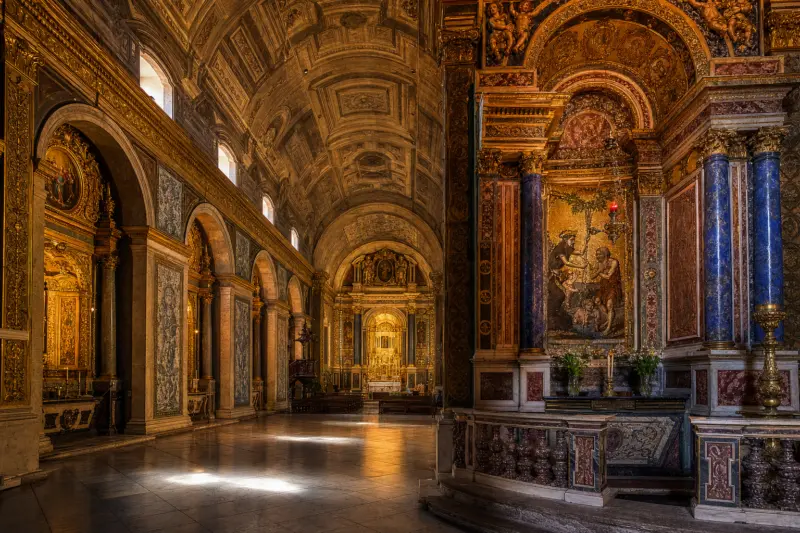
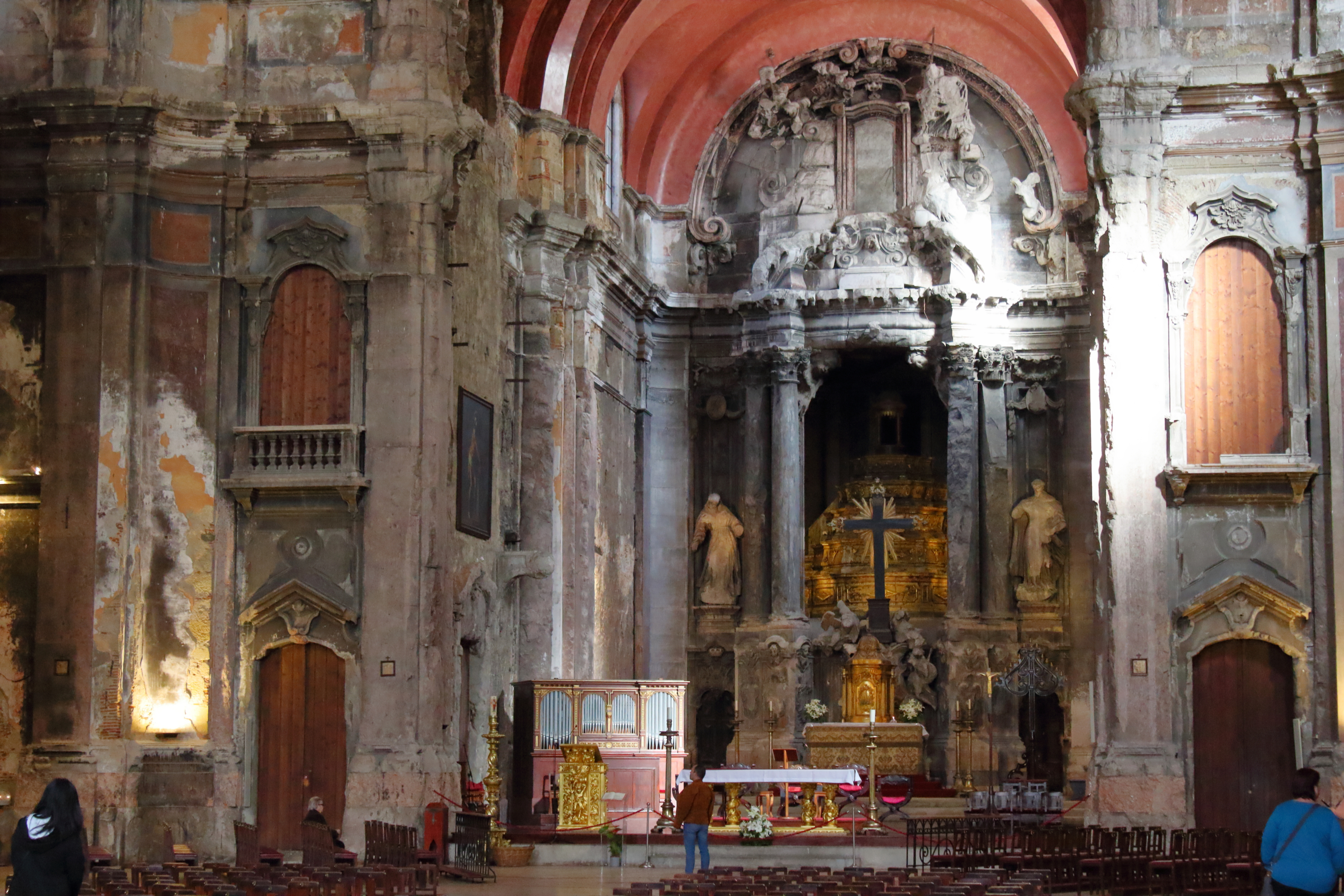
The single-nave interior, with its deep chancel, transept, and barrel-vaulted ceiling of coffered panels bearing sculpted reliefs, is a study in disciplined grandeur. Small lateral chapels were opened into the nave walls in 1608, connected to each other in sequence. Thermal windows high along the apse and transept flood the space with diffused light. The 1755 earthquake that devastated Lisbon collapsed the original crossing dome, the vault, the apse, and the transept; restoration followed, and between 1772 and 1792 the church served as the Patriarchal See of Lisbon. For this role, two exceptional works were commissioned: a monumental canopy designed by sculptor Joaquim Machado de Castro, and a fully gilded pipe organ of extraordinary decorative richness. The church was declared a National Monument in 1910.
Visitors today enter a layered space of history, art, and dynastic memory. The monastery's former refectory is lined with 18th-century azulejo tile panels depicting scenes from the life of Saint Vincent and from La Fontaine's fables. The royal pantheon within the complex holds the tombs of nearly every Portuguese monarch of the House of Bragança, from João IV (died 1656) onward, as well as those of the last kings of the House of Braganza-Saxe-Coburg and Gotha. The complex is open daily — winter hours run 10:00 AM to 6:00 PM (November through May), with extended summer hours. The rooftop terrace offers one of Lisbon's most commanding views over the Alfama district and the Tagus River. Comfortable shoes and a camera are essential.
Private tours with a local guide, at your own pace.
Lisboa

Lisboa
Lisboa
Lisboa

Lisboa
Lisboa
Lisboa

Lisboa
Lisboa
We use a single cookie, to remember this choice. We do not use analytics or advertising cookies. Read our cookie policy.