7 hrs
Barcelona
Montserrat & Gaudi's Crypt Private Day Trip - Hotel Pickup by car
✓ Free cancellation Kids friendly
4.8(12 reviews)
From €537/ person
Book Now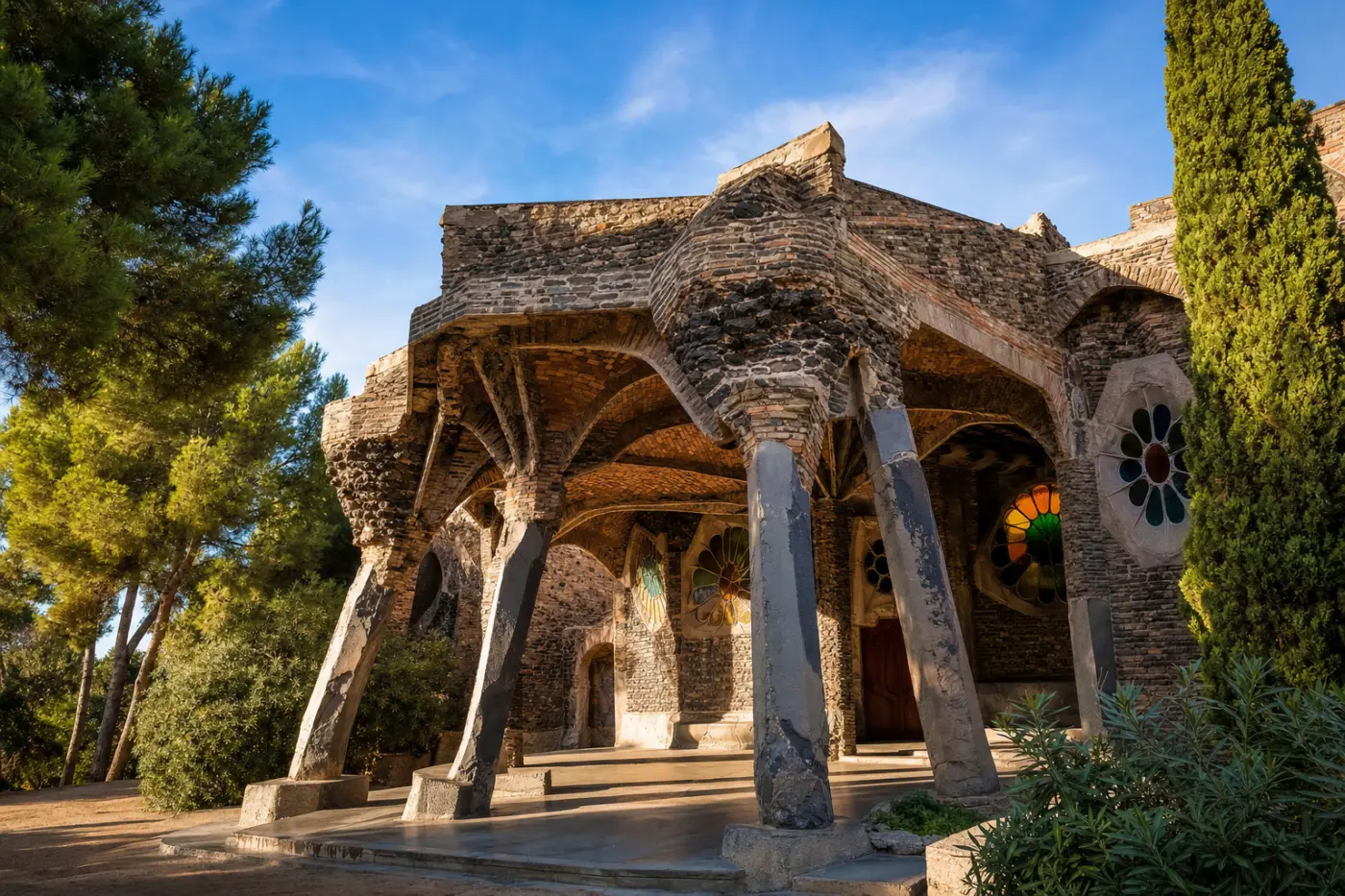
Tourist attraction
Colònia Güell is a model industrial village commissioned in 1890 by the textile magnate Eusebi Güell on the outskirts of Barcelona, in what is now Santa Coloma de Cervelló. Güell relocated his cotton mill from Barcelona to this purpose-built community, designing it as a self-contained workers' town complete with housing, schools, a theatre, a cooperative store, and a church — all organised along the paternalistic industrial-colony model that was spreading across Catalonia in the late 19th century. He entrusted the colony's master plan to architect Francesc Berenguer, Gaudí's most trusted collaborator, who designed the brick workers' housing in a restrained Modernista style still visible throughout the settlement today. At its peak in the early 20th century, the colony housed roughly 2,000 residents entirely dependent on the Güell mill, making it one of the most ambitious and complete examples of industrial urbanism in the Iberian Peninsula.
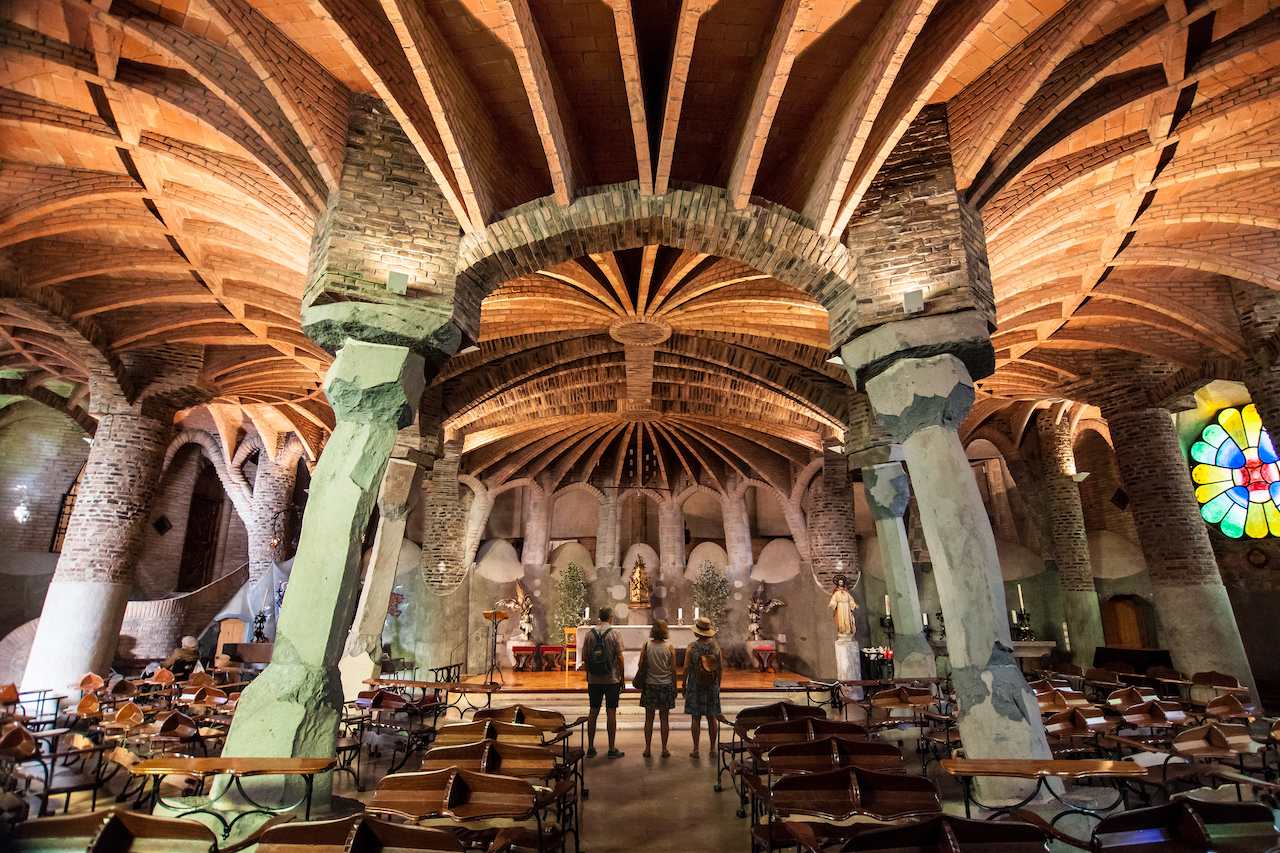
The crown jewel — and the reason architects make pilgrimages here — is the Crypt of the Church of Colònia Güell, begun by Antoni Gaudí in 1908 and abandoned in 1914 when funding collapsed after Eusebi Güell diverted resources to the Parc Güell project. Gaudí worked on the design for nearly a decade before laying a single stone, pioneering a revolutionary funicular modelling method: he constructed an upside-down scale model of the church using weighted strings and small sacks of lead shot, photographing the catenary curves formed by gravity and then inverting the image to derive perfectly self-supporting arches. This hanging model, developed between 1898 and 1908, directly informed the structural logic of the Sagrada Família's nave. The crypt itself, the only part ever built, is a masterwork of organic Modernisme — its columns of basalt and brick lean at dramatic angles, its undulating brick vaults are punctured by vivid stained-glass windows in muted greens and ambers, and its porch rests on rough lava-stone pillars that seem to grow from the earth. The crypt was declared a UNESCO World Heritage Site in 2005 as part of the "Works of Antoni Gaudí" group inscription.
Visiting Colònia Güell rewards far more than a glance at the crypt. The village streets, largely unchanged since the early 20th century, preserve Berenguer's two- and three-storey workers' homes with their characteristic arched ground floors, communal laundry areas, and the Neo-Gothic brick church façade that Gaudí's completed structure was meant to crown. The on-site museum, housed in the former mill buildings, traces the social history of the colony through photographs, original machinery, and accounts of worker life under the Güell patronage. Guided tours led in ten languages depart regularly and include access to the crypt's interior, where the interplay of natural light through the asymmetrical windows changes dramatically by time of day — morning visits yield the warmest illumination through the south-facing glass.
Colònia Güell is located 20 km southwest of central Barcelona and is served directly by FGC (Ferrocarrils de la Generalitat de Catalunya) train from Plaça Espanya — the journey takes approximately 25 minutes, and the colony entrance is a five-minute walk from the station. The site is open Monday to Friday from 10:00 to 17:00 and on weekends and public holidays from 10:00 to 15:00. Combined tickets covering the museum, crypt, and audioguide (available in ten languages) are sold on-site and through the official website at gaudicoloniaguell.org. Because visitor numbers remain far lower than at Gaudí's Barcelona monuments, the crypt can be explored in genuine quiet — a rare opportunity to study the architect's structural thinking at close range without crowds.
Private tours with a local guide, at your own pace.
Barcelona
Barcelona
Barcelona
Barcelona
Barcelona
Barcelona
Barcelona
Barcelona
Barcelona
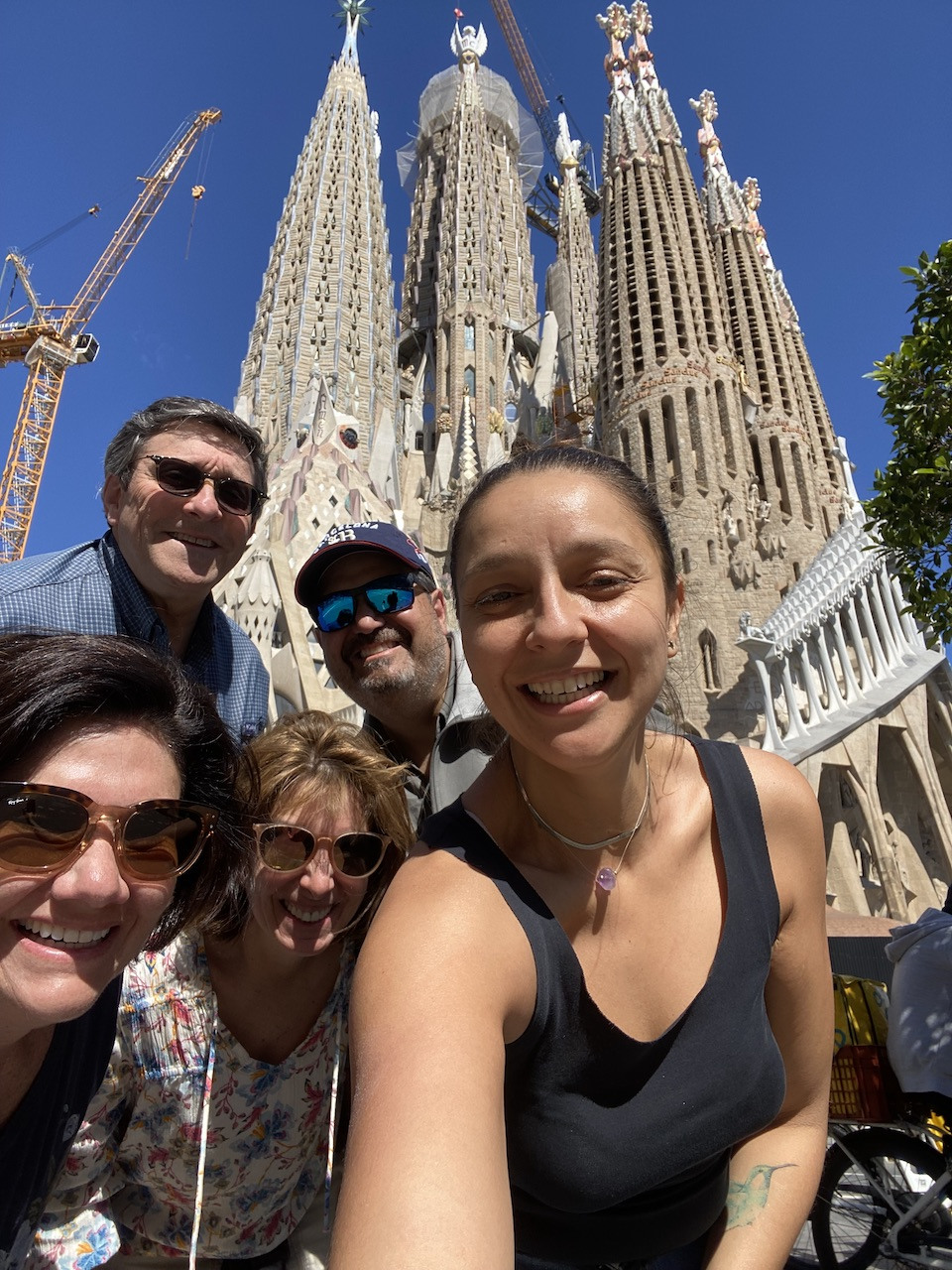
Barcelona
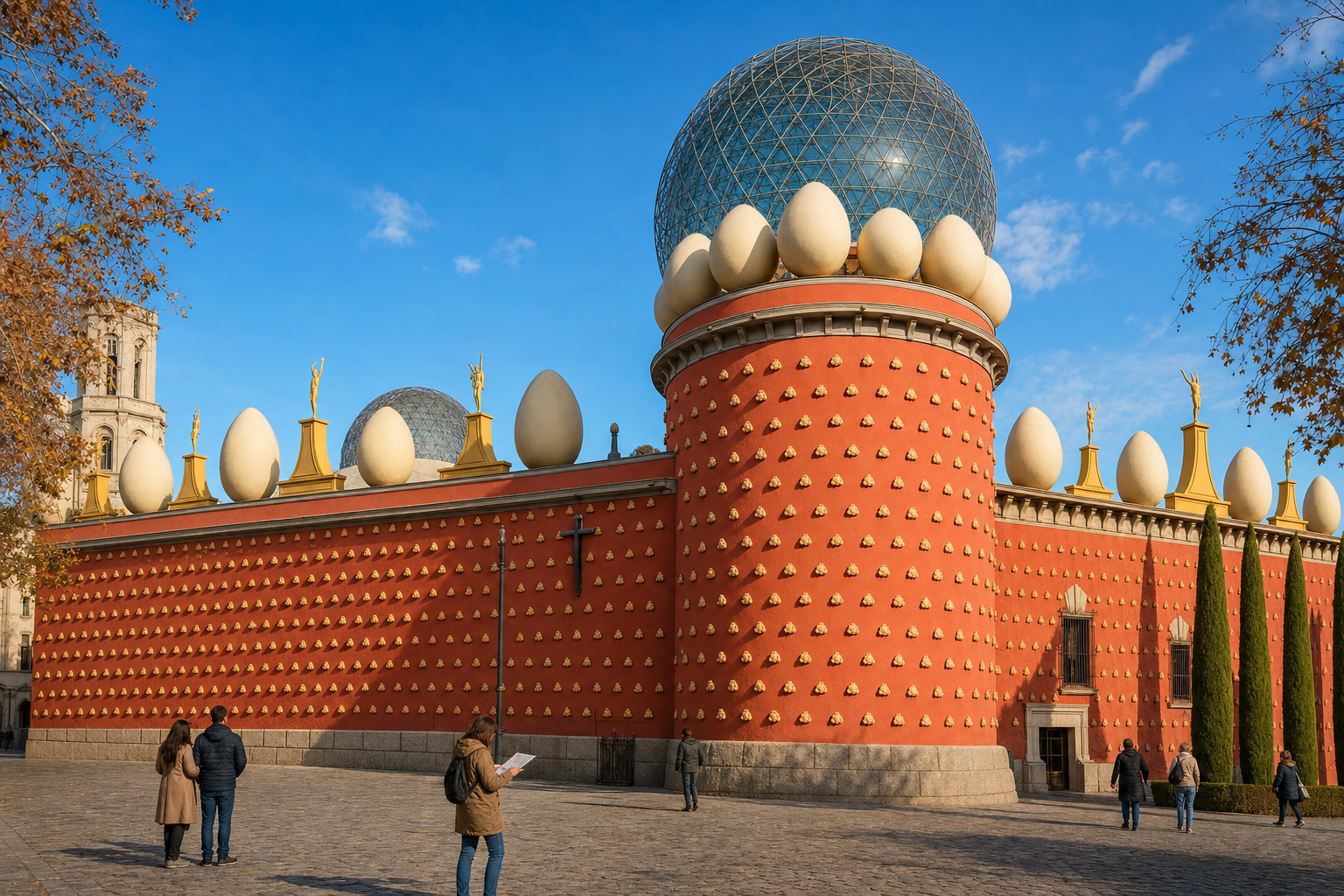
Most people know that Salvador Dalí was born in Figueres on 11 May 1904 — fewer realise that he spent the last decade of his life living inside his own museum, in a castle tower he had converted into a private apartment, refusing almost all visitors. That detail alone reframes everything you're about to see on a Costa Brava day trip from Barcelona. This isn't a sightseeing loop past pretty landmarks; it's a journey into one of the most deliberately constructed artistic universes ever assembled, set against a coastline so geologically dramatic that it physically shaped the imagery of a surrealist movement. From the geodesic dome above Figueres to the labyrinthine rooms of Portlligat, from the tramuntana-battered vines of the Empordà to the whitewashed lanes of Cadaqués, every stop carries a specific weight of history that rewards knowing before you arrive. This guide gives you that context — and shows you why adding a winery to the route isn't a detour, it's the most logical ending the day could have.
Read more →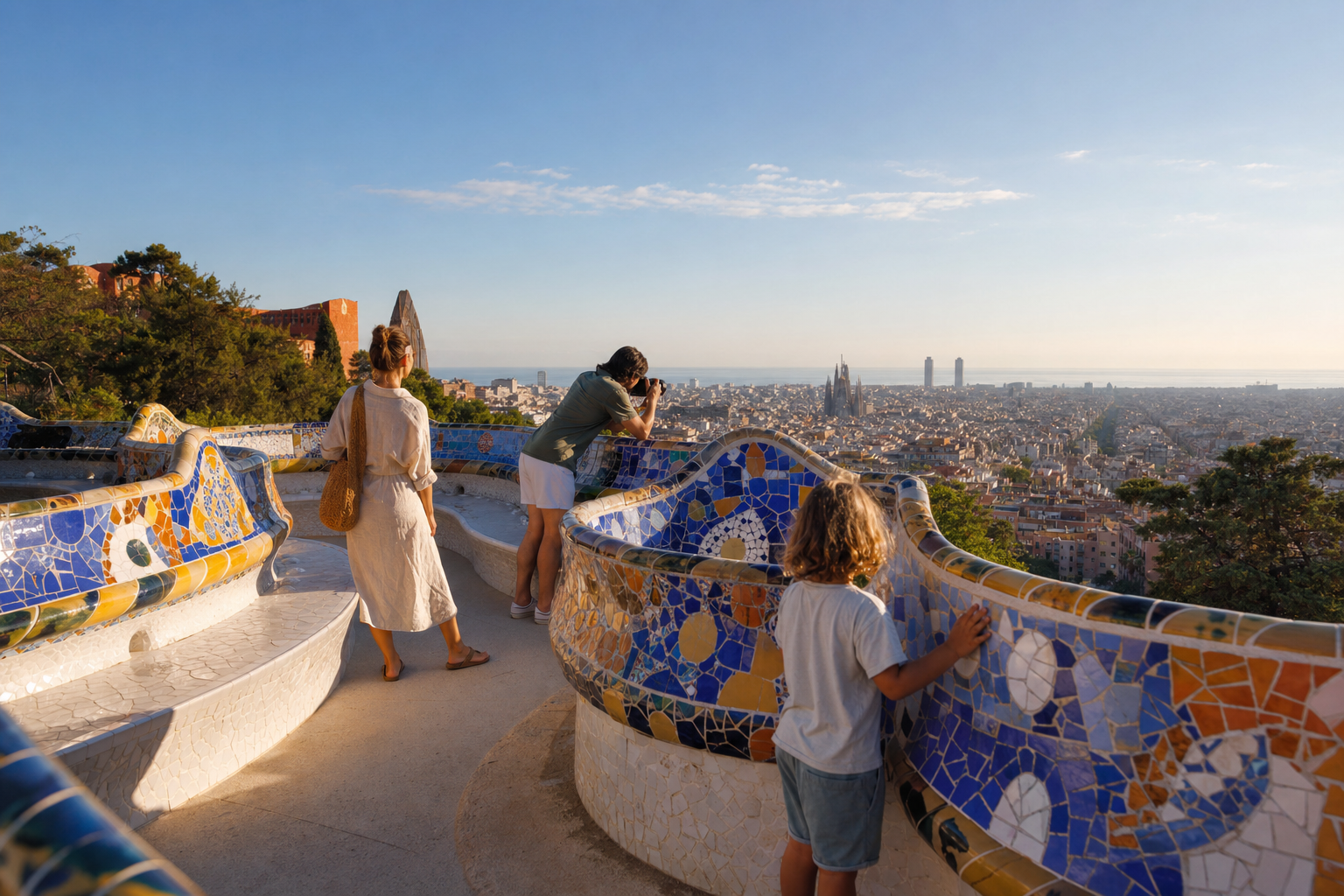
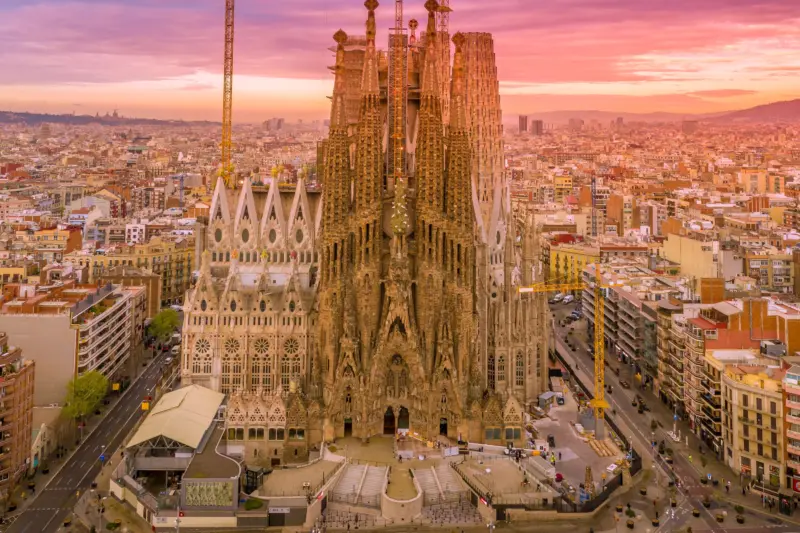
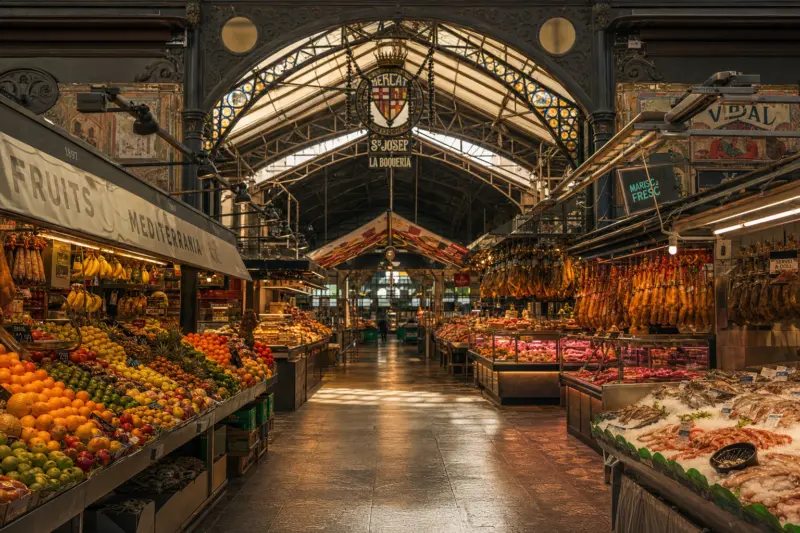
In 1883, a 31-year-old architect named Antoni Gaudí inherited a half-built church from a resigning predecessor and spent the next 43 years — until his death in 1926 — turning it into one of the most structurally radical buildings in human history. That church, the Sagrada Família, is still under construction today, and it is just one reason why Barcelona rewards curiosity more than almost any other city in Europe. But Gaudí's Barcelona is only one layer. Beneath the Gothic Quarter's cobblestones lie the preserved streets of a Roman settlement called Barcino, founded around 10 BC. In the city's markets, a food culture rooted in Catalan identity — not the generalised 'Spanish' clichés exported for tourists — plays out every single morning. Barcelona is a city that consistently offers more the deeper you look. This guide cuts past the surface to give you the historical facts, cultural context, and local knowledge that turn a good trip into an unforgettable one.
Read more →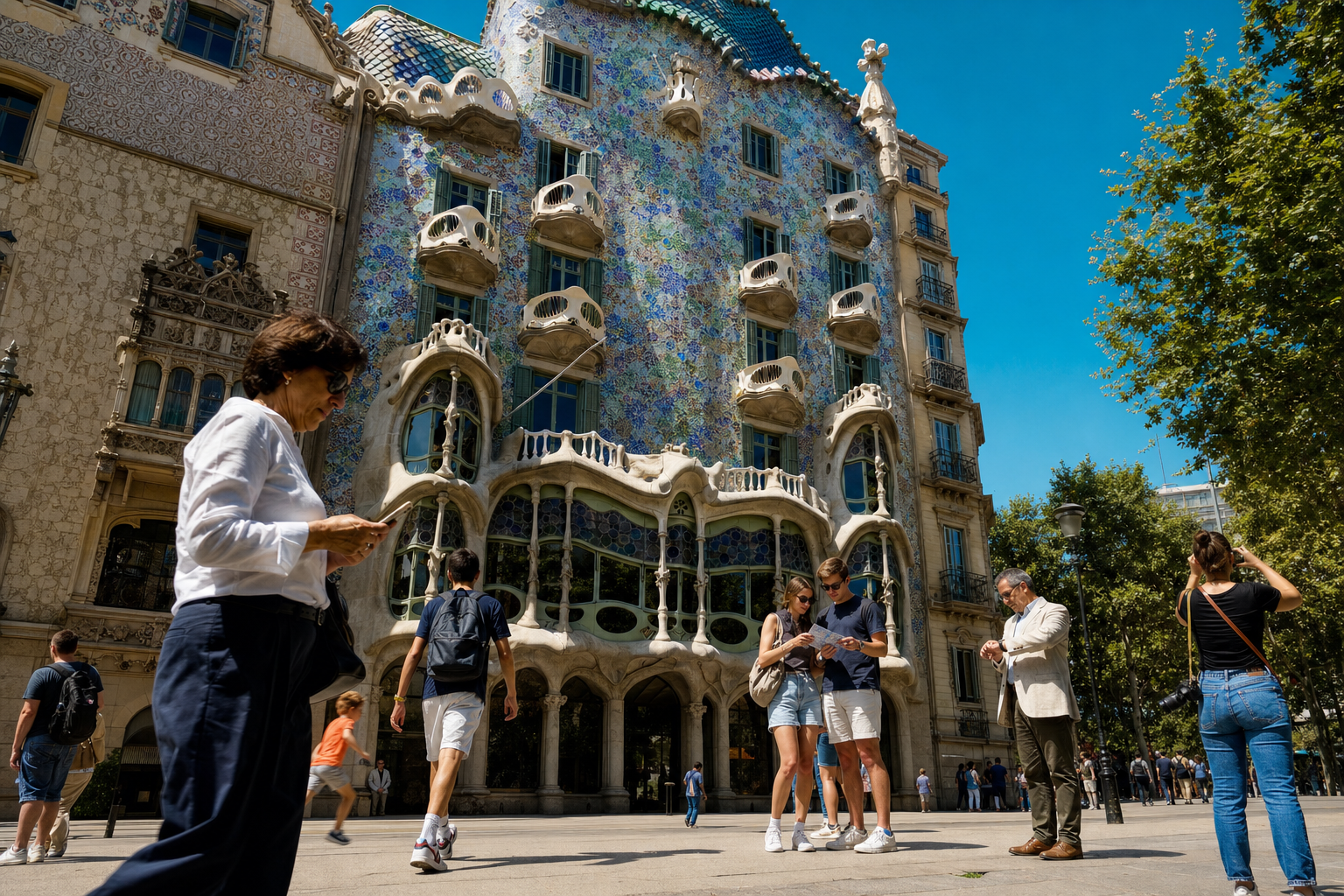
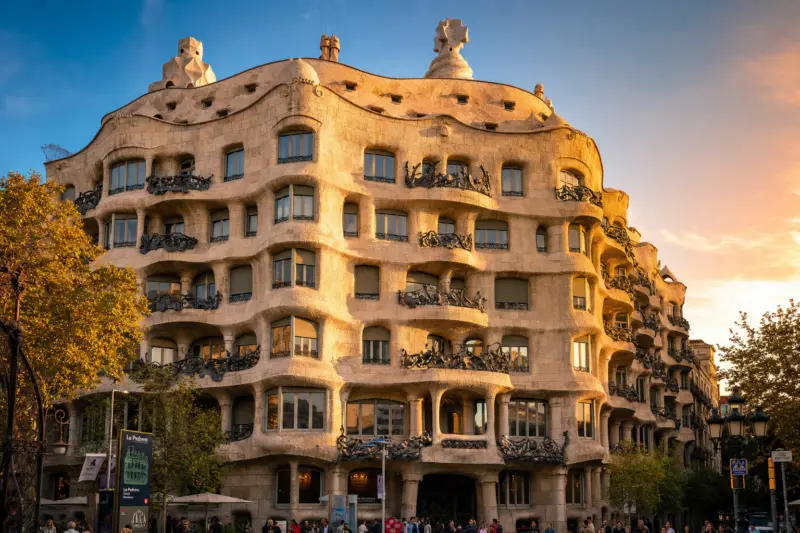
On the grandest stretch of Barcelona's Passeig de Gràcia — a boulevard so thick with Modernista jewels that locals call it the Block of Discord — one building stops every passerby cold. Casa Batlló shimmers like a living creature: scales of iridescent ceramic, a roofline that breathes, skulls carved into stone balconies. It was commissioned by a wealthy textile magnate, transformed by a visionary architect, and completed in 1906 as a statement that would redefine what a city building could be. This is its story.
Read more →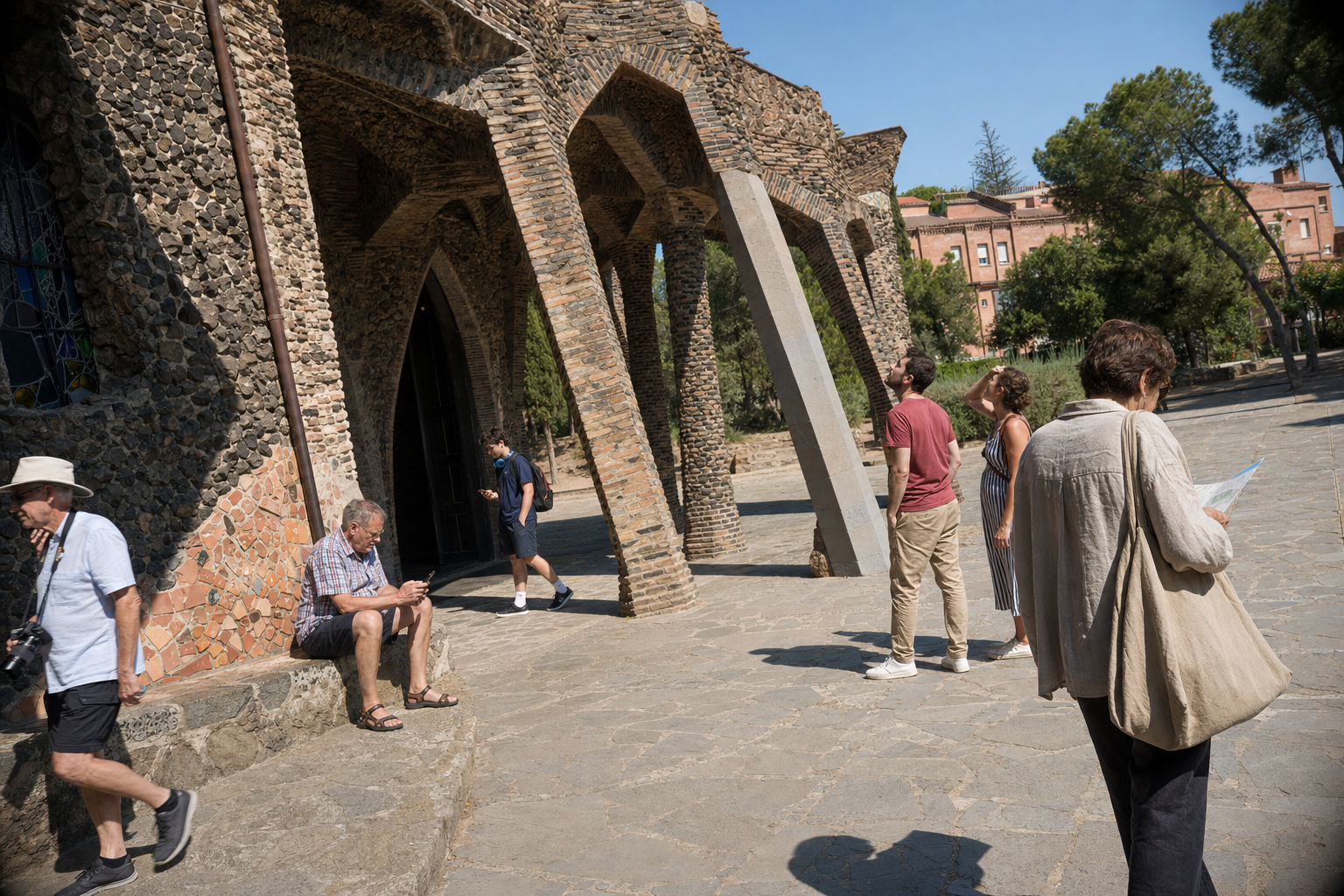
In 1890, the Catalan industrialist Eusebi Güell made a decision that was radical even by the standards of a city already electrified by modernisme: he abandoned Barcelona's choking factory districts and moved his textile mill — and his entire workforce — to a pine-forested hillside in Santa Coloma de Cervelló, just 20 kilometres southwest of the city. What he built there was not merely a factory complex but a full social experiment: a self-contained workers' village with housing, schools, a theatre, a cooperative shop, and a church that would become one of the most structurally daring buildings of the 20th century. That church was entrusted to Antoni Gaudí — and what Gaudí designed in its crypt between 1908 and 1914 was nothing less than the structural laboratory for the Sagrada Família. Colonia Güell is where the dream was tested. It draws a fraction of the crowds that queue outside Park Güell or the Sagrada Família, yet it is arguably the most intellectually fascinating Gaudí site in all of Catalonia.
Read more →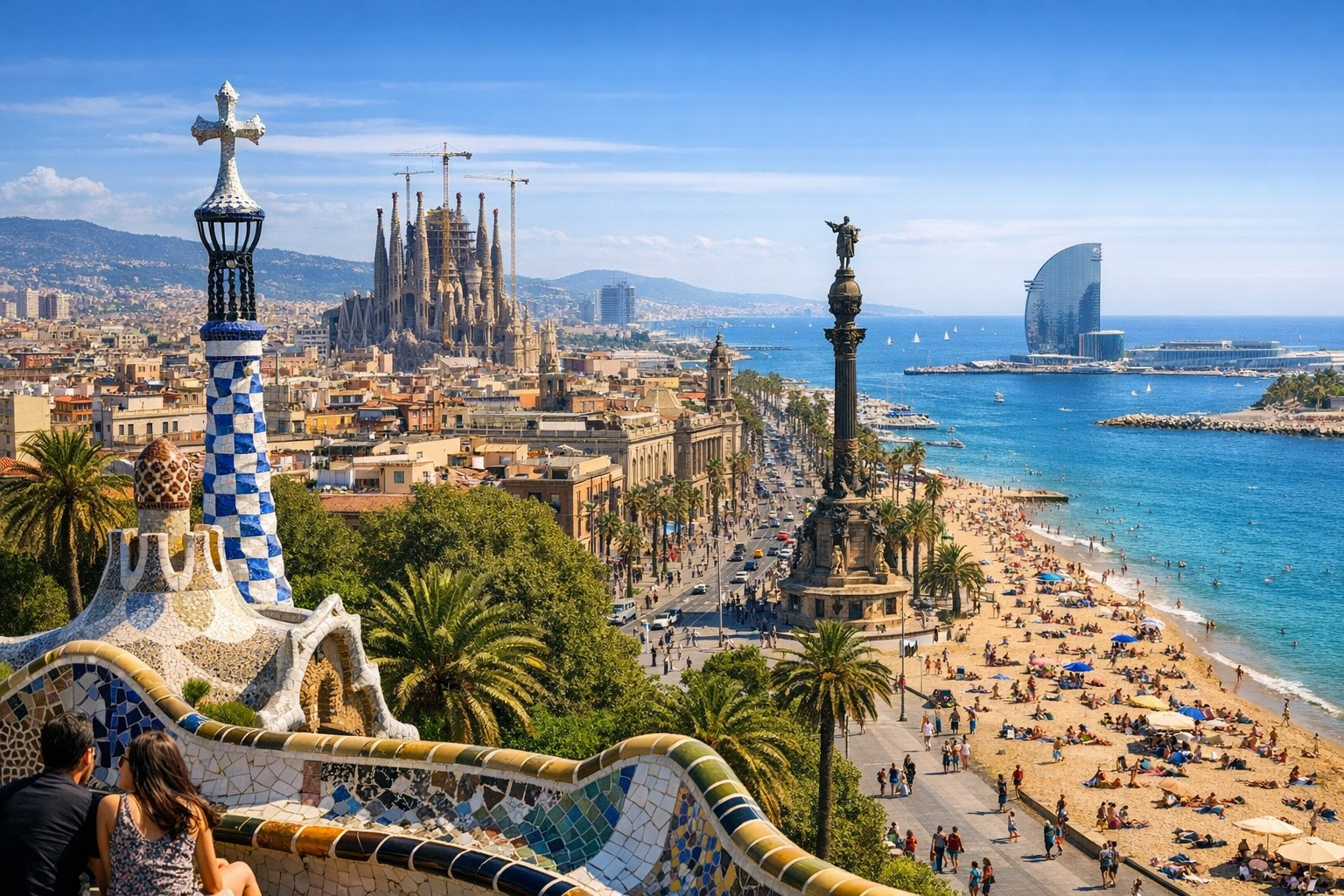
Discover the vibrant culture, stunning architecture, and culinary delights of Barcelona. From iconic landmarks to hidden gems, this guide offers the best activities to experience in the city, ensuring an unforgettable visit.
Read more →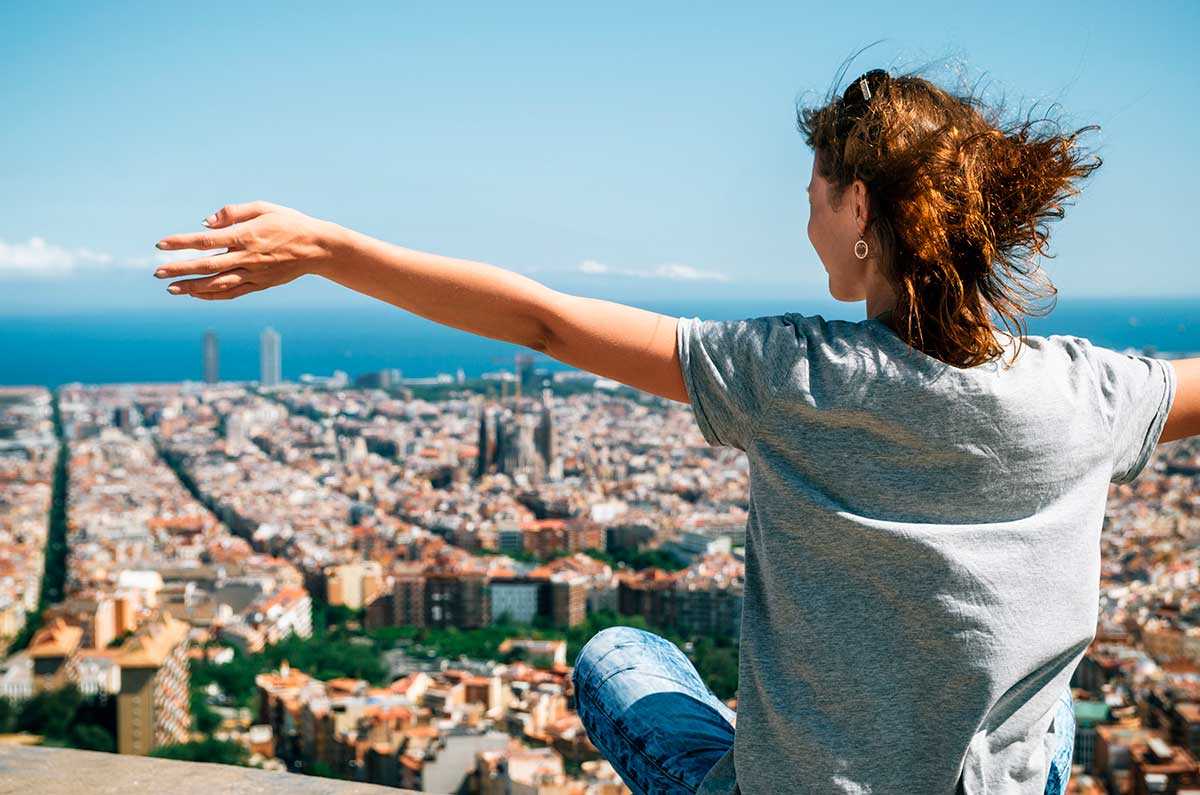
Barcelona, the enchanting coastal city in Spain, is a treasure trove of captivating attractions, historic landmarks, and awe-inspiring architecture. With so much to explore, having a well-designed attractions map can significantly enhance your sightseeing experience and ensure you make the most of your time in this vibrant destination. Whether you are an adventurous solo traveler or a family seeking a cultural getaway, a detailed map will be your faithful companion throughout your journey.
Read more →We use a single cookie, to remember this choice. We do not use analytics or advertising cookies. Read our cookie policy.