7 to 7,5 hrs
Barcelona
Barcelona & Montserrat Day Trip with Sagrada Familia Guided Tour
✓ Free cancellation Kids friendly
4.5(17 reviews)
From €134/ person
Book Now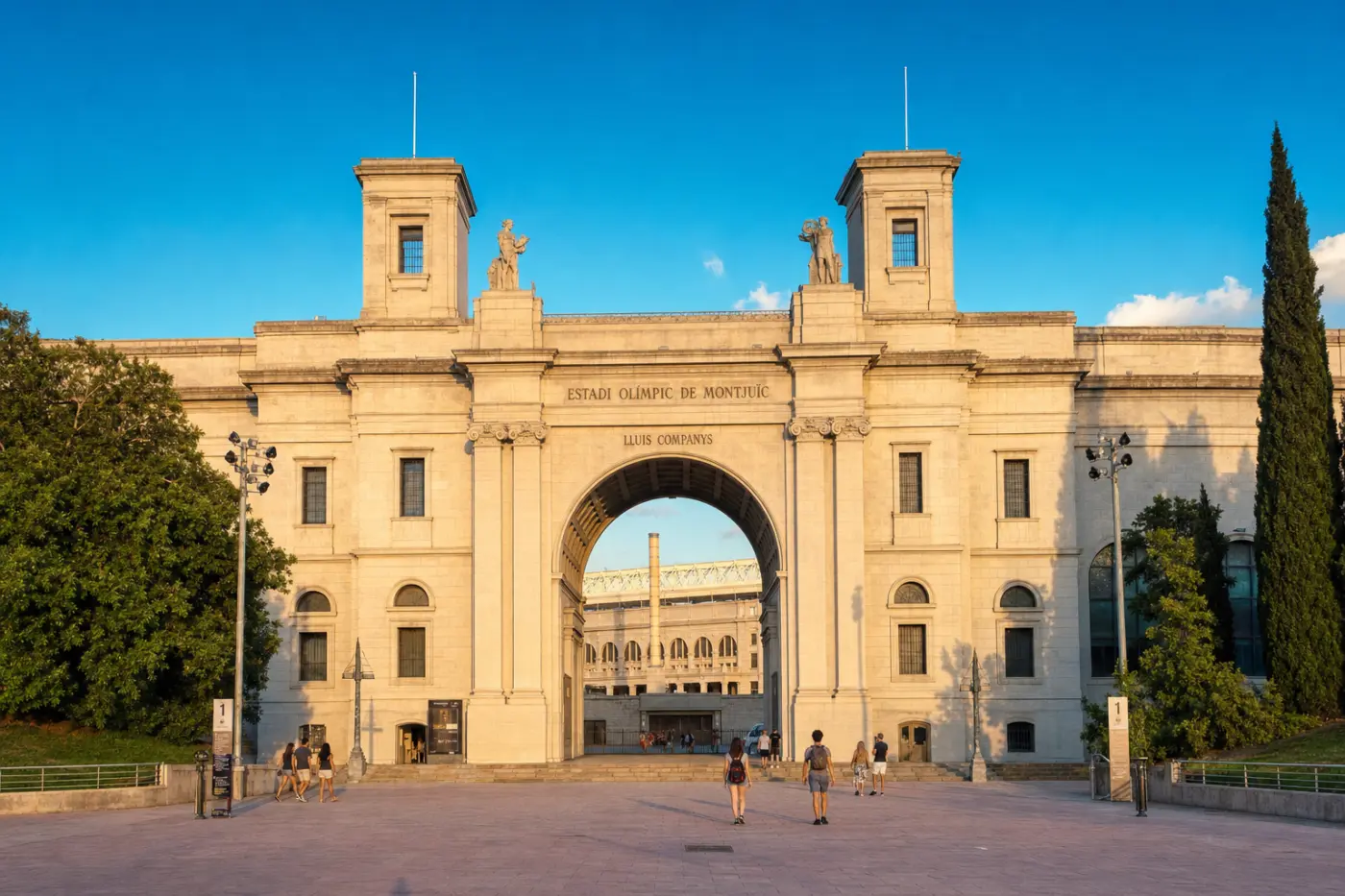
Tourist attraction
Perched on the southern slopes of Montjuïc hill, the Estadi Olímpic Lluís Companys is one of Europe's most historically layered stadiums. It was designed by architect Pere Domènech i Roura and inaugurated in 1927 as the centrepiece of Barcelona's ambitious bid to host the 1936 Summer Olympics — a bid that ultimately lost to Berlin. The stadium was built simultaneously to serve the 1929 International Exposition, which transformed Montjuïc into a grand civic showcase. Its original neoclassical façade — complete with monumental gate towers, a palatial entrance arch, and a capacity of 55,000 — was intended to project Spain's renewed prestige on the world stage following the humiliations of the 1898 Spanish-American War. The very first football match played here, on 20 May 1929, saw a Catalan XI defeat Bolton Wanderers 4–0.
The stadium's modern identity was forged over a six-year reconstruction completed in 1989, when the entire interior was gutted and rebuilt to meet IOC standards while the historic 1927 façade was meticulously preserved. Expanded to a capacity of 65,000, it served as the main venue for the opening and closing ceremonies of the 1992 Barcelona Summer Olympics — games widely regarded as the gold standard of modern Olympic organisation. One of sport's most iconic moments occurred here on 3 August 1992, when Paralympic archer Antonio Rebollo lit the Olympic cauldron by firing a flaming arrow in a parabolic arc over the stadium's rim. The stadium was renamed in 2001 in honour of Lluís Companys, the President of Catalonia who was executed by Franco's regime in 1940 on the very hill where the stadium stands.
Private tours with a local guide, at your own pace.
Barcelona
Barcelona
Barcelona
Barcelona
Barcelona

Barcelona

Barcelona
Barcelona

Barcelona

Barcelona
Barcelona
Barcelona
Barcelona
Barcelona