3 hrs
Vienna
Vienna Art Nouveau Private Tour with Secession Tickets and Klimt
✓ Free cancellation Kids friendly
4.5(56 reviews)
From €219/ person
Book Now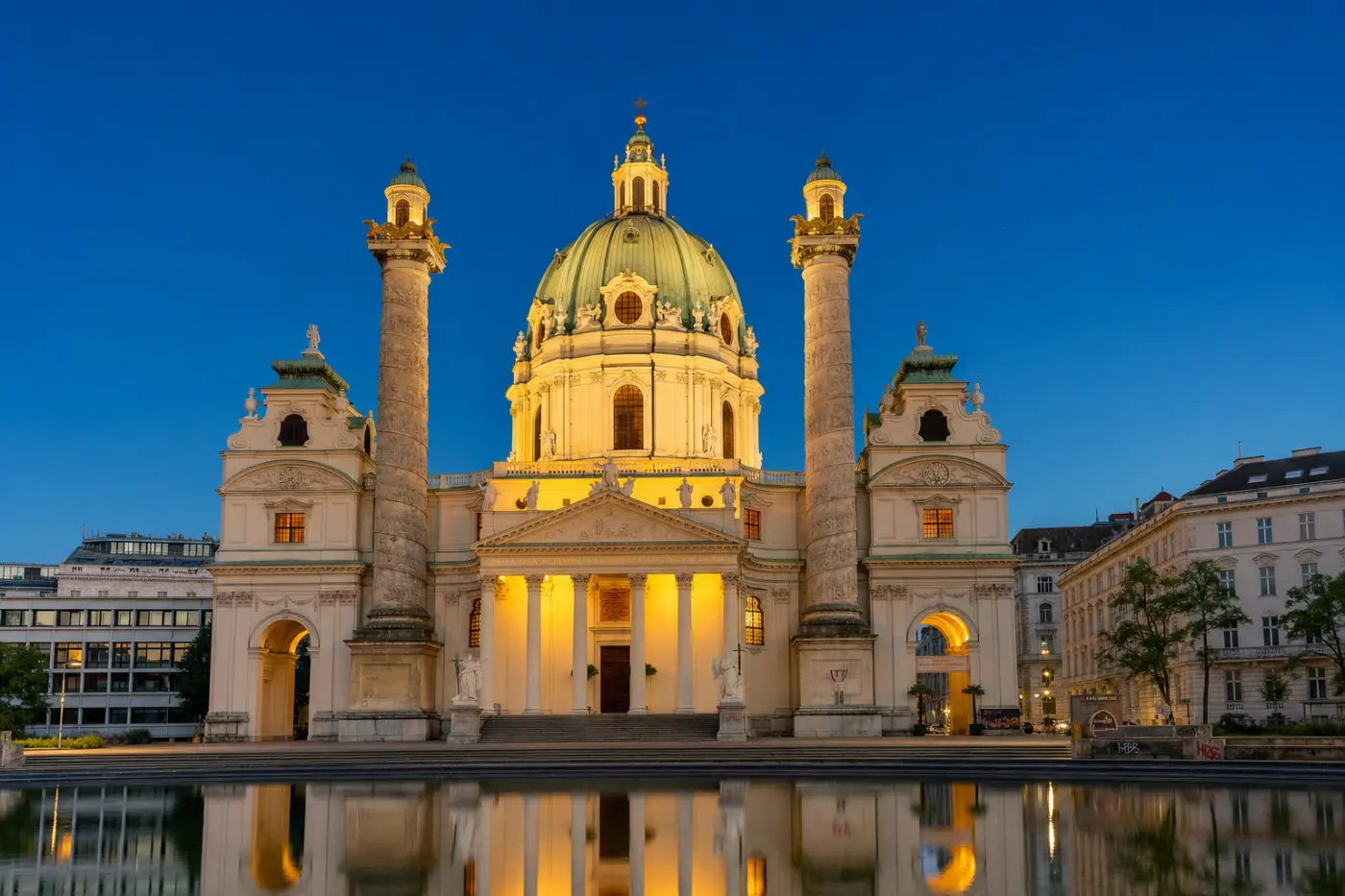
Tourist attraction
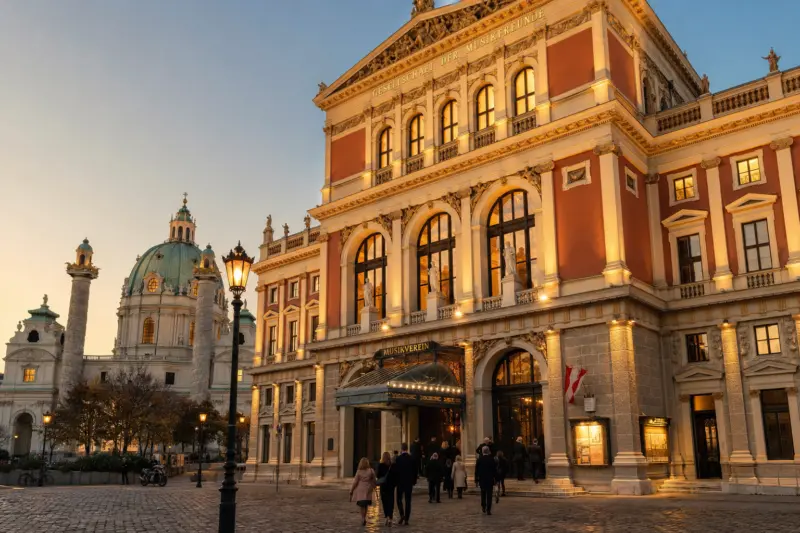
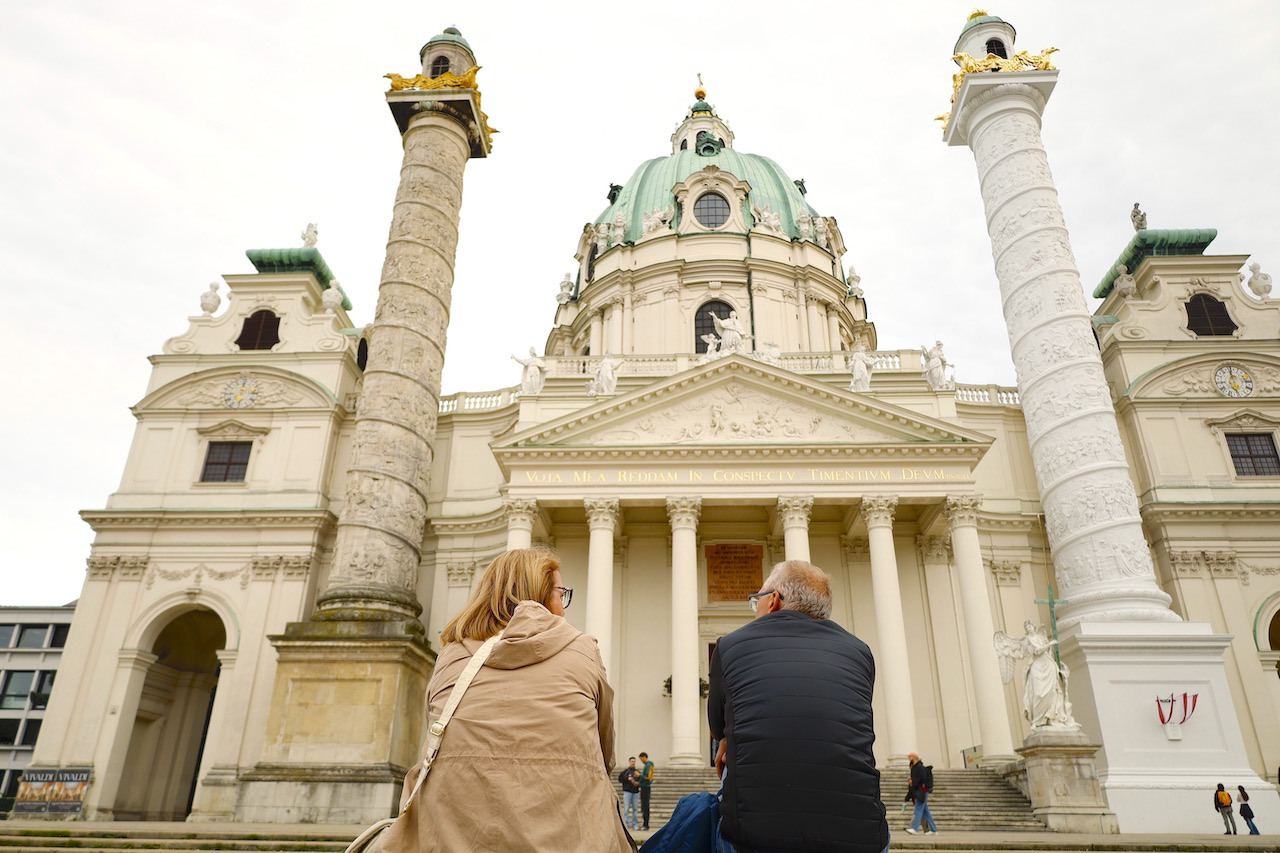
Karlskirche — officially the Церква Святого Карла, or St. Charles's Church — rises from the southern edge of Karlsplatz as one of the most architecturally ambitious buildings in all of Europe. Emperor Charles VI commissioned it in 1713 after surviving Vienna's final and most devastating plague epidemic, making a public vow to build a church dedicated to St. Charles Borromeo (1538–1584), the Archbishop of Milan who had become the patron saint of plague sufferers after his selfless ministry to the dying during Milan's epidemic of the 1570s. The fact that saint and emperor shared the name "Charles" made the dedication all the more resonant. Johann Bernhard Fischer von Erlach won the architectural competition and broke ground in 1716. He died in 1723 with the church unfinished; his son, Joseph Emanuel Fischer von Erlach, completed the structure in 1737 with some modifications to the original plans.
The design is a deliberate collision of symbolic languages. The entrance portico mimics a classical Greek temple facade, while two 33-metre freestanding columns — directly modeled on Rome's Trajan's Column — flank the portal. These spiraling columns are wrapped in continuous relief carvings by Lorenzo Mattielli depicting scenes from the life of St. Charles Borromeo, and they double as symbols of the Pillars of Hercules, invoking the global reach of Habsburg imperial power. Above everything, a 72-metre oval dome dominates the Vienna skyline — an elliptical form that was technically daring for its era and remains visually commanding today. The interior dome fresco was painted by Johann Michael Rottmayr between 1725 and 1730, depicting the intercession of St. Charles Borromeo, and covers approximately 1,000 square metres of curved ceiling surface. Side chapel altarpieces were contributed by Daniel Gran, Sebastiano Ricci, and Jakob van Schuppen — a who's-who of early 18th-century European painting.
One of the most unusual visitor experiences in Vienna is the panoramic lift installed inside the dome itself. A contemporary glass-and-steel elevator ascends through the interior of the cupola, bringing visitors within arm's reach of Rottmayr's frescoes and ultimately to a platform offering unobstructed views over the Ringstrasse, the Staatsoper, and the Alps on clear days. It is a rare chance to study Baroque ceiling painting not from 20 metres below, but face-to-face. The church also hosts regular evening concerts — Vivaldi's Four Seasons is a recurring programme — making it as much a live music venue as a place of worship.
Karlskirche sits beside the Resselpark reflecting pool, designed in the 20th century to mirror the facade, and is steps from the Wien Museum and the Vienna Musikverein. Admission to the church interior and dome lift is ticketed; arrive early on weekdays to avoid tour groups. The church remains an active Roman Catholic parish, so dress modestly and be respectful of any ongoing services. The U1/U2/U4 metro lines all converge at Karlsplatz station, making access straightforward from anywhere in the city centre.
Private tours with a local guide, at your own pace.
Vienna
Vienna
Vienna
Vienna
Vienna
Vienna
Vienna
Vienna
Vienna
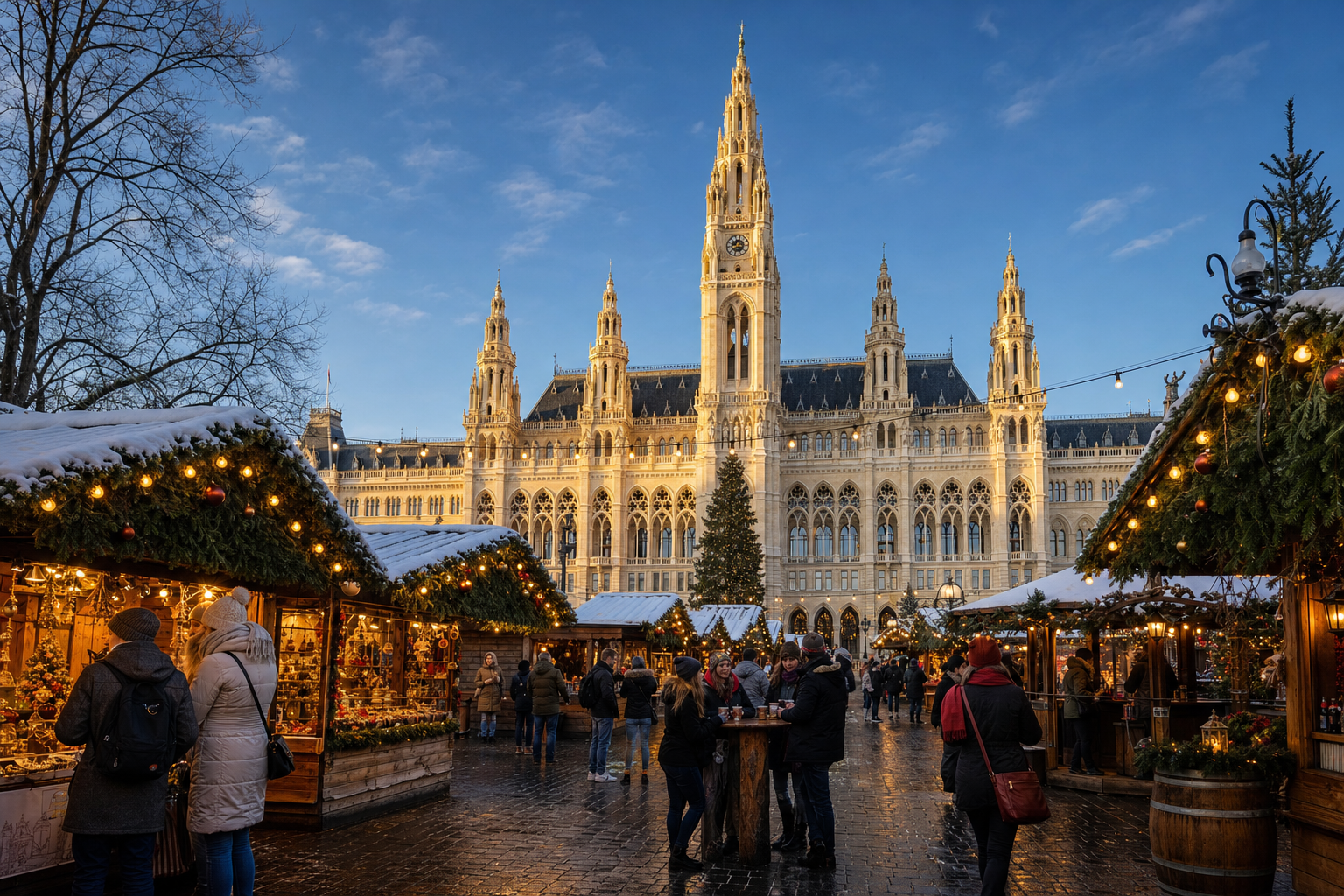
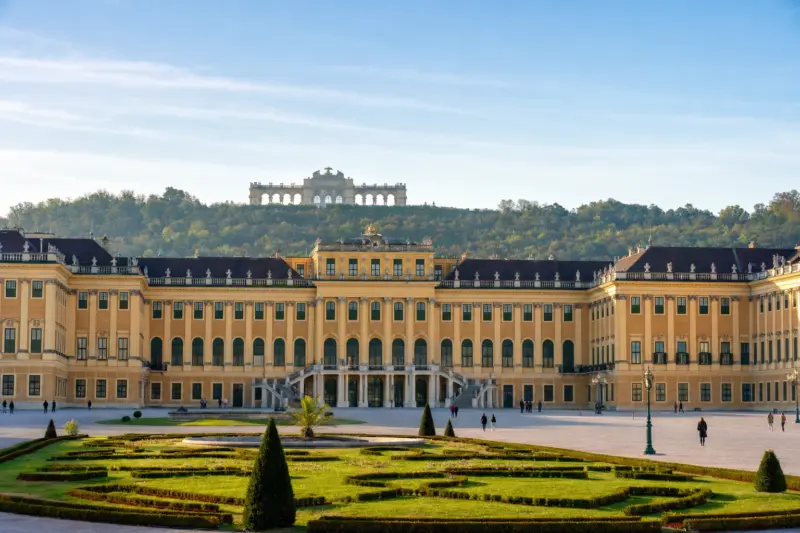
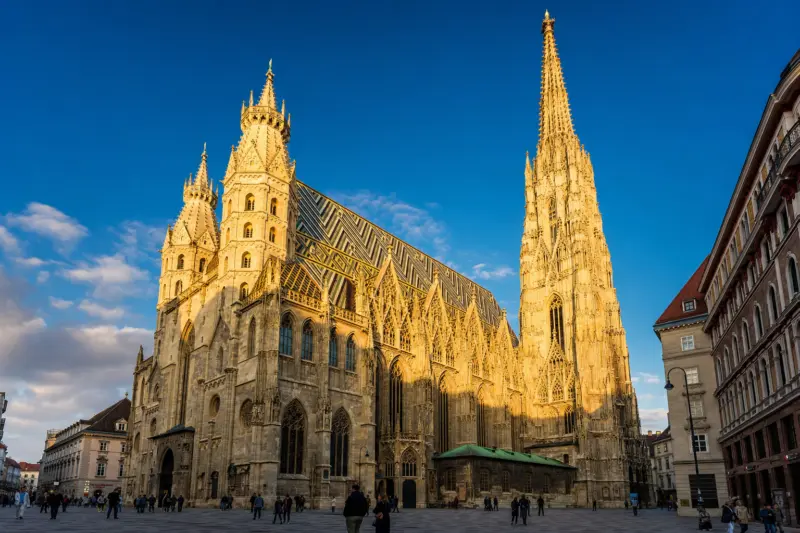
On the 20th of November 2026, the lights go on at the Rathausplatz Christmas market — and Vienna becomes, for five weeks, the most convincing argument anyone has made for winter travel. The Austrian capital hosts not one but a constellation of Advent markets, each anchored to a landmark of world historical significance: a Gothic cathedral begun in 1137, a Baroque imperial palace with 1,441 rooms, a Neo-Gothic city hall whose tower clears 98 metres. This is not the Christmas market circuit of fairy-lit sheds and mass-produced ornaments. Vienna's markets sit inside one of the densest concentrations of monumental architecture in Europe, and the 2026 season adds a brand-new market at Schwarzenbergplatz to an already remarkable lineup. Whether you are planning your first December in Vienna or your fifth, the 2026 calendar has enough new details — and enough enduring magic — to justify reading every word of what follows.
Read more →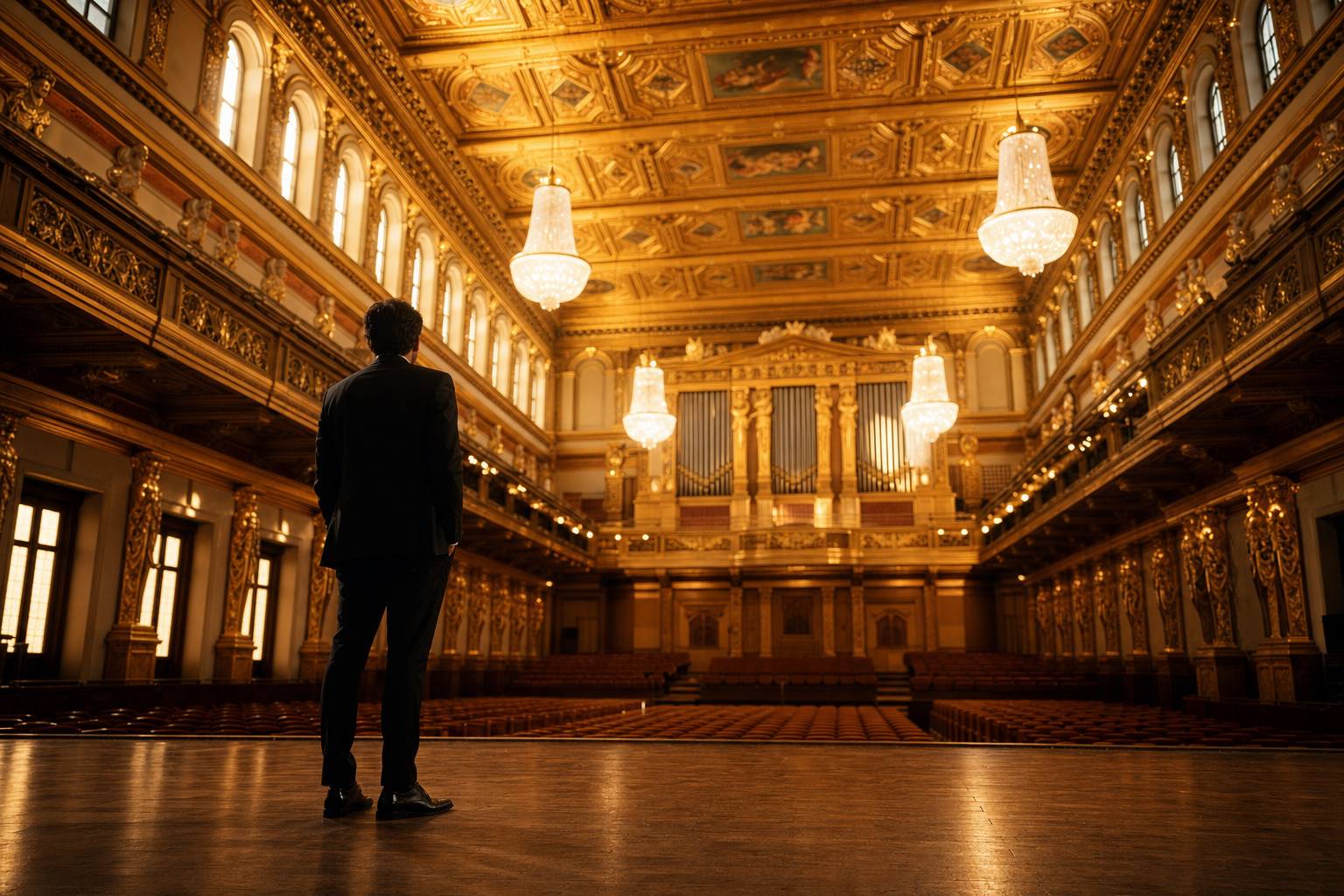
On the night of 30 September 1791, The Magic Flute premiered at the Theater auf der Wieden in Vienna — just ten weeks before Mozart died at 35. That a composer on the edge of poverty could still produce one of opera's most enduring works in this city is not a coincidence. Vienna didn't simply attract great composers; it manufactured the conditions for greatness. The Habsburg imperial court poured money into music for two centuries, aristocratic families competed for prestige through the composers they sponsored, and by the mid-19th century, the bourgeoisie had taken over that role — filling salons and concert halls with an appetite for live performance that has never really stopped. Today Vienna remains the only city on earth where the classical tradition isn't a museum piece but a living, breathing part of daily life: the Vienna Philharmonic still rehearses in the same Musikverein built in 1870, and you can hear Mozart performed within walking distance of the apartment where he wrote it. This guide explains why — and how to experience it fully.
Read more →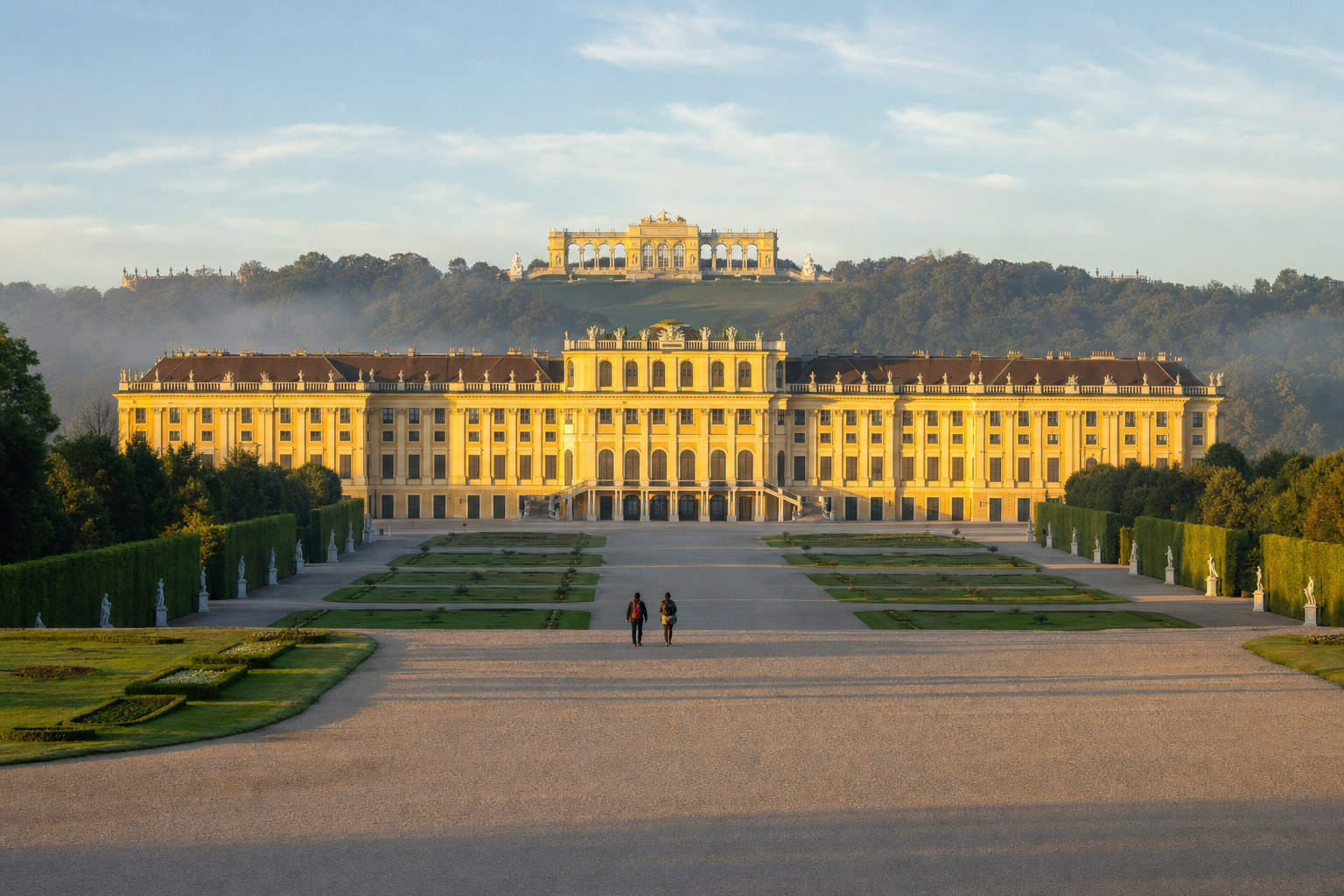
When the Habsburg court needed to escape the summer heat of the Hofburg, they didn't travel far — they didn't need to. Vienna sits at one of Europe's great geographical crossroads: the eastern edge of the Alps, where the Danube cuts through limestone gorges before fanning out across the Pannonian Plain. That position, refined over seven centuries of imperial ambition, means that monasteries, wine valleys, spa towns, and forested hilltops all cluster within 100 kilometres of the city centre. Vienna is, by any measure, the most populous city on the entire length of the Danube — and that river is the artery along which the most memorable day trips flow. The Wachau Valley, a UNESCO World Heritage Site since 2000, begins barely 80 km upstream. Baroque abbeys, Roman thermal springs, and a castle where an English king once languished in captivity are all reachable before lunch. If you've given Vienna a day or two and feel the pull to go further, you're in exactly the right city for it.
Read more →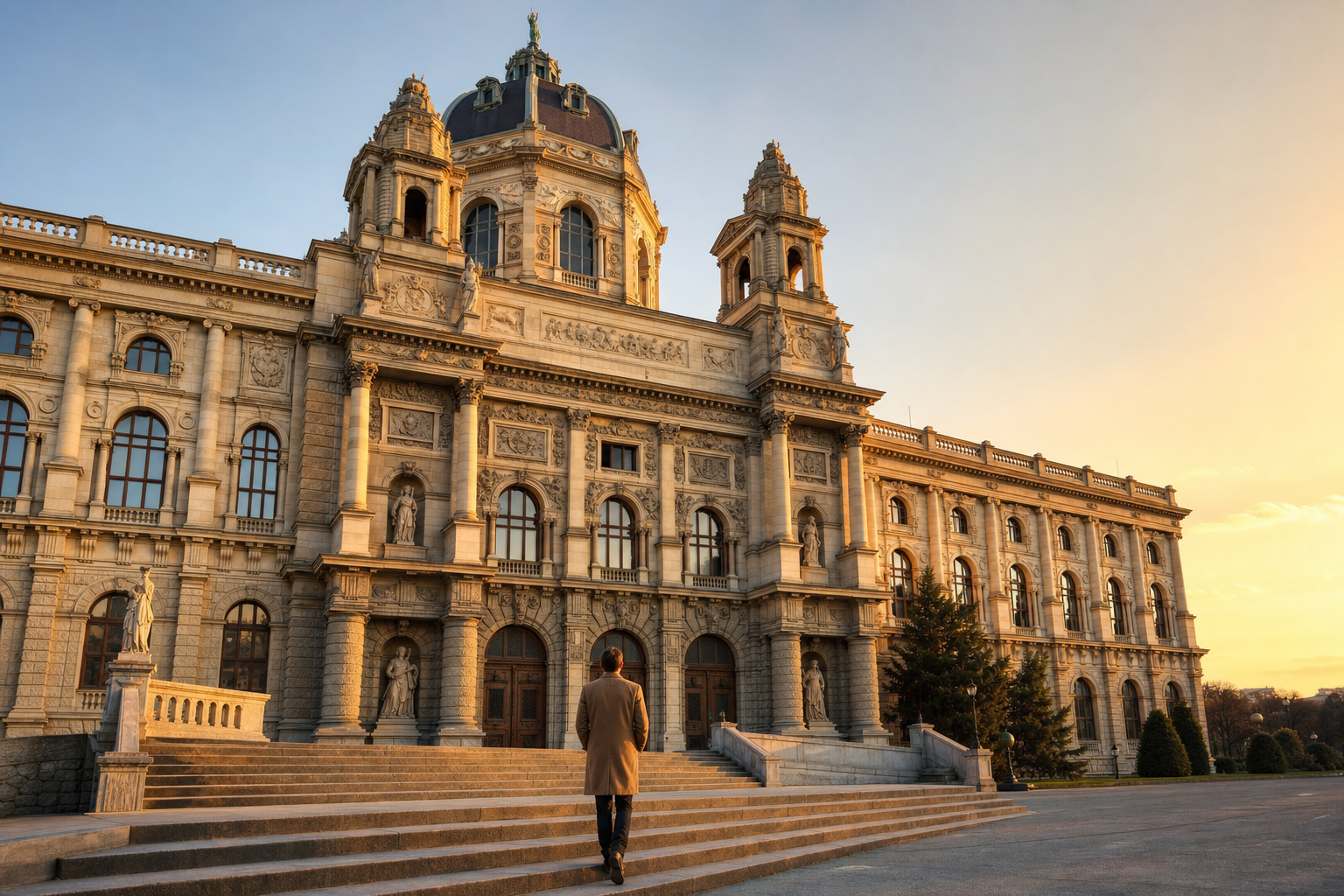
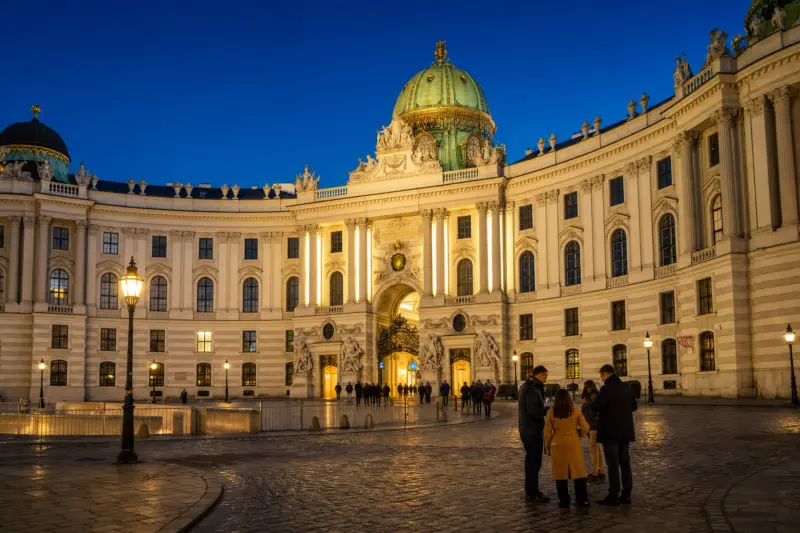
In 1857, Emperor Franz Joseph I signed a single decree that erased Vienna's medieval city walls and replaced them with one of the most choreographed urban boulevards in European history. What rose in their place — the Ringstrasse — was not just a road but a statement of imperial ambition encoded in stone, marble, and political symbolism. Today, Vienna remains the 5th-largest city in the EU by population, yet at its Habsburg peak it governed over 50 million people across a dozen languages and cultures. That weight of history doesn't announce itself. It hides in the geometry of a palace courtyard, in the separate resting places of a dead emperor's heart, entrails, and body, in the deliberate Gothic silhouette of a city hall designed to honour civic — not royal — power. A two-hour bus tour skims the surface of all this. A Vienna private tour, led by a local who has spent years decoding the city's layers, is something categorically different. This guide explains exactly why — and helps you find the right experience for your visit.
Read more →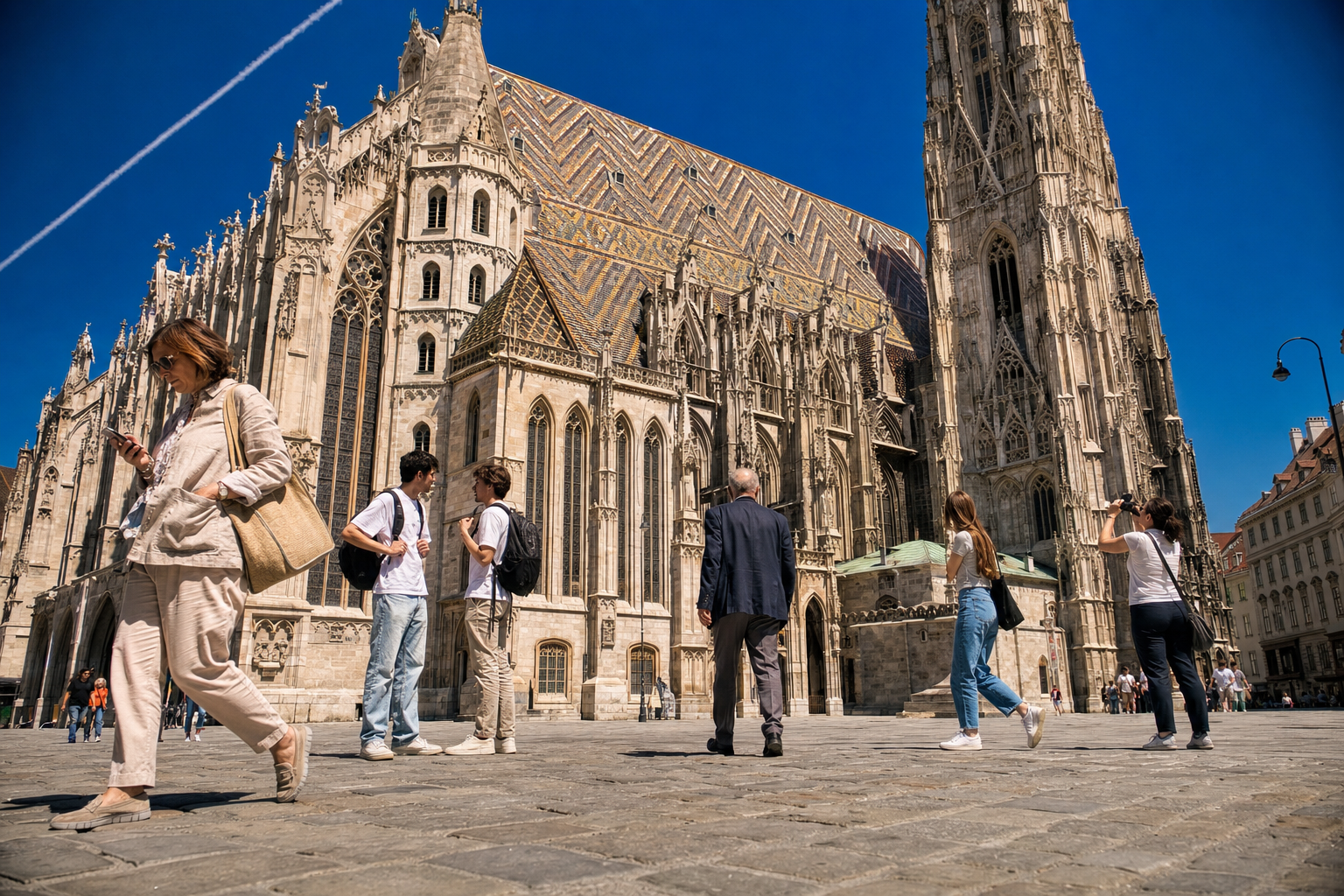
In 1857, Emperor Franz Joseph I issued a single decree that would physically reshape Vienna forever — ordering the demolition of the medieval city walls to make way for the Ringstrasse, a grand ceremonial boulevard that would announce the Habsburg Empire's ambitions to the world. That act of urban willpower set the tone for a city that has always used culture, architecture, and intellect as instruments of power and identity. Vienna is where Mozart premiered operas and Freud mapped the unconscious; where coffeehouse regulars rewrote political theory over a single cup of Melange; where social housing was built on a scale that still astonishes urban planners today. For travellers, this density of history, music, design, and everyday Viennese life means there is almost no such thing as a wasted hour. The question is never whether there's something extraordinary to do — it's knowing where to look, and why it matters. This guide cuts through the clichés to show you the city that locals know: layered, contradictory, and endlessly rewarding.
Read more →We use a single cookie, to remember this choice. We do not use analytics or advertising cookies. Read our cookie policy.