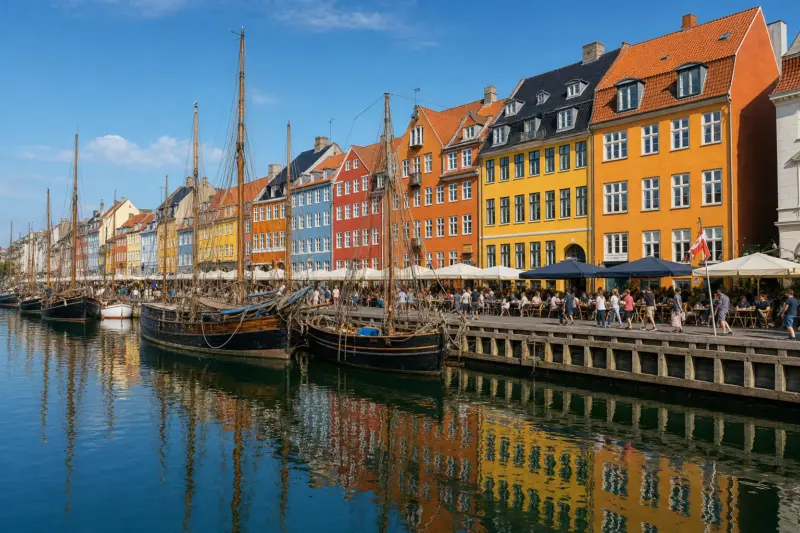
5 hrs
copenhagen
Copenhagen Private Full Day Tour with Lunch Option
✓ Free cancellation Kids friendly
4.8(138 reviews)
From €334/ person
Book Now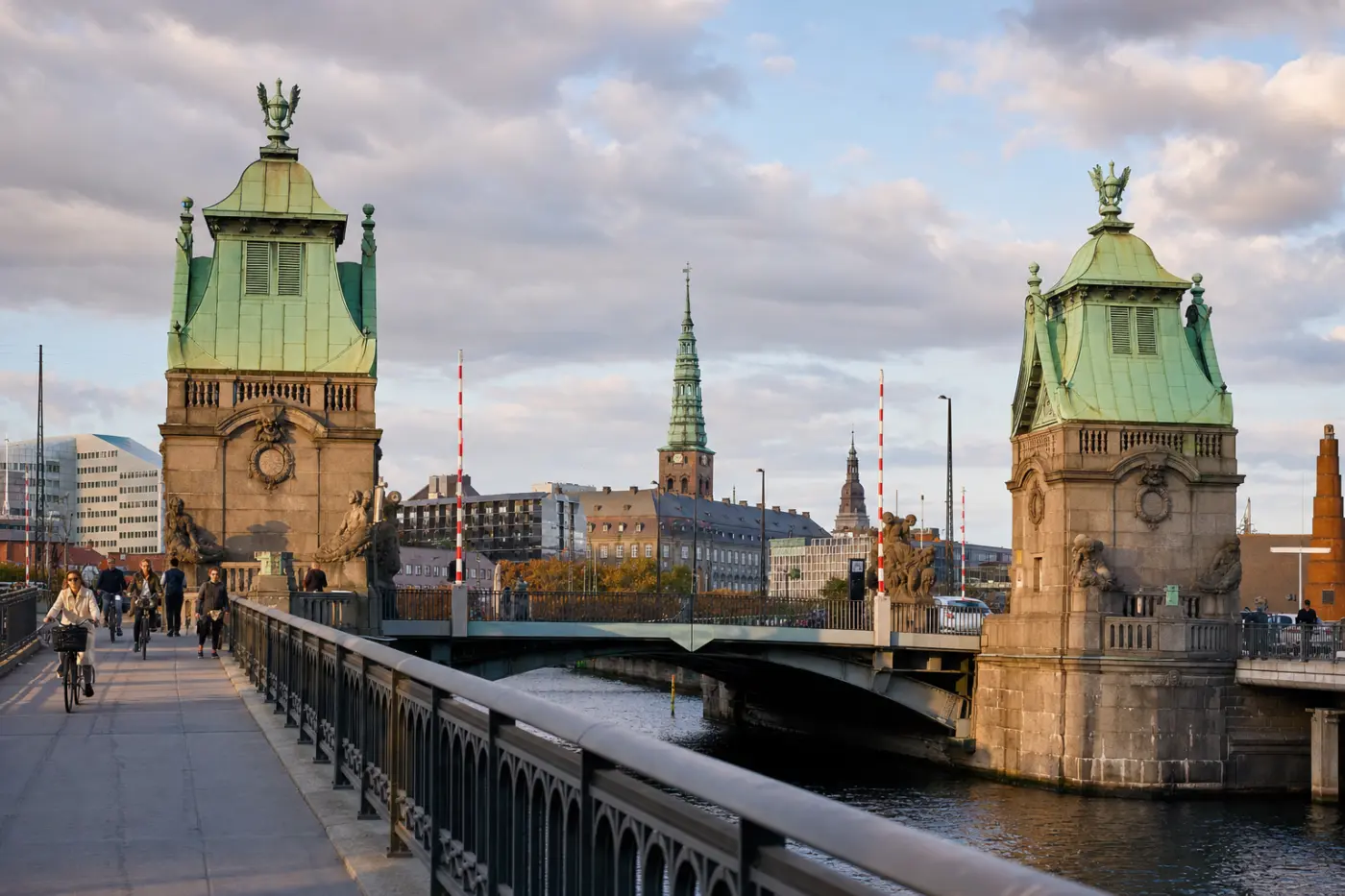
Tourist attraction
Knippelsbro is a double-leaf bascule bridge spanning the Inderhavn (Inner Harbour) canal in central Copenhagen, linking the medieval city centre on Slotsholmen with the district of Christianshavn. The current structure, completed in 1937 and designed by architects Andreas Bugge and Kaj Gottlob alongside engineer Anker Engelund, stretches approximately 190 metres and carries six lanes of traffic, two tramway tracks (now repurposed for cyclists), and dedicated pedestrian walkways. Its two symmetrical tower houses, clad in green-patinated copper and dressed granite, give the bridge a distinctly monumental yet elegant character that has made it one of the most photographed structures in the Danish capital.
A crossing at this exact location has existed since at least 1618, when the first timber drawbridge was erected to connect the newly founded district of Christianshavn — established by King Christian IV as a planned merchant and artisan quarter — with the rest of the city. That original bridge was colloquially named after Hans Knip, a ferryman who operated the crossing before it was built. Over the following three centuries, successive bridges occupied the site: a stone arch bridge replaced the timber structure in 1868, and that in turn was demolished to make way for the current steel-and-concrete bascule design. When the 1937 bridge opened, it was one of the most technically advanced moveable bridges in Scandinavia, its twin 48-metre bascule leaves capable of lifting to a near-vertical 73 degrees to allow tall-masted vessels passage into the harbour.
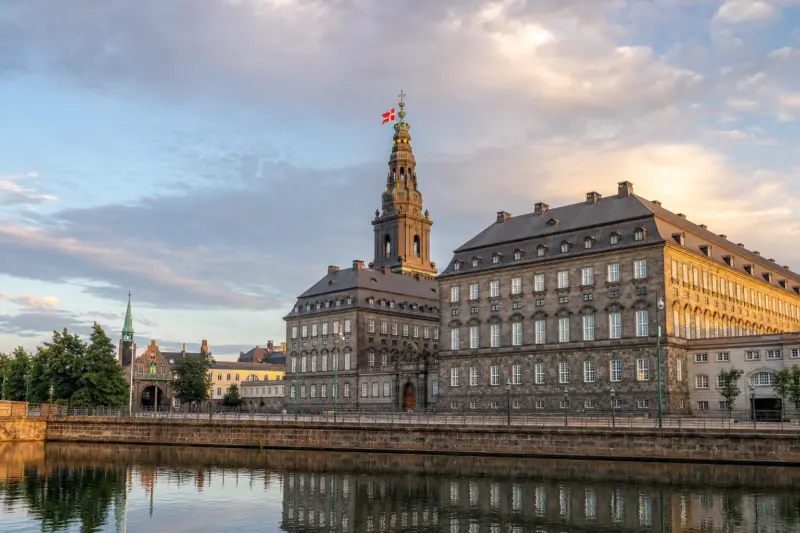
Standing on Knippelsbro today places you at one of Copenhagen's great urban crossroads. To the west rises the green copper spire of Christiansborg Palace — the seat of the Danish Parliament — while to the east the colourful warehouses of Christianshavn's canals come into view. On busy harbour days, visitors can watch the bascule leaves rise in a slow, counterweighted arc, an operation that still draws onlookers to both sides of the railing. The bridge also offers an unobstructed sightline south toward the Black Diamond extension of the Royal Danish Library, opened in 1999, making it a favourite vantage point for architectural photography at golden hour.
Knippelsbro is freely accessible at all hours and sits a five-minute walk from Christiansborg Palace and roughly ten minutes on foot from Nyhavn. The nearest Metro station is Kongens Nytorv (lines M1 and M2), and several harbour bus routes stop directly at the bridge's eastern end. If you time your visit to coincide with a bridge opening — which occurs on a regular schedule when harbour traffic demands it — aim to be in position on the pedestrian walkway at least ten minutes beforehand for the best view of the lifting mechanism in action.
Private tours with a local guide, at your own pace.
copenhagen

copenhagen
copenhagen
copenhagen
copenhagen
We use a single cookie, to remember this choice. We do not use analytics or advertising cookies. Read our cookie policy.