Lisboa
Highlights & Secrets of Lisbon Private Walking Tour
✓ Free cancellation Kids friendly
4.8(22 reviews)
From €124/ person
Book Now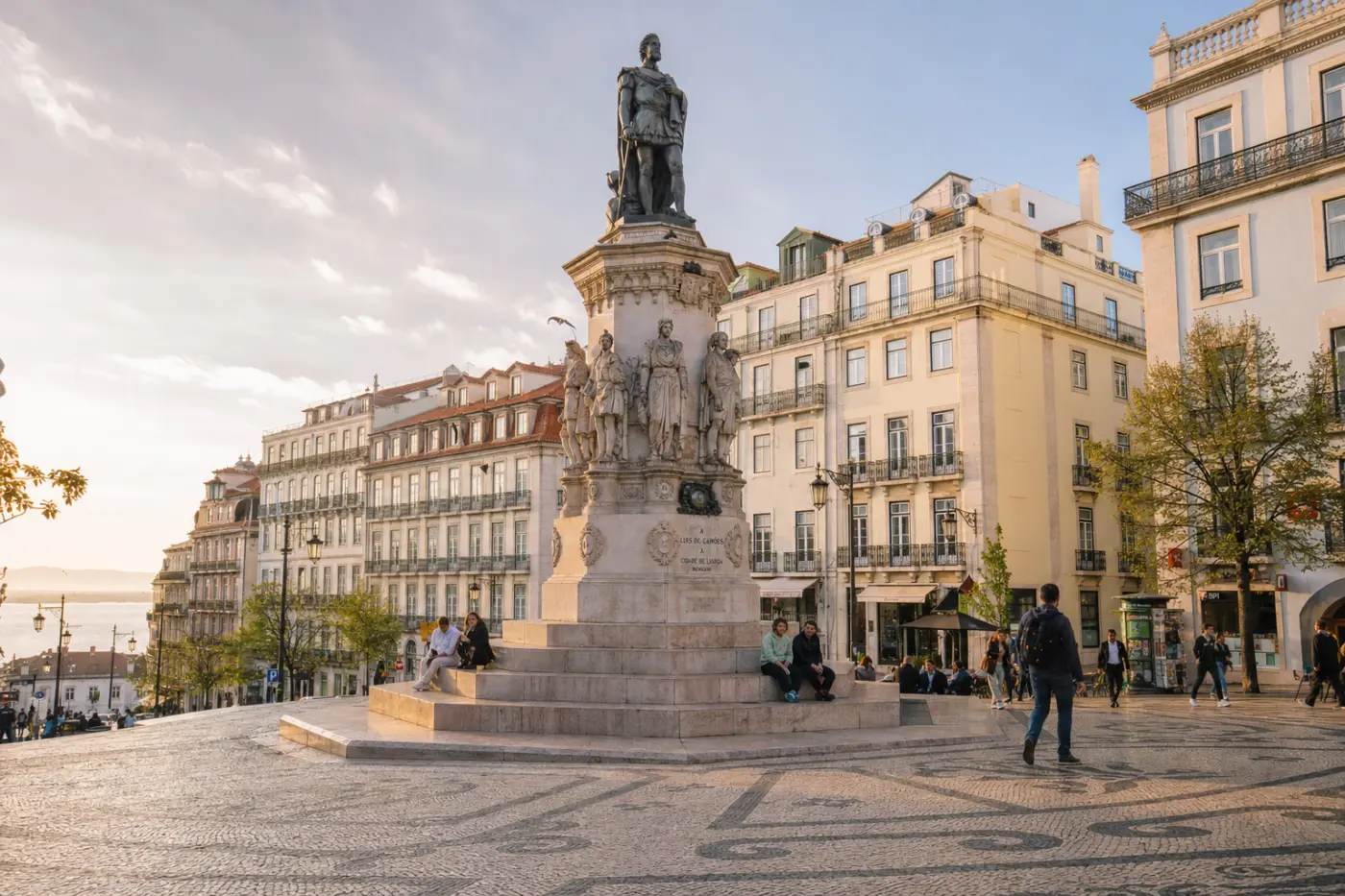
Tourist attraction
Praça Luís de Camões sits at the upper edge of the Chiado neighbourhood, one of Lisbon's most storied cultural districts, where the bohemian energy of 19th-century literary cafés meets the city's elegant hillside architecture. At its centre stands a bronze statue of Luís de Camões (1524–1580), Portugal's greatest poet and the author of Os Lusíadas (The Lusiads, 1572) — the national epic that retells Vasco da Gama's pioneering sea voyage to India and weaves in centuries of Portuguese history. Surrounding the statue's tall pedestal are allegorical figures representing other luminaries of 16th-century Portuguese letters, reinforcing the square's identity as a monument to the country's intellectual golden age. The square was inaugurated in 1867, designed by architect Victor Bastos, and quickly became a defining gathering point for Lisbon's intelligentsia.
Camões himself led a life as turbulent as the seas he immortalised in verse. Born into a poor family and educated at the University of Coimbra, he was banished from the royal court in 1546 after a scandalous romance with Dona Caterina de Ataide, the inspiration for his celebrated love sonnets. He lost his right eye fighting in a Moroccan military campaign, was imprisoned in 1552 after wounding a court aide in a Lisbon street brawl, and was released only on the condition that he serve as a soldier in India. During a shipwreck off the coast of what is now Cambodia, legend holds that he swam to shore clutching the manuscript of Os Lusíadas rather than abandon it to the sea. The epic was finally published in Lisbon in 1572 and had reached an English translation by Sir Richard Fanshawe by 1655. Camões died in Lisbon in 1580 at the age of 56 and was buried at the Jerónimos Monastery in Belém. June 10th — the date of his death — is now Portugal's National Day.
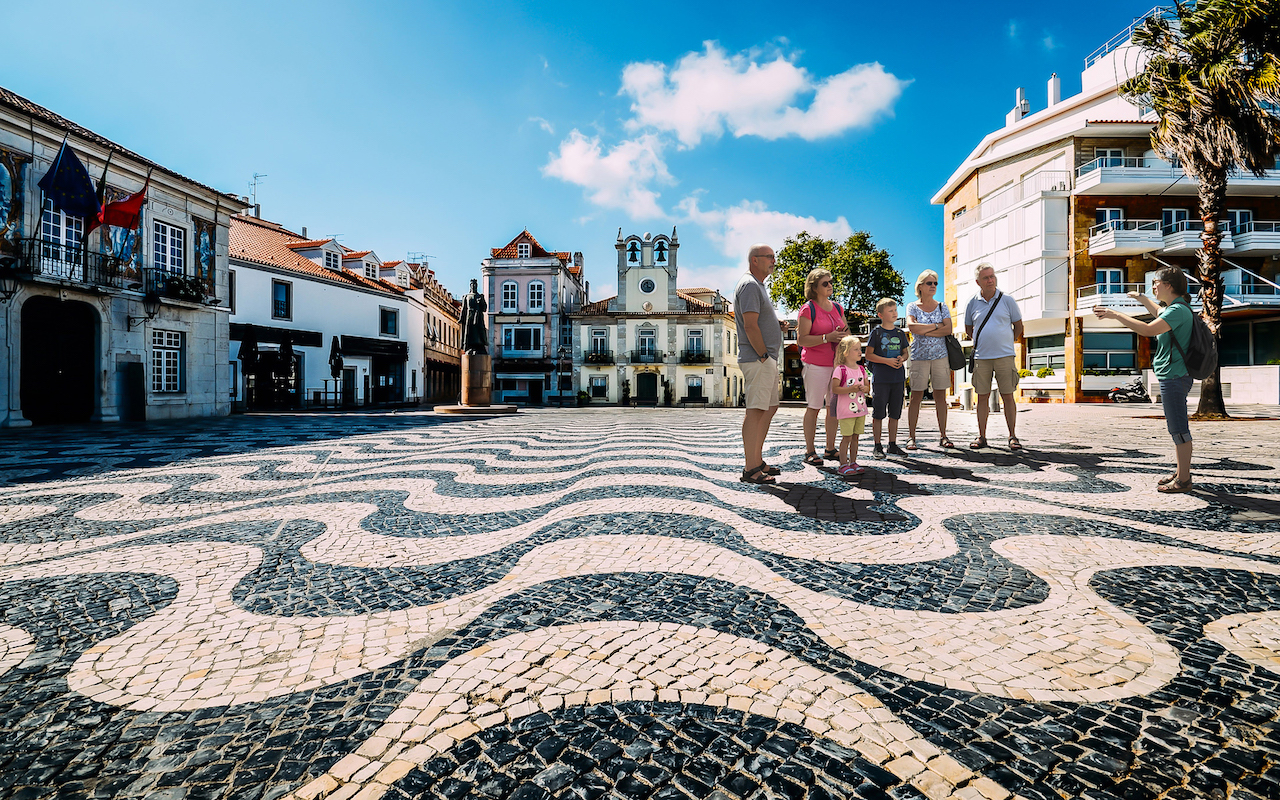
Today, Praça Luís de Camões is one of the most animated open spaces in central Lisbon. Its wide, mosaic-paved esplanade draws locals and visitors throughout the day: students from the nearby Escola Superior de Belas-Artes, shoppers crossing between the Chiado and Bairro Alto, and travellers pausing after visiting the Igreja do Loreto or Rua Garrett's bookshops and pastry counters. The terrace of the square offers a natural crossroads perspective, with the city's rooftops and the Tagus estuary visible in the distance on clear days. Street musicians, vendors, and outdoor café seating give the square a lively, lived-in atmosphere that feels distinctly Lisbon.
The square is easily reached on foot from the Chiado metro station (Green and Yellow lines) in under five minutes, or via the Elevador da Bica funicular, which deposits passengers within two blocks. The best light for photography falls in the late afternoon, when the low Atlantic sun catches the bronze statue from the west and casts long shadows across the stone pavement. Early mornings on weekdays offer a quieter encounter with the monument and its surroundings before the neighbourhood fills with foot traffic.
Private tours with a local guide, at your own pace.
Lisboa

Lisboa
Lisboa

Lisboa
Lisboa
Lisboa

Lisboa
Lisboa
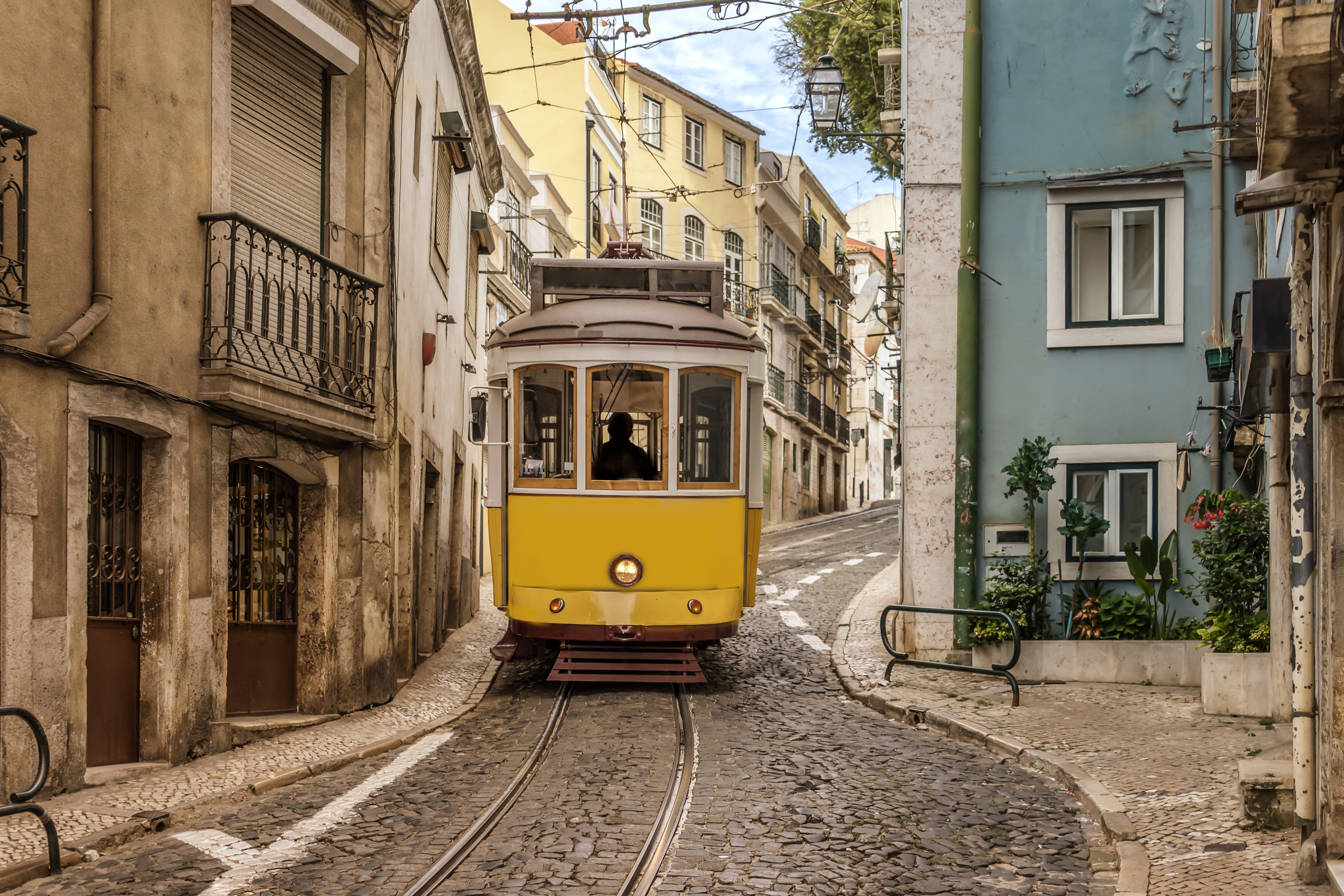
Lisboa
We use a single cookie, to remember this choice. We do not use analytics or advertising cookies. Read our cookie policy.