6 hrs
Lisboa
Lisbon Private Full-day Tour - History, Culture, Local Life & Gastro Experience
✓ Free cancellation Kids friendly
5.0(27 reviews)
From €219/ person
Book Now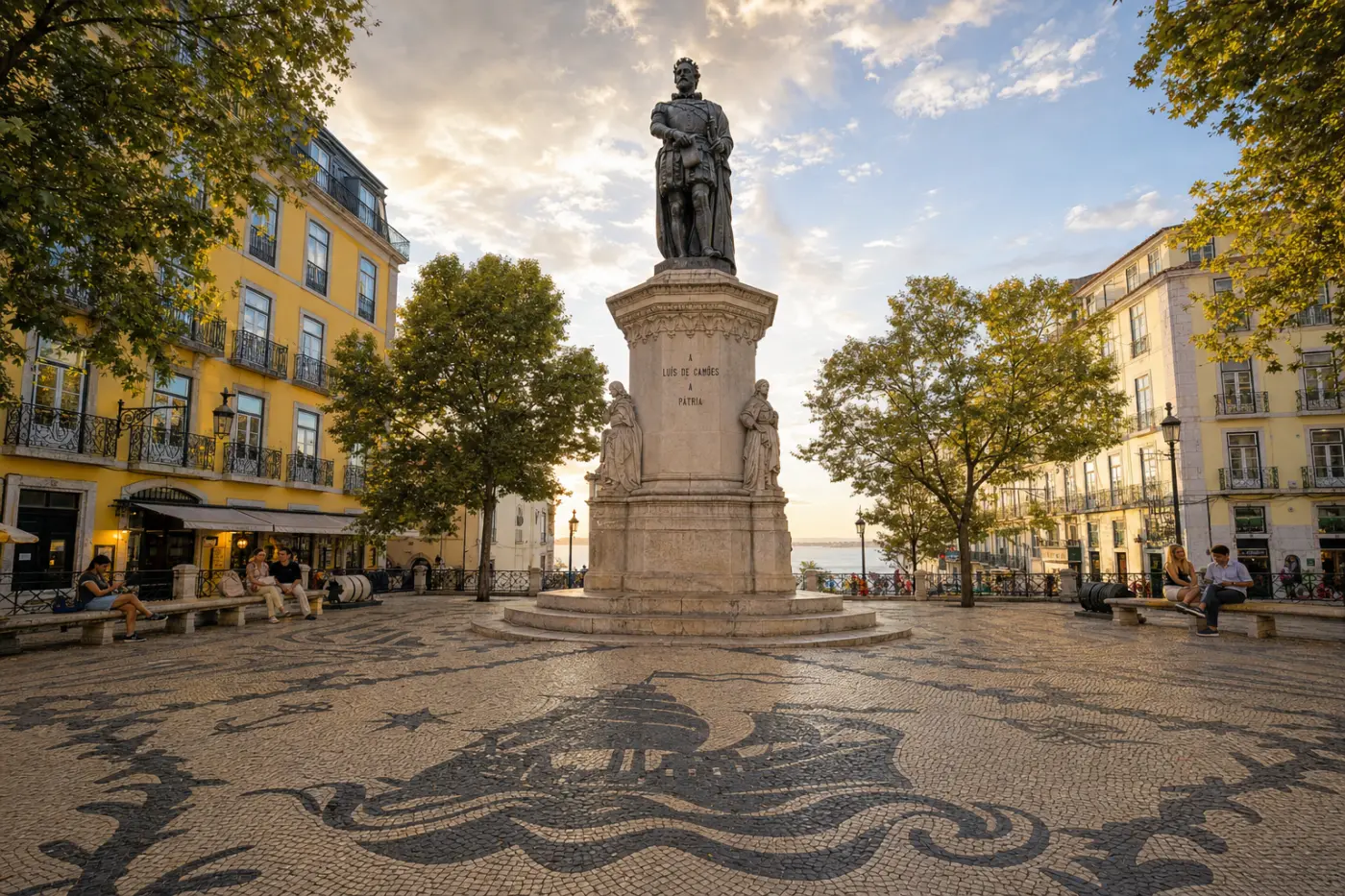
Tourist attraction
Largo de Camões sits at the edge of the Chiado neighbourhood in Lisbon, where the city's literary and commercial histories converge. The square is anchored by an imposing statue of Luís de Camões (1524–1580), considered the greatest figure in Portuguese literature and the author of Os Lusíadas (The Lusiads, 1572), the epic poem that chronicles Vasco da Gama's sea voyage to India and weaves together centuries of Portuguese history. Camões died in Lisbon in 1580 at age 56, and June 10th — the date of his death — is now Portugal's National Day, a testament to how thoroughly the nation has absorbed his legacy. The statue, cast in bronze and positioned at the square's centre on a tall pedestal ringed with figures representing other celebrated Portuguese writers, was inaugurated in 1867, sculpted by Victor Bastos.
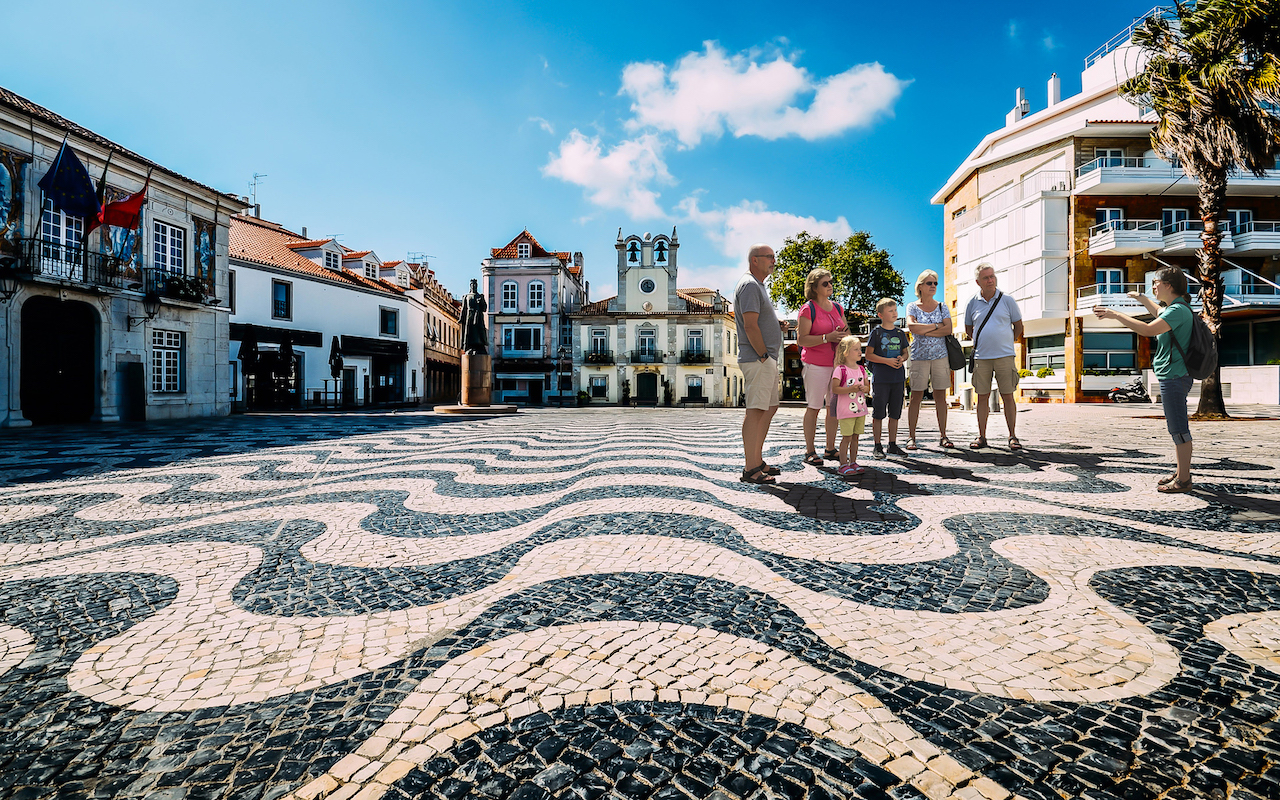
The ground beneath visitors' feet is as remarkable as the monument above it. The plaza floor is paved in the traditional calçada portuguesa — hand-laid black and white limestone cobblestones — arranged in elaborate geometric patterns that evoke the sea, a mermaid, and a caravel, the light sailing vessel that carried Portuguese explorers across unknown oceans in the 15th and 16th centuries. The surrounding Pombaline-era buildings, constructed in the restrained neoclassical style introduced after the catastrophic 1755 Lisbon earthquake, frame the square with a uniform elegance that has been preserved through careful restoration. Stone benches and mature trees complete a space that functions as much as a neighbourhood living room as a historic monument.
The square's literary and geographic position makes it a natural crossroads. It sits just steps from the Rua Garrett bookshops and cafés of the Chiado, a district historically favoured by Lisbon's intellectuals and poets. Fernando Pessoa, another of Portugal's towering literary figures, was a habitué of the nearby Café A Brasileira, whose famous terrace is barely a minute's walk away. The juxtaposition of Camões — the Renaissance soldier-poet who lost an eye in a Moroccan military campaign, was imprisoned in Lisbon in 1552, and sailed to India and Macao — with the refined calm of the square creates a quietly charged atmosphere that rewards contemplation.
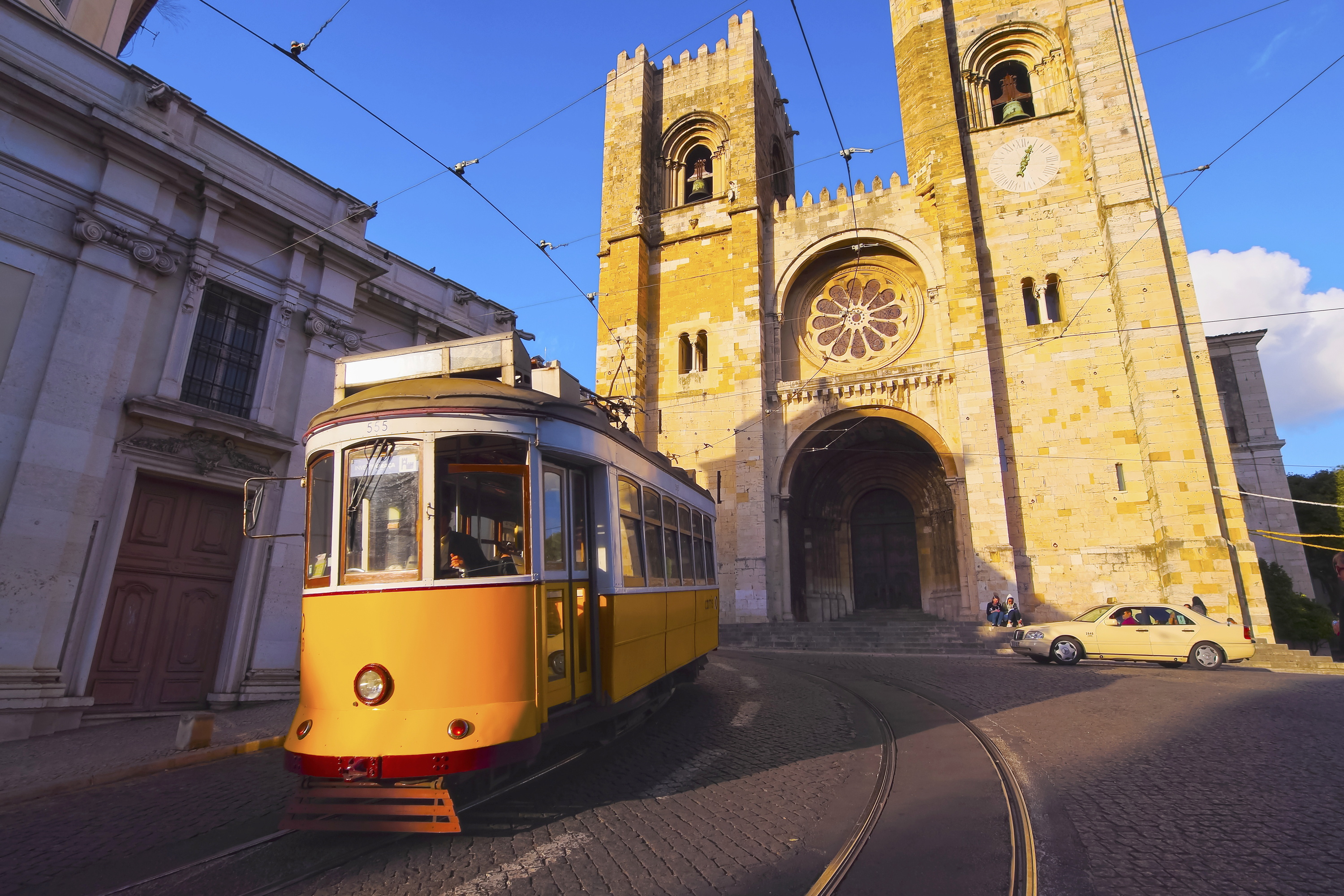
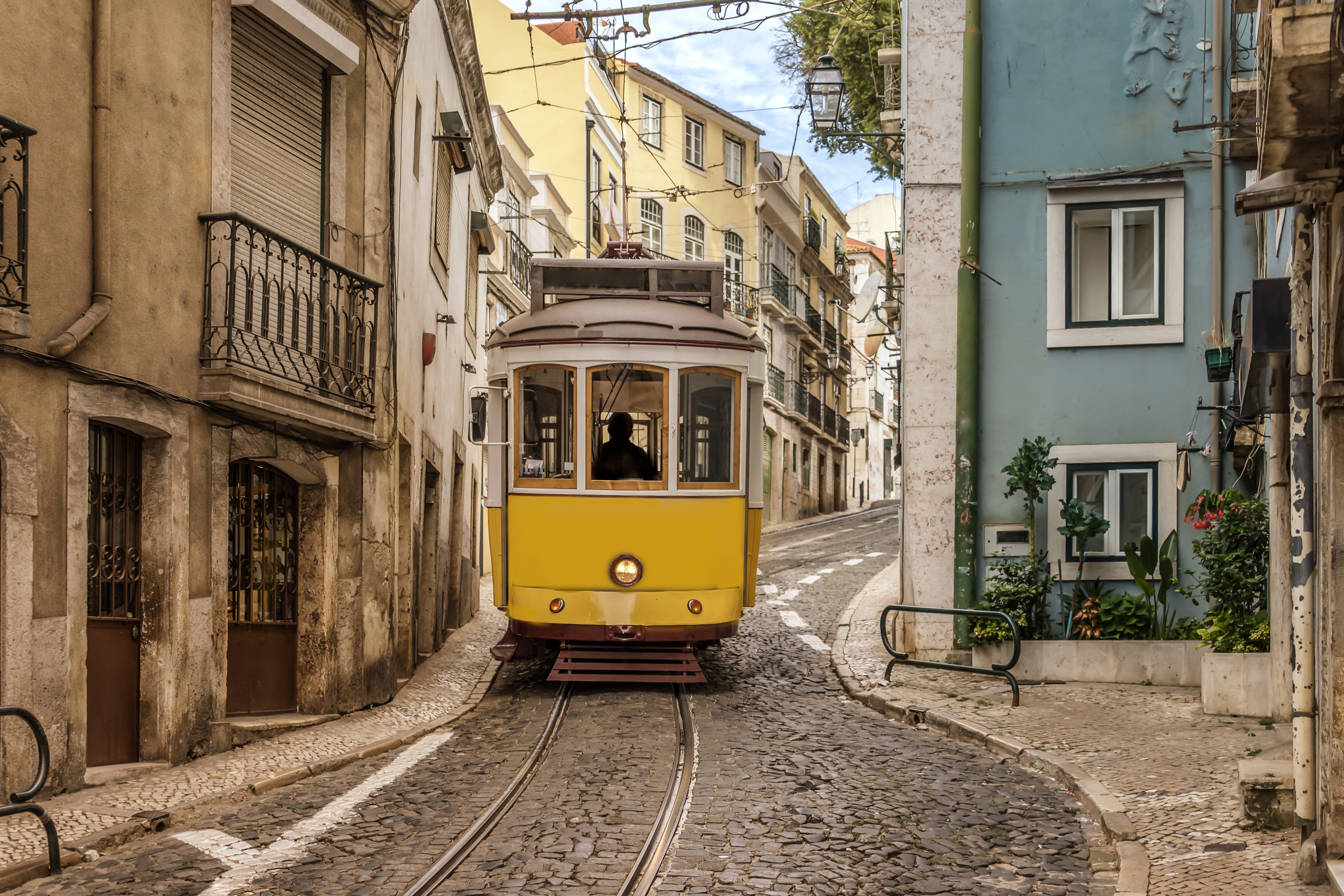
Largo de Camões is freely accessible at all times and requires no admission. An underground car park was installed beneath the plaza during restoration works, making it accessible by car, though the square is most naturally reached on foot from the Chiado metro station (Green and Yellow lines) or by the historic Tram 28, which passes nearby. Early morning visits reward those who want to study the cobblestone patterns without crowds; evenings bring a lively mix of locals and visitors to the surrounding café terraces. The square is an ideal starting point for a walking route through the Chiado and Bairro Alto neighbourhoods.
Private tours with a local guide, at your own pace.
Lisboa
Lisboa

Lisboa
Lisboa

Lisboa
Lisboa

Lisboa
Lisboa
Lisboa
We use a single cookie, to remember this choice. We do not use analytics or advertising cookies. Read our cookie policy.