3 hrs
Vienna
Vienna Art Nouveau Private Tour with Secession Tickets and Klimt
✓ Free cancellation Kids friendly
4.5(56 reviews)
From €219/ person
Book Now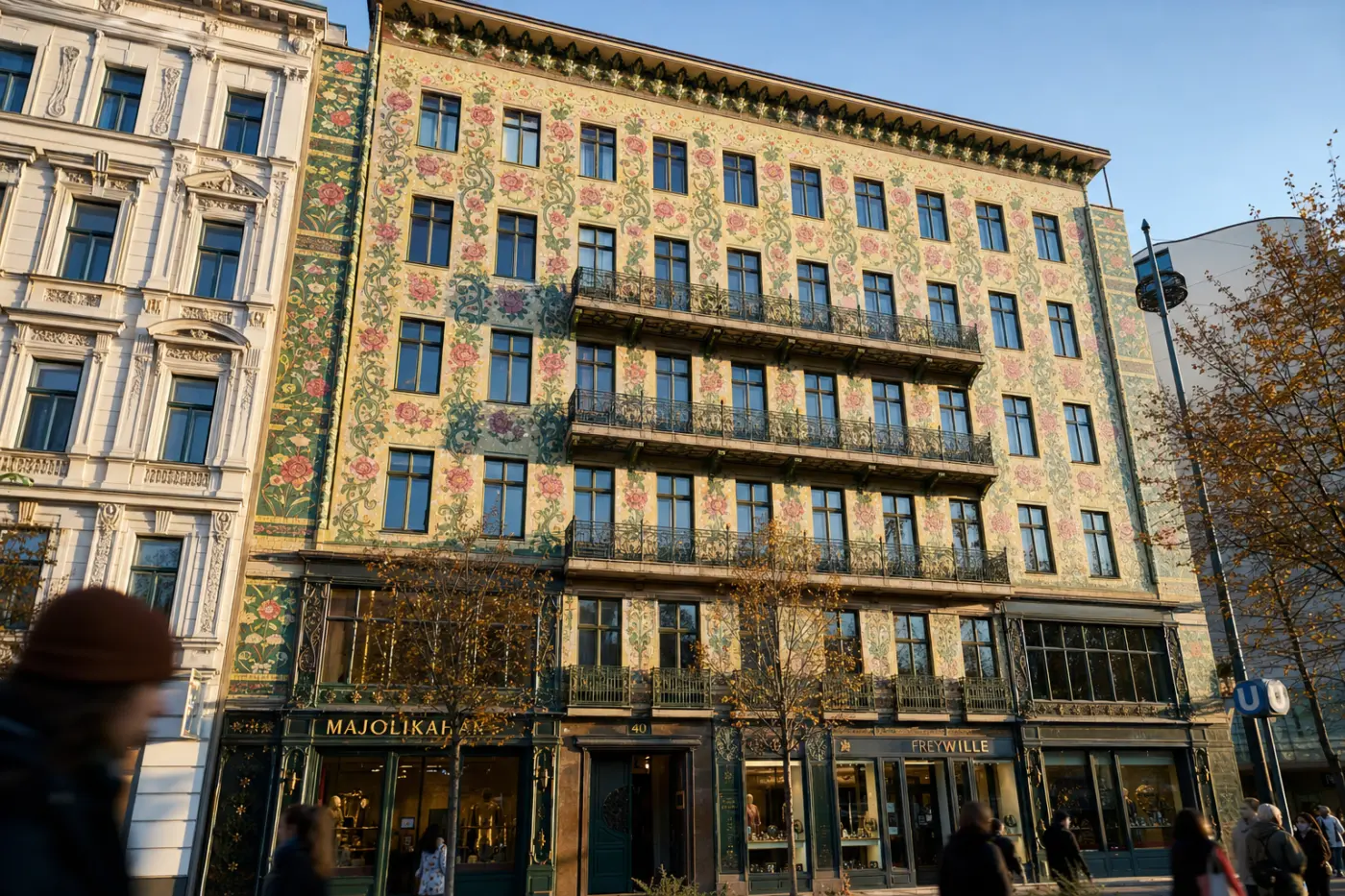
Tourist attraction
The Majolikahaus — formally known as Linke Wienzeile 40 — is a six-storey residential apartment building completed in 1899 by the Viennese architect Otto Wagner. Its name derives from majolica, the Italian tradition of tin-glazed, vibrantly coloured ceramic tilework, and the building's entire façade is clad in these weather-resistant ceramic panels hand-painted with an exuberant pattern of pink roses, red poppies, and green tendrils cascading from the top-floor cornice all the way down to the first-floor pilasters. Wagner commissioned the tile designs through the Viennese manufacturer Hirsch & Co., and the resulting surface was both a technical innovation — the glazed tiles shed rain and resist frost far better than stucco — and an aesthetic declaration of faith in the Wiener Secession movement he had helped to inspire.
Wagner designed the Majolikahaus at the precise moment his architectural philosophy shifted from Historicism toward what he called Nutzstil (utility style) — the idea that modern construction methods and modern life should dictate ornament, not the reverse. The building stands directly beside its twin commission, the Medallion House at Linke Wienzeile 38, whose gilded female medallions were executed by the Secession painter Koloman Moser. Together the two buildings were constructed as part of Wagner's larger urban project: redesigning the Wienzeile boulevard above the newly regulated Wien River for the 1898–1900 city improvement programme. Wagner himself had overseen the engineering of the underground Stadtbahn line running beneath the same street, and the apartment blocks were conceived as prestige showpieces along that modernised corridor.
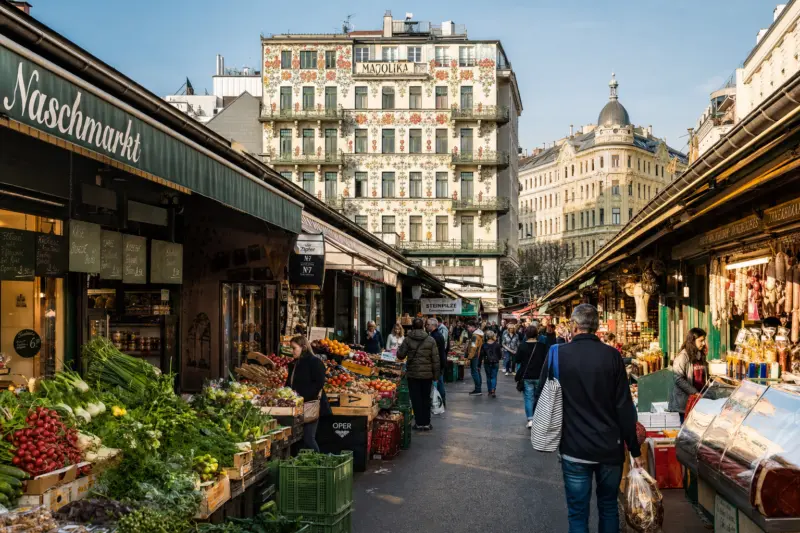
Standing before the building today, visitors are struck by how the floral pattern behaves almost like wallpaper scaled to an urban canyon — the repeating botanical motif is densest at the upper storeys and grows more restrained near street level, drawing the eye upward to the crowning ironwork balconies and the flat, projecting cornice that replaces the historicist roofline typical of Vienna's Ringstrasse era. The ground floor retains its original iron-framed shopfronts. Because the building remains a functioning private residence, interior access is not available to the public, but the entire façade can be examined at close range from the pavement of Linke Wienzeile, and the neighbouring Naschmarkt — Vienna's famous open-air market in continuous operation since the 16th century — makes the visit easy to combine with a broader morning itinerary.
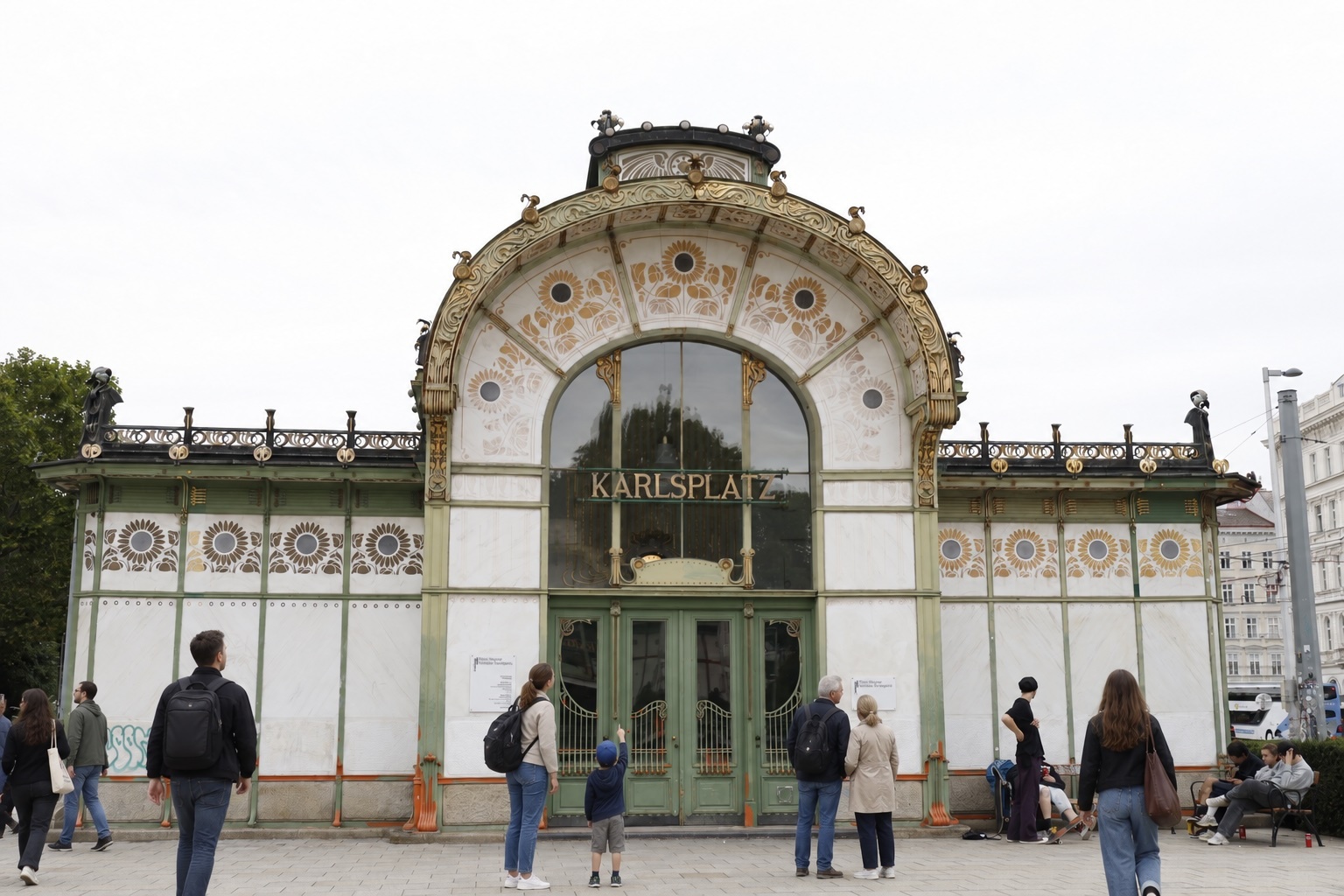
The best light for photography falls on the façade in the late morning, when the sun reaches the west-facing elevation and saturates the ceramic glazes. The nearest U-Bahn station is Kettenbrückengasse (U4 line), a two-minute walk away. Wagner's Stadtbahn Pavilions at the adjacent Karlsplatz station, completed the same year and also listed as protected monuments, are worth visiting on the same trip to understand the full scope of his 1898–1900 output. The Majolikahaus was listed as a protected architectural monument under Austrian heritage law, cementing its status as one of the most photographed Jugendstil façades in Central Europe.
Private tours with a local guide, at your own pace.
Vienna
Vienna
Vienna
Vienna
Vienna
Vienna
Vienna
Vienna
Vienna
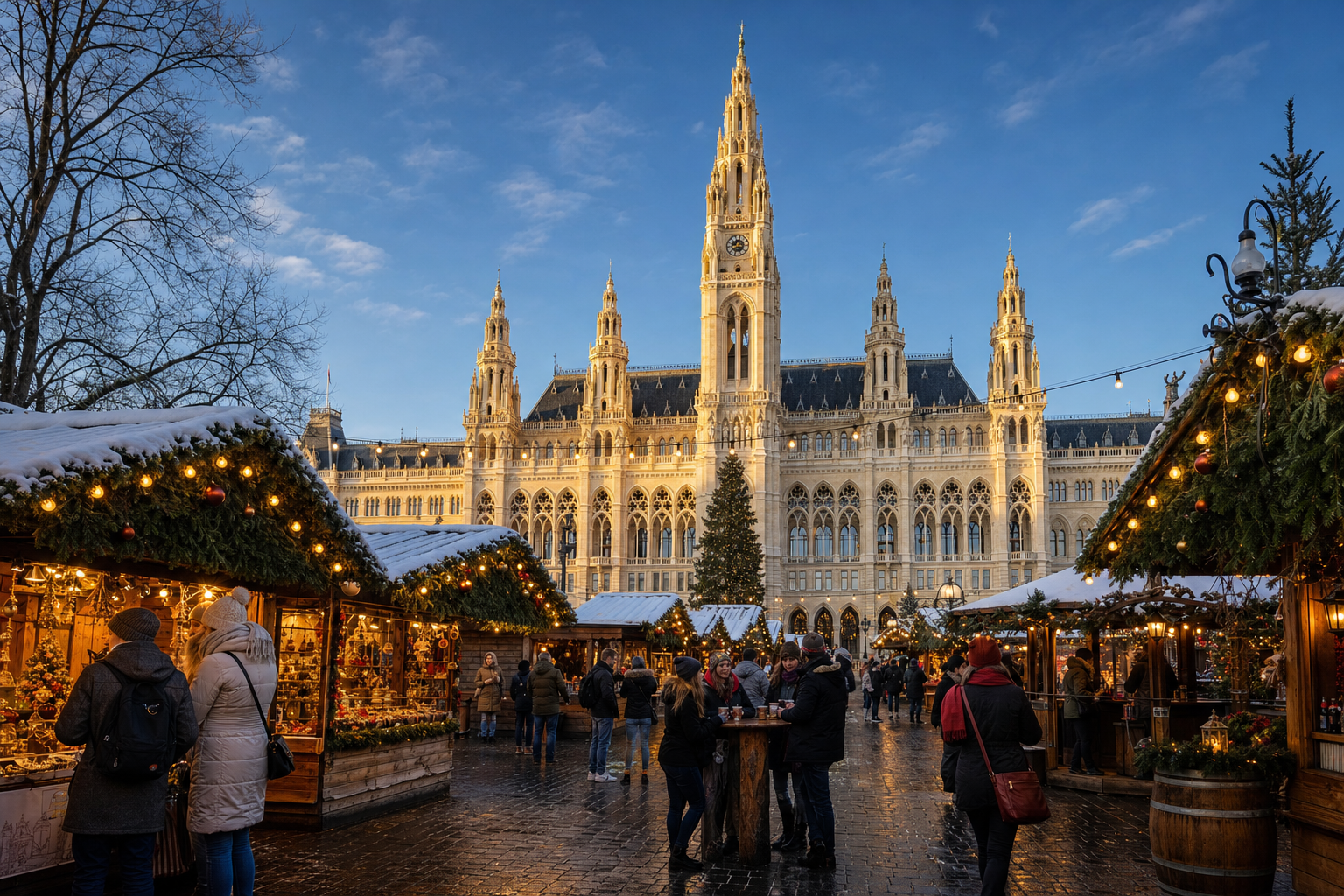
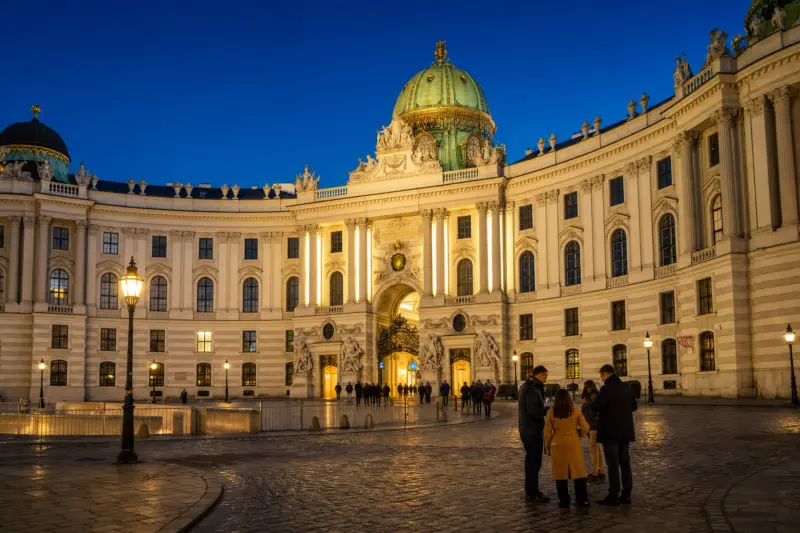
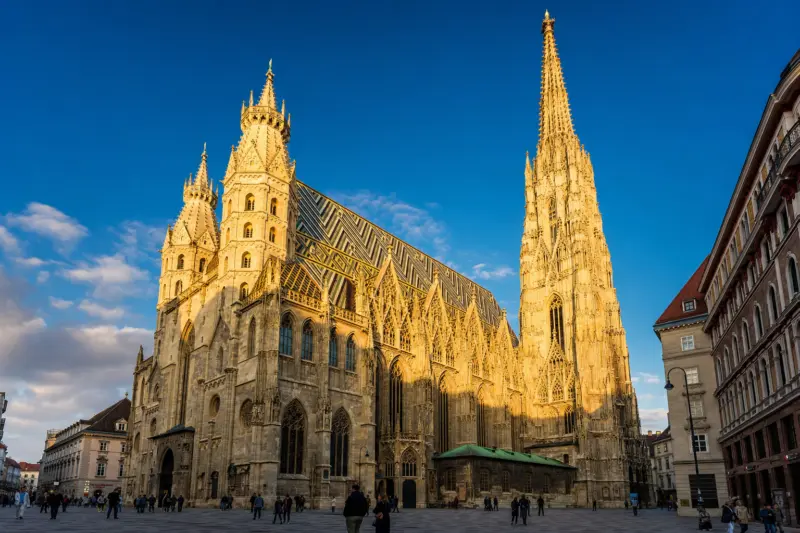
On the 20th of November 2026, the lights go on at the Rathausplatz Christmas market — and Vienna becomes, for five weeks, the most convincing argument anyone has made for winter travel. The Austrian capital hosts not one but a constellation of Advent markets, each anchored to a landmark of world historical significance: a Gothic cathedral begun in 1137, a Baroque imperial palace with 1,441 rooms, a Neo-Gothic city hall whose tower clears 98 metres. This is not the Christmas market circuit of fairy-lit sheds and mass-produced ornaments. Vienna's markets sit inside one of the densest concentrations of monumental architecture in Europe, and the 2026 season adds a brand-new market at Schwarzenbergplatz to an already remarkable lineup. Whether you are planning your first December in Vienna or your fifth, the 2026 calendar has enough new details — and enough enduring magic — to justify reading every word of what follows.
Read more →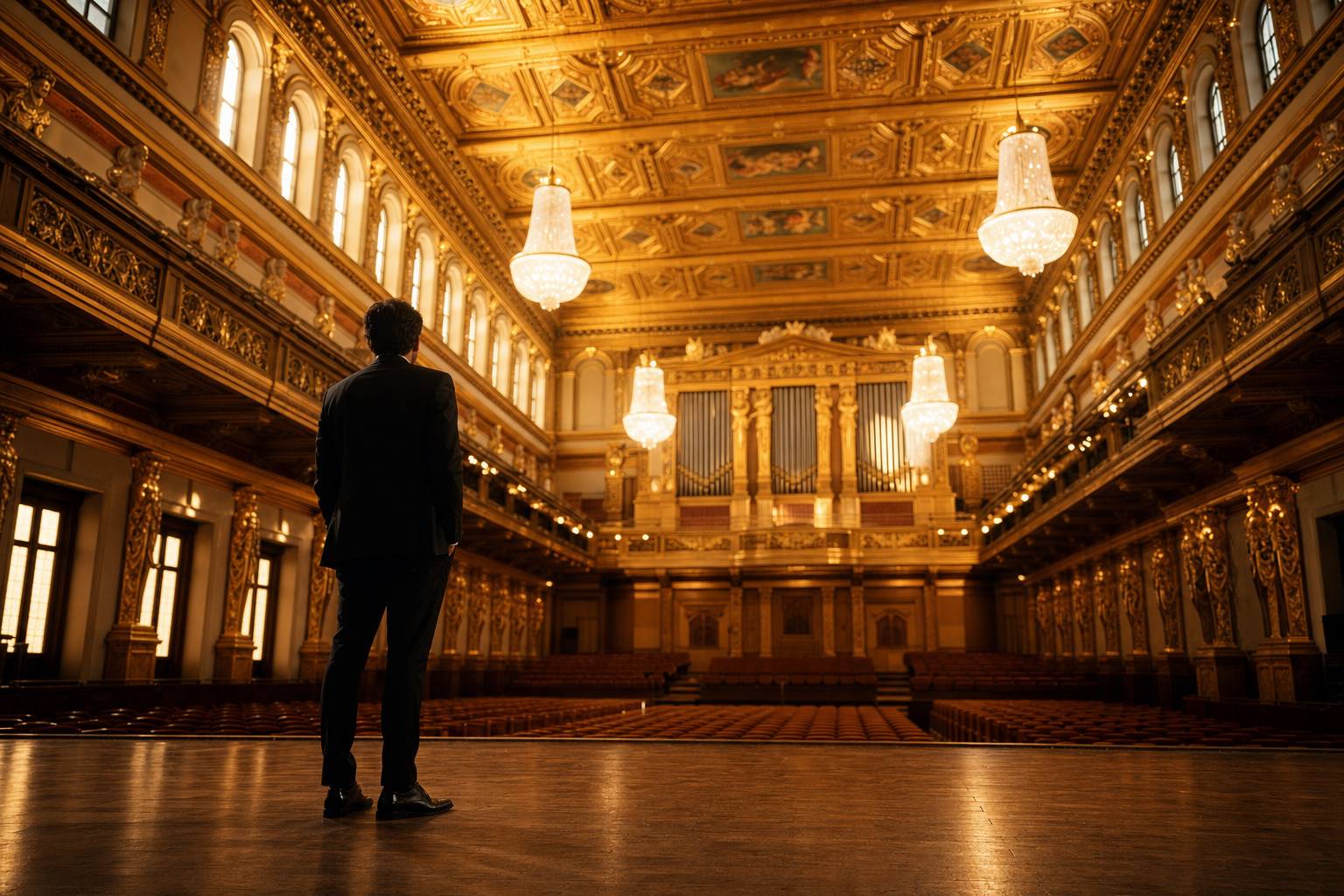
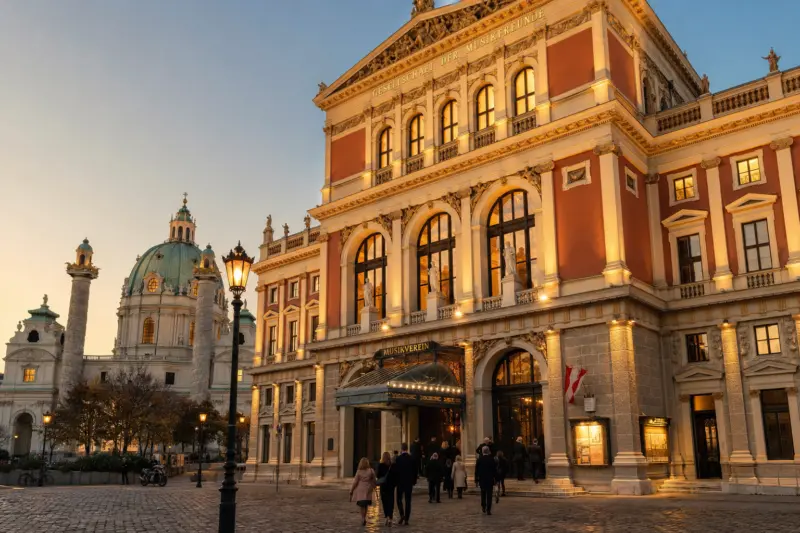
On the night of 30 September 1791, The Magic Flute premiered at the Theater auf der Wieden in Vienna — just ten weeks before Mozart died at 35. That a composer on the edge of poverty could still produce one of opera's most enduring works in this city is not a coincidence. Vienna didn't simply attract great composers; it manufactured the conditions for greatness. The Habsburg imperial court poured money into music for two centuries, aristocratic families competed for prestige through the composers they sponsored, and by the mid-19th century, the bourgeoisie had taken over that role — filling salons and concert halls with an appetite for live performance that has never really stopped. Today Vienna remains the only city on earth where the classical tradition isn't a museum piece but a living, breathing part of daily life: the Vienna Philharmonic still rehearses in the same Musikverein built in 1870, and you can hear Mozart performed within walking distance of the apartment where he wrote it. This guide explains why — and how to experience it fully.
Read more →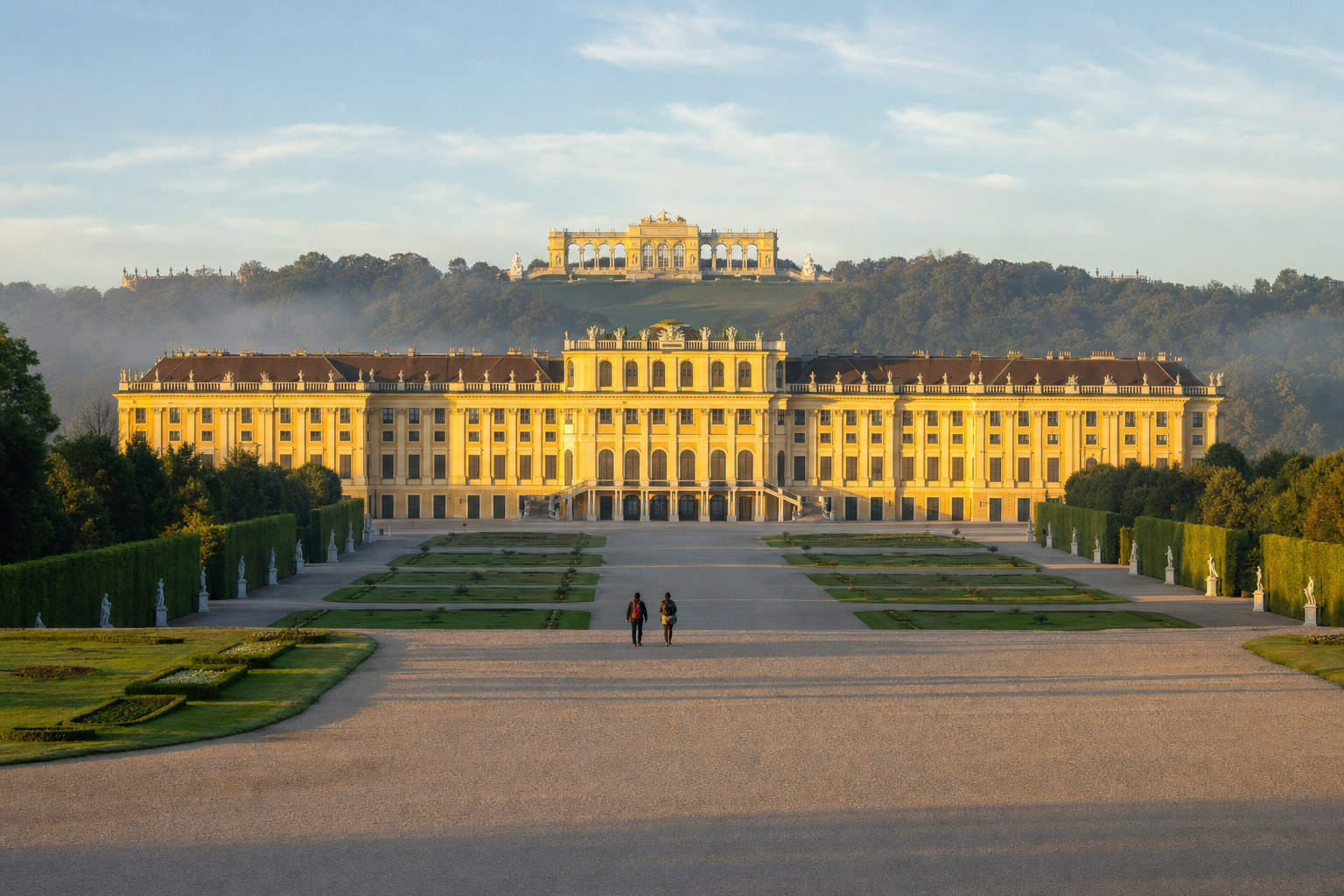
When the Habsburg court needed to escape the summer heat of the Hofburg, they didn't travel far — they didn't need to. Vienna sits at one of Europe's great geographical crossroads: the eastern edge of the Alps, where the Danube cuts through limestone gorges before fanning out across the Pannonian Plain. That position, refined over seven centuries of imperial ambition, means that monasteries, wine valleys, spa towns, and forested hilltops all cluster within 100 kilometres of the city centre. Vienna is, by any measure, the most populous city on the entire length of the Danube — and that river is the artery along which the most memorable day trips flow. The Wachau Valley, a UNESCO World Heritage Site since 2000, begins barely 80 km upstream. Baroque abbeys, Roman thermal springs, and a castle where an English king once languished in captivity are all reachable before lunch. If you've given Vienna a day or two and feel the pull to go further, you're in exactly the right city for it.
Read more →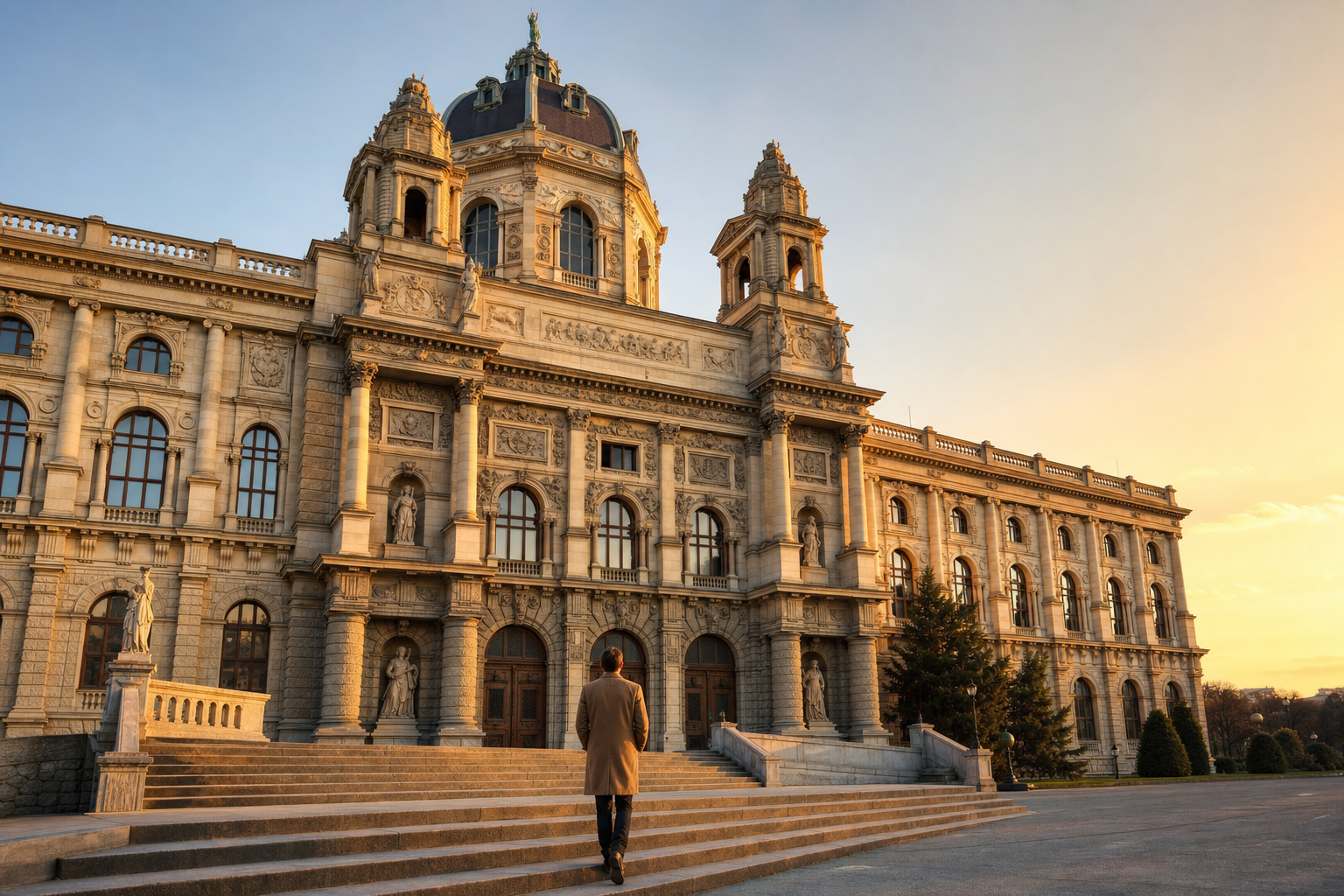
In 1857, Emperor Franz Joseph I signed a single decree that erased Vienna's medieval city walls and replaced them with one of the most choreographed urban boulevards in European history. What rose in their place — the Ringstrasse — was not just a road but a statement of imperial ambition encoded in stone, marble, and political symbolism. Today, Vienna remains the 5th-largest city in the EU by population, yet at its Habsburg peak it governed over 50 million people across a dozen languages and cultures. That weight of history doesn't announce itself. It hides in the geometry of a palace courtyard, in the separate resting places of a dead emperor's heart, entrails, and body, in the deliberate Gothic silhouette of a city hall designed to honour civic — not royal — power. A two-hour bus tour skims the surface of all this. A Vienna private tour, led by a local who has spent years decoding the city's layers, is something categorically different. This guide explains exactly why — and helps you find the right experience for your visit.
Read more →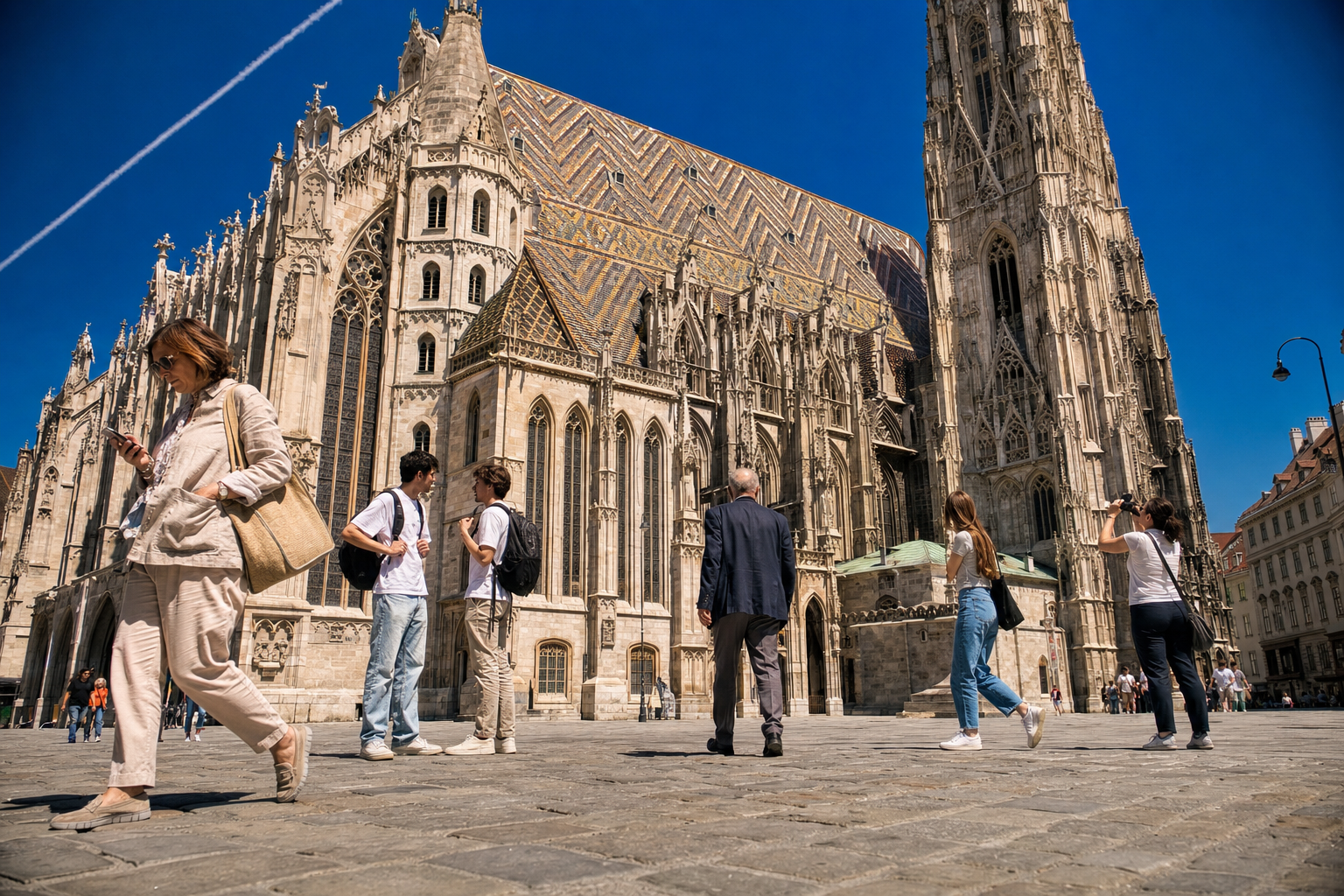
In 1857, Emperor Franz Joseph I issued a single decree that would physically reshape Vienna forever — ordering the demolition of the medieval city walls to make way for the Ringstrasse, a grand ceremonial boulevard that would announce the Habsburg Empire's ambitions to the world. That act of urban willpower set the tone for a city that has always used culture, architecture, and intellect as instruments of power and identity. Vienna is where Mozart premiered operas and Freud mapped the unconscious; where coffeehouse regulars rewrote political theory over a single cup of Melange; where social housing was built on a scale that still astonishes urban planners today. For travellers, this density of history, music, design, and everyday Viennese life means there is almost no such thing as a wasted hour. The question is never whether there's something extraordinary to do — it's knowing where to look, and why it matters. This guide cuts through the clichés to show you the city that locals know: layered, contradictory, and endlessly rewarding.
Read more →We use a single cookie, to remember this choice. We do not use analytics or advertising cookies. Read our cookie policy.