4 hrs
Lisboa
Cacilhas: Food & Drink Private Tour in a Fishing Village & Lisbon
✓ Free cancellation Kids friendly
5.0(17 reviews)
From €266/ person
Book Now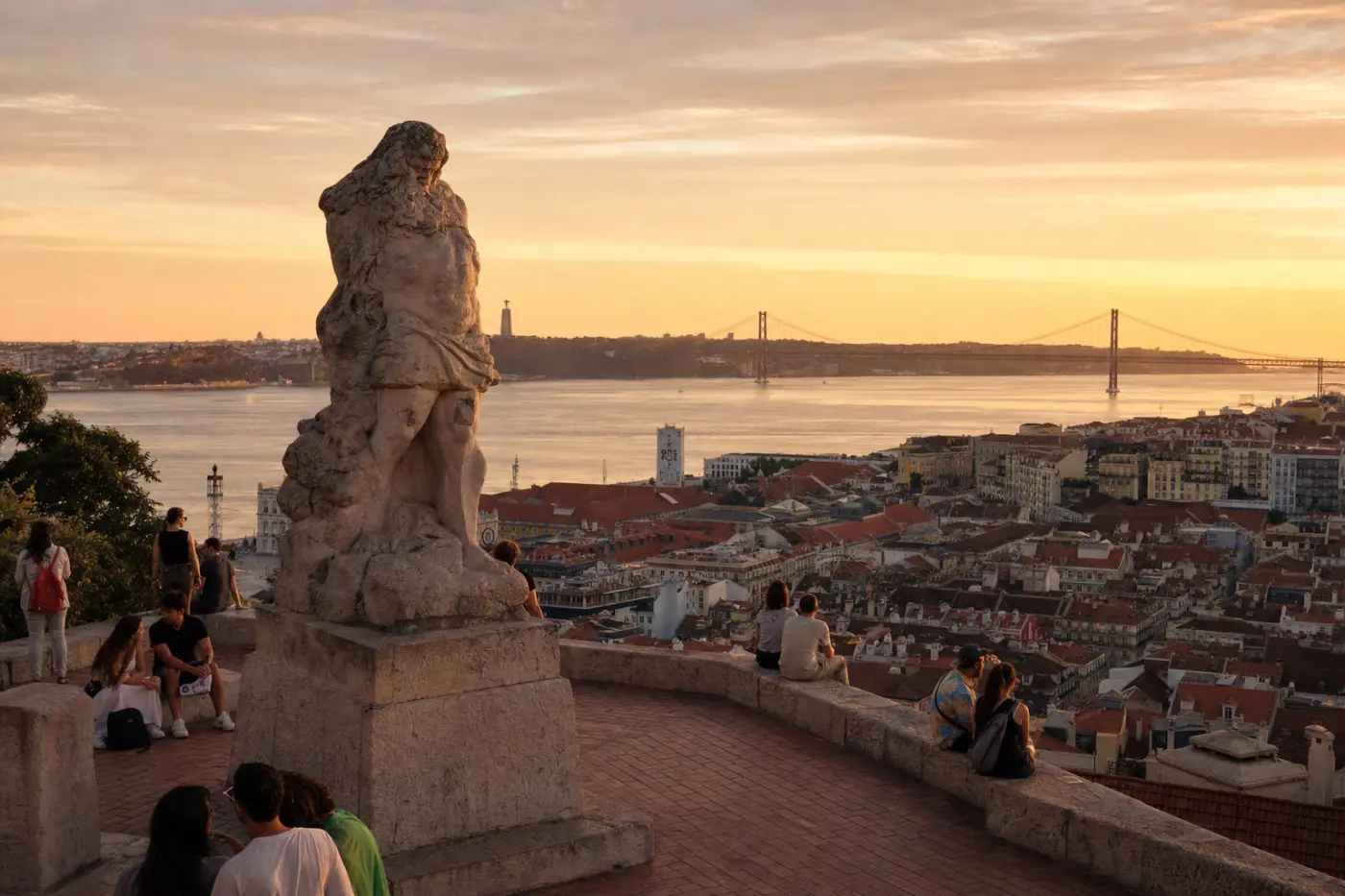
Tourist attraction
Miradouro de Santa Catarina — universally known among locals as Adamastor, after the mythical sea monster from Luís de Camões' 16th-century epic Os Lusíadas — is a hillside viewpoint perched on the edge of the Santa Catarina neighborhood, just below the bohemian grid of Bairro Alto and roughly parallel to the steep Bica funicular. At its center stands a rough-hewn stone statue of Adamastor, the shape-shifting Titan that Camões used to personify the treacherous Cape of Good Hope in his 1572 masterpiece. The statue has become one of Lisbon's most recognizable counterculture symbols, and the entire esplanade commands a sweeping panorama south over the Tagus estuary, with the 1,013-meter suspended span of the 25 de Abril Bridge — inaugurated in 1966 and later renamed to commemorate the 1974 Carnation Revolution — dominating the horizon at sunset.
Unlike the more manicured Miradouro da Graça or the café-terrace formality of Miradouro de São Pedro de Alcântara, Santa Catarina built its reputation on radical informality. Through the 1990s and 2000s it was a magnet for students, musicians, artists, and anyone carrying a guitar or a bottle of Sagres. That atmosphere of radical inclusivity — described by academic Pedro Schacht as one of the few places in any contemporary city where someone "completely transformed by acid" could sit beside a family with children and a banker in a suit — made it unlike any other square meter in the Portuguese capital. The viewpoint's closure in 2018 for undisclosed renovation works triggered a civic protest movement called Libertem o Adamastor (Free the Adamastor), which gathered over 7,000 members and placed the site at the center of Lisbon's larger debate over gentrification, public space, and who the city is being rebuilt for.
When the miradouro is open, visitors arrive to find stone balustrades worn smooth by decades of elbows and wine glasses, terraced seating on the hillside slopes, and vendors circulating with chilled beers. The view encompasses the Tagus in its full width, the rust-red towers of the 25 de Abril Bridge, the hilltop statue of Cristo Rei across the river in Almada, and on clear days a soft smear of the Serra da Arrábida mountains to the south. Sunset here, when the light turns the river to hammered copper, remains one of the definitive Lisbon experiences.
The miradouro is freely accessible and open to the public. It sits on Rua de Santa Catarina, reachable on foot from Chiado (a 10-minute walk down from Largo do Chiado) or by riding the Elevador da Bica funicular to its upper terminal. Bus line 758 also stops nearby. No admission is charged. Street vendors sell drinks informally on busy evenings, but bringing your own wine is entirely accepted and very much part of the culture. Arrive at least 30 minutes before sunset and expect company — this is one viewpoint where the crowd is as much of the attraction as the panorama.
Private tours with a local guide, at your own pace.
Lisboa

Lisboa

Lisboa
Lisboa
Lisboa
Lisboa
Lisboa
Lisboa
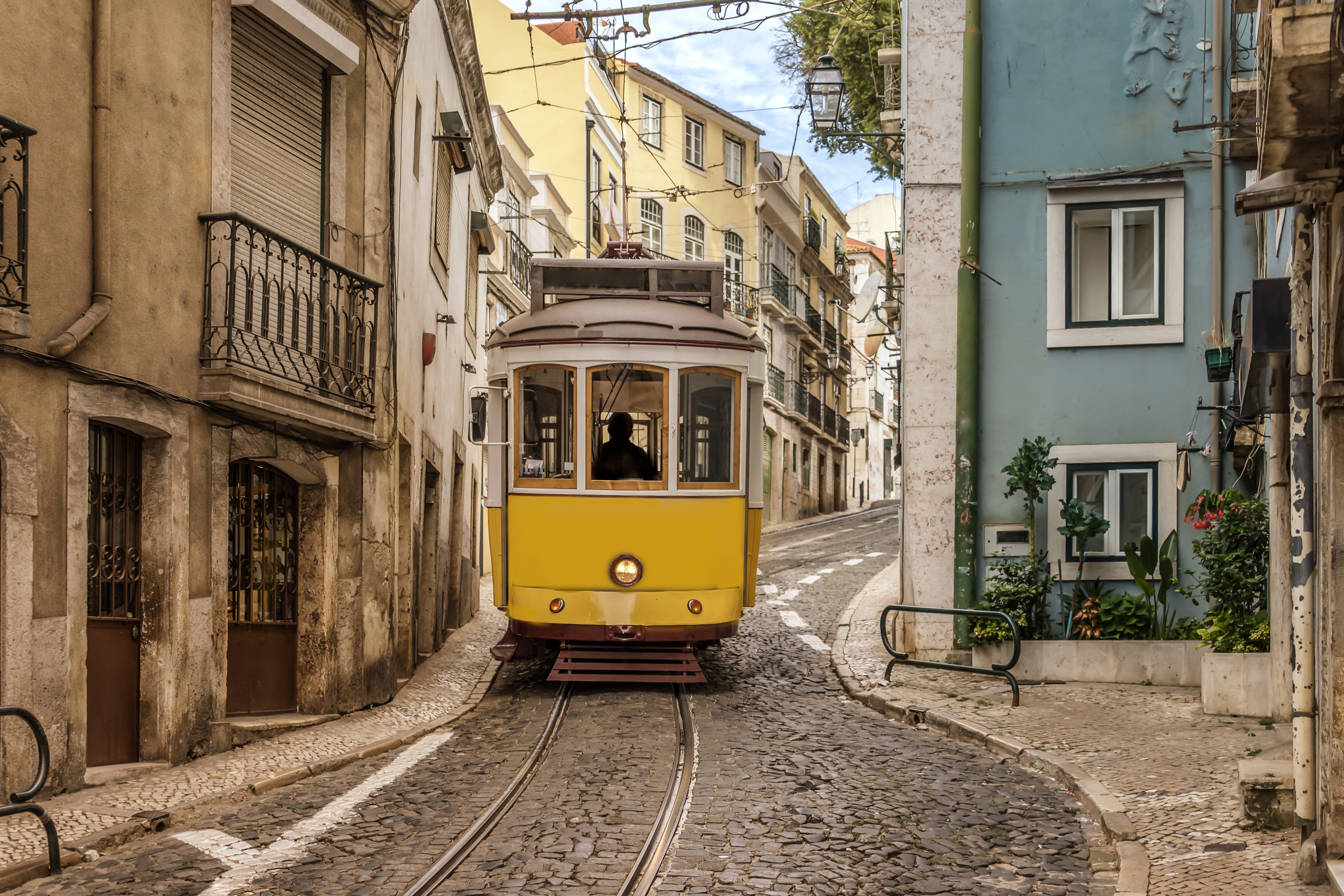
Lisboa
We use a single cookie, to remember this choice. We do not use analytics or advertising cookies. Read our cookie policy.